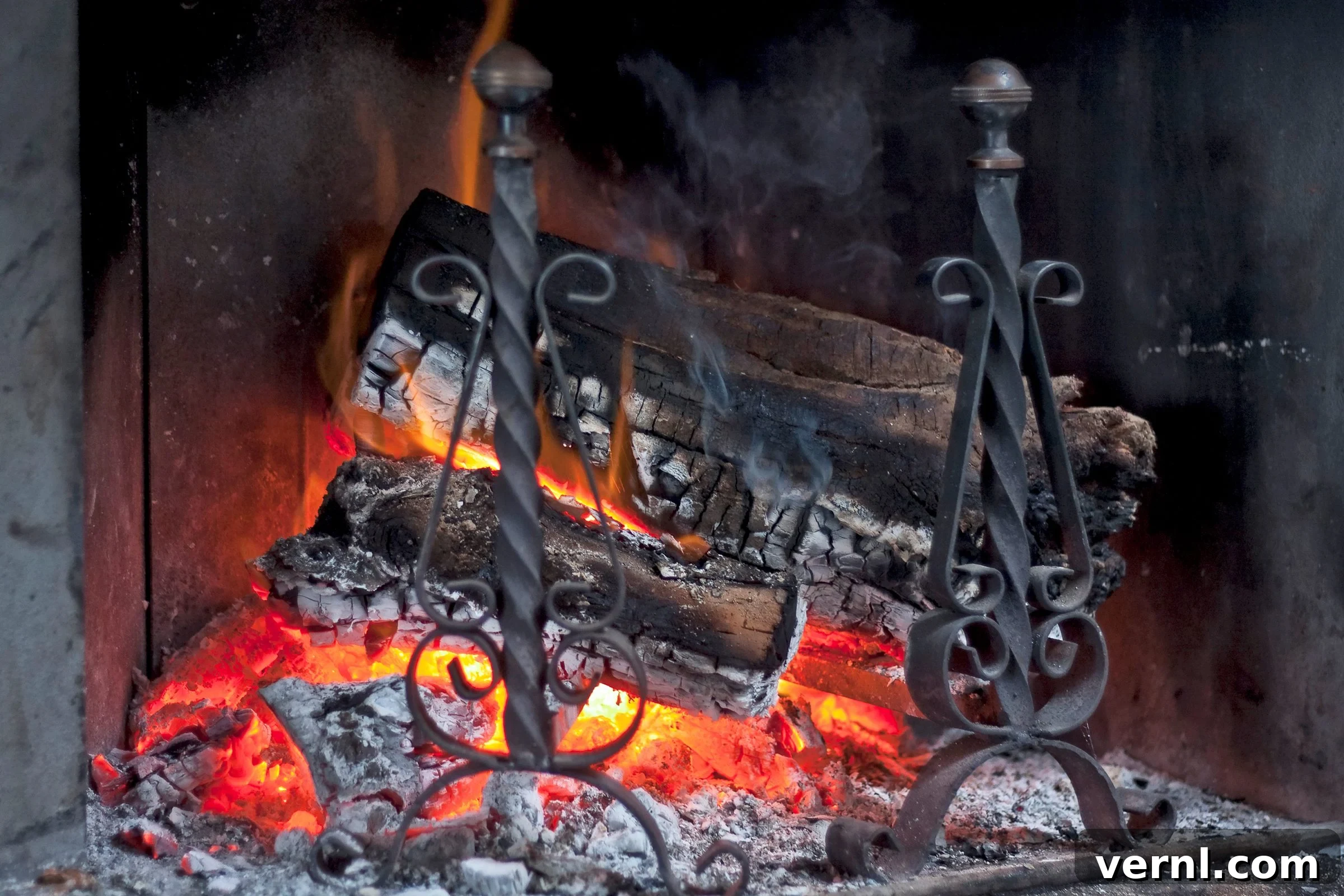
The crackling fire, the dancing flames, the warm glow – a fireplace is often the heart of a home, especially during chilly winter months. For years, I cherished my fireplace, finding immense comfort in its radiant heat and captivating beauty. It was my sanctuary, transforming dreary days into cozy evenings with a simple, roaring blaze.
However, my perspective on fireplace functionality and aesthetics has dramatically shifted, primarily due to a deeper understanding of the crucial components that support those mesmerizing flames. I’ve learned that the humble grate, while common, might not be the optimal choice for a truly magnificent and efficient fireplace experience. In fact, compared to a sophisticated set of andirons, a grate can often feel like a second-rate solution.
“If you possess a grand, visually striking fireplace, it would be a missed opportunity to simply rely on a basic grate,” explains Leroy Hite, CEO and founder of Cutting Edge Firewood in Peachtree Corners, Georgia. He emphasizes, “Such a fireplace truly beckons for the elegance and functionality of andirons. Their presence instantly elevates the aesthetic, a feat a grate simply cannot achieve. With a grate, your fireplace isn’t reaching its full potential, neither in performance nor in visual appeal.”
The notion of an underperforming fireplace is, for many homeowners, an unsettling one. Who wouldn’t want to maximize the warmth, efficiency, and beauty of their hearth? This comprehensive guide aims to ignite your passion for a superior fireplace experience, fanning the flames of ‘andiron envy’ as we delve into why these elegant fireplace accessories are often the definitive choice over traditional grates. Prepare to discover how the right tools can transform your fireplace from merely functional to truly extraordinary.
Understanding Fireplace Andirons and Grates: Beyond Basic Supports
Before we explore the distinct advantages, let’s establish a clear understanding of what fireplace andirons and grates are and how they fundamentally differ in design and purpose.
Fireplace Andirons: Typically presented in pairs, andirons are L-shaped metal bracket supports designed to cradle logs within an open fireplace. The horizontal arm provides a base for the logs, while the upright, often decorative, arm extends forward, preventing logs from rolling out. These uprights are where much of their aesthetic charm lies, frequently featuring intricate designs such as polished balls, elaborate finials, stylized pheasants, elegant harps, or other classic motifs. Beyond their decorative appeal, this design crucially lifts logs off the hearth floor, facilitating vital airflow.
Fireplace Grates: In contrast, grates are essentially metal grill-like baskets or cages that sit directly on the fireplace floor. They are designed to hold burning logs within their confines, keeping them contained and somewhat elevated. While functional, their design is generally more utilitarian, prioritizing log containment and a modest degree of airflow from beneath.
The historical context of these two tools also sheds light on their design evolution. “Grates, in many ways, are more a product of tradition than pure utility, especially concerning wood fires,” states Hite. He elaborates, “Historically, in England, extensive deforestation led to a scarcity of wood for fuel. As a result, charcoal or coal became the primary heat sources for homes. Grates were ideally suited for holding these smaller, denser fuel types, a tradition we subsequently adopted. However, for burning wood, their design offers less efficiency compared to a more specialized tool.”
Hite further emphasizes a key functional difference: “Andirons inherently create more heat and promote a cleaner burn because their design significantly increases airflow around and beneath the logs. This enhanced oxygen circulation is vital for efficient combustion.” Despite their effectiveness and widespread historical presence, Hite notes a common linguistic gap. “People often recognize the physical objects, but they’re not familiar with the name ‘andiron,'” he observes. “Everyone has likely seen andirons in classic Western films or historical English dramas featuring castles, yet when I mention ‘andirons,’ 95 percent of people initially respond with a confused expression. It’s only when I present an image that they exclaim, ‘Oh, yes, I know precisely what those are!'” This recognition underscores their ubiquity even if their formal name remains less known.
Andirons vs. Grates: A Deep Dive into Performance, Durability, and Aesthetics
While both andirons and grates serve the fundamental purpose of holding logs in a fireplace, their practical differences significantly impact your fire-burning experience. Let’s explore these disparities in detail:
1. Superior Durability and Longevity
- Andirons: The metal used in quality andirons is typically far thicker and more robust than that found in most grates. This substantial construction means they are built to withstand prolonged exposure to intense heat without warping or sagging. “I’ve owned a set of andirons for roughly a decade, and they remain in essentially perfect condition,” Hite affirms. “You can acquire antique andirons in the U.S. that are 150 years old, and in Europe, some date back a thousand years. Despite burning many hot fires, before I understood the clear advantage of andirons, I would reliably go through a new grate every single winter.” This longevity translates to a better long-term investment.
- Grates: Grates, particularly those made from thinner metal, are prone to deforming and sagging over time due to the constant stress of heat and the weight of logs. This structural compromise not only diminishes their effectiveness but also necessitates frequent replacement, making them a less durable option in the long run.
2. Enhanced Airflow and Combustion Efficiency
- Andirons: By elevating the logs higher off the hearth floor and allowing air to circulate more freely from beneath and around the entire log pile, andirons promote significantly better airflow. This optimized oxygen supply leads to a more vigorous, hotter, and cleaner burn, reducing smoldering and enhancing the overall heat output of your fire. A better burn also means less creosote buildup in your chimney over time, contributing to safer operation.
- Grates: While grates do provide some elevation for airflow, their basket-like design can restrict air circulation, especially as ashes accumulate underneath. This can lead to a less efficient burn, more smoke, and logs that smolder rather than burn cleanly, diminishing the fire’s heat output and increasing emissions.
3. Effortless Cleaning and Ash Management
- Andirons: Their open, individual design makes cleaning a breeze. You can easily sweep ashes around and between the andirons, directing them into an ash pit or removal pan without obstruction. This simplified process ensures that ash buildup doesn’t impede airflow, maintaining optimal fire performance.
- Grates: The mesh or bar structure of a grate often traps ashes, making thorough cleaning a more cumbersome task. Frequently, the grate itself must be lifted or removed to access and clear the ash beneath it, adding extra effort and mess to fireplace maintenance.
4. Superior Aesthetics and Design Versatility
- Andirons: “Andirons are fundamentally designed to be decorative while fulfilling their function of holding firewood,” notes Hite. “No one would describe a grate as beautiful, but andirons are crafted to be visually appealing year-round, even when your fireplace isn’t lit.” Their diverse range of styles, from simple utilitarian forms to ornate antique pieces, allows them to complement any interior design, serving as an elegant focal point for your hearth.
- Grates: Grates, with their purely functional design, typically offer little in the way of aesthetic enhancement. They often fade into the background, or worse, detract from the fireplace’s overall beauty, especially if they are warped or rusted.
Why Utilize Fireplace Supports at All? The Importance of Elevation and Airflow
Regardless of whether you choose andirons or grates, the core principle remains the same: elevating the logs. Both tools are essential for allowing vital airflow from beneath the fire. This crucial oxygen supply makes a fire significantly easier to ignite and ensures it burns more robustly, minimizing smoldering and maximizing heat output. Furthermore, both methods serve to securely contain the burning logs within the designated firebox, preventing them from rolling out onto the hearth or floor, which is a critical safety consideration.
While both systems perform this fundamental task, Hite unequivocally states, “Andirons accomplish these shared functions with greater efficiency and elegance. They represent an evolution in fireplace accessory design, offering superior performance and lasting beauty.”
Choosing Your Fireplace Essentials: Key Considerations
When investing in fireplace accessories, several factors should guide your decision, whether you lean towards the elegance of andirons or the practicality of a grate.
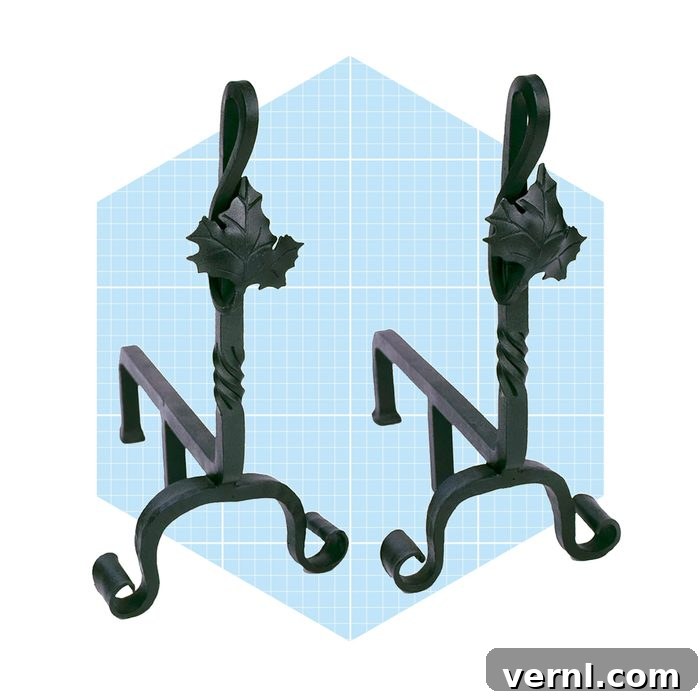
Considerations When Buying Fireplace Andirons
- Aesthetics and Design Impact: “The decision to upgrade from a grate to andirons often comes down to aesthetic preference,” says Hite. “While a warped grate is a clear signal for replacement, many people simply prioritize the visual appeal of their fireplace so much that they will replace a perfectly functional grate with beautiful andirons.” Consider how the style and finish of the andirons will complement your fireplace and the overall room decor. From rustic forged iron to polished brass, the options are vast.
- The Thickness and Material of Metal: For maximum durability and heat resistance, andirons should be constructed from robust materials like solid steel or cast iron, with a minimum thickness of 1/2-inch. Thicker materials ensure greater longevity and stability under intense heat.
- New, Used, or Antique: New andirons are readily available online and in specialty fireplace stores, with prices starting around $150 and going upwards depending on design and material. Used andirons can be a more budget-friendly option, often found for $50 and up, but inspect them carefully for signs of excessive rust or structural compromise. Antique andirons, while potentially pricey (e.g., a pair from Antwerp, Belgium, circa 1870, running $2,600), offer unique historical charm and can be magnificent conversation pieces.
- Size and Fireplace Compatibility: “Accurate measurement is paramount to ensure your chosen andirons fit seamlessly within your fireplace opening,” Hite advises. Consider both the width and depth of your firebox, ensuring the andirons provide adequate space for logs while not protruding excessively.
Best Andirons for Your Hearth
While simple bent-metal andirons can be acquired for under $80, a statement piece truly elevates your fireplace. Here are a few examples that blend style and functionality (note: these are not antiques, which fall into a distinct category):
- Around $160: The Chambliss Leaf Andirons offer a charming and attractive design, tastefully topped with maple leaf motifs, adding a touch of natural elegance to your hearth.
- Around $300: For a more classic and robust option, consider the Wrought Iron Andiron Set With Ball Finish. This set features a traditional twisted-rope design, adorned with sophisticated ball finials, and incorporates center legs for enhanced support and long-lasting durability.
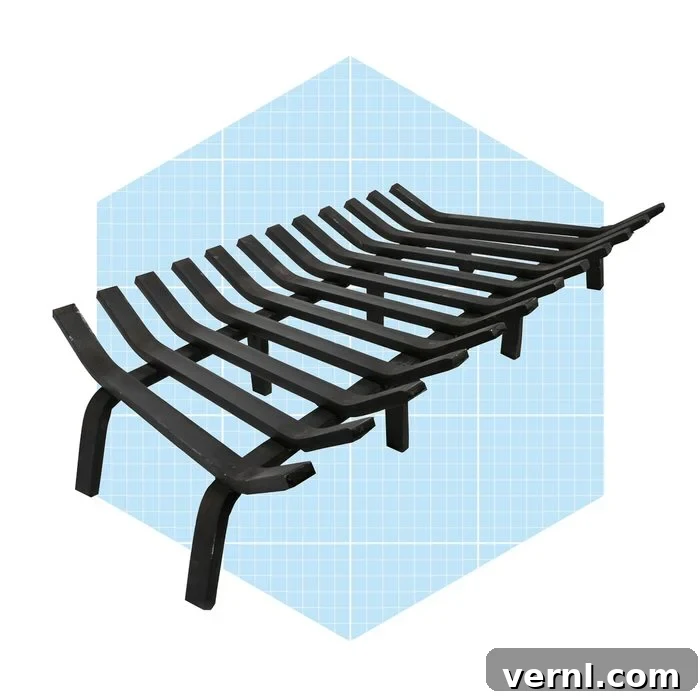
Considerations When Buying Fireplace Grates (If Andirons Aren’t Your Current Choice)
For those prioritizing a more traditional approach or adhering to a tighter budget, choosing a quality grate is still important. Here’s what to look for:
- The Thickness of Metal: Just as with andirons, the thicker the metal of a grate, the greater its resilience to heat and its overall lifespan. Opt for heavier gauge steel or cast iron to minimize sagging and premature wear.
- New vs. Used: “When it comes to grates, you absolutely want to purchase a new one, nothing used,” advises Hite. Used grates are almost certainly pre-stressed by heat, likely warped, and will have a significantly shorter lifespan. Investing in a new, sturdy grate ensures better immediate performance and safety.
- Size and Fit: Always measure the interior dimensions of your fireplace carefully before buying a grate. Ensure it fits comfortably within the firebox, allowing adequate space for logs and preventing it from being too close to the front opening.
Best Grates (for those who prefer them)
If a grate is your preferred choice, invest in one built to last. Here are a couple of attractive, durable options:
- Around $160: The 22-inch Stronghold Zero Clearance Lifetime Fireplace Grill stands out with its robust 3/4-inch bars, engineered for exceptional durability and designed to endure countless fires.
- Around $250: For ultimate peace of mind, the Black Lifetime 36-inch Fireplace Grate — Extra Heavy-Duty lives up to its name, offering an impressive lifetime guarantee, underscoring its superior construction and longevity.
Elevating Your Entire Fireplace Experience: Comprehensive Care and Knowledge
Beyond selecting the perfect andirons or grate, a holistic understanding of fireplace care is essential for safety, efficiency, and enjoyment. From choosing the right style for your home to ensuring proper maintenance, knowing the essentials will help you get the most out of your indoor fireplace, making it a source of warmth and beauty for years to come.
- Indoor Fireplace Safety for Beginners: Essential Tips for a Secure Hearth
- How to Properly Babyproof a Fireplace: Creating a Safe Environment for Little Ones
- Is My Wood-Burning Fireplace Illegal? Navigating Regulations and Restrictions
- The Best Indoor and Outdoor Ethanol Fireplaces: Modern, Ventless Heating Solutions
- How to Clean a Brick Fireplace: Restoring the Beauty of Your Hearth
- What You Need to Know About Bathroom Fireplaces: Adding Luxury and Warmth to Your Retreat
- A Step-by-Step Guide to Fireplace Refacing: Modernizing Your Hearth on a Budget
- Everything You Need to Know About a Fireplace Damper: Function, Maintenance, and Efficiency
Conclusion: Invest in Your Fireplace’s Potential
The choice between fireplace andirons and grates might seem minor, but it profoundly impacts your fire’s performance, the longevity of your equipment, and the overall aesthetic appeal of your hearth. While grates have a historical place, particularly with coal, modern wood-burning fireplaces truly thrive with the superior design of andirons. They offer unmatched durability, promote a more efficient and hotter burn through enhanced airflow, simplify cleaning, and provide an undeniable touch of elegance that transforms your fireplace into a true centerpiece.
As Leroy Hite aptly concludes, a beautiful fireplace deserves accessories that allow it to meet its full potential. By understanding the advantages of andirons, you’re not just buying a metal support; you’re investing in a richer, more efficient, and undeniably more beautiful fireplace experience for years to come.