
Understanding and Managing Hammerhead Worms: A Comprehensive Guide for Gardeners
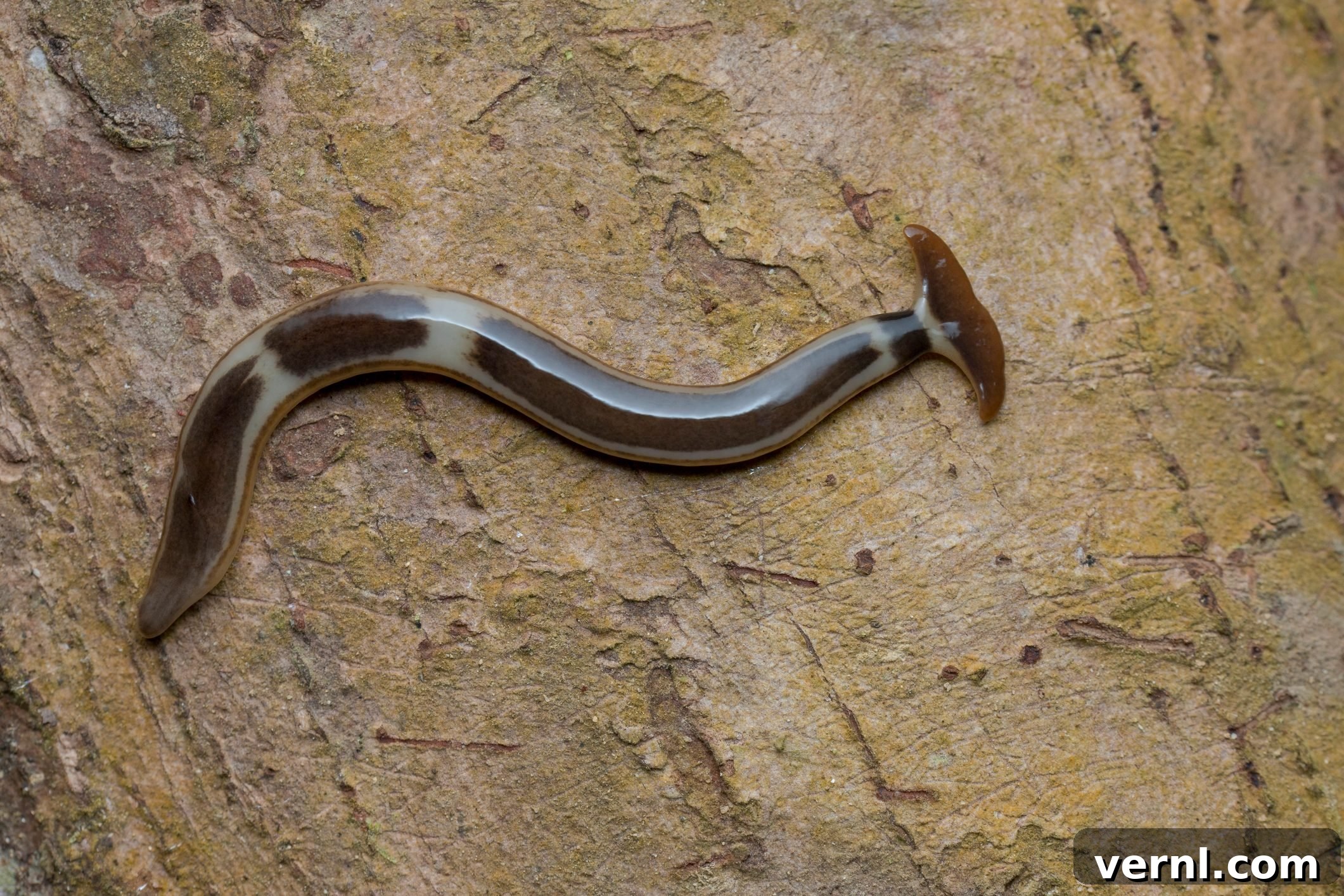
Slithering silently across garden landscapes with their distinctive, mushroom-shaped cranium, hammerhead worms are formidable predators with a peculiar diet. Known by various names such as arrowhead flatworms, land planarians, or even “landchovies,” these fascinating invertebrates are perpetually on the hunt for their preferred sustenance. Their menu typically includes slugs, various soil-dwelling insect larvae, and a particular favorite: beneficial common earthworms. When food sources become scarce, these opportunistic hunters resort to an even more unsettling behavior: cannibalism, preying on other hammerhead worms.
What sets these creatures apart, making them more gruesome than the average garden worm, is their chilling method of predation. Instead of a direct attack, the hammerhead worm employs a sophisticated chemical weapon. It delivers a sticky, potent neurotoxin that swiftly incapacitates its victim. Once paralyzed, the prey is then subjected to a unique liquefaction process, rendering it an easily digestible meal for the worm.
“They are capable of producing a toxin, tetrodotoxin, that can be harmful if touched or consumed,” explains Katelyn A. Kesheimer, Ph.D., an esteemed assistant professor and extension specialist at the Alabama Cooperative Extension System, Auburn University. Dr. Kesheimer further highlights the unique nature of this phenomenon: “It’s uncommon in terrestrial animals like this, as we more often see this toxin in aquatic creatures. This toxin is used to induce paralysis in a prey item. In the case of these flatworms, they use it to help subdue earthworms.” This revelation underscores the hammerhead worm’s remarkable adaptation and its potential ecological impact on terrestrial ecosystems, particularly those vital for gardening.
What Exactly Are Hammerhead Worms? Understanding Their Biology and Origins
Originating from the humid, lush environments of the Indochinese Peninsula in Southeast Asia, the hammerhead worm, scientifically classified as Bipalium kewense, is a fascinating member of the invertebrate kingdom. Unlike segmented earthworms, these creatures possess a soft, distinctly flattened, and elongated body, completely devoid of appendages. Their most striking feature, and indeed the origin of their common name, is their unique head shape, which bears an uncanny resemblance to the head of a hammerhead shark. “Hammerhead worms get their name from the unique head shape, resembling a hammerhead shark, and are typically a gray or tan color,” Dr. Kesheimer states, describing their often subtle appearance and helping with initial identification.
As terrestrial planarians, hammerhead worms thrive predominantly in tropical and subtropical habitats, where humidity and warmth provide ideal conditions for their survival and proliferation. However, their presence is not confined to these regions; these invasive flatworms have been increasingly spotted in temperate zones, with recent reports confirming their establishment in countries like France and Italy. Their activity patterns are primarily nocturnal, meaning they typically emerge from their hiding spots as the sun sets or after periods of heavy rain, when the ground is moist and cool – conditions favorable for their movement and hunting. This nocturnal habit can make them elusive to gardeners during peak daytime hours.
In the United States, outside of controlled environments like greenhouses, hammerhead worms are most commonly encountered in the Southern coastal regions. Their arrival in the U.S. dates back to the early 1900s, with initial sightings reported in Louisiana. Since then, their range has expanded considerably, with reports of their presence reaching as far north as the Missouri Ozarks. This northward expansion, facilitated largely by human activity, particularly the transport of potted plants and nursery stock, highlights their adaptability and the significant challenges associated with managing invasive species across diverse climates.
Understanding their biology is key to effective management. Hammerhead worms are hermaphroditic, possessing both male and female reproductive organs, yet they typically reproduce sexually by laying egg capsules. More critically, they are renowned for their remarkable ability to reproduce asexually through fragmentation. If a hammerhead worm is cut into pieces, each fragment has the astonishing capability to regenerate into a new, complete worm. This regenerative power makes traditional methods of pest control, such as slicing them in half, entirely counterproductive and is a crucial factor to consider when dealing with an infestation.
Are Hammerhead Worms Dangerous to Humans and Pets? Assessing the Risk
While hammerhead worms are generally considered harmless to humans in terms of direct aggression or biting, their presence does come with a significant cautionary note regarding their secreted neurotoxin. These worms secrete a potent substance known as tetrodotoxin (TTX), the same powerful compound famously found in pufferfish and blue-ringed octopuses. Although the amount secreted by a hammerhead worm is typically not enough to be life-threatening to a healthy adult human, direct skin contact can lead to minor irritation, ranging from a mild rash to itching or a tingling sensation. The primary concern lies with accidental ingestion or prolonged, unprotected contact.
Dr. Kesheimer advises strongly, “Because we don’t know the amount of toxin on the hammerhead worms, it’s best to avoid touching or allowing pets to consume in your yard.” This recommendation underscores the unpredictable nature of biological toxins and the varying sensitivities among individuals and animals. For curious pets, especially smaller animals like puppies or kittens, ingesting a hammerhead worm could potentially lead to more severe symptoms, including nausea, vomiting, lethargy, drooling, or even neurological effects, depending on the amount consumed and the pet’s size and overall health. It is always wise to err on the side of caution and prevent pets from interacting with these worms.
When it becomes necessary to handle hammerhead worms for removal purposes, taking appropriate safety measures is paramount. “If you are touching them to remove from the garden, wear gloves, use a plastic bag or otherwise protect your skin,” Dr. Kesheimer emphasizes. Gardeners should opt for thick, durable gardening gloves to create a physical barrier. Alternatively, using a shovel, trowel, or even a sturdy leaf to gently scoop the worm into a container can prevent direct contact. Post-handling, it’s always good practice to thoroughly wash hands with soap and water, even if gloves were worn, to eliminate any residual toxins.
What Impact Do Hammerhead Worms Have on Lawns and Gardens?
Despite their unsettling appearance and predatory nature, hammerhead worms do not directly damage backyard landscapes, vegetable gardens, or ornamental plants in the way that many conventional pests do. Dr. Kesheimer confirms this, stating, “We have no evidence of hammerhead worm damage (tunneling, root feeding, etc.) directly on the lawn itself.” Unlike slugs that munch on leaves or grubs that chew through roots, hammerhead worms do not feed on plant material, nor do they create tunnels that disrupt root systems or soil structure. This distinction is important for gardeners worried about immediate plant damage.
However, dismissing them as benign would be a grave mistake. The true ecological peril presented by the hammerhead worm lies in its diet. These flatworms are voracious predators of native earthworms, which are absolutely vital to the health and vitality of garden ecosystems. Earthworms are nature’s tireless soil engineers, performing indispensable services such as aerating the soil, improving drainage, enhancing nutrient cycling, and breaking down organic matter to create rich, fertile topsoil. A healthy earthworm population is a cornerstone of any thriving garden, contributing to stronger plant growth, better water retention, and overall soil resilience.
“Laboratory studies have confirmed that hammerhead worms will prey on earthworms,” Dr. Kesheimer points out. The implications of this predatory behavior are profound. A significant reduction in earthworm populations due to hammerhead worm predation can lead to compacted soil, reduced water infiltration, poorer nutrient availability for plants, and an overall decline in soil fertility. Over time, this can negatively impact plant health, crop yields, and the ability of your garden to support diverse microbial life. “And we all know how earthworms help contribute to soil health, so we don’t want anything removing those from our lawns or gardens,” she adds, highlighting the critical importance of protecting these subterranean allies for the long-term well-being of your garden.
In essence, while hammerhead worms may not directly consume your prize-winning tomatoes or ornamental shrubs, their indirect impact on the foundational elements of your garden – the soil and its invaluable microbial and invertebrate communities – can be substantial and long-lasting. Protecting earthworm populations is synonymous with safeguarding the long-term health and productivity of your garden space, making hammerhead worm control an important aspect of sustainable gardening.
Recognizing the Signs of a Hammerhead Worm Infestation
Identifying a hammerhead worm infestation early is crucial for effective management. These worms are not particularly subtle; their size alone often makes them stand out. Mature hammerhead worms can reach impressive lengths, typically ranging from 12 to 15 inches (about 30-38 cm), and are notably slender. Their distinctive physical characteristics and behaviors make them relatively easy to spot if you know what to look for. Here are the key signs indicating the unwelcome presence of hammerhead worms in your garden:
- Secretive Hiding Spots: Hammerhead worms are nocturnal and prefer cool, moist environments during the day to avoid desiccation. Consequently, you are most likely to find them hiding underneath rocks, logs, decorative landscaping stones, leaf litter, mulch piles, potted plants, or other shaded and damp areas. Similar to many other worm species, their activity significantly increases following a soaking rain, as the saturated soil makes it easier for them to move and hunt. Check these areas first, especially in the early morning or late evening.
- Distinctive Slime Trails: Like slugs and snails, hammerhead worms produce a visible slime trail as they move. However, their trails tend to be thicker, shinier, and more gelatinous than those left by snails or slugs. Observing these shiny, ribbon-like trails on patios, sidewalks, garden beds, or even the walls of your home can be a strong indicator of their presence, especially if you notice them in the early morning before the sun dries them out. These trails are a clear signal of their nocturnal wanderings.
- Egg Cocoons: While adult worms are unmistakable, their reproductive efforts also leave telltale signs. Hammerhead worms lay tiny, often opaque, bright red or black eggs encased within protective cocoons. These cocoons are typically found hidden in secluded, damp spots, such as under logs, rocks, deep within mulch, or buried shallowly in soil. These abandoned egg cases, though small, are a definitive sign of breeding activity and a potential surge in the hammerhead worm population. Prompt removal of these cocoons can help prevent future generations.
- Observation of Predation: On rare occasions, you might witness a hammerhead worm actively preying on an earthworm or slug. This direct observation provides unequivocal proof of their presence and confirms their predatory habits, leaving little doubt about their identity.
Regular inspection of your garden, particularly in damp and shaded areas, and after rainfall, will significantly increase your chances of detecting these invasive flatworms before their populations can establish firmly and impact your beneficial earthworm community. Early detection is your best defense against a larger infestation.
Effective Methods for Getting Rid of Hammerhead Worms in Your Garden
While the thought of these toxin-producing predators in your garden can be alarming, the good news is that hammerhead worms haven’t caused widespread devastation comparable to some other aggressive invasive species, such as the brown marmorated stink bug or fire ants. However, where there’s one hammerhead worm, there are almost certainly more, making proactive removal essential. It is critical to approach their eradication correctly to avoid exacerbating the problem due to their unique biology.
The most crucial piece of advice for dealing with a hammerhead worm is to resist the urge to cut them in half with your garden trowel or shovel. “If you find some in your backyard, resist the urge to cut them in half with your trowel,” Dr. Kesheimer warns. This seemingly logical action is, in fact, entirely counterproductive. “They can reproduce asexually, so you may end up with two worms,” she explains. This remarkable ability, known as fragmentation and regeneration, allows each severed piece to regenerate into a fully functional adult worm, effectively doubling your problem. Always avoid physical chopping or crushing.
Instead, the recommended method involves carefully capturing the worm without direct contact. Use gloves, a stick, or a piece of cardboard to gently scoop the worm into a sealable plastic bag or an airtight jar. Once contained, you can proceed with one of the following humane and effective killing methods, ensuring the worm is completely incapacitated before disposal. Always dispose of the tightly-sealed container and its contents in the trash, far from your garden, to prevent any chance of escape or regeneration.
1. Salt or Vinegar Application
A simple and readily available method involves using common household substances. Sprinkling a small amount of table salt or applying a direct spray of white vinegar (acetic acid) onto the hammerhead worm will effectively kill it. These substances work by drawing moisture out of the worm’s soft body (desiccation, in the case of salt) or disrupting its cellular structure through pH changes (vinegar), causing it to dry out and die. “Only a small amount is needed, and be careful not to harm any nearby vegetation,” Dr. Kesheimer cautions. When using salt, a pinch directly on the worm is sufficient; for vinegar, a direct, targeted spray from a bottle is best. Ensure the application is precise to avoid harming your garden plants, as both salt and vinegar can be detrimental to plant health and soil composition in larger quantities.
2. Oil Sprays: Citrus or Neem
Another effective and relatively natural approach is to spray the worm directly with citrus oil or neem oil. Citrus oil, often found in natural pest control products, acts as a powerful degreaser, breaking down the waxy cuticle of insects and worms, leading to dehydration and respiratory distress. Neem oil, derived from the neem tree, is a natural insecticide that disrupts insect growth and acts as an anti-feedant, interfering with the worm’s ability to feed and reproduce. Both oils are generally considered safer for the environment and beneficial insects than synthetic pesticides, making them a good choice for targeted application. Ensure the spray thoroughly coats the entire worm for maximum effectiveness.
3. Freezing
For a guaranteed kill without any chemical application in your garden, freezing is a highly effective and environmentally friendly method. Once you have carefully captured the hammerhead worm in a tightly-sealed plastic bag or airtight container, place this container directly into your freezer. Leave it there for at least 48 hours. The prolonged exposure to freezing temperatures will completely destroy the worm’s cellular structure, ensuring it is no longer viable and cannot regenerate. This method is particularly useful for those who prefer not to use salt or vinegar near delicate plants or for those with children and pets who might be exposed to treated areas.
Preventative Strategies to Keep Hammerhead Worms Away from Your Property
Preventing hammerhead worms from establishing a foothold in your garden is often more manageable than eradicating an existing infestation. Given their relatively limited natural mobility, human-assisted transport, primarily through contaminated soil or potted plants, is their main mode of spread. Therefore, vigilance in inspecting new additions to your garden is paramount for long-term control.
Dr. Kesheimer strongly advises inspecting all potted plants, trees, shrubs, or sod grasses thoroughly before introducing them into your garden or integrating them with existing landscaping. “Given hammerhead worms’ limited mobility, if you are careful to bring in only clean plants, your risk of ever finding them will be low,” she says. This thorough inspection should include:
- Checking the soil surface: Carefully look for adult worms, distinctive slime trails, or any unusual activity on the top layer of the soil in new pots or sod.
- Examining the undersides of pots: Hammerhead worms often hide in moist, dark crevices, including the drainage holes or rims of plant containers.
- Inspecting the root ball: Gently dislodge some soil from the root ball to check for hidden worms, tiny egg cocoons (which can be red or black), or any signs of their presence within the soil matrix itself.
- Source Awareness: Consider the origin of your plants. Purchasing from reputable local nurseries that practice good hygiene might reduce risk compared to unknown online sellers or transplanted wild specimens.
Beyond careful inspection, maintaining a clean and well-maintained garden can significantly reduce their appeal. Remove excessive leaf litter, decaying wood, old tarps, and other garden debris that can serve as ideal hiding spots for these nocturnal creatures. Improve drainage in consistently wet areas, as hammerhead worms thrive in damp conditions. While not a direct control method, a healthy, diverse garden ecosystem can be more resilient to invasive species in general.
Should You Call a Professional Exterminator for Hammerhead Worms?
In most cases, the presence of hammerhead worms in your garden does not warrant calling a professional exterminator. Dr. Kesheimer unequivocally states, “There is no reason to call an exterminator. We don’t see large enough populations that cannot be easily, mechanically removed.” This expert advice provides valuable reassurance to concerned gardeners.
This reassurance is based on several factors. Hammerhead worm infestations, while concerning due to their predatory nature, rarely reach the overwhelming population densities seen with other invasive insects. Their control methods are relatively straightforward and can be effectively implemented by homeowners using common household items or simple tools already available in most gardens. Furthermore, chemical pesticides are generally ineffective against these flatworms and can cause more harm than good to your garden’s delicate ecosystem, potentially killing beneficial insects, earthworms (the very creatures you’re trying to protect), and pollinators. By consistently following the preventative measures and direct removal techniques outlined above, you can manage hammerhead worm populations successfully, protect your garden’s ecological balance, and avoid unnecessary costs associated with professional pest control services.