
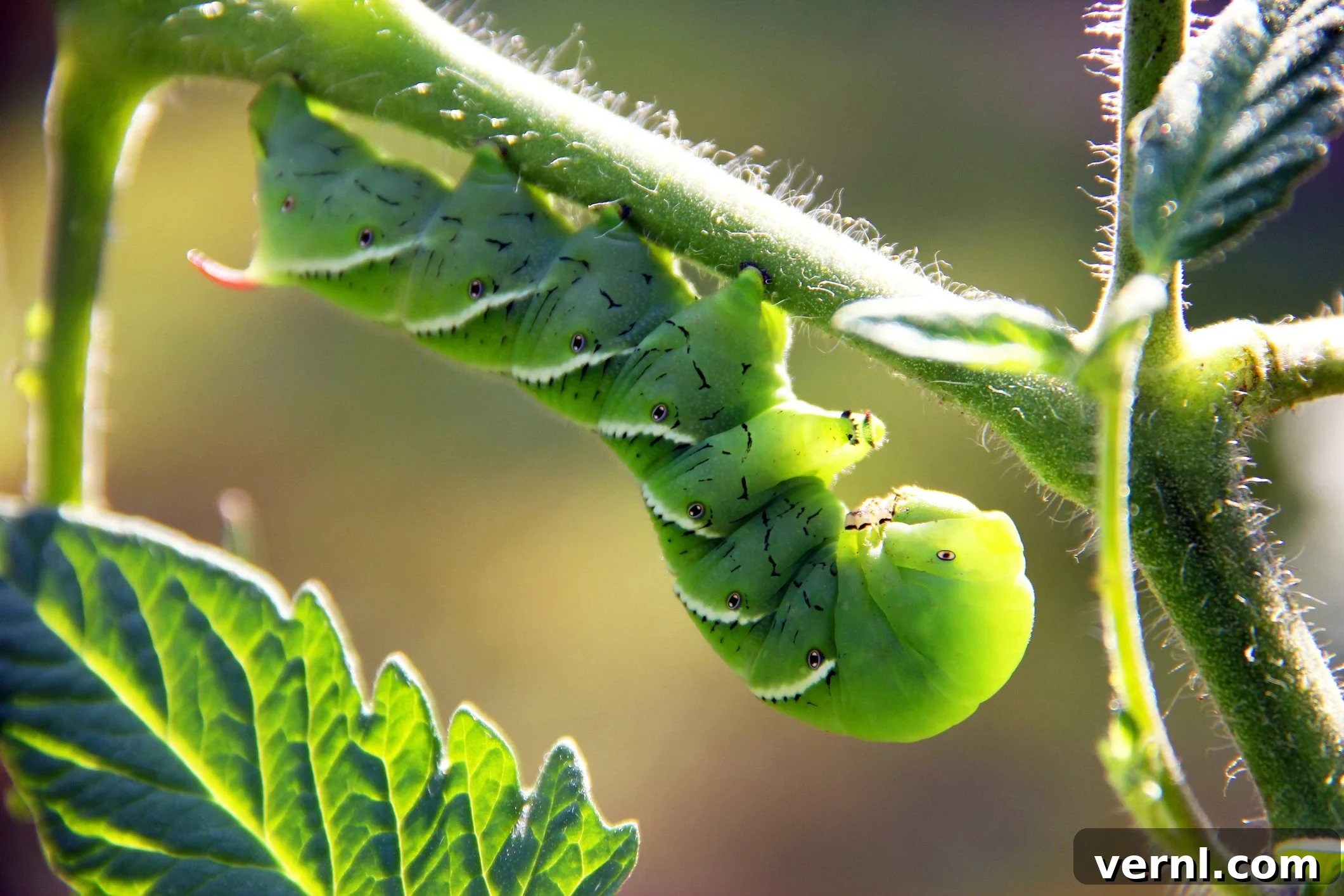
The tomato hornworm, a plump, vibrant green caterpillar with an insatiable appetite, stands as one of the most formidable adversaries for gardeners cultivating tomatoes and other prized members of the nightshade family. This includes popular crops like peppers, potatoes, and eggplants, all vulnerable to its destructive feeding habits. While these pests have, on more than one occasion, uninvitedly graced my own tomato patch, years of hands-on experience have taught me the timeless wisdom: “Know your enemy.” A deep understanding of the tomato hornworm’s fascinating yet troublesome life cycle is not merely academic; it’s the cornerstone of effective population control, safeguarding your harvest from devastating damage. My approach blends vigilance with a strong commitment to natural, sustainable methods, ranging from diligent hand-picking to strategic companion planting, all designed to deter these voracious eaters and foster a healthy, thriving garden ecosystem.
What Exactly Is a Tomato Hornworm?
Far more than just a garden nuisance, the tomato hornworm (Manduca quinquemaculata) is an intriguing insect, presenting both a significant challenge to gardeners and a captivating subject for naturalists. These impressively large caterpillars, often reaching the size of a human thumb, are instantly recognizable. Their striking bright green bodies are adorned with distinctive white, V-shaped markings that run along their sides, providing an almost perfect camouflage amidst the lush foliage of a tomato plant. Perhaps their most iconic feature is the harmless, yet prominent, horn-like tail located at the rear of their body, from which they derive their common name.
The tomato hornworm represents the larval stage of the five-spotted hawkmoth, a large, swift-flying moth. While primarily found across the northern United States, their range extends as far south as Mexico and north into southern Canada. Globally, these caterpillars or their close relatives thrive in virtually any temperate climate where nightshade family plants grow abundantly. It’s worth noting a common distinction: in the northern regions, you’re more likely to encounter the true tomato hornworm (Manduca quinquemaculata), whereas in the southern United States, its close cousin, the tobacco hornworm (Manduca sexta), is more prevalent. Despite these scientific differences, both species are typically referred to generically as “tomato hornworms” by most gardeners due to their similar appearance, destructive habits, and the types of plants they infest, with a particular affinity for your beloved tomato plants. Their remarkable camouflage and rapid growth make them particularly challenging to spot until significant damage has already occurred, highlighting the need for vigilant inspection and prompt action.
The Intricate Tomato Hornworm Life Cycle
A thorough understanding of the tomato hornworm’s fascinating and complex life cycle is paramount for any gardener aiming to protect their crops. By knowing what to look for at each stage, we gain the power to spot these creatures early, intervene effectively, and prevent them from inflicting widespread harm on our precious nightshade plants. Beyond the practical benefits of pest control, observing nature unfold in this intricate manner, even if you’re not actively growing tomatoes, offers a profound appreciation for the natural world.
The Egg Stage: The Silent Beginning
The cycle typically begins in late spring, signaling the arrival of warmer weather. Female five-spotted hawkmoths, after mating, embark on their mission to perpetuate the species. They meticulously lay small, spherical, greenish-yellow eggs, each no larger than a poppy seed, primarily on the underside of foliage belonging to nightshade plants. This strategic placement offers protection from predators and environmental elements. Although the eggs themselves pose no direct threat to your plants, this stage represents a critical window for early detection. Spotting and removing these eggs can preempt an entire generation of destructive larvae, preventing a future infestation before it ever takes hold. To find them, carefully inspect the undersides of leaves, paying close attention to areas near where the leaf joins the stem. A magnifying glass can be a useful tool for this detailed search. Upon discovery, gently rub off the eggs with your fingers, or dislodge them with a focused, gentle spray of water from your garden hose, ensuring they don’t hatch into hungry caterpillars.
The Larval Stage: The Period of Destruction
Approximately one week after being laid, the hornworm eggs hatch, unleashing tiny larvae that immediately begin their relentless feeding frenzy. This larval stage is the most destructive phase of the hornworm’s life cycle, as these caterpillars are voracious eaters, consuming vast amounts of plant material to fuel their rapid growth. During this period, they undergo five instars, or developmental stages, where they shed their old skin to accommodate their increasing size. With each molt, they grow larger and their appetite intensifies. Their vibrant green coloration provides perfect camouflage, making them incredibly difficult to spot against the backdrop of tomato leaves, which are almost the exact same shade. This “nature’s sneakiness” allows them to devastate plants seemingly overnight. Gardeners often notice the damage—stripped leaves, defoliated branches, and characteristic large, dark green droppings (known as “frass”) on the leaves or ground below—before they ever spot the caterpillars themselves. This damage can range from minor leaf munching to the complete defoliation of entire branches, severely compromising fruit production and plant vigor. Vigilant inspection for frass and defoliation is often the first clue to their presence.
The Pupal Stage: The Underground Transformation
After two to four weeks of relentlessly gorging themselves on your tomato plants, accumulating sufficient energy reserves, the fully grown larvae are ready for their next transformation. They burrow deep into the ground, often reaching depths of up to six inches in loose, sandy soils. Here, they construct protective cocoons and enter the pupal stage, where they will spend the autumn and winter months. Within these hidden cocoons, an incredible metamorphosis takes place, transforming the caterpillar into an adult moth. The cocoon, or chrysalis, of the five-spotted hawkmoth is distinctively dark red-brown in color and features a prominent hook-like structure at one end, known as a maxillary loop. This loop is actually the developing mouthparts of the adult moth, a unique identifier. During this subterranean stage, the pupae pose no direct threat to your garden plants. However, this is a crucial time for intervention. Practices like tilling the top few inches of soil in late fall or early spring can expose these overwintering cocoons to harsh weather conditions, as well as to hungry birds, ground beetles, and other natural predators who will happily feast upon them. By disrupting this stage, you effectively prevent them from metamorphosing into adult moths that would otherwise emerge to lay their eggs on your young plants, starting the destructive cycle anew. Pest control is indeed one of the key benefits I consider when deciding to lightly till my vegetable beds in both late fall and again in early spring.
The Adult Stage: The Nocturnal Pollinators
As spring progresses and temperatures rise, the adult five-spotted hawkmoths emerge from their pupal cocoons, usually at dusk. These impressive creatures boast a wingspan of up to five inches, making them quite striking. As their name suggests, they feature five distinct pairs of yellow spots running down the sides of their robust abdomens. Their wings, a blurry mix of gray and brown, provide excellent camouflage against tree bark or shadows during daylight hours when they are less active. These moths are primarily nocturnal, taking flight at twilight to feed on nectar from various flowers, acting as important pollinators for many species. They are often mistaken for hummingbirds due to their rapid, agile, and hovering flight patterns as they feed. While the adult moths themselves do not cause any direct damage to your garden plants—they are not chewing pests—their role is critical in the hornworm life cycle. The female moths are responsible for laying the eggs that will hatch into the next generation of destructive caterpillars. In warmer climates, two generations of hornworms can occur within a single growing season, meaning the threat of re-infestation is continuous until cold weather arrives to break the cycle. Understanding their flight patterns and egg-laying habits informs strategies to break this cycle effectively.
Effective Strategies: How to Get Rid of Tomato Hornworms
While tomato hornworms can undoubtedly present a significant challenge, leading to frustration and potential crop loss if left unchecked, my personal experience has consistently shown that a proactive approach, combining vigilance with proven organic and natural methods, can effectively manage their populations and protect your valuable harvest. It’s about creating a multi-faceted defense system.
Manual Removal: The First Line of Defense
Given that hornworms are remarkably large creatures once they reach their later larval stages, manual removal stands as one of the most immediate and satisfying methods of control. Because of their size, you can easily spot and pick them off your plants, provided you’re diligent. The best times for inspection and removal are typically in the early morning or late evening when these caterpillars are most active and visible. Regularly inspecting your plants and plucking off any hornworms you find can dramatically reduce their numbers and the damage they inflict. When removing them, wear gardening gloves, as their grip on the stems can be surprisingly strong. Once collected, there are several humane and effective disposal methods. I prefer to drown them in a bucket of soapy water; the soap breaks the surface tension, causing them to drown quickly. Other options include crushing them (not for the squeamish) or placing them in a sealed plastic bag and leaving it in the sun to eliminate them. Some gardeners with chickens also find their flock happily consumes these protein-rich pests.
Attract Natural Predators: Enlisting Garden Allies
Embracing biodiversity in your garden is a powerful strategy. Many creatures view the tomato hornworm as a delectable meal, and by creating a welcoming environment, you can turn your garden into a haven for these beneficial predators. Braconid wasps (specifically Cotesia congregata) are perhaps the most famous natural predators of the tomato hornworm. These tiny parasitic wasps lay their eggs on the hornworm’s back; the wasp larvae then hatch and feed internally on the hornworm before emerging to spin characteristic white, rice-like cocoons directly on the hornworm’s exterior. While the hornworm eventually perishes, seeing these cocoons means the wasps are at work, and you should leave the hornworm on the plant to allow the wasp larvae to complete their development and emerge to parasitize more hornworms. You can attract these invaluable allies by planting a variety of flowers that offer nectar and pollen, such as dill, parsley, cilantro, mustard, yarrow, and other small-flowered native plants.
Beyond wasps, insect-eating birds are incredible pest controllers. Sparrows, bluebirds, orioles, woodpeckers, and even hummingbirds will feast on hornworms and their larvae. Create a bird-friendly landscape by providing essential resources: bird feeders (especially during lean times), bird baths for water, and native shrubs and trees for cover and nesting sites. Bats, nocturnal hunters, are also fantastic allies, consuming adult hawkmoths (the parent stage of hornworms) during their night flights. Installing bat houses can encourage these flying mammals to make your garden their home. Other general predators like ladybugs, green lacewings, and ground beetles also contribute to overall garden health by preying on various pest stages, though their direct impact on large hornworms may be less pronounced.
Utilize Bacillus thuringiensis (Bt): An Organic Solution
For more widespread infestations, or when manual removal becomes too time-consuming, Bacillus thuringiensis (Bt) is an organic gardener’s best friend. Bt is a naturally occurring soil bacterium that is remarkably effective and highly specific. The strain Bacillus thuringiensis subspecies kurstaki (Bt-k) is lethal to caterpillars like the tomato hornworm but completely harmless to pets, wildlife (including birds and beneficial insects like bees), and humans. When hornworms ingest plant material sprayed with Bt, the bacterial toxins paralyze their digestive system, causing them to stop feeding and eventually die within a few days. It’s crucial to apply Bt at the first sign of an infestation, ideally when the caterpillars are still small and actively feeding. Since Bt must be ingested to be effective, thorough coverage of the plant foliage is important, especially the undersides of leaves. Reapplication may be necessary after heavy rainfall or every 7-10 days if hornworms persist, always following the product’s label instructions carefully. It’s a highly recommended tool for sustainable pest management.
Companion Planting: Basil and Beyond
Companion planting leverages the natural synergies between different plant species to deter pests and enhance overall garden health. Basil is a classic example of this. The strong, aromatic scent of basil plants is believed to mask the appealing smell of tomato plants, disorienting and effectively repelling hornworms, making it harder for the moths to locate suitable egg-laying sites. Beyond its repellent properties, growing basil near tomatoes is often credited with improving the flavor, health, and vigor of tomato plants, making it a win-win situation for your vegetable patch. Experiment with different varieties of basil to find your favorite. Other companion plants that gardeners often associate with pest deterrence (though not always specifically for hornworms) include marigolds (for nematodes and other pests), borage (attracts beneficial insects and is said to improve tomato flavor), and nasturtiums (which can act as a trap crop for aphids, drawing them away from more valuable plants).
Integrated Pest Management (IPM) for Long-Term Control
For sustainable and effective hornworm management, adopting an Integrated Pest Management (IPM) philosophy is key. IPM is a holistic approach that combines multiple strategies to control pests in an environmentally sensitive way. This includes not just the methods above, but also preventative measures. Regularly scouting your garden for signs of hornworms (frass, defoliation, eggs, or the caterpillars themselves) is critical for early intervention. Practicing good garden hygiene, such as removing plant debris in the fall where pupae might overwinter, and rotating crops, can also help reduce pest pressure over time. Physical barriers like lightweight row covers can also be used over young plants to prevent adult moths from laying eggs, though this needs to be removed once plants flower if you rely on pollinators.
By understanding the hornworm’s life cycle, diligently inspecting your plants, and strategically deploying a combination of manual removal, beneficial insect attraction, organic sprays like Bt, and companion planting, you can successfully protect your tomatoes and other nightshade crops from this formidable garden pest, ensuring a bountiful and healthy harvest year after year.