Modern vehicles are equipped with numerous features designed to enhance convenience and ease of use, and the power liftgate stands out as one of the most appreciated innovations. Whether you’re juggling a heavy load of groceries, handling luggage, or simply trying to get into your trunk during inclement weather, a smoothly functioning power liftgate can be a true game-changer. However, like all intricate mechanical and electronic systems in your vehicle, the power liftgate mechanism requires regular attention and proper maintenance to ensure its long-term functionality, safety, and reliability. Neglecting this crucial component can lead to frustrating issues such as a tailgate that becomes difficult to open, operates sluggishly, or, even worse, fails to latch securely, posing a potential safety hazard.
Debris, dirt, dust, and moisture are constant enemies of moving automotive parts. Over time, these elements can accumulate within the liftgate’s intricate components, leading to increased friction, wear, and ultimately, operational failures. A common symptom of a neglected liftgate is a tailgate that refuses to latch, leaving your cargo vulnerable and your vehicle unsecured. This comprehensive guide will walk you through the essential steps of effectively lubricating your power liftgate mechanism and provide practical troubleshooting tips for addressing a non-latching tailgate, helping you maintain this valuable feature and extend its lifespan.
Why Regular Power Liftgate Lubrication is Essential
Many vehicle owners overlook the importance of lubricating their power liftgate, assuming it’s a “set it and forget it” component. However, consistent lubrication offers a multitude of benefits that contribute significantly to the overall health and performance of your vehicle’s rear access system:
- Ensures Smooth Operation: Lubrication reduces friction between moving parts, allowing the liftgate to open and close effortlessly and quietly. This prevents grinding noises and jerky movements, enhancing the user experience.
- Extends Lifespan of Components: Reduced friction directly translates to less wear and tear on crucial parts such as hinges, latches, motors, and cables. Regular lubrication can significantly prolong the operational life of these expensive components, saving you money on premature replacements.
- Prevents Corrosion and Rust: Many high-quality lubricants, especially lithium grease, provide a protective barrier against moisture and environmental contaminants. This is vital for preventing rust and corrosion, which can severely compromise the integrity and function of metal parts.
- Maintains Security: A properly lubricated latch mechanism is a reliably functioning one. It ensures that your tailgate latches securely every time, protecting your belongings from theft and preventing the tailgate from unexpectedly opening while driving.
- Prevents Debris Buildup: While it might seem counterintuitive, a clean and lubricated surface is less likely to hold onto new dirt and debris. The smooth, greased surfaces make it harder for grime to stick, simplifying future cleaning processes.
- Avoids Costly Repairs: Proactive maintenance, such as regular lubrication, is a cost-effective way to prevent minor issues from escalating into major, expensive repairs. Addressing friction and wear early on can prevent motor strain, damaged gears, and complete mechanism failure.
Understanding the Power Liftgate Mechanism
Before diving into maintenance, it’s helpful to understand the basic components that make your power liftgate work. While variations exist between manufacturers, most systems include:
- Hinges: These allow the tailgate to pivot open and closed. They bear the weight of the tailgate and are crucial for smooth movement.
- Actuators/Motors: These are the power units responsible for the automatic opening and closing action. They typically use electric motors to drive arms, cables, or gears.
- Latches and Strikers: The latch mechanism secures the tailgate to the vehicle body, preventing it from opening when closed. The striker is the fixed component on the vehicle body that the latch hooks onto.
- Gas Struts: Often present to assist in lifting and holding the tailgate in the open position, especially on manual or semi-powered systems.
- Sensors and Control Modules: These electronic components detect obstructions, monitor tailgate position, and manage the automatic operation. While lubrication targets mechanical parts, these electronics govern the overall function.
Our focus for lubrication will primarily be on the mechanical moving parts: the hinges, the latch mechanism, and any visible pivot points.
Lubricating the Tailgate Mechanism: A Step-by-Step Guide
Performing this maintenance task is straightforward and requires only a few basic tools. Dedicating a small amount of time to this will ensure your power liftgate continues to operate smoothly and reliably for years to come.
Materials Needed:
- Socket Set: Essential for safely removing various panels and potentially brackets to access the internal mechanism.
- Spray Lithium Grease: This is the recommended lubricant for automotive latches and hinges due to its excellent adhesion, water resistance, and ability to withstand temperature fluctuations and heavy loads. It comes with a straw attachment for precise application.
- Compressed Air (Optional but Recommended): Highly effective for dislodging loose dirt, dust, and debris from tight spaces within the mechanism before lubrication.
- Clean Rags/Microfiber Cloths: For wiping away old grease, dirt, and any excess new lubricant.
- Small Brush (e.g., old toothbrush) or Detail Brush: Useful for scrubbing away stubborn grime.
- Safety Glasses and Gloves: Always recommended for personal protection when working with tools and chemicals.
Step-by-Step Guide:
- Prepare and Access the Mechanism:
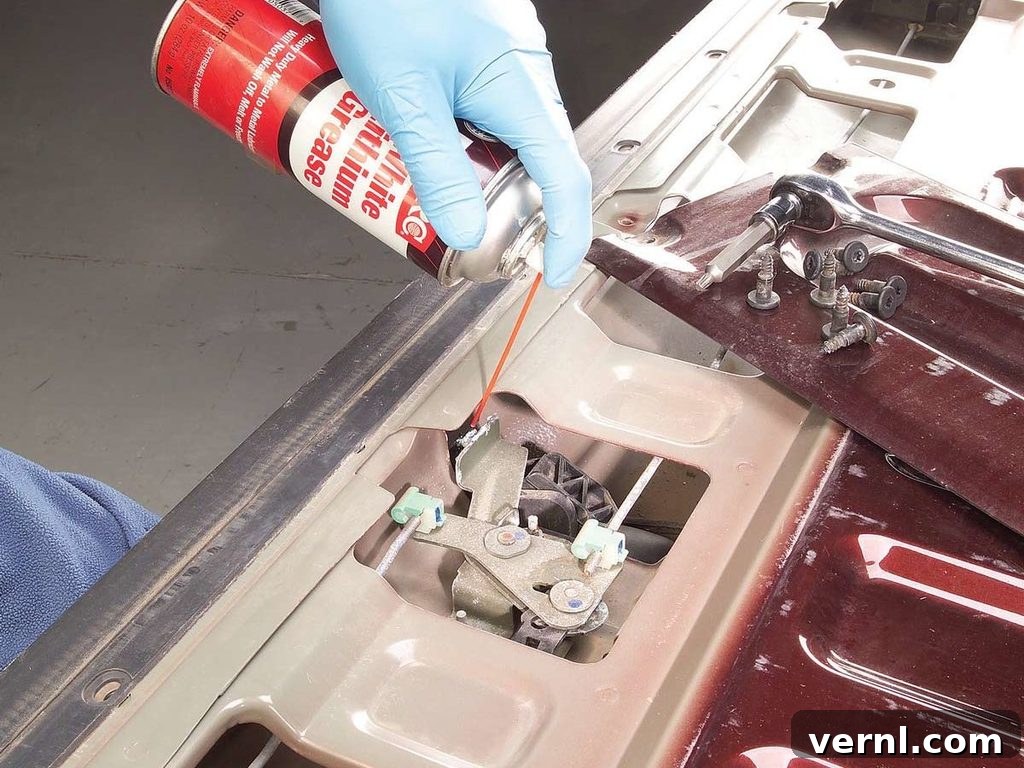
Begin by ensuring your vehicle is safely parked on a level surface. Open the tailgate fully to gain better access. The liftgate mechanism is typically hidden behind an interior access panel on the tailgate itself. If your vehicle has a bed liner, you may first need to remove the section of the liner that covers the tailgate to reveal this panel. Use your socket set to carefully remove the screws, bolts, or clips securing the access panel. Take care to keep track of all fasteners to ensure proper reassembly. Gently pry off the panel, being mindful of any electrical connectors attached to it (for lights or other features) and disconnecting them if necessary for full panel removal.
- Thoroughly Clean the Lock and Latch Mechanism:
Before applying any new lubricant, it is absolutely critical to clean the mechanism thoroughly. Applying grease over existing dirt and grime will only trap those contaminants, accelerating wear rather than preventing it. Start by using compressed air to blow off any loose debris, dust, and accumulated dirt from the entire lock and latch assembly. Pay close attention to the cam/lever area, springs, pivot points, and the striker opening. For stubborn grime or old, gummy grease, use a small brush (like an old toothbrush) and a clean rag to scrub and wipe away the residue. If necessary, a mild automotive degreaser sparingly applied to a rag can help clean particularly stubborn deposits, but ensure it doesn’t get into electrical components. The goal is to have a visibly clean mechanism ready for fresh lubrication.
- Apply Lithium Grease to Key Areas:
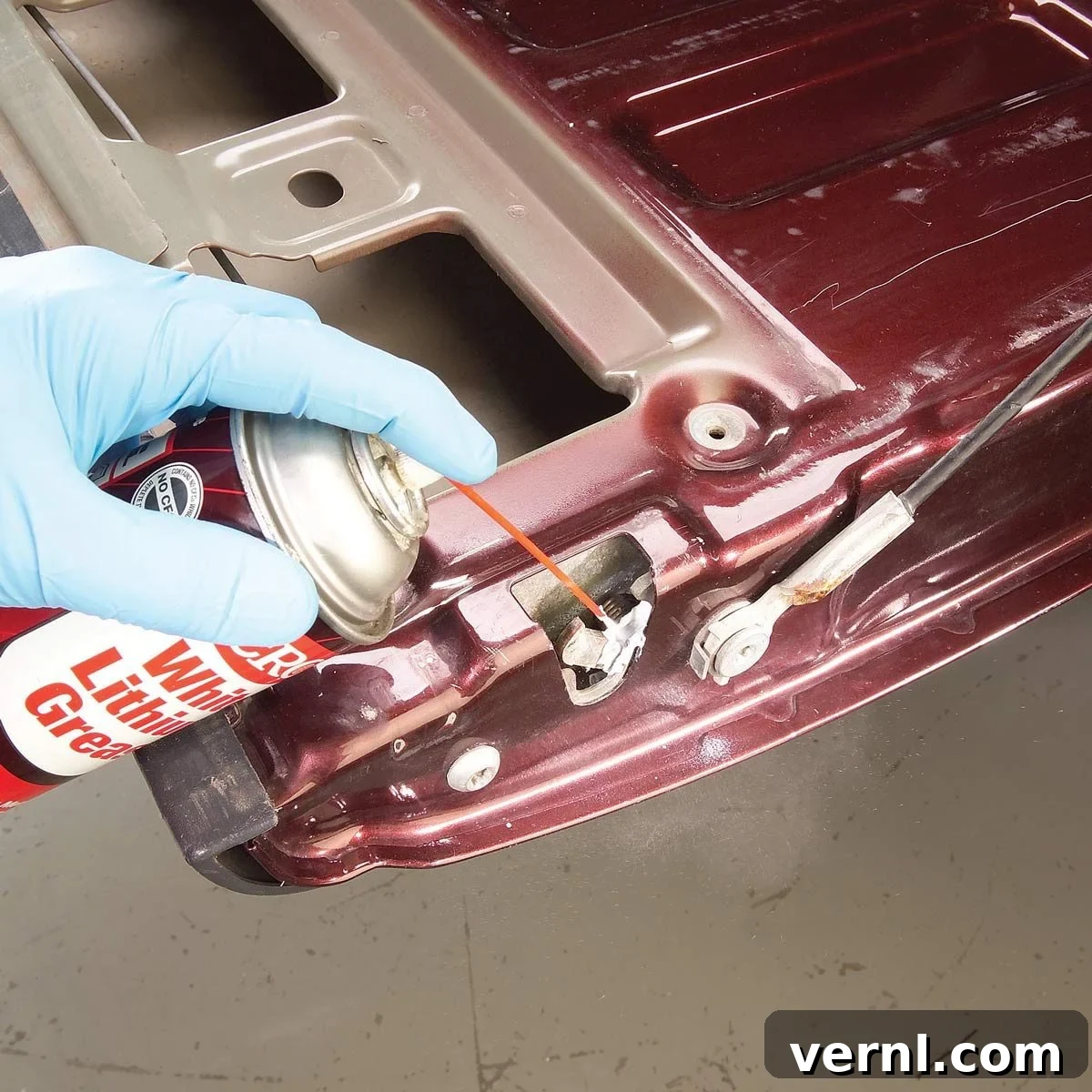
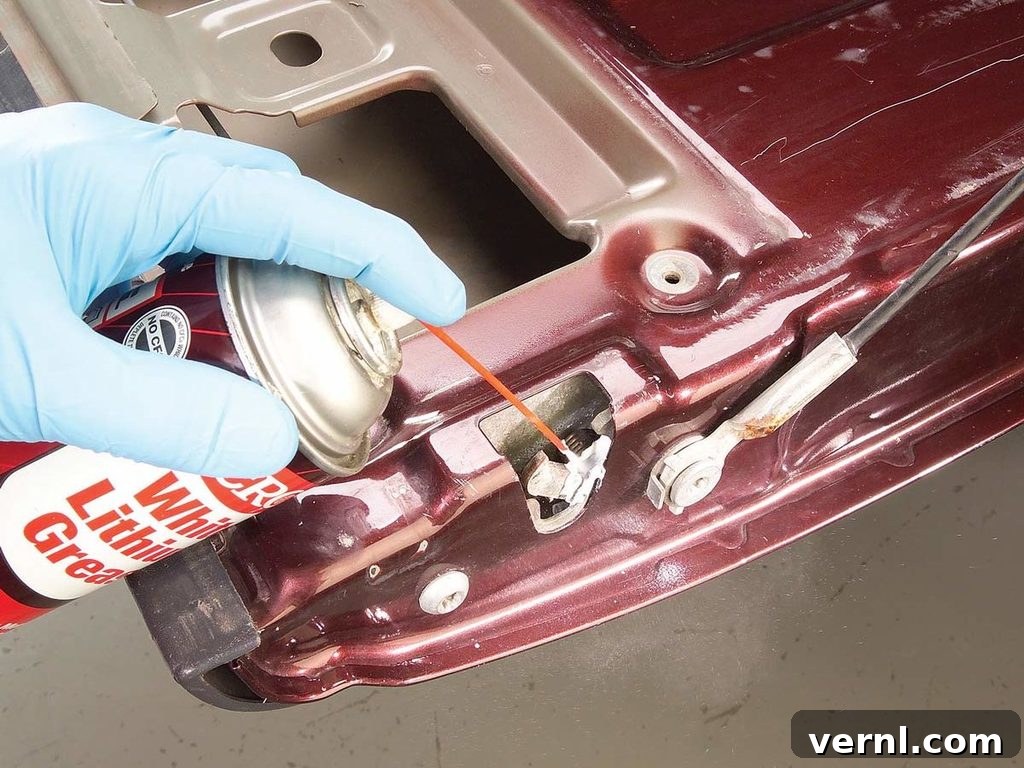
Now, with a clean mechanism, it’s time to apply the spray lithium grease. Attach the straw applicator to the can for precise targeting. Generously coat the cam/lever area of the latch mechanism. This is where the primary locking and unlocking action occurs. Extend the application to all visible pivot points, hinges (both at the tailgate and potentially where the liftgate arms connect), and any sliding surfaces where metal-on-metal contact happens during operation. Don’t forget the striker bolt area on the vehicle body; a thin coat here can also aid in smooth latching. The lithium grease not only provides superior lubrication but also creates a durable protective layer that helps repel future dirt and moisture buildup.
- Work in the Grease and Re-lubricate:
Once the grease has been applied, it’s essential to work it into all the moving parts. Operate the tailgate handle several times – opening and closing the tailgate manually (if possible) or cycling the power liftgate function. This action helps distribute the grease evenly throughout the entire mechanism, ensuring full coverage and penetration into tight spaces. You should immediately notice a smoother, quieter operation. After cycling the tailgate a few times, apply another lighter coat of grease to reinforce the lubrication, especially to any areas that might have been missed or where the initial application was absorbed. Continue cycling until the movement feels consistently smooth and effortless.
- Reassemble the Tailgate and Final Check:
Once you are satisfied with the lubrication and smooth operation, it’s time to reassemble. Carefully place the access panel back into position, ensuring all alignment clips or tabs are correctly seated. Reconnect any electrical connectors that were detached. Secure the panel using all the screws, bolts, or clips that were removed, tightening them appropriately without overtightening, which could strip threads or damage plastic. If a bed liner section was removed, reinstall it now. Finally, perform several full open and close cycles of your power liftgate to ensure everything is functioning correctly and securely. Listen for any unusual noises and confirm that the tailgate latches firmly every single time.
Troubleshooting a Tailgate That Won’t Latch Securely
Even after thorough lubrication, you might still encounter a situation where your tailgate doesn’t latch properly. This can be frustrating and poses a significant security risk. Here’s a systematic approach to troubleshooting the issue:
1. Re-evaluate the Cleaning and Lubrication:
The most common culprit for a non-latching tailgate, even after initial maintenance, is often residual debris. Go back through the lubrication steps mentioned above, but focus even more intensely on the cleaning phase. Use a flashlight to inspect every nook and cranny of the lock and latch mechanisms. Sometimes, a tiny piece of gravel, a leaf stem, or hardened old grease can prevent the latch pawl from fully engaging with the striker. Use compressed air, a small brush, and a degreaser if necessary to ensure absolutely no obstruction remains.
2. Inspect for Visible Obstructions or Damage:
Once cleaning is verified, perform a detailed visual inspection for physical issues:
- Striker Alignment: Look at the striker plate on the vehicle’s body. Is it bent, loose, or misaligned? Even a slight bend can prevent the latch from grabbing it properly.
- Latch Components: Inspect the latch mechanism itself for any bent, broken, or severely worn components. Are the springs intact and functioning? Does the latch pawl move freely?
- Tailgate Alignment: Is the entire tailgate sitting squarely with the vehicle body when closed? If it’s sagging or misaligned, it might not be making proper contact with the striker. This could indicate worn hinges or other structural issues.
- Cable/Rod Damage: For some latches, internal cables or rods connect the handle to the latch. Check these for looseness, stretching, or disconnection.
3. Consider Adjustment (Professional Recommendation):
Some tailgate striker plates are adjustable. If you’ve ruled out debris and damage, and the tailgate appears slightly misaligned, adjusting the striker might solve the problem. However, this often requires specific tools and knowledge to ensure proper alignment, which is critical for both security and preventing further damage. It’s generally best to consult a professional mechanic for striker adjustments, as improper adjustment can lead to a tailgate that is either too loose or too difficult to close.
4. Potential Electrical Issues (for Power Liftgates):
Since you have a power liftgate, electrical components can also play a role. If the tailgate attempts to close but then reopens, or stops mid-cycle, there could be an issue with:
- Sensors: Obstruction sensors (which prevent the tailgate from closing on an object) might be faulty or overly sensitive, causing the tailgate to think there’s an obstruction when there isn’t.
- Motor/Actuator: The motor driving the liftgate might be weak, failing, or receiving insufficient power.
- Wiring: Damaged or corroded wiring can interrupt signals to the liftgate’s control module.
Diagnosing electrical issues requires specialized equipment and expertise. If cleaning and lubrication haven’t resolved the non-latching issue, and you suspect an electrical problem, it’s a clear sign to seek professional help.
When to Consult a Professional Mechanic
While many liftgate issues can be resolved with DIY maintenance, it’s important to recognize when a problem extends beyond your capabilities. You should consult a professional mechanic if:
- The tailgate still won’t latch securely after thorough cleaning and lubrication.
- You notice visible damage to the latch, hinges, or surrounding bodywork.
- The power liftgate motor sounds strained, grinds, or completely fails to operate.
- The tailgate opens or closes inconsistently, despite no visible obstructions.
- You suspect an electrical fault with the sensors, wiring, or control module.
- You are uncomfortable with diagnosing or repairing complex mechanical or electrical components.
A professional mechanic has the specialized tools, diagnostic equipment, and experience to accurately identify and repair underlying issues, ensuring your vehicle’s safety and functionality.
Preventative Maintenance Schedule
To keep your power liftgate in optimal condition, establish a regular maintenance schedule. A good rule of thumb is to:
- Inspect and Clean Annually: At least once a year, or every 12,000 to 15,000 miles, thoroughly inspect and clean the liftgate mechanism, even if it seems to be working fine. This helps catch minor issues before they become major problems.
- Lubricate Bi-Annually or as Needed: Apply fresh lubricant to the moving parts every six months, especially if you live in a dusty environment, frequently use the liftgate, or notice any signs of stiffness or noise during operation.
- Address Issues Promptly: Don’t ignore minor squeaks, groans, or slight hesitations. These are often early warning signs that the mechanism needs attention.
Safety Precautions During Maintenance
Always prioritize safety when working on your vehicle:
- Wear Protective Gear: Safety glasses and gloves are recommended when dealing with cleaners, lubricants, and tools.
- Vehicle Stability: Ensure your vehicle is parked on a level surface with the parking brake engaged.
- Avoid Pinch Points: Be mindful of moving parts of the liftgate. Keep hands and fingers clear when opening, closing, or testing the mechanism.
- Electrical Safety: If you need to access areas with wiring, consider disconnecting the vehicle’s battery to prevent accidental shorts or activation, especially when dealing with power liftgates.
Conclusion
Your vehicle’s power liftgate is a sophisticated system designed for convenience, but it is not immune to wear and tear. Despite their sturdy appearance, tailgate mechanisms, like all moving parts of a vehicle, require regular preventative maintenance to ensure they remain functional, secure, and reliable. By consistently checking, cleaning, and lubricating the mechanical components, you can significantly reduce friction, prevent premature wear, and fend off issues like debris buildup and corrosion. This proactive approach not only ensures a smooth and effortless operation every time you access your cargo space but also helps in extending the overall lifespan of this valuable automotive feature, saving you from potentially costly repairs down the line.
Should you perform all recommended maintenance steps and still encounter persistent problems such as a stubborn non-latching tailgate, unusual noises, or inconsistent power operation, it is always best to consult a professional mechanic. Expert diagnosis is crucial for complex mechanical or electrical failures that fall outside the scope of basic DIY care. Prioritizing proper maintenance and seeking professional assistance when necessary will ensure your vehicle’s power liftgate continues to serve you reliably, enhancing both your convenience and your vehicle’s safety and longevity for years to come.