
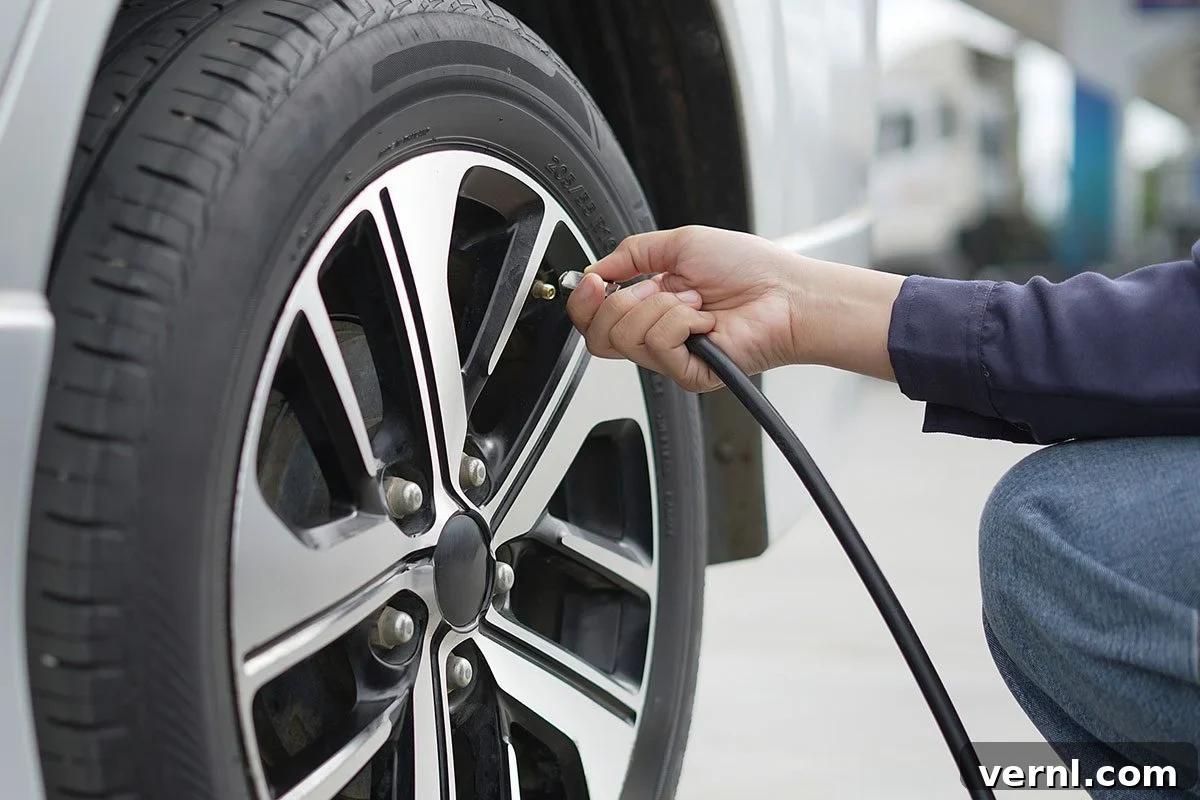
Nitrogen in Tires: Is It Worth the Hype? The Pros, Cons, and Expert Opinions
Let’s talk tires. As someone deeply involved in the automotive world for decades, I’ve seen countless trends come and go. One topic that consistently sparks debate is the use of nitrogen to inflate tires. I consider the brakes, steering/suspension, and the tires to be the trifecta of car safety, and I never compromise on their maintenance.
My own experience led me to question the real benefits of nitrogen. When the tires on my SUV started showing signs of dry rot, the manufacturer kindly replaced them under warranty. The tire shop suggested filling the new tires with nitrogen, claiming it would prevent future dry rot. I was also encouraged to purchase new tire valves and a road hazard warranty. Since the tires themselves were free, I agreed to the nitrogen fill for a small fee.
Unfortunately, life happened, and my SUV sat mostly unused for the next few years. Despite the nitrogen, the replacement tires developed dry rot again, and were once again replaced under warranty. In my personal test, nitrogen proved ineffective. This experience prompted me to delve deeper: Is nitrogen in tires truly beneficial, or is it merely an unnecessary add-on? Let’s explore the facts and myths surrounding nitrogen tire inflation, with insights from industry experts.
The Claimed Benefits of Nitrogen in Tires
The primary selling points for nitrogen tire inflation are fairly straightforward and compelling at first glance:
- Consistent Tire Pressure: Nitrogen is touted to maintain more stable tire pressure, even with seasonal temperature fluctuations. This is because nitrogen expands and contracts less than standard compressed air when subjected to temperature changes.
- Improved Fuel Economy: By maintaining optimal tire pressure, nitrogen is said to enhance fuel efficiency. Under-inflated tires increase rolling resistance, forcing the engine to work harder and burn more fuel.
- Extended Tire Life: Nitrogen proponents claim that its use can prolong tire lifespan by minimizing pressure loss and reducing internal corrosion.
- Enhanced Driving Safety: Consistent tire pressure contributes to better handling, braking, and overall vehicle stability, resulting in safer driving conditions.
Jim DeLeo, of Hunter Engineering Company, explains the scientific basis behind these claims: “Nitrogen molecules are larger than oxygen molecules, so in theory, the larger nitrogen molecules are supposed to leak more slowly. Nitrogen also does not contain moisture, which supposedly reduces corrosion and oxidation inside the tire and wheel.”
What Does the Science Say? Debunking the Myths
While the theoretical benefits of nitrogen sound promising, what does the actual scientific evidence reveal? It turns out the advantages, while potentially real, are often minimal in real-world driving situations.
William Fletcher from car.com.uk offers a pragmatic perspective: “Nitrogen used in service garages, as is regular shop compressed air, is usually filtered and dry, but still in regular driving, the difference [in overall tire performance] is very slight.”
Several independent tests and studies have examined the effectiveness of nitrogen tire inflation. Here’s a summary of their key findings:
- Consumer Reports: A 12-month test involving 31 nitrogen-filled tires showed they lost an average of 2.2 psi (pounds per square inch), compared to 3.5 psi lost by tires filled with regular air. This translates to a difference of only 1.3 psi over an entire year. The report concluded that both nitrogen and air-filled tires lose pressure over time, and that routine tire pressure checks are crucial, regardless of the inflation gas used.
- National Highway Traffic Safety Administration (NHTSA): NHTSA’s research indicated that nitrogen can slightly slow pressure loss and reduce oxidation within the tire. However, they emphasized that this reduction is not substantial enough to significantly impact tire life or rolling resistance in practical applications. The report also pointed out that even minor contamination of the nitrogen with compressed air during pressure maintenance could negate any potential benefits.
- AAA Testing: AAA’s testing demonstrated that nitrogen-filled tires do not eliminate temperature-related pressure changes and do not make tires maintenance-free. Their conclusion was that nitrogen offers minimal benefits to vehicle owners who already maintain their tires properly.
- The Purity Factor: Jim DeLeo makes an important point: “If you understand that air is already 78 percent nitrogen, and it’s virtually impossible to evacuate all of the air from a tire assembly. That makes it impractical to try filling a tire with 100 percent pure nitrogen. Mixing air and nitrogen is safe, it just reduces the nitrogen’s purity and any of the small benefits that may come with it.” DeLeo also noted that nitrogen protects the *inside* of the tire, but dry rot is largely caused by external factors like heat, cold, UV rays, ozone, harsh chemicals, road salts, and prolonged inactivity.
When Does Nitrogen Make Sense? Niche Applications
While the benefits for everyday drivers may be debatable, nitrogen tire inflation does have legitimate applications in specific situations:
- Racing Cars: Racing teams have long used nitrogen in their tires. The primary reason is its stability under extreme temperature fluctuations experienced during high-speed racing. Nitrogen’s inert nature (it doesn’t support combustion) is another safety factor.
- Commercial Fleets: Large commercial fleets, like trucking companies and delivery services, can potentially realize significant cost savings by using nitrogen. While the individual benefit per vehicle may be small, it adds up when multiplied across hundreds or thousands of vehicles. These savings can come from slightly improved fuel economy and potentially longer tire life.
- Negligent Tire Maintenance: If you are someone who rarely checks their tire pressure and relies solely on the tire pressure monitoring system (TPMS) light, then nitrogen might offer a slight advantage. However, this is not a substitute for regular maintenance.
When Nitrogen Probably Isn’t Worth It: The Bottom Line
For the vast majority of drivers who routinely check and maintain their tire pressure, the added cost of nitrogen inflation is unlikely to be justified. The difference in air pressure loss between nitrogen and compressed air is typically insignificant when tires are properly maintained.
Here’s a recap of the reasons why nitrogen might not be worth the investment:
- Minimal Fuel Economy Improvement: Tests consistently show that nitrogen does not substantially improve fuel economy when tire pressures are properly maintained.
- No Protection Against Damage: Nitrogen does not prevent punctures, major leaks, or valve stem issues. William Fletcher emphasizes that “both gases will leak equally” in these situations.
- Limited Impact on Tire Life: Under normal driving conditions, nitrogen does not typically increase tire lifespan to a significant degree.
- Cost vs. Benefit: As Tire Rack aptly puts it, “Rather than pay extra for nitrogen, most drivers would be better off buying an accurate tire pressure gauge and checking and adjusting their tire pressures regularly.”
Frequently Asked Questions (FAQ) About Nitrogen in Tires
How do I know if my tires can be filled with nitrogen?
According to Jim DeLeo, “Any modern tubeless tire can be filled with nitrogen.” Modern tires are manufactured to tighter tolerances, making it more difficult for both nitrogen and air to seep through the rubber. To switch to nitrogen, the tire shop will need to purge the tires by inflating and deflating them with nitrogen multiple times to achieve a purity level of 95% or higher. While not mandatory, green valve stem caps (often with an N2 logo) are commonly used to indicate nitrogen-filled tires.
Is nitrogen environmentally better?
Not significantly. The air we breathe already consists of approximately 78% nitrogen and is essential for life on Earth. Nitrogen also plays a vital role in agriculture as a fertilizer. However, nitrogen oxides (NOx), a byproduct of combustion, are harmful air pollutants. William Fletcher points out that “properly inflated tires can increase fuel economy, reducing emissions (smog) over time,” which indirectly benefits the environment.
Meet the Experts
- Jim DeLeo is the Northeast Division Manager for Hunter Engineering Company.
- William Fletcher MBE (Order of the British Empire) is the CEO of Car.co.uk, a UK-based online car-selling and automotive services platform.
Further Reading and Resources
- AAA Automotive: “Top 4 Myths Vs Facts About Using Nitrogen To Inflate Car Tires”
- Biology Insights: “Is Nitrogen Good or Bad for the Environment and Your Health?”
- Car Buzz: “Nitrogen In Tires: Understanding The Benefits”
- Consumer Reports: “Should You Use Nitrogen in Your Car Tires?”
- NHTSA: “Use of Nitrogen Gas in Tires”
- Tire Rack: “Should I Use Nitrogen In My Tires?”