
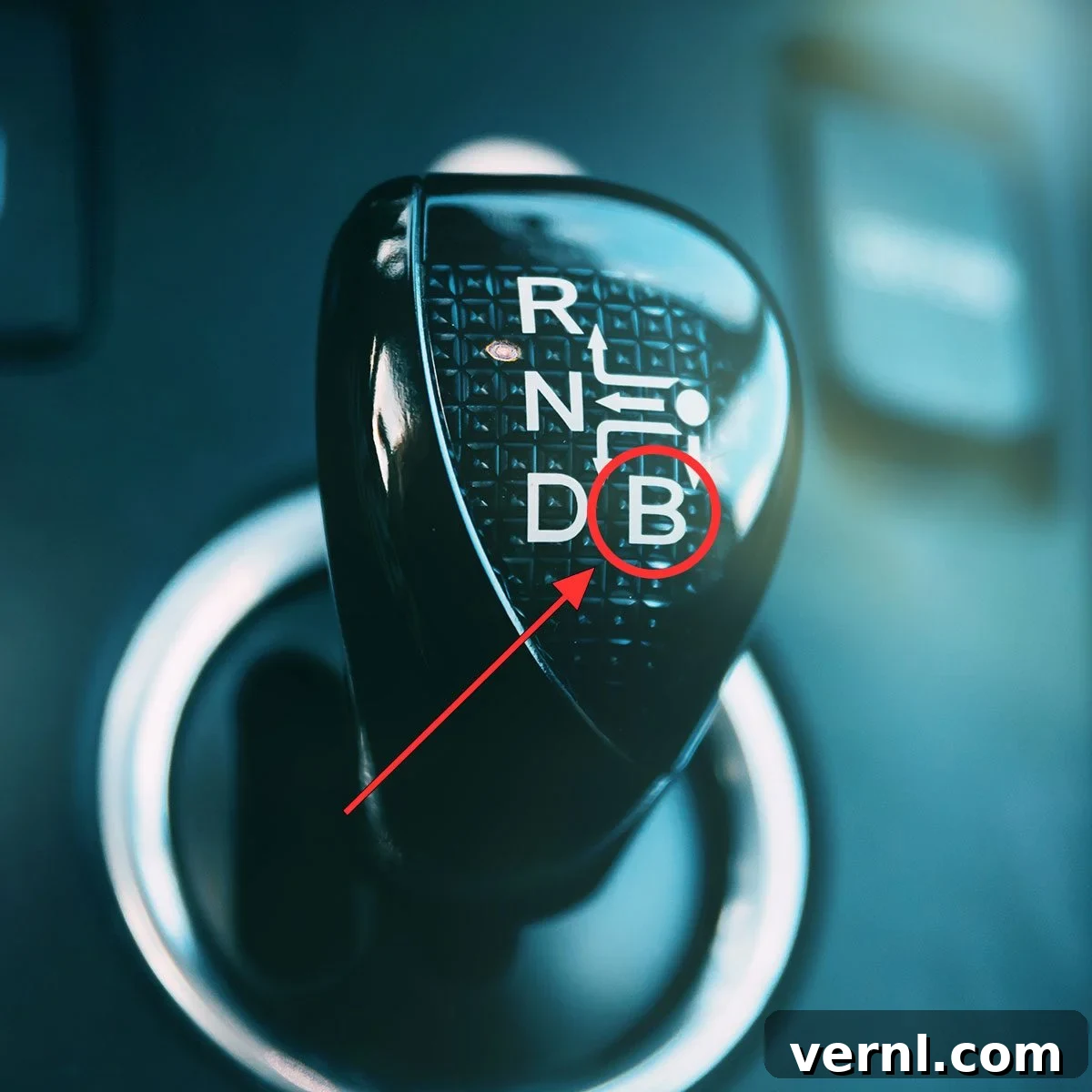
The intricate mechanisms of modern vehicles often hide in plain sight, and few components are as routinely used yet as misunderstood as the gear shifter. While many drivers assume all cars operate on identical principles when it comes to transmission settings, this common misconception can lead to missing out on advanced features designed for efficiency, safety, and performance. Standard settings like Park, Reverse, Neutral, and Drive are universal, but delve deeper, especially into the world of hybrid vehicles, and you’ll encounter specialized options. Among these, the ‘B’ setting on your gear shift stands out as a particularly intriguing and beneficial mode, often unfamiliar to those accustomed to conventional gasoline cars. This article aims to demystify the ‘B’ mode, exploring its purpose, its unique differences from standard low gears, and crucially, when and how to leverage it for an optimized driving experience.
Decoding the Dashboard: A Guide to Your Gear Shift Letters
Before diving into the specifics of the ‘B’ mode, it’s essential to have a solid understanding of the more common letters found on virtually every automatic transmission gear shift. These foundational settings dictate your vehicle’s primary operational state and are critical for safe and effective driving.
P for Park: The Ultimate Security Lock
The ‘P’ position is universally understood as Park. When engaged, it mechanically locks the transmission, preventing the vehicle from moving. This is not just a convenience but a vital safety feature, particularly when parking on an incline or when leaving the vehicle unattended. Always ensure your vehicle is in Park before turning off the ignition, and ideally, engage the parking brake as an additional layer of security. Relying solely on the ‘P’ setting, especially on steep grades, can put undue stress on your transmission components over time.
R for Reverse: Backward Motion, Forward Thinking
As its name suggests, ‘R’ stands for Reverse. Selecting this gear engages the transmission to move the vehicle backward. Modern cars often combine this with rear-view cameras and parking sensors, transforming what was once a challenging maneuver into a straightforward task. Always exercise caution and check your surroundings thoroughly when backing up, as blind spots can still pose risks.
N for Neutral: Disconnected and Free-Wheeling
‘N’ signifies Neutral, a state where the engine is disconnected from the transmission, allowing the wheels to spin freely. While the engine might still be running, no power is being transmitted to the drive wheels. This mode is typically used for short stops where you don’t need to engage Park, such as at a train crossing, or when your car needs to be pushed or towed. However, it’s generally advised against coasting in neutral down hills, as it eliminates engine braking capabilities and can make the car harder to control, potentially increasing wear on your friction brakes.
D for Drive: The Standard Forward Motion
The ‘D’ setting, for Drive, is your primary mode for forward motion. In an automatic transmission, once ‘D’ is selected, the vehicle automatically shifts through its various forward gears as you accelerate and decelerate, optimizing for a balance of power and fuel efficiency. This is the default setting for most everyday driving scenarios.
Beyond D: Understanding Lower Gear Options (D1, D2, D3, L)
Many automatic transmissions offer additional “lower” gear selections, often labeled as D1, D2, D3, or simply ‘L’ for Low. These settings are designed to keep the transmission in a lower gear ratio, preventing it from automatically shifting into higher gears. This serves several crucial purposes:
- Engine Braking: When descending steep hills, engaging a lower gear allows the engine to assist in slowing the vehicle down, reducing reliance on the friction brakes. This prevents the brakes from overheating and experiencing “fade,” where their effectiveness diminishes.
- Increased Torque: In situations requiring maximum power at lower speeds, such as climbing a steep incline with a heavy load or traversing challenging off-road terrain, lower gears provide increased torque to the drive wheels.
- Adverse Conditions: On slippery surfaces like snow or ice, starting in a lower gear can help prevent wheel spin by providing less aggressive acceleration.
Unlike a manual transmission, where the driver manually selects each gear, automatic vehicles manage most of this for you. However, these lower gear options offer drivers a degree of control, allowing them to override the automatic shifting logic when specific driving conditions demand it.
Unveiling the “B” Mode: A Hybrid-Specific Innovation
While the concept of engine braking via lower gears is familiar in conventional internal combustion engine (ICE) vehicles, hybrid cars introduce a sophisticated evolution of this principle through the ‘B’ mode. This setting, often found exclusively in hybrid and sometimes electric vehicles, capitalizes on the unique powertrain architecture to achieve both deceleration and energy recovery.
What Does “B” Stand For? Brake or Engine Braking Mode with a Hybrid Twist
Leading hybrid manufacturers like Toyota explicitly state that ‘B’ stands for “Brake” or “Engine Braking mode.” However, it’s crucial to understand that in a hybrid, this isn’t just about using the engine’s resistance to slow down. Instead, it “increases regenerative braking, which slows the vehicle down while recharging the hybrid battery.” This distinction is key: conventional engine braking converts kinetic energy primarily into wasted heat, whereas ‘B’ mode in a hybrid actively converts that kinetic energy back into usable electrical energy, stored in the battery.
The Dual Objectives of B Mode
The introduction of the ‘B’ mode serves two primary, interconnected goals:
- Reduce Wear on Your Brake Pads: By using the electric motor (and sometimes the internal combustion engine) to decelerate the vehicle, the ‘B’ mode lessens the workload on the conventional friction brakes. This significantly extends the lifespan of brake pads and rotors, leading to reduced maintenance costs over the vehicle’s lifetime.
- Conserve Energy that Would Otherwise Be Lost When Decelerating: In any vehicle, braking converts kinetic energy into heat. The genius of hybrid technology, particularly in ‘B’ mode, lies in its ability to capture a substantial portion of this energy during deceleration and convert it back into electricity, which is then stored in the hybrid battery. This energy would otherwise be completely wasted as heat, representing a significant gain in overall energy efficiency.
Essentially, ‘B’ mode transforms your vehicle’s deceleration process from an energy-wasting event into an energy-harvesting opportunity, a cornerstone of hybrid vehicle efficiency.
The Mechanics Behind B Mode: How It Works
To fully appreciate the ‘B’ mode, it helps to understand the underlying principles of regenerative braking, which is at the heart of its operation. When you engage ‘B’ mode or even lightly press the brake pedal in a hybrid, a sophisticated process unfolds:
- Electric Motor as a Generator: The electric motor, which typically propels the car, reverses its function and acts as a generator. Instead of drawing power from the battery to turn the wheels, the momentum of the spinning wheels forces the motor to turn, generating electricity.
- Increased Resistance: This act of generating electricity creates electromagnetic resistance, which actively slows the vehicle down. The more aggressively the system generates electricity (as is the case in ‘B’ mode), the stronger this deceleration effect becomes.
- Energy Conversion and Storage: The electricity generated by the motor is then sent back to the hybrid battery, recharging it. This process efficiently converts the vehicle’s kinetic (motion) energy into electrical energy, ready to be used later for acceleration or electric-only driving.
- Complementary to Friction Brakes: While ‘B’ mode provides significant slowing, it doesn’t entirely replace the friction brakes. If stronger deceleration is required, or if the battery is fully charged and cannot accept more energy, the conventional friction brakes will seamlessly engage to provide additional stopping power. The blending of regenerative and friction braking is a hallmark of hybrid systems.
For the driver, engaging ‘B’ mode often feels like a stronger, more pronounced engine braking effect compared to standard ‘D’ mode, even without touching the brake pedal. It allows for a one-pedal-like driving experience in certain situations, where simply lifting off the accelerator initiates a noticeable deceleration.
Key Benefits of Utilizing B Mode in Your Hybrid
Beyond the core objectives, the practical advantages of integrating ‘B’ mode into your driving habits are numerous, contributing to a more economical, safer, and enjoyable experience.
1. Maximized Energy Efficiency and Battery Recharging
The most compelling benefit of ‘B’ mode is its role in enhancing fuel efficiency. By actively capturing energy during deceleration, it reduces the amount of fuel the engine needs to consume to recharge the battery or to provide power later. This translates directly into more miles per gallon and can extend the vehicle’s electric-only driving range in suitable conditions. For urban driving, where stop-and-go traffic is common, ‘B’ mode becomes an invaluable tool for continuous energy recovery.
2. Extended Brake Pad and Rotor Life
Conventional braking relies purely on friction, which wears down brake pads and rotors. ‘B’ mode, by employing regenerative braking as the primary means of deceleration, significantly reduces the mechanical stress on these components. Drivers who frequently use ‘B’ mode often find their brake pads last much longer than those in conventional vehicles, leading to substantial savings on maintenance costs and reducing the frequency of brake replacements.
3. Enhanced Vehicle Control, Especially Downhill
Similar to engine braking in conventional cars, ‘B’ mode offers superior control when descending steep grades. Honda, another manufacturer incorporating this mode, notes that ‘B’ mode “increases the deceleration effect of lifting up on the accelerator, reducing the need to apply the brakes.” This helps prevent brake fade – a dangerous condition where prolonged braking causes the brakes to overheat and lose effectiveness. By maintaining a more consistent speed without constant pedal input, ‘B’ mode contributes to safer driving in mountainous or hilly terrain.
4. Improved Driving Experience in Specific Conditions
For drivers who prefer a more engaged driving feel, or those navigating heavy traffic, ‘B’ mode can offer a smoother, less fatiguing experience. The strong deceleration allows for more “one-pedal” driving, where you can modulate speed largely with the accelerator pedal alone, only resorting to the brake pedal for complete stops or emergencies. This can make stop-and-go driving less arduous and more intuitive.
When and Where to Engage B Mode: Practical Applications
Understanding the “how” and “why” of ‘B’ mode is crucial, but knowing “when” to use it is equally important. While it offers numerous advantages, it’s not a mode designed for all driving situations.
1. Descending Steep Hills and Mountain Passes
This is arguably the most critical application for ‘B’ mode. When driving downhill, especially on long or steep inclines, gravity naturally wants to accelerate your vehicle. Without engine braking, you’d be forced to constantly ride your friction brakes, leading to overheating, brake fade, and potential loss of stopping power. Engaging ‘B’ mode provides sustained, controlled deceleration, keeping your speed in check and your brakes cool and ready for emergency stops. This is safer and significantly reduces brake wear.
2. Navigating Stop-and-Go Traffic
In urban environments characterized by frequent acceleration and deceleration, ‘B’ mode excels. Each time you lift off the accelerator, the system regenerates energy, topping up your battery. This continuous cycle of energy recovery makes your hybrid significantly more efficient in heavy traffic, maximizing the benefits of its electric powertrain.
3. Towing with a Hybrid (If Your Vehicle is Capable)
Toyota points out that “B mode can offer additional control and braking assistance when descending with a load.” When towing a trailer or carrying a heavy load, the vehicle’s overall mass increases, requiring more effort to slow down. ‘B’ mode provides valuable supplementary braking power, reducing the strain on both your vehicle’s brakes and the towing vehicle’s powertrain. Always consult your owner’s manual to confirm your hybrid’s towing capacity and recommended practices.
4. Approaching Traffic Lights or Known Stopping Points
Proactive drivers can use ‘B’ mode to their advantage by engaging it when they anticipate a stop, such as approaching a red light or a busy intersection. Instead of coasting and then braking hard, ‘B’ mode allows for a more gradual, controlled deceleration that simultaneously recharges the battery, optimizing energy capture.
Important Considerations and Cautions for B Mode Use
While highly beneficial, ‘B’ mode is not a universal solution for every driving scenario. Understanding its limitations ensures you use it effectively and avoid unintended consequences.
Not for Everyday Driving on Flat Roads
A crucial caution highlighted by manufacturers like Toyota is that ‘B’ mode is “not designed for everyday driving because it can make your hybrid slightly less fuel-efficient if used all the time, as it prioritises engine braking over coasting.” On flat, open roads where you can maintain a consistent speed, coasting (allowing the car to roll with minimal engine input) is generally the most fuel-efficient approach. ‘B’ mode, by actively creating resistance, works against coasting, meaning it will slow you down more quickly and require you to reapply the accelerator sooner to maintain speed, potentially burning more fuel than necessary in such conditions.
A Learning Curve for Drivers
The stronger deceleration effect of ‘B’ mode requires a slight adjustment in driving style. Drivers accustomed to conventional automatic transmissions might find the initial experience a bit abrupt. It’s important to practice using ‘B’ mode in controlled environments to become familiar with its feel and to develop a smooth driving technique that anticipates stops and descents.
Always Consult Your Owner’s Manual
Vehicle manufacturers implement ‘B’ mode with subtle variations across models and brands. The exact behavior, recommended usage, and any specific warnings will be detailed in your car’s owner’s manual. This is the definitive source for information tailored to your specific vehicle.
Varying Implementations Across Brands
While the core principle of enhanced regenerative braking is consistent, the intensity and feel of ‘B’ mode can differ. Some systems might offer a more aggressive deceleration, while others might be more subtle. Familiarize yourself with how your particular hybrid model’s ‘B’ mode operates.
The Evolving Landscape of Driving Modes
The ‘B’ mode is a prime example of how automotive technology is continuously evolving to meet demands for efficiency and control. Alongside features like Sport mode (for enhanced performance), Eco mode (for maximum fuel economy through altered throttle response and shifting), and Snow mode (for better traction in slippery conditions), ‘B’ mode adds another layer of sophistication to modern driving. As hybrid and electric vehicles become more prevalent, understanding and utilizing these specialized modes will become increasingly important for drivers to maximize the potential of their advanced powertrains and contribute to more sustainable driving practices.
Conclusion: Mastering Your Hybrid’s Potential
The gear shifter, seemingly a simple control, can unlock a world of advanced capabilities in your hybrid vehicle. While the standard P, R, N, and D settings remain fundamental, the ‘B’ mode represents a significant technological leap, transforming deceleration from a wasteful process into an energy-harvesting opportunity. By understanding what the ‘B’ on your gear shift means – enhanced regenerative braking – and knowing when to strategically engage it, you can unlock a host of benefits. These include extending the life of your brake pads, maximizing fuel efficiency, and gaining superior control, especially on challenging descents or in stop-and-go traffic. Remember, however, that ‘B’ mode is a specialized tool, not a default for all driving. By consulting your owner’s manual and practicing its use, you can confidently integrate this intelligent feature into your driving habits, leading to a safer, more economical, and ultimately, a more informed driving experience with your hybrid vehicle.
Sources
- How to Use B Mode in Your Toyota Hybrid, Toyota, May 6, 2025.
- B Range (Sport Hybrid, Sport Touring Hybrid), Honda.