Air Conditioner Security: Is Your AC a Security Risk? Protecting Your Home from Break-ins and Cyber Threats
In an increasingly warm climate, air conditioners have become indispensable for maintaining a comfortable living environment. While most homeowners understand the importance of security measures to protect their homes from theft and intrusions, the potential security risks associated with air conditioners are often overlooked. Overlooking these risks can leave your home vulnerable.
Many homeowners fail to consider that an air conditioner, especially a window unit, could serve as an easy entry point for burglars. Even if it doesn’t provide direct access, the unit itself can become a target for vandalism or theft. This article delves into the various security risks posed by different types of air conditioners and offers practical advice on minimizing these vulnerabilities.
It’s easy to underestimate the security implications of air conditioner installation. Think about it: installing a window unit, particularly on the ground floor, without considering how easily it could be removed creates a potential security breach. While not everyone lives in an area with high crime rates, it’s always better to be prepared. This guide, with expert insights, will help you assess and mitigate air conditioner-related security risks.
Is Your Air Conditioner Impacting Your Home’s Security?
According to HVAC professionals and insurance experts, the answer is a resounding yes, but with nuances. “Your air conditioner can absolutely affect your home’s security,” emphasizes David Lewis, an experienced HVAC professional. Melanie Musson, an insurance expert, adds that the type of air conditioner and its location significantly influence the level of risk. A window unit on the second floor poses less of a security concern compared to one installed on the ground floor.
Furthermore, Musson highlights that the risk varies significantly based on location. Homes situated in neighborhoods with a higher incidence of robberies and other crimes are inherently more vulnerable. Therefore, understanding the specific security risks associated with your air conditioning system and taking proactive measures is crucial for safeguarding your home.
Types of Air Conditioners & How They Impact Security
The primary function of an air conditioner is to regulate the indoor temperature by exchanging air between the interior and exterior of a building. This necessitates an opening, which, unfortunately, can also serve as a point of vulnerability. While utilizing a window is the most common and convenient method, it also presents the lowest level of security. Here’s a breakdown of the security risks associated with the three main types of air conditioners:
Window-Mounted Units
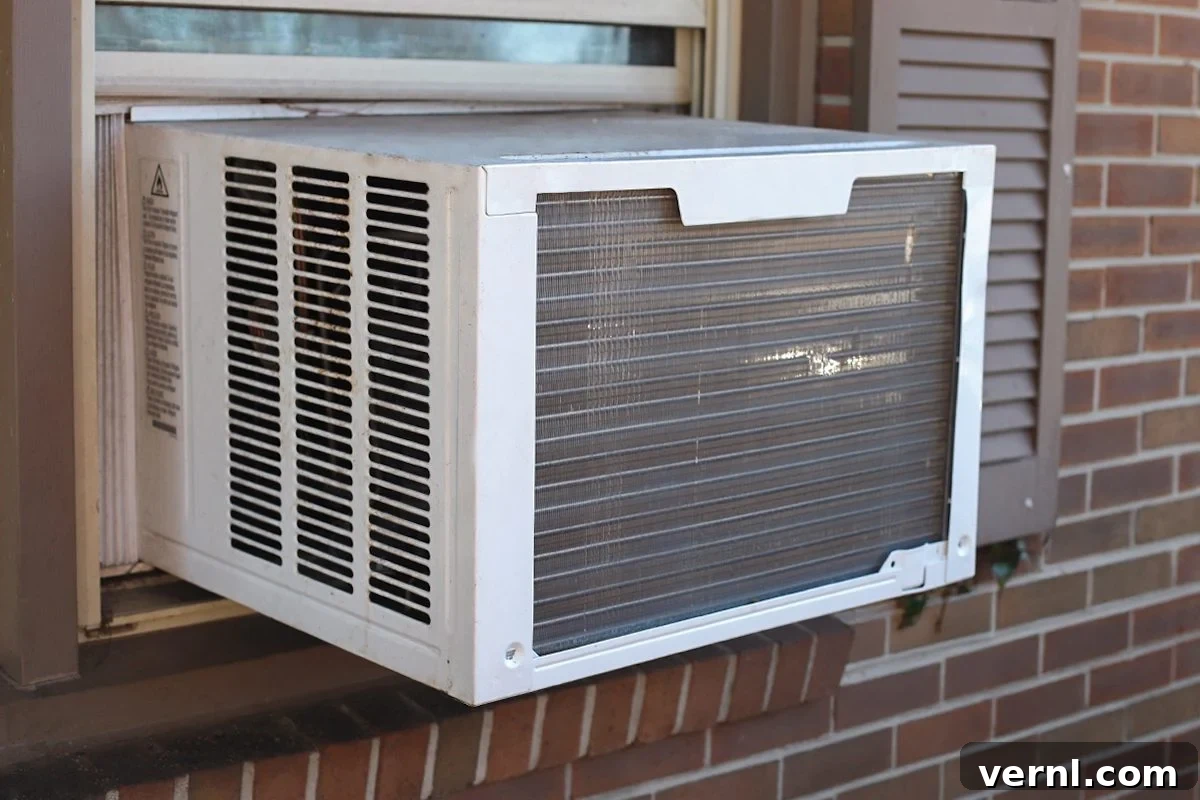
Window-mounted units are designed to be installed within a window frame, typically secured by the window sash. However, this method often provides inadequate security. Chris Hays, a plumbing and HVAC specialist, cautions that “window-mounted AC units create the most obvious security risk because they’re designed to sit in an opening with minimal securing mechanisms.” Even units equipped with brackets can be easily compromised by burglars.
Many window units rely on the weight of the window sash for security, which is often insufficient. The security risks are most pronounced for units installed in ground-floor windows, although upper-story windows can also be vulnerable if accessible via a roof or adjacent building. This is an important fact to consider, as many assume upper floors are naturally safer, and therefore skimp on additional security measures.
- How to reinforce: To enhance the security of window-mounted units, Hays recommends implementing security measures such as bars or locks, particularly for ground-floor windows overlooking alleys. A simple security bar that wedges between the top of the sash and the window frame can effectively prevent the sash from moving, costing as little as $15. A piece of scrap wood can also serve this purpose. Installing an inexpensive window alarm is another effective deterrent, alerting you to any unauthorized window openings.
Portable Indoor Units
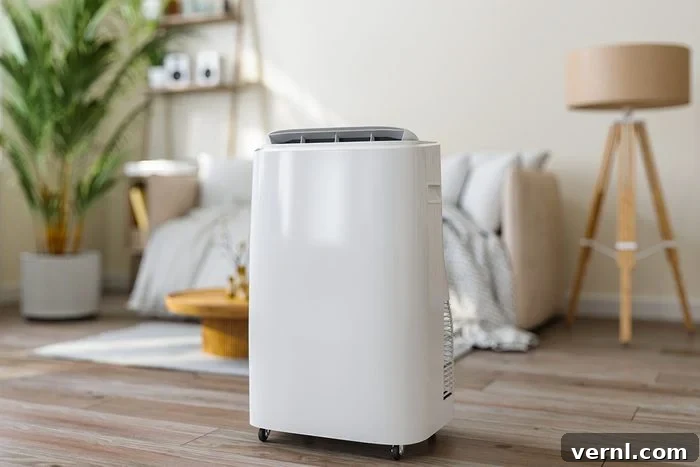
A portable air conditioner is designed to sit inside the room it’s cooling, exhausting warm air outdoors through a 3- to 4-inch plastic vent. The vent comes with a cap that mounts on a window, typically requiring the window to be open only a foot or less. While this may seem minimal, it can be enough for an intruder to gain access. “You end up with the same security risks as with a window unit,” warns Musson.
Portable air conditioners offer flexibility and ease of use, but it’s important to recognize the security implications. Leaving a window even slightly ajar can create an opportunity for a break-in, particularly if security measures are lacking. Don’t let convenience compromise your home’s security.
- How to reinforce: The security challenges posed by portable air conditioners are similar to those of window units, and so are the solutions. Use a bar to prevent the sash from moving vertically or horizontally, depending on the type of window. Alternatively, install a window alarm to detect any unauthorized openings.
Central A/C Units/Heat Pumps
The compressor for a centralized air conditioning unit, or a specialized heat pump, is located outdoors and exchanges air with the indoor cooling unit through a hose that carries refrigerant. While the hose must pass through the wall, the opening is sealed, rendering it too small for human passage. The primary security risk associated with central A/C units lies in the compressor itself.
“Outdoor units used in central air systems or ductless mini-splits don’t impact home access, but they can still be targets for copper theft,” explains Lewis. Components such as pipe fittings and electrical controls can also be attractive to thieves. The rising value of copper and other metals makes these units a tempting target.
- How to reinforce: When installing a heat pump or central A/C unit, consider the compressor’s location. “Place it in a sight line visible from within the home and away from any fence, so it isn’t hidden,” advises Hays. In high-theft areas, consider installing a metal cage around the compressor and anchoring the cage to the compressor pad. This adds a physical barrier that makes it more difficult for thieves to access the unit.
Minimizing Smart Air Conditioner Security Risks
Any A/C unit that can be controlled remotely via Wi-Fi presents a potential entry point for cyber thieves to hack into your router and steal data. “Internet of Things (IoT) devices have a constant flow of sensitive data but often don’t get the same security protection as, say, a laptop,” warns security expert Aimee Simpson.
Smart devices, while convenient, often have weaker security protocols than traditional computers. This makes them attractive targets for hackers looking to access your home network. It’s crucial to take steps to protect your smart air conditioner and your home network from cyber threats.
Simpson recommends using a strong password on your A/C app and changing it regularly. For enhanced security, consider segmenting your A/C system from your main network and enabling two-factor authentication on the app. Always check for and install firmware updates to patch any security vulnerabilities.
What Is the Most Secure A/C Configuration?
“If home security is a priority,” states Lewis, “your best option is a central air system or a ductless mini-split. They don’t leave any open windows or weak points and offer comfort without reducing safety.” While other systems have their merits, it’s hard to argue with the enhanced security that these closed systems provide.
Central air systems and ductless mini-splits eliminate the need for open windows or vulnerable entry points, providing a more secure and comfortable living environment. If security is a primary concern, investing in one of these systems may be a worthwhile consideration.
FAQs
Does having a window AC unit void my home insurance if I’m robbed?
“Having a window AC unit does not void your home insurance,” clarifies Musson. “Similarly, your home insurance is not voided if your front door is left unlocked. The fact that you increased your risk doesn’t change your coverage or make it okay for someone to break into your home. If someone does access your home because of a window AC unit, and you file a claim, you’ll face higher premiums. If it happens more than once, don’t be surprised if your insurer will not renew your coverage.”
Are the plastic “accordion” side panels on window units secure?
No. The plastic side panels that come with window A/C units may prevent drafts, but they won’t stop intruders from opening the window. The same goes for the side panels that come with the vent hoses for portable A/C units. “If you go with that route, get a window lock or a security bar,” advises Lewis.
About the Experts
- David Lewis is the owner of Houston-based Mission AC and is a seasoned professional in the field of HVAC, plumbing, and home services.
- Melanie Musson is a published insurance and finance expert who specializes in the auto industry, real estate, home security, consumer analyses, investing, and finance. She works at Clearsurance.
- Chris Hays is the owner of Local Roots AC and Plumbing, a trusted HVAC and plumbing service provider in Phoenix, Arizona.
- Aimee Simpson is the Director of Product Marketing at Huntress, where she oversees its Managed ITDR and Managed SAT solutions.