
Pink Slime in Your AC Drain: A Homeowner’s Guide to Prevention and Repair
Welcome to a deep dive into the often-unseen, yet surprisingly common, world of household woes. Today, we’re tackling a particularly unsettling issue: that dreaded pink slime lurking in your air conditioner’s drain line. This isn’t just a cosmetic problem; it can lead to significant AC malfunctions and potentially costly repairs. Let’s explore what it is, why it appears, and, most importantly, how to get rid of it and prevent its return.
The Case of Nicole and Michael: A Florida AC Fiasco
Meet Nicole and Michael, homeowners in the sunny, yet intensely humid, state of Florida. As first-time homeowners, they quickly discovered that homeownership comes with a steep learning curve. Their initiation into the world of AC maintenance began one sweltering summer day when their air conditioning system abruptly failed.
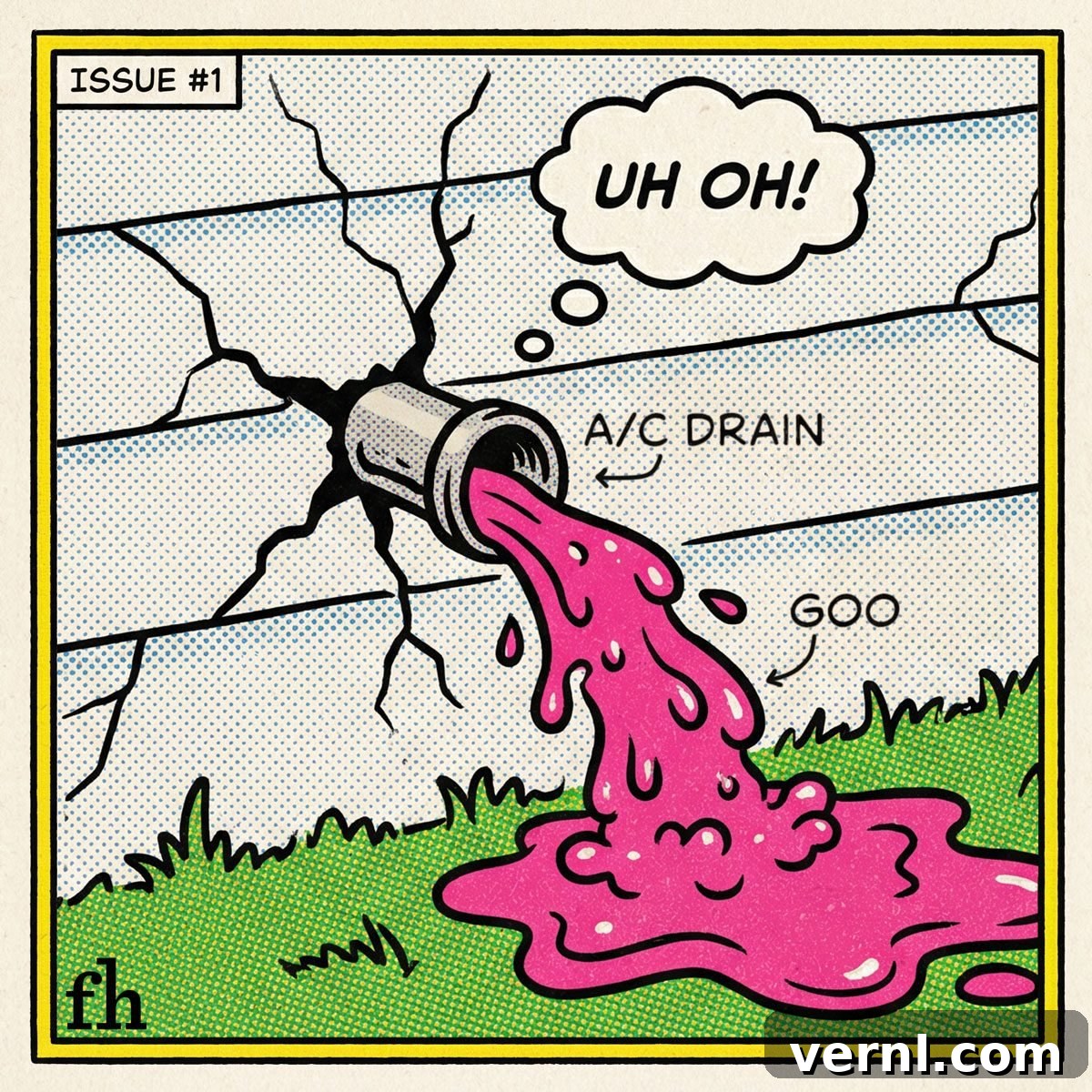
One moment, cool air was flowing; the next, the oppressive Florida heat was back with a vengeance. After a quick check of the usual suspects, they ventured outside to inspect the AC drainpipe. What they found was, in Nicole’s words, “a disgusting pink goo that looked like snot” bubbling up from the pipe. A frantic online search confirmed their fears: they weren’t alone. Many homeowners face this same revolting, yet fixable, issue.
DIY Attempts: A Hose, Some Vinegar, and a Prayer
Nicole, understandably alarmed by the “pink slimy-sludge,” suspected bacterial growth, perhaps related to mold. A quick Google search revealed a crucial piece of information: their central HVAC unit had an emergency shutoff valve. When the AC drain pan fills due to a blockage, this valve trips, shutting down the system to prevent flooding. The pink slime had clogged the drain, triggering the AC’s sudden demise. Nicole realized that without this safety feature, the situation could have been far worse, potentially leading to water damage in their ceilings.
Determined to tackle the problem head-on, Nicole and Michael worked as a team. They began by unclogging the outdoor AC drain using a garden hose, flushing out the accumulated debris. Once the initial blockage was cleared, Michael flushed the drain with vinegar. To their relief, the AC sprang back to life. They had seemingly fixed the problem themselves, quickly and affordably. But had they addressed the root cause?
Expert Insight: What is This Pink Slime, Really?
To get a professional perspective, we consulted Josh Mitchell, an experienced HVAC technician from Air Conditioner Lab. He shed light on the true nature of Nicole and Michael’s unwelcome guest.
Mitchell explained that the pink “sludgy slime” is “almost certainly bacterial biofilm buildup in the condensate drain line.” In hot, humid climates, AC systems play a dual role: cooling the air and removing excess moisture. This moisture, combined with dust and organic debris inside the drain line, creates a breeding ground for bacteria. Over time, these bacteria multiply, forming a pink or orange slime.
The good news is that “this buildup doesn’t usually pose a direct health risk,” Mitchell reassured. However, he cautioned that “it is very effective at clogging drain lines and triggering system shutdowns,” precisely what happened to Nicole and Michael.
While the slime itself isn’t a major health hazard, the potential consequences of ignoring it are significant. “The real danger comes from what happens next,” Mitchell warned. “When the drain line blocks, water backs up into the overflow pan. Most modern systems have a float switch that shuts the unit off to prevent flooding, which explains why the AC stopped suddenly.” The real concern lies in the reliability of these safety measures. “If that safety fails or is bypassed,” he emphasized, “water can spill into ceilings, walls, insulation, or flooring. That is where repair costs rise fast.”
The Panic Meter: How Worried Should You Be?
So, how concerned should you be about this pink slime? It depends on how early you catch the problem. Mitchell places it on a scale ranging from a simple “Do It Yourself” fix to a “Call a Pro” situation.
- Do It Yourself: Minor issues easily resolved on your own.
- Phone a Friend: Requires some external assistance or guidance.
- Call a Pro: Professional assistance is necessary.
- SOS: Dangerous situations requiring immediate attention due to risk of injury or significant damage.
“If caught early, a homeowner who knows where the drain line access point is can handle it,” Mitchell explained. However, he cautioned that “once water has backed up or damage has started, it becomes a professional job.” Fortunately, it rarely escalates to an “SOS” level unless “overflow causes electrical damage or widespread water intrusion.”
The Cost Differential: Addressing the Issue Early Saves Money
The cost to resolve this issue varies greatly depending on how quickly it’s addressed. According to Mitchell, “fixing it early costs almost nothing. Vinegar, hot water, or a wet-dry vacuum usually solves it.”
If you have these items on hand, you can potentially fix the problem without spending a dime. However, if you delay treatment or opt to call a professional immediately, a drain-cleaning visit could cost between $150 and $300.
Procrastination can lead to significantly higher costs. Mitchell warned that “ignoring it can lead to a need for a new pan, drywall repair, insulation replacement, or mold remediation. That can push costs into the $800 to $1,500 range, sometimes higher.”
The Right Way to Fix It: A Step-by-Step Guide
If you catch the problem early, a DIY approach is entirely feasible. Mitchell recommends the following steps:
- “Start by vacuuming the outdoor drain line to pull the blockage out instead of pushing it deeper.”
- “Flush from the indoor access point with warm water and follow with distilled vinegar.”
- “Inspect and clean the trap, reset the float switch, and replace the air filter.”
- “If the system didn’t already have a drain pan treatment option, I would add one.”
Nicole and Michael’s initial approach was generally correct. “Flushing with a garden hose cleared the immediate blockage, and vinegar helped break down the remaining growth,” Mitchell confirmed. However, he advises prioritizing vacuuming out debris whenever possible, rather than solely relying on pushing water through the line.
Preventing Pink Slime: Consistency is Key
While DIY repairs are often possible, preventing the problem altogether is the ideal scenario. Fortunately, prevention is relatively simple, but it requires consistency, according to Mitchell.
If you live in a humid area, he recommends “pouring 1/2 cup of distilled vinegar into the condensate line every 30 to 60 days during the cooling season.” Additionally, “make sure the drain line slopes properly and doesn’t sag. If water sits in the pipe, bacteria multiply faster.” Condensate treatment tablets, costing around $20 per year, can also provide added protection.
Airflow is another critical factor. Mitchell emphasizes the importance of clean air filters, as dust can fuel bacterial growth. “When filters are clogged or return vents are blocked, airflow slows down.”
Reduced airflow has detrimental effects beyond just hindering cooling efficiency. Mitchell explains that slower airflow “leaves the evaporator coil damp for longer than it should be, which encourages biological growth.”
Therefore, regular filter cleaning and replacement, as per the manufacturer’s recommendations, are essential. “Keeping airflow steady helps the system dry out properly between cycles, making it harder for that slime to build up again,” Mitchell concludes.
Lessons Learned: Nicole and Michael’s Takeaways
Nicole gained valuable knowledge from their AC adventure. She now understands that “this is a very common issue [in Florida] because it’s so humid … I’ve added AC line maintenance into my regular routine.” Perhaps the most significant lesson was the importance of knowing the location of essential home components like the AC drain, breaker panel, and shutoff valves. “This is how I figured out where all of those things are.”
Her advice to other homeowners is to prioritize familiarizing themselves with the essential parts of their home. This knowledge simplifies troubleshooting, potentially averting further damage and saving money on professional repairs.
About the Expert
Josh Mitchell is an HVAC technician and the founder of Air Conditioner Lab.