Welcome to Domestic Disasters, your ultimate guide to unraveling the mysteries behind some of the most frustrating home mishaps and perplexing discoveries. Here, we delve deep into real-life household dilemmas, bringing them to seasoned experts who assess the scope of the problem and outline the most effective, and often surprisingly affordable, solutions.
For many homeowners, the dream of finding the perfect residence can quickly turn into a perplexing nightmare, especially when confronted with an inexplicable, lingering odor. This was precisely the experience for Tim and Kathy, who several years ago, stumbled upon what they believed was their dream home nestled in the serene suburbs of Atlanta. At approximately ten years old, the house struck them as having the ideal vintage – sufficiently mature for any initial kinks or builder quirks to have been ironed out, yet still new enough to be free from the major, costly structural issues often associated with much older properties.
However, the honeymoon period was short-lived. A mere twelve months after they settled in, a disturbing and persistent odor began to emanate from their bathroom. It wasn’t just any unpleasant smell; it was a distinctive, gas-like, sulfurous stench that permeated the air, turning their sanctuary into a source of discomfort and confusion.
This wasn’t the first time their bathroom had presented an olfactory challenge. Just a few months prior, they had battled a pervasive sewage smell, which they eventually traced back to mold thriving within the toilet tank – a relatively straightforward fix. But the new aroma, originating specifically from the shower drain, proved far more elusive and stubborn. Determined to find a remedy, they enlisted the help of several local plumbers. To their dismay, after thorough inspections, each professional declared there was nothing discernibly wrong with the plumbing system. Frustrated but not defeated, Tim and Kathy turned to the vast collective wisdom of the internet, specifically a popular Reddit forum for homeowners. What they discovered was both alarming and strangely comforting: dozens of other homeowners were grappling with the exact same mysterious, persistent shower drain odor, often without a clear solution.
The online community’s comments echoed Tim and Kathy’s own anxieties and frustrations. “I was convinced something died in the walls,” one user chillingly shared, highlighting the intensity of the smell. Another homeowner recounted their isolating experience: “My husband and the plumbers that came to my home didn’t smell it, but it drove me mad,” underscoring how subjective and maddening the odor could be when others couldn’t detect it.
Amidst the shared bewilderment, Kathy, with a touch of humor and intuition, posted a comment that would later prove prophetic: “Maybe it’s not a gasket or P-trap, maybe it’s the smell of the stuff you’re washing down the drain coming back up to haunt you.” As it turned out, her humorous speculation hit the nail squarely on the head. Bingo!
After what felt like an interminable two-year quest for answers, the couple finally pinpointed the culprit: the very products they were routinely washing down their drain. The revelation was both simple and astonishing. “It was freakin shampoo,” Kathy exclaimed, “Dandruff shampoo at that. Like Head & Shoulders, Selsun Blue, whatever medicated shampoo.” This unexpected discovery brought an end to their long-standing dilemma and opened the door to understanding a surprisingly common household problem.
In the following sections, we will explore precisely how Kathy and Tim managed to finally eliminate the persistent, unpleasant scent that had plagued their bathroom for so long. Furthermore, we’ll bring in expert insights and advice to ensure that you, too, can effectively handle and permanently resolve such a frustrating issue, should it arise in your own home.
The Frustrating Journey: What They Tried to Eliminate the Odor
Before uncovering the true cause, Tim and Kathy, like many homeowners facing a mysterious odor, embarked on a trial-and-error odyssey through common household remedies and conventional plumbing theories. Initially, Kathy suspected the problem lay with an empty P-trap, a common cause of sewer gas odors. A P-trap is the U-shaped bend in a drainpipe designed to hold a small amount of water, creating a barrier that prevents sewer gases from entering the home. However, this theory was quickly and easily debunked after inspection, as the P-trap was functioning correctly and filled with water.
With the P-trap ruled out, Kathy moved on to a battery of drain cleaners and fresheners, hoping to chemically neutralize or physically dislodge whatever was causing the stench. She poured various substances down the drain, including powerful disinfectants like bleach, the natural deodorizer vinegar, the abrasive baking soda, and even common household detergents such as Dawn dish soap and Tide laundry detergent. Each of these attempts was met with disappointing results; the smell, though perhaps momentarily masked, invariably returned with its familiar intensity.
When these widely accessible solutions failed to make a lasting impact, Kathy escalated her efforts and tried an enzyme cleaner. This particular approach showed promise, offering temporary relief from the noxious odor. The bathroom would smell fresh for a brief period, providing a glimmer of hope. However, this relief was always fleeting. As soon as someone washed their hair again, especially using the medicated shampoo, the gas-like smell would re-emerge, as potent and persistent as ever. Each return of the odor left her feeling increasingly exasperated and at a complete loss for a permanent solution.
Expert Insights: A Pro Weighs In on Shower Drain Odors
To truly understand why medicated shampoos can wreak such havoc on an otherwise clean bathroom environment and how to provide a permanent solution for homeowners like Tim and Kathy, we consulted with leading plumbing experts. Their insights reveal that this puzzling problem is far more prevalent than many might imagine.
“This problem is actually more common than you think,” confirms Jordan Benjamin, owner and president of Done Rite Services, a reputable company specializing in HVAC, plumbing, and electrical services. Benjamin adds, “I’ve had more than a few service calls to fix this exact issue, often after homeowners have tried everything else under the sun.” This highlights the widespread nature of the complaint and the often-misunderstood cause.
The Hidden Science Behind the Foul Odor
The root cause of the sulfurous smell lies in the very composition of dandruff and other medicated shampoos. These specialized hair care products are formulated with a unique blend of powerful ingredients, including surfactants, oils, and stabilizers. While effective at treating scalp conditions, these components share a crucial characteristic: they do not dissolve easily or completely in water. Consequently, when you rinse your hair after shampooing, a significant portion of these residues doesn’t simply wash away clean. Instead, they begin to accumulate and build up within the inner walls of your drainpipes.
These pipes are rarely pristine. They are already home to an existing layer of common shower byproducts: soap scum, loose hair, and various organic matter from skin cells and body oils. This pre-existing coating provides a fertile ground for the shampoo residues to adhere to, forming what plumbers and microbiologists refer to as a “biofilm.” As Benjamin meticulously explains, “With each shower, that layer of biofilm grows a little thicker, becoming a dense, slimy matrix.” This ever-growing layer creates an ideal, oxygen-deprived environment where anaerobic bacteria—microorganisms that thrive in the absence of oxygen—can flourish. It is the metabolic activity of these bacteria, as they feed on the organic buildup within the biofilm, that produces hydrogen sulfide gas, the notorious culprit behind the rotten egg or sewer odor that plagues affected bathrooms. The smell, therefore, is not sewage, but rather a byproduct of microbial digestion within your pipes.
The problem is particularly acute with medicated shampoos that contain active ingredients such as selenium sulfide, zinc pyrithione, and ketoconazole. These powerful antifungal and antibacterial agents, while beneficial for scalp health, contribute significantly to the undissolved residue that fuels the biofilm’s growth and subsequent odor production.
Beyond the immediate unpleasant odor, the continuous buildup of this organic matter in the drainpipes poses several other potential problems. Over time, the thickening biofilm can restrict water flow, leading to noticeable slow draining. Eventually, if left untreated, this buildup can culminate in complete clogs, requiring more drastic intervention. Furthermore, the corrosive byproducts of anaerobic bacterial activity within the biofilm can actually degrade the very pipes they inhabit, potentially causing damage to PVC and ABS plastic pipes over extended periods. The longer the problem persists, the more robust and entrenched the biofilm becomes, making it significantly tougher and more time-consuming to clean and remove effectively.
Did the Homeowners Choose the Right Approach?
When it comes to Tim and Kathy’s various attempts, the plumbing pros offer a nuanced perspective. Yes and no. The experts concur that Kathy was on the right track when she eventually turned to an enzyme cleaner. Enzymatic cleaners are specifically formulated to break down organic matter, making them conceptually appropriate for tackling biofilm.
However, the pros issue a strong caution against the homeowner’s initial approach of indiscriminately dumping a wide range of different household products down the drain. “You run the risk of damaging your pipes, especially older ones or those with minor existing weaknesses,” warns Benjamin. Certain chemical combinations can lead to dangerous reactions, producing toxic fumes or even exothermic reactions that can damage pipe materials. Moreover, if your home utilizes a septic system, pouring harsh chemicals like bleach or even large quantities of soap can severely disrupt the delicate balance of beneficial bacteria within your septic tank, impairing its ability to properly break down waste and potentially leading to costly system failures.
Plumber Kelly Russum, owner of KC’s 23 ½ Hour Plumbing & Air Conditioning, further emphasizes why many common household solutions fall short. “Keep in mind, too, that in general, products like bleach, baking soda, soaps, and vinegar are often no match for stinky drains,” says Russum. He explains the fundamental flaw: “They usually just flow past the buildup and don’t stay in contact long enough to break it down.” To be effective, a cleaning agent needs extended contact time with the biofilm. “You need something that actually touches the walls,” Russum advises. “Usually, that means enzyme cleaners, foaming drain cleaners that expand to coat the pipes, or mechanical cleaning using a drain brush to physically scrub the interior surfaces.” This distinction is crucial for understanding why some methods succeed where others fail.
The Panic Meter: Assessing the Severity

At Domestic Disasters, we rank household issues on a straightforward four-point scale, helping you quickly understand the necessary level of intervention:
- Do It Yourself (DIY): These are the most straightforward problems, easily tackled with common tools and a little know-how. You can confidently handle these on your own.
- Phone a Friend: These issues might be a bit more complex or require an extra set of hands or a second opinion. A little outside assistance could be beneficial.
- Call a Pro: This situation clearly warrants the expertise and specialized equipment of a professional. Don’t hesitate to seek expert help.
- SOS: These are critical, potentially dangerous problems that pose a direct risk of injury, significant property damage, or worse. Immediate professional intervention is imperative.
Fortunately, the persistent shower drain odor caused by medicated shampoos typically falls squarely on the “Do It Yourself” scale. As Kelly Russum explains, “The ‘odor factory’ is close to the drain opening, where DIY tools and cleaners can reach it easily.” This means that with the right approach and a bit of effort, most homeowners can successfully tackle this problem without needing to call in a professional plumber. You only truly need a plumber if the clog or the source of the smell is much deeper within your home’s plumbing system, beyond the reach of conventional DIY tools, or if the smells keep returning despite consistent and proper cleaning efforts. In such cases, a deeper inspection might be necessary to rule out other, more serious underlying issues.
The Cost Differential: DIY vs. Professional Intervention
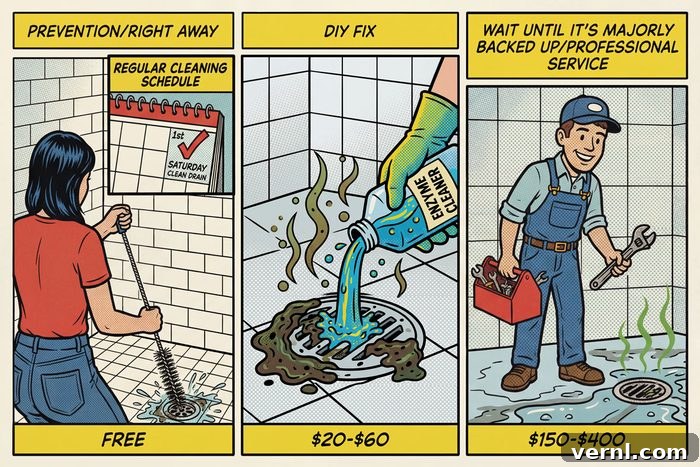
One of the most appealing aspects of addressing this particular domestic disaster is its affordability, especially when approached as a Do It Yourself project. When handled by a homeowner, this project typically costs a modest sum, ranging between $20 to $60. This budget primarily covers the purchase of essential tools: a good quality flexible pipe brush, designed to navigate the curves of your drain, and a bottle of effective enzymatic drain cleaner, which contains beneficial bacteria to break down organic buildup. These are one-time purchases that can be used for ongoing maintenance.
However, should you opt to call in a professional plumber for a drain cleaning service, perhaps because the DIY attempts were unsuccessful or you prefer expert intervention, be prepared for a significant jump in cost. Professional drain cleaning services, which might involve augering, snaking, or even hydrojetting, typically range from $150 to $400. While professional services offer peace of mind and often a more thorough initial clear-out, the cost difference highlights the substantial savings possible through a dedicated DIY approach, making it an attractive option for budget-conscious homeowners.
The Definitive Solution: How to Fix A Stinky Drain (The Right Way)
While Kathy instinctively reached for an enzymatic cleaner, recognizing its potential, achieving a truly lasting solution for a persistent shower drain odor goes beyond simply pouring a product down the drain. It demands a combination of targeted chemical action, a little “elbow grease” for mechanical removal, and a commitment to a consistent, preventative cleaning routine. Here are the expert-recommended steps for effectively eliminating the stubborn biofilm and its accompanying stench:
- Initiate Physical Debris Removal: Before introducing any cleaners, start by addressing any visible obstructions. Carefully remove the drain plug or cover. Using gloves for hygiene and better grip, reach into the drain opening and pull out any hair, soap scum, or other debris you can physically access. “Most of what you find will be hair and slimy sludge, so my recommendation is to wear gloves to avoid direct contact and for easier cleanup,” advises Benjamin. This initial step removes large blockages that can trap odors and impede cleaning agents.
- Loosen Surface Residues with Heat: After removing physical debris, slowly and carefully pour several cups of boiling water down the drain. The intense heat helps to melt and loosen greasy residues and soften the outer layers of the biofilm, making subsequent cleaning steps more effective. Allow the hot water to sit for a few minutes before proceeding.
- Apply an Enzyme Cleaner for Biological Action: This is where the biological battle begins. Pour a generous amount of a high-quality enzyme cleaner directly down the drain. It is crucial that the product you choose contains live bacteria or enzymes, not just a regular chemical cleaner or deodorizer, as Russum emphasizes. These beneficial microorganisms will actively consume the organic matter in the biofilm. For maximum effectiveness, let the enzyme cleaner sit overnight, allowing the bacteria ample time to work their magic on the accumulated buildup.
- Mechanical Scrubbing with a Pipe Brush: The next day, after the enzyme cleaner has had time to act, it’s time for mechanical cleaning. Acquire a flexible pipe brush that closely matches the diameter of your drainpipe. “Gently feed the brush into the pipe, twisting it as you push and pull it,” Russum instructs. This action physically scrubs the walls of the pipe, dislodging the softened biofilm that the enzyme cleaner has started to break down. To enhance the scrubbing action and cut through any remaining grease, add a few drops of a powerful grease-cutting dish soap, such as Dawn, to the brush or directly down the drain as you scrub.
- Clean the Drain Opening and Threads: Don’t overlook the visible parts of the drain. Using an old toothbrush and a small amount of dish soap, thoroughly clean around the drain opening and any exposed threads. This area can also accumulate biofilm and contribute to odors, and keeping it clean prevents future buildup from migrating into the pipe.
- Thorough Final Rinse: Once you’ve completed the scrubbing, rinse the drain thoroughly with hot water for several minutes. This will flush away all the loosened debris, soap residue, and dead bacteria down the plumbing system. Finally, replace the drain cover.
“You might need to repeat these steps every few days until the biofilm is completely gone,” advises Benjamin, stressing that persistence is key for deeply embedded odors. “If the odor is still present after that, your best bet is to call a plumber who offers hydrojetting.” Hydrojetting is a powerful professional service that uses high-pressure water streams to blast away even the toughest clogs and biofilm, effectively restoring pipes to their original condition.
Proactive Measures: How to Prevent a Stinky Drain from Recurring
Once you’ve successfully eliminated the existing odor, the key to maintaining a fresh and functional shower drain lies in consistent preventive measures. Incorporating these simple habits into your routine can save you from future headaches and unpleasant smells:
- Install a Hair Catcher: This is perhaps the simplest yet most effective preventative tool. A hair catcher placed over the drain opening will intercept the vast majority of hair, soap scum, and other solid debris before they can enter the pipes and contribute to biofilm formation. Regularly empty and clean the hair catcher.
- Flush with Hot Water After Each Use: After you finish washing your hair or showering, make it a habit to run hot water down the drain for at least 60 seconds. This helps to flush away any residual shampoo, conditioner, soap, and skin flakes that might otherwise settle and cling to the pipe walls.
- Regular Enzyme Cleaner Treatment: To continuously combat biofilm growth, pour a small amount of enzyme cleaner down the drain once a week. This maintains a healthy population of beneficial bacteria in your pipes, actively breaking down organic matter before it can accumulate and generate odors.
- Monthly Drain Scrubbing: Even with other preventative measures, a thorough manual cleaning is beneficial. At least once a month, remove the drain cover and use a long, flexible drain brush to scrub the accessible parts of the pipe. This dislodges any stubborn residues that might be starting to form.
- Occasional Drain Snaking: For deeper maintenance, occasionally use a drain snake (or auger) to remove any hair or debris that might have slipped past your hair catcher and accumulated further down the pipe. This is especially useful if you notice any signs of slow draining.
As Russum wisely notes, “The dirtier your drains, the harsher that dandruff-shampoo-related smell becomes, because more skin flakes and oils stick to the pipe walls instead of washing away.” By adopting these preventive steps, you can significantly reduce the chances of biofilm developing, keeping your shower drain clean, clear, and odor-free for the long term.
The Lesson Learned: What Kathy and Tim Discovered
Through their two-year struggle and eventual triumph, Kathy and Tim became accidental experts in the peculiar plumbing problem of medicated shampoo-induced drain odors. With the consistent implementation of an enzymatic cleaner and regular physical cleaning of their pipes, they have finally been able to effectively manage and keep the persistent smell in check, transforming their bathroom back into a pleasant space.
Now, empowered by their hard-won knowledge, Kathy is determined to spread awareness about this surprisingly common yet often-misunderstood household issue. “I had posted [on Reddit] many moons ago about a nasty scent coming from my bathroom,” she recounted, sharing her journey with the same online community that offered her initial solace. “I’ve finally figured out why, and since many others have similar complaints, I’ve decided to share my experience.” Her story serves as a testament to the power of perseverance and the importance of understanding the science behind everyday household problems.
Editor’s Note: This story is adapted from a real homeowner’s experience shared on Reddit, providing an authentic foundation for our exploration of this common issue. While we’ve dramatized the narrative with fictionalized names and locations to enhance readability and privacy, the core plumbing mechanics, the identified causes, and the professional solutions provided are all rigorously expert-verified and factually accurate. Our aim is to offer reliable, actionable advice based on real-world problems.
About the Experts Who Shaped This Guide
Our comprehensive guide to conquering stubborn drain odors is built upon the invaluable expertise of seasoned professionals in the plumbing industry:
- Jordan Benjamin is the esteemed owner and president of Done Rite Services, a highly respected Arizona-based company renowned for its comprehensive HVAC, plumbing, and electrical services. Jordan’s practical experience and deep understanding of common household plumbing issues were crucial in demystifying the science behind shower drain odors.
- Kelly Russum brings nearly five decades of hands-on experience as a professional plumber. He is the dedicated owner of KC’s 23 ½ Hour Plumbing & Air Conditioning, serving the Palm Springs, California area. Kelly’s extensive field knowledge and pragmatic advice on effective cleaning techniques and preventative measures have been instrumental in crafting our actionable solutions.