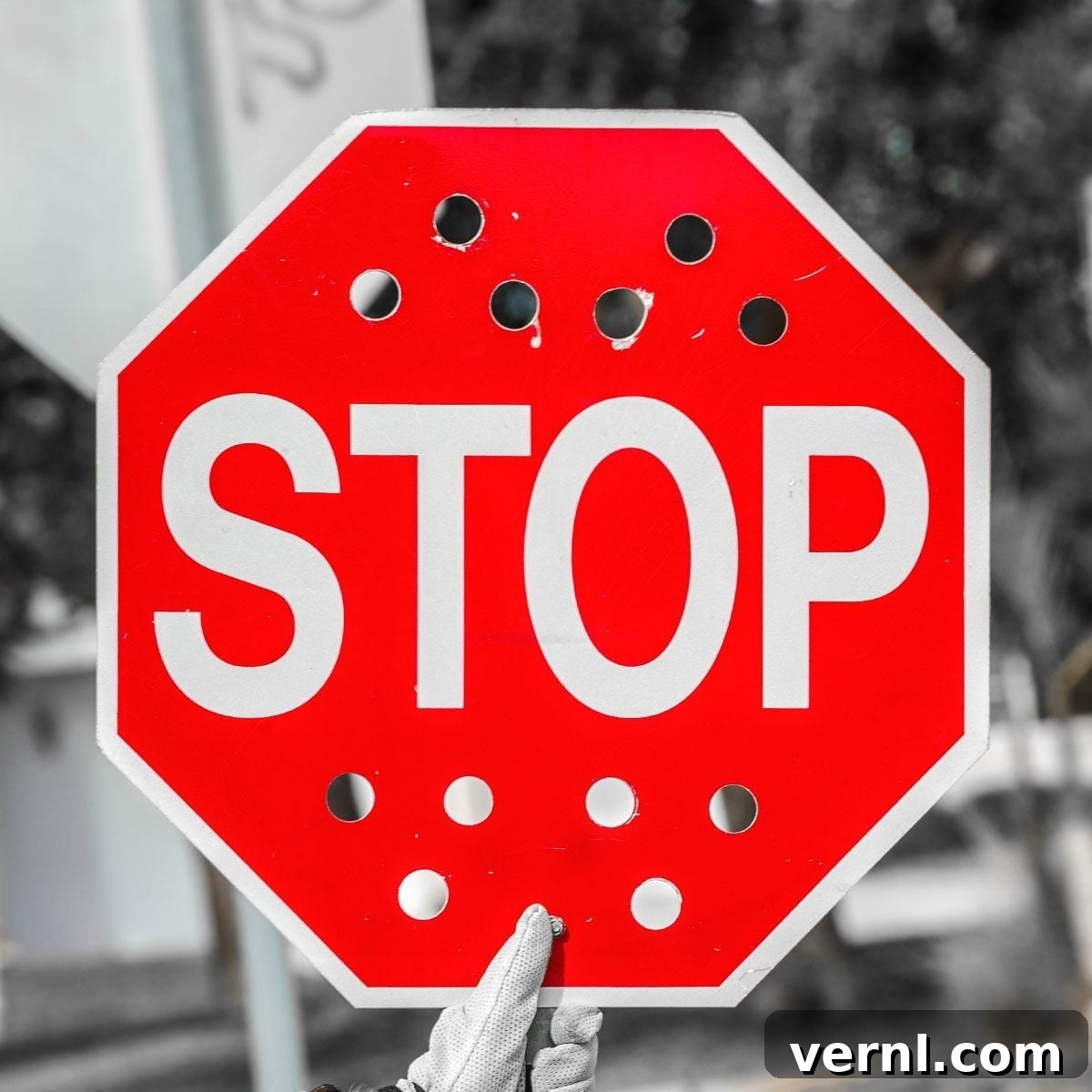
A road sign with holes can be surprising at first. It’s natural to notice something different about an everyday object you’ve seen intact countless times. Before assuming the worst, however, consider that many of those holes are intentional.
Engineers sometimes design traffic signs with perforations to help them withstand harsh conditions and reduce long-term wear. Below is an explanation of what those holes do, how to distinguish deliberate design from damage, why the feature matters for safety, and where you’ll most often encounter perforated signs.
Why Some Stop Signs Have Intentional Holes
Small, evenly spaced holes in road signs reduce wind resistance by allowing air to pass through the sign instead of pushing against a solid surface. That simple change significantly lowers the wind load on the sign, which decreases strain on the post and mounting hardware.
Solid signs present a flat surface to winds, which can bend or warp the sign over time and impose greater forces on the supporting structure. Perforated signs reduce that pressure, improving longevity in high-wind environments and cutting down on repairs and replacements. Research supports this approach: studies of perforated sign designs show improvements in wind-load resistance and a reduced need for overly robust supporting components.
Even minor bending of a sign can affect visibility, particularly at night. A warped face may no longer reflect vehicle headlights back to the driver, making the sign harder to see in low light. The US Department of Transportation’s Federal Highway Administration notes that signs with minor bending may be removed, straightened, and reinstalled to restore visibility. Perforations help prevent that bending from occurring in the first place.
Where Are You Most Likely to See Road Signs With Holes?

Perforated signs are most common in areas exposed to frequent or strong winds—coastal regions, open plains, rural highways, and locations prone to severe storms like hurricanes or tornadoes. In those settings, reducing wind load is a practical way to extend the service life of signs and lower maintenance costs.
Urban environments generally experience less need for perforated signs because buildings and other structures block and diffuse high wind flow. In cities, sign designs and mounting systems differ to address local conditions, and engineers may select other solutions—such as heavier hardware or alternate mounting configurations—rather than perforated sign faces.
Are Road Sign Holes Ever From Damage?
Not all holes in signs are intentional. Damage from accidents, vandalism, corrosion, or environmental wear can also create holes or pitting. Telling the difference is usually straightforward for the unaided eye.
Intentional perforations are uniform: consistent hole size, even spacing, and a regular pattern across the sign. Damage-related holes tend to be irregularly placed, vary in size, and often show surrounding paint peeling, rust, or other signs that the area was not pretreated for corrosion resistance.
Local, state, or federal maintenance crews typically repair or replace signs when visibility is reduced by damage or wear. Notifying local authorities about damaged or obscured signs can help speed repairs and reduce potential safety hazards.
When you notice a stop sign with holes, check whether the holes form a clean, symmetrical pattern—indicating design—or whether they appear scattered and deteriorated, suggesting damage or vandalism.
SOURCES
National Center for Biotechnology Information, “CFD Simulation Study on Wind Load of Perforated Traffic Sign Board”
Federal Highway Administration, “Repair and Replacement of Sign Panels”
RELATED:
- Do You Know What That Little Button on Your Seat Belt Is For?
- What Those Lines on Your Backup Camera Really Tell You
- Here’s What The Small Panel On Your Car’s Front Bumper Is For