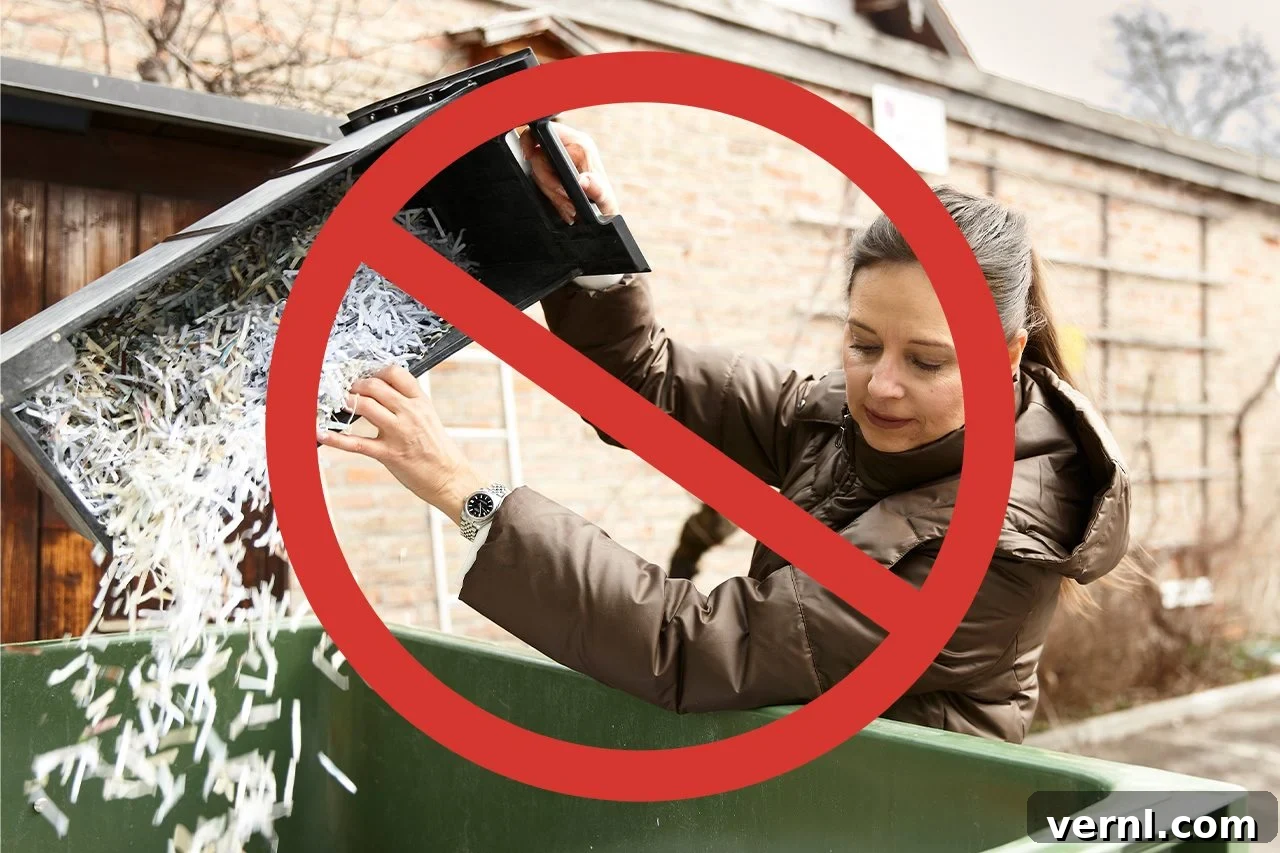
A stack of old bills, tax records, or other paperwork can turn into a full bag of shredded paper surprisingly fast. Because most regular office paper belongs in the recycling bin, many homeowners assume shredded paper should be recyclable too. The issue isn’t always the paper itself; it’s the way shredding changes the paper’s size and behavior. That change can make shredded paper difficult for recycling facilities to sort and process, so some communities accept it while others direct residents to dispose of it differently.
Understanding why shredding creates problems and what options are available can help homeowners manage sensitive documents and reduce waste without unintentionally contaminating the recycling stream.
Why Shredded Paper Causes Recycling Problems
Recycling facilities are designed to handle full sheets and larger pieces of paper. Shredded paper breaks those sheets into tiny strips or confetti, which behave very differently in sorting equipment. Loose shreds can fall through screens, jam machinery, or get blown into other waste streams. They are also lightweight, so they can scatter easily and contaminate other materials during processing.
Shredding also shortens paper fibers. Short fibers are less valuable for making new paper products, which reduces the usefulness of shredded paper for recycling. Some cities and haulers report that bagged shredded paper tears open during collection and sorting, releasing the contents and increasing contamination. For these reasons, a municipality might choose to exclude shredded material from curbside recycling.
Why Some Recycling Programs Still Accept Shredded Paper
Rules vary widely from one locality to another. Some programs have adapted equipment and procedures to handle shredded paper when it is prepared properly, while others have not. Local guidelines typically reflect job-site realities: what the processing facility can manage, what contamination levels they can tolerate, and what collection systems are in place.
In places that do accept shredded paper, the usual requirement is that it be contained so it does not scatter: for example, placed in a labeled paper bag that is closed or sealed to prevent spillage. In other communities, even bagged shredded paper is not allowed because bags can burst during sorting and release the shreds, leading to contamination. The best course of action is to follow the specific instructions of the local recycling program rather than assuming national or neighboring-city rules apply.
Practical Disposal Options for Homeowners
Before tossing shredded paper into the recycling bin, homeowners should check local recycling rules. If curbside collection accepts shredded paper, follow any container or bagging requirements precisely. If the local program does not accept it, options commonly include using dedicated drop-off sites, placing shreds in the regular trash, or following special instructions from the city or your waste hauler.
Avoid using plastic bags as a workaround unless your program explicitly allows them. Many curbside recycling programs do not accept plastic bags because they tangle in sorting machines and complicate material recovery. Using plastic bags could lead to the entire load being rejected.
To reduce the volume of shredded paper in the first place, consider shredding only documents that contain personal or financial information, and recycle intact papers that don’t pose a privacy risk. Many unnecessary documents can be eliminated before they pile up. Going paperless for bills, statements, and receipts is another effective strategy to prevent large amounts of paper from accumulating and needing shredding.
Sources
- U.S. Environmental Protection Agency, How Do I Recycle Common Recyclables
- City of Tampa Solid Waste, Recycling FAQs
- Portland Bureau of Planning and Sustainability, Recycling updates
- City of Gainesville Public Works, Recycle Collection
- City of Fremont Environmental Services, Recycling Guide: Single Family