
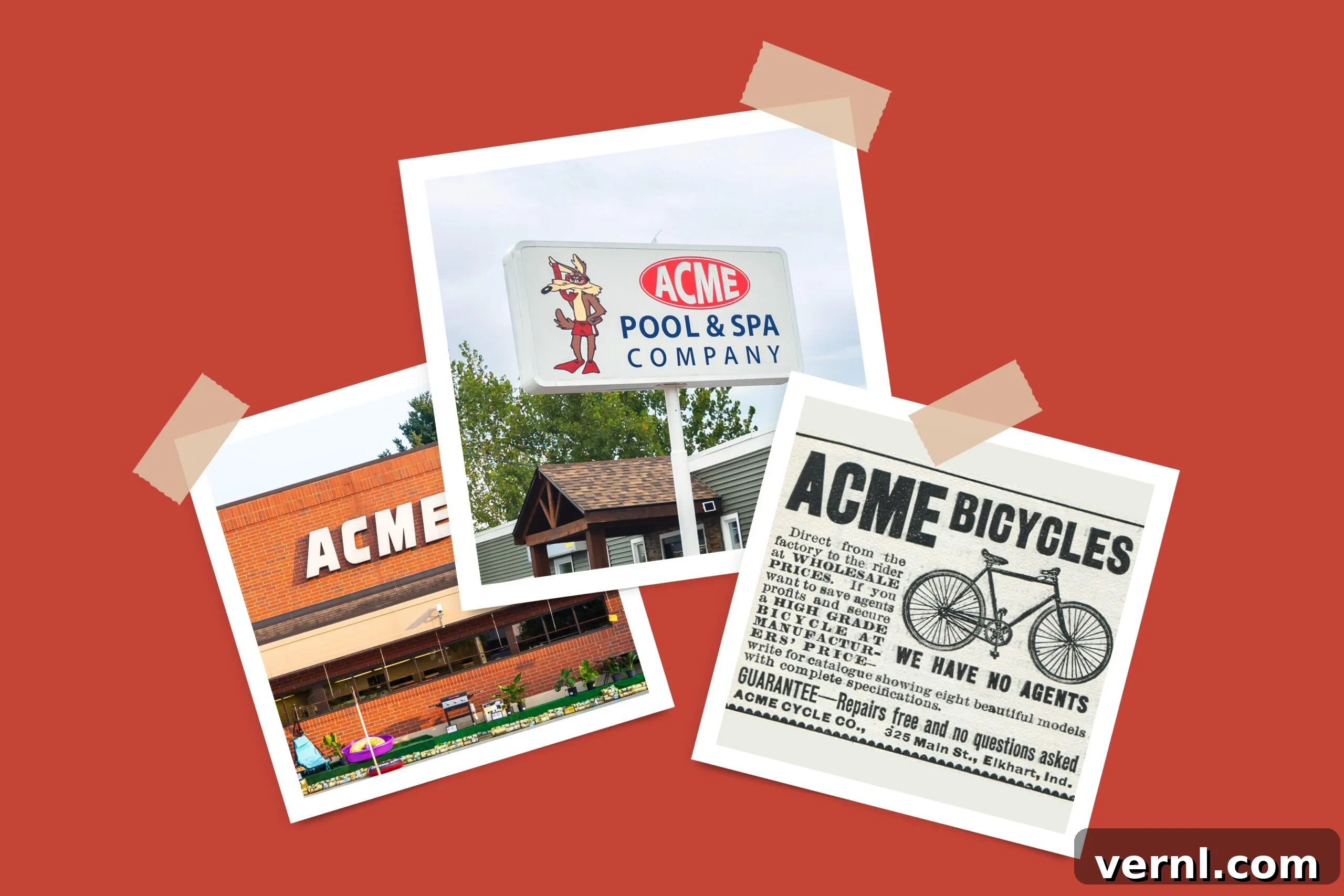
Pretty much everyone has heard of a company called ACME. Whether it’s the cartoon supplier that fuels Wile E. Coyote’s endless attempts to catch the Road Runner or the name of real businesses in towns across America, ACME is widely recognizable. The label appears on actual U.S. companies and has a history that reaches back long before it became a cartoon staple.
Learn what ACME means, why businesses liked (and continue to use) the name, and how cartoons transformed it into a catchall brand for almost any fictional company.
What Does ACME Mean?
The word acme wasn’t invented by cartoonists. The American Heritage Dictionary and other sources trace it to the Greek word akmē, which means the highest point, peak, or culmination of development. In English, acme came to signify the best or most successful point of something — essentially the top or peak.
That positive connotation made ACME an attractive choice for business names. For example, Acme Tools’ company history says its founder, George Kuhlman, selected the name for his electric motor business because it implied peak performance and superior quality. Using a word that literally meant “the highest point” was a simple, direct way to suggest excellence to customers.
One common myth is that ACME stands for “A Company Making Everything” or another acronym. That’s not accurate. ACME existed as an English noun long before such backronyms circulated on the internet. The acronym explanation is a later invention, a playful guess that stuck because it sounds clever, but it isn’t the true origin.
Why ACME Worked Well in Phone Books
ACME also offered a clear practical benefit in the era of printed directories and phone books. Businesses were often listed alphabetically in category sections. A name starting with AC had a strong chance of appearing near the beginning of its category listings, making it easier for potential customers to notice.
Before the internet made searching instantaneous, appearing at or near the top of a list in the local directory could translate to more phone calls and more walk-in business. For many small businesses, that visibility mattered. Choosing a name such as ACME combined a positive meaning with an advantageous position in printed listings — quality implied plus better exposure.
Today, the alphabetical advantage has largely faded as search engines and online maps determine visibility. But for decades the placement benefit was a real consideration when naming a new company.
How ACME Became a Cartoon Company
Warner Bros. and their cartoon writers cemented ACME’s place in popular culture by making it the fictional supplier for Wile E. Coyote in the Road Runner cartoons. The humor came from the contrast between the name’s literal meaning — the best, the top — and the unreliable or absurd results of the products sold by ACME in those shorts. An anvil, rocket, or spring-loaded device from ACME would often fail spectacularly, creating a comedic reversal.
Cartoons also broadened ACME’s identity into a tongue-in-cheek, catchall company capable of providing almost anything an enterprising cartoon character might order. That association has endured for decades, and even recent productions that riff on the old cartoons have kept the ACME connection alive. The continuing cultural reference keeps the name recognizable and often evokes playful notions of over-the-top gadgets and improbable solutions.
Why Companies Still Use the ACME Name
For several real companies, ACME simply became part of their legacy. ACME Markets, for instance, traces its corporate name to an earlier business called the ACME Tea Company, and other firms like Acme Tools continue to operate under names chosen by founders many years ago. The name’s original meaning — peak, highest point, quality — still resonates as a brand message.
Even though the alphabetical advantage is mostly irrelevant today, the name’s familiarity and positive implication remain useful. For many customers, ACME evokes both the idea of quality and a wink toward popular culture, depending on context. While theories and myths about the name’s origin persist, the straightforward etymology and practical reasons for its popularity explain most of its appeal.
Next time you encounter the name ACME — whether on a business storefront or in a cartoon gag — you’ll know it originally meant the highest point, offered a useful placement benefit in printed directories, and later gained a comic identity that has kept it recognizable to generations of Americans.
Sources
American Heritage Dictionary, “acme”
Library of Congress, “United States: City and Telephone Directories”
Acme Tools, “The History of Acme Electric Motor, Inc.”
ACME Markets, “About Us”
RELATED:
- The Real Reason Aluminum Foil Has a Shiny Side and a Dull Side
- Think Adirondack Chairs Are Uncomfortable? You’re Using Them Wrong
- Why You Shouldn’t Crush Aluminum Cans Before Recycling