
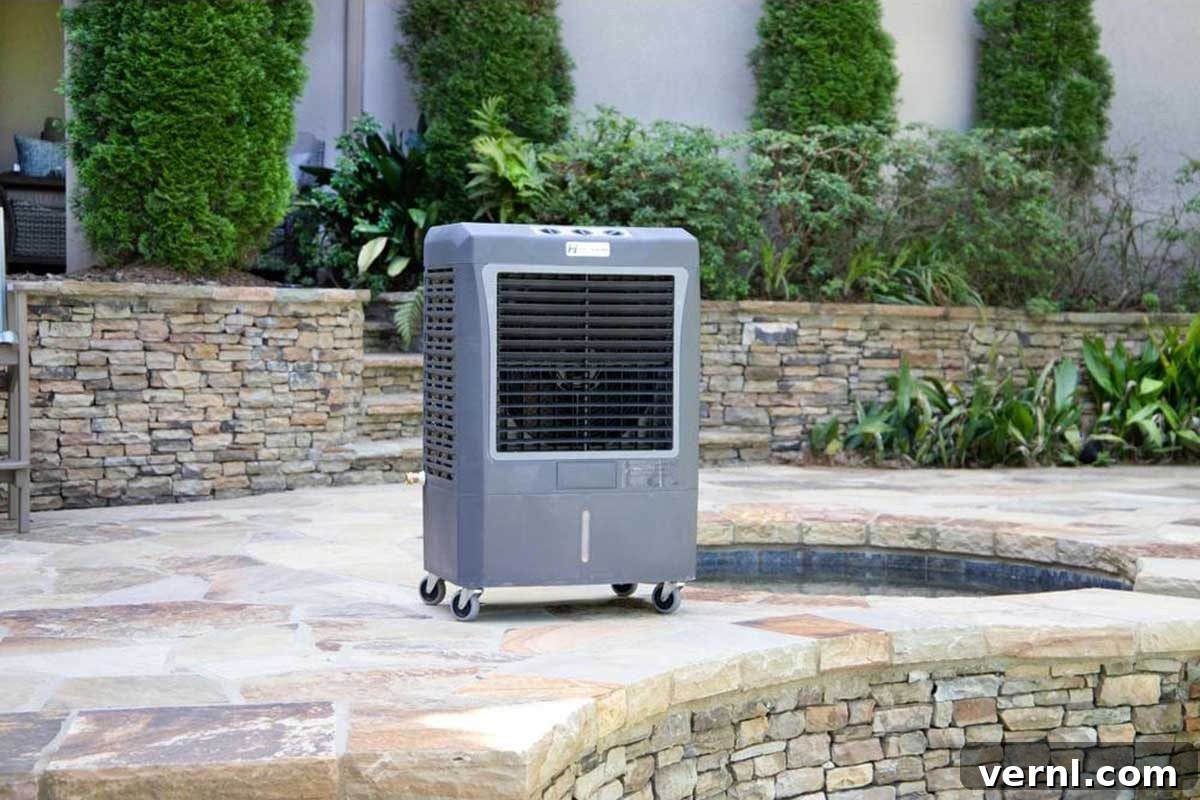
As summers grow warmer and energy costs continue to rise, many homeowners are seeking efficient and sustainable cooling solutions. Among the most promising options are evaporative coolers, often affectionately known as "swamp coolers." These ingenious devices offer a refreshing alternative to traditional air conditioning, leveraging a natural process to deliver comfort. While their modern design dates back to the 1930s, the fundamental concept of using water evaporation for cooling has roots in ancient civilizations, like the Egyptians, who mastered the art of cooling their surroundings by blowing air over damp mats and water-filled clay pots. This time-tested principle remains incredibly effective today, particularly in dry climates.
Scott Jenschke, an air circulation and accessories merchant for The Home Depot, highlights the contemporary appeal: "Installing an evaporative cooler is a great way to keep indoor air fresh and cool, especially with the windows open." If you're considering this eco-friendly cooling method for your residence, understanding its mechanics, benefits, and maintenance is essential.
What Exactly is an Evaporative Cooler?
At its core, an evaporative cooler is a system designed to reduce air temperature through the simple, natural process of water evaporation. Unlike conventional air conditioners that rely on complex refrigerant cycles and compressors, an evaporative cooler utilizes an electric-powered fan to draw warm, dry ambient air through specially designed dampened pads. As the air passes over these water-saturated surfaces, the water absorbs heat from the air and evaporates, transforming from a liquid into a gas. This phase change efficiently removes heat, resulting in significantly cooler, more humid air being circulated back into the room.
This straightforward yet highly effective process yields several significant advantages. Critically, evaporative coolers consume substantially less energy than standard air conditioning units. Furthermore, they operate without the need for ozone-damaging refrigerants, such as HFCs or CFCs, making them a much greener choice for environmental-conscious consumers. Beyond the environmental benefits, these systems are typically less expensive to purchase, install, and maintain compared to central air conditioning systems, offering an attractive economic proposition for homeowners.
Understanding How Evaporative Coolers (Swamp Coolers) Work
The operational principle of evaporative coolers, or swamp coolers, is rooted in thermodynamics, specifically the concept of evaporative cooling. As Scott Jenschke explains, "The liquid turns into gas when water evaporates, releasing the highest energy particles and causing the temperature to drop." He draws a relatable analogy: "This is why your forehead feels cooler after you put a moist cloth on it on a hot day." This same scientific phenomenon is harnessed to cool the air within your home.
An evaporative cooler is composed of a few key components working in concert: a powerful fan, a water reservoir or tank, absorbent filter pads (often referred to as media), and an internal motor. The motor drives the fan, which continuously pulls warm, dry air from the environment into the unit. This air then passes through the wet internal filter pads. As the warm air interacts with the water-saturated pads, evaporation occurs rapidly. The heat energy from the air is used to convert the liquid water into water vapor, effectively lowering the air's temperature before it is propelled back into the room. A beneficial side effect of this process is that the internal pads also act as a filter, trapping dust, pollen, and other airborne allergens, thereby improving indoor air quality.
The efficacy of an evaporative cooler is notably influenced by climatic conditions. Jenschke points out, "Evaporative coolers work best in arid climates, where you can see as much as a 30-degree reduction in temperature." In regions with naturally lower humidity, the air has a greater capacity to absorb moisture, maximizing the cooling effect. "In less arid climates, they’re not as effective, but can still cool the surrounding air by five to 15 degrees," he adds. To optimize performance and ensure a continuous supply of fresh, cool air, Jenschke also advises homeowners to open nearby windows. This allows for proper air circulation, preventing the buildup of humidity and maintaining the cooler's efficiency.
Exploring the Different Types of Evaporative Coolers
Evaporative coolers come in various designs, each tailored to specific cooling needs and spaces. Understanding these types will help you select the most appropriate system for your home or outdoor area:
- Portable Evaporative Coolers: These units are designed for flexibility and ease of movement. Lightweight and often equipped with wheels, portable coolers are perfect for spot cooling a single room, enhancing comfort on outdoor patio spaces, garages, or even providing relief on sports field sidelines. While generally smaller, some larger portable models are capable of cooling significant areas, ranging from 500 to an impressive 3,000 square feet, according to Jenschke. Their main advantage is the ability to provide cooling precisely where and when it's needed, without permanent installation.
- Window or Wall-Mounted Evaporative Coolers: Specifically designed to fit into a window or a dedicated wall opening, these units offer a more integrated cooling solution than portable models. They are an excellent choice for cooling individual rooms, garages, or open-plan living spaces where a fixed cooling source is desired without the complexity of a central system. By drawing fresh air directly from outside, they ensure continuous air exchange and cooling efficiency.
- Outdoor Evaporative Coolers (Down-Discharge or Down-Draft): These powerful units are typically installed on the roof of a building. Known as down-discharge or down-draft coolers, they are engineered to cool an entire home by distributing cooled air through a ductwork system that carries it downwards into various rooms. Their elevated position allows them to draw in ambient air from above, which can often be slightly cooler than ground-level air, enhancing efficiency.
- Side-Discharge or Side-Draft Evaporative Coolers: Similar to their down-discharge counterparts, side-discharge (or side-draft) coolers are also designed to provide whole-house cooling. As their name suggests, they are usually installed on the side of a building, though some models offer the versatility of roof installation as well. These units push cooled air horizontally into the home's ductwork, making them a flexible option for homes with suitable exterior wall space.
Key Advantages of Choosing Evaporative Coolers
When comparing evaporative coolers with conventional air conditioning units, it's clear they operate on fundamentally different technologies, leading to distinct advantages for the evaporative approach.
"Air conditioners use chemical refrigerants in tubes and coils to remove hot air from your home and leave behind drier, cooler air," Jenschke explains. "In many situations, an air conditioner is connected to the outdoors because the tubes and coils absorb heat from indoors and release it outdoors. You can feel warm air coming from an air conditioner outside for this reason." This process, while effective, is energy-intensive and relies on synthetic chemicals.
Evaporative coolers, conversely, harness the pure, natural power of evaporation to cool the air. This inherent difference translates into a host of compelling benefits:
- Superior Energy Efficiency: Evaporative coolers are remarkably energy-efficient. Jenschke states, "The evaporative cooler is a more sustainable option as it uses one-fourth of the energy and costs about half as much to install as an air conditioner." This substantial reduction in energy consumption directly translates to lower utility bills for homeowners, offering significant savings over the cooling season.
- Environmental Friendliness: By operating without chemical refrigerants, evaporative coolers eliminate the emission of harmful greenhouse gases, such as hydrofluorocarbons (HFCs), which are potent contributors to climate change. This makes them a significantly more eco-conscious choice for cooling your home.
- Enhanced Air Quality: As air passes through the wet pads, dust, pollen, and other airborne particles are filtered out, contributing to cleaner indoor air. Furthermore, because evaporative coolers continually draw in fresh outdoor air and expel stale indoor air through open windows, they provide a constant supply of fresh, naturally humidified air, avoiding the dry, recirculated air often associated with traditional AC.
- Natural Humidification: In arid climates, the added moisture from an evaporative cooler can be a significant benefit. It can alleviate issues like dry skin, irritated sinuses, and static electricity, creating a more comfortable indoor environment.
- Lower Installation and Maintenance Costs: Beyond the lower operating costs, evaporative coolers generally require simpler installation procedures and are less expensive to maintain than complex central air conditioning systems. "It also doesn’t require ductwork to move the cooler air throughout the house like a central air conditioning unit does," Jenschke notes, further simplifying installation for many models.
Essential Evaporative Cooler Maintenance Tips for Longevity
To ensure your evaporative cooler operates at peak efficiency and provides reliable cooling for many years, regular maintenance is key. Adhering to these tips will extend its lifespan and help you save money on repairs and energy consumption:
- Consider Climate Suitability: Evaporative coolers achieve their maximum efficiency in drier climates where humidity levels consistently remain below 60%. In such conditions, they can deliver exceptional cooling. While less effective in the more humid climates of the South and Midwest, they can still be useful on days with lower humidity or by operating in fan-only mode to circulate air and improve comfort without adding significant moisture.
- Regular Pad Inspection and Replacement: The cooling pads are the heart of the evaporative process. Over time, these pads can become clogged with mineral deposits, dust, and debris, reducing their efficiency.
- Fiber Pads (Aspen Pads): These pads are traditionally made from shredded Aspen fibers woven together, available in one-inch and two-inch thicknesses. "The thicker the pad, the more moisture it can hold, which improves cooling," Jenschke advises. While economical, aspen pads typically deteriorate faster and require annual replacement.
- Synthetic Pads: Offering greater durability than fiber pads, synthetic pads tend to last longer. However, they may not retain as much moisture, potentially slightly reducing their cooling effectiveness compared to new fiber pads.
- Brand-Compatible Cellulose Pads (Honeycombed): Many modern and popular cooler brands, such as Mastercool, utilize custom-designed, sturdy honeycomb-shaped cardboard pads (cellulose pads). These provide excellent cooling ability due to their intricate structure and can last up to five years with proper care and regular cleaning.
- Clean the Water Tank and Fan Blades: Mineral buildup, algae, and mold can accumulate in the water tank and on fan blades. Regular cleaning, ideally once a month during peak use and certainly before seasonal storage, is crucial to maintain air quality and prevent clogs. Use a mild detergent and thoroughly rinse the tank.
- Check for Leaks and Proper Airflow: Periodically inspect the unit for any water leaks or blockages in the airflow. Ensure that the water distribution system evenly saturates the pads.
- Motor and Pump Checks: For units with replaceable components, regularly inspect the motor and pump. Ensure they are running smoothly and quietly. A failing pump won't adequately saturate the pads, diminishing cooling, while a struggling motor can overheat or consume excess energy.
- Winterization: Before storing your cooler for the off-season, drain the water tank completely, clean the pads and interior thoroughly, and disconnect the water supply line. For outdoor units, consider using an evaporative cooler cover.
How Much Do Evaporative Coolers Cost?
The cost of an evaporative cooler varies significantly based on its type, size, features, and cooling capacity. Small, portable personal models can be remarkably affordable, often costing less than $100. On the other end of the spectrum, large down- or side-discharge models designed to cool an entire home can range up to $1,500 or even more, especially with professional installation.
Beyond the initial purchase price, homeowners may find opportunities for additional savings. "Some municipalities offer rebates of up to $250 for the purchase of a whole-house unit through your utility provider," notes Jenschke. It's always a good idea to check with your local energy provider or municipality for potential rebate programs, as these can significantly offset the upfront cost of a more powerful unit.
Selecting the Best Evaporative Cooler Size for Your Home
Choosing the correctly sized evaporative cooler is critical for optimal performance and comfort. The primary metric to consider is the Cubic Feet per Minute (CFM) rating, which indicates the volume of air the unit can cool and move each minute. To determine the minimum CFM you require, follow these steps:
- Calculate the Cubic Feet of Your Space: Measure the length, width, and height of the room or area you intend to cool in feet. Multiply these dimensions together: Length (ft) x Width (ft) x Height (ft) = Cubic Feet.
- Determine Desired Air Changes per Hour: The American Society of Heating, Refrigerating and Air-Conditioning Engineers (ASHRAE) generally recommends five to nine air changes per hour for residential rooms to maintain effective cooling and air circulation. For areas with higher activity or more heat generation (e.g., kitchens, workshops), you might opt for a higher number of air changes.
- Calculate Required CFM: Multiply your total cubic feet by the desired number of air changes per hour. Then, divide that total by 60 (minutes per hour).
Formula: (Cubic Feet x Air Changes per Hour) / 60 = Minimum CFM Needed
For example, for a room 20ft L x 15ft W x 8ft H (2400 cubic feet), aiming for 7 air changes per hour: (2400 x 7) / 60 = 280 CFM.
Some evaporative cooler models also provide a square footage rating, which can be a helpful, albeit less precise, guide for quick comparisons. However, for accurate sizing, especially for whole-house or larger area cooling, using the CFM calculation is highly recommended to ensure adequate cooling capacity.
Here is a detailed table comparing various types of evaporative coolers, their estimated costs, capacities, and functionalities:
| Evaporative Cooler Types | Approx Cost (USD) | Cooling Capacity (Sq. Ft.) | Water Tank Capacity (Liters) | Best Suited For | Key Features & Functionality |
| Personal/Room Cooler | $50 – $150 | Up to 150 | 5 – 10 liters | Small rooms, personal use, bedside |
|
| Desert Cooler | $100 – $300 | 200 – 600 | 30 – 60 liters | Hot, dry climates, large rooms, workshops |
|
| Tower Cooler | $80 – $200 | 150 – 400 | 10 – 25 liters | Medium-sized rooms, apartments, offices |
|
| Window Cooler | $150 – $400 | 300 – 700 | 30 – 50 liters | Rooms with accessible windows, garages |
|
| Industrial/Commercial Cooler | $500 – $3000+ | 1000 – 5000+ | 100 – 200+ liters | Warehouses, workshops, large outdoor areas, event spaces |
|
| Portable Outdoor Cooler | $200 – $800 | 500 – 1200 | 40 – 100 liters | Patios, gardens, outdoor events, poolside areas |
|
| Ducted/Whole House Cooler | $1000 – $3000+ | Entire house (1500–2500 sq ft+) | Connected to plumbing (continuous supply) | Homes in dry climates seeking central cooling alternative |
|
Essential Evaporative Cooler Accessories for Eco-Friendly Cooling Solutions
While most evaporative coolers come complete with all necessary operational components (except potentially the motor for larger, whole-house units), investing in the right accessories and understanding their purpose is vital for optimizing performance, prolonging lifespan, and maximizing the eco-friendly benefits of your cooling system. These items are readily available from your cooler supplier, home improvement stores, or online retailers.
- Cooling Pads: These are the most critical accessory, as they are central to the evaporation process and act as filters. Regular replacement is key.
- Fiber Pads (Aspen Pads): Composed of interwoven shredded Aspen fibers, these are available in one-inch and two-inch thicknesses. "The thicker the pad, the more moisture it can hold, which improves cooling," explains Jenschke. They are economical but typically require annual replacement due to natural deterioration.
- Synthetic Pads: Offering increased durability compared to natural fiber pads, synthetic pads tend to last longer. However, their moisture retention might be slightly less, potentially impacting cooling effectiveness.
- Brand-Compatible Cellulose Pads: Many popular brands, such as the Mastercool line, utilize custom-designed pads often made from a sturdy, honeycomb-shaped cardboard material. These cellulose pads offer superior cooling ability and, with proper maintenance, can last up to five years, making them a premium, longer-lasting option.
- Evaporative Cooler Covers: For outdoor evaporative cooler units, a durable cover is an indispensable accessory. These covers protect the unit from harsh weather elements like rain, snow, UV radiation, and dust during the off-season or when the cooler is not in use, significantly extending its lifespan and preventing premature wear and tear.
- Motors: In the case of some larger, whole-house down-discharge or side-discharge units, the motor might be sold separately. This allows for customization based on your specific cooling needs and the unit's capacity. Most such units can accommodate a one-half, three-quarters, or one horsepower motor, providing flexibility to match the motor power to the required airflow and cooling power for your home.
- Water Treatment Tablets/Conditioners: To prevent mineral buildup (limescale) and inhibit the growth of algae and bacteria in the water reservoir and on the pads, water treatment tablets or conditioners can be used. This helps maintain efficiency, prolong pad life, and ensure healthier air quality.
Frequently Asked Questions (FAQ) About Evaporative Coolers
Are evaporative coolers effective in humid climates?
Evaporative coolers are most effective in dry climates where humidity levels consistently remain below 60%. In such conditions, they can provide substantial temperature drops. In humid regions, their cooling capacity is significantly reduced because the air is already saturated with moisture and cannot absorb much more. However, they can still be utilized in fan-only mode to circulate air and provide a breeze, which can feel refreshing even without significant temperature reduction. For optimal performance, always ensure adequate ventilation by keeping windows open in moderately humid conditions.
What are the maintenance requirements for a swamp cooler?
Consistent maintenance and regular check-ups are crucial for the optimal performance and longevity of a swamp cooler. Key maintenance tasks include: changing cooling pads annually (or every few years for cellulose pads), regularly cleaning the water tank and fan blades to prevent mold, algae, and mineral buildup, checking for any leaks in the water lines or unit casing, and ensuring proper airflow through the pads. Additionally, periodically inspect the motor and pump for any signs of wear or malfunction. Proper winterization, including draining and cleaning the unit before storage, is also vital.
How much energy does an evaporative cooler save compared to AC?
Evaporative coolers are significantly more energy-efficient than traditional compressor-based air conditioners. They typically consume up to 75% less electricity. This substantial energy saving is due to their simpler operational principle, which avoids the energy-intensive compressor and refrigerant cycle of AC units. The lower energy consumption translates directly into considerably reduced electricity bills and a smaller carbon footprint, making evaporative coolers a smart, sustainable, and eco-friendly cooling solution for many households.
Can evaporative coolers add too much humidity to my home?
While evaporative coolers add moisture to the air as part of their cooling process, this is generally beneficial in dry climates, helping to alleviate issues like dry skin and static electricity. However, in already humid environments or if used in poorly ventilated spaces (e.g., with all windows closed), they can increase indoor humidity to uncomfortable levels, potentially promoting mold growth. This is why proper ventilation by opening windows is crucial, especially in less arid conditions, to allow the moist air to escape and fresh, drier air to enter.
Are evaporative coolers noisy?
The noise level of an evaporative cooler varies greatly by model and size. Smaller portable units are generally quieter, comparable to a fan. Larger, whole-house or industrial units can be louder due to more powerful fans and motors, but modern designs often include features to minimize operational noise. Many users find the white noise generated by an evaporative cooler to be less intrusive than the on-and-off cycling of a traditional air conditioner, especially once accustomed to it.
Sources:
- ScienceDirect: “A comprehensive review on evaporative cooling systems”
- IJESD: “A Review of Evaporative Cooling Technologies”
- U.S. Department of Energy: “Evaporative Coolers”
- HomeGuide: “Swamp cooler cost”
- Wiley: “Current Status, Challenges and Opportunities of Evaporative Cooling for Building Indoor Thermal Comfort Using Water as a Refrigerant: A Review”
- Nature Portfolio: “Study on performance of perforated dew point indirect evaporative coolers”
- ResearchGate: “An evaporative cooler for the storage of fresh fruits and vegetables”