
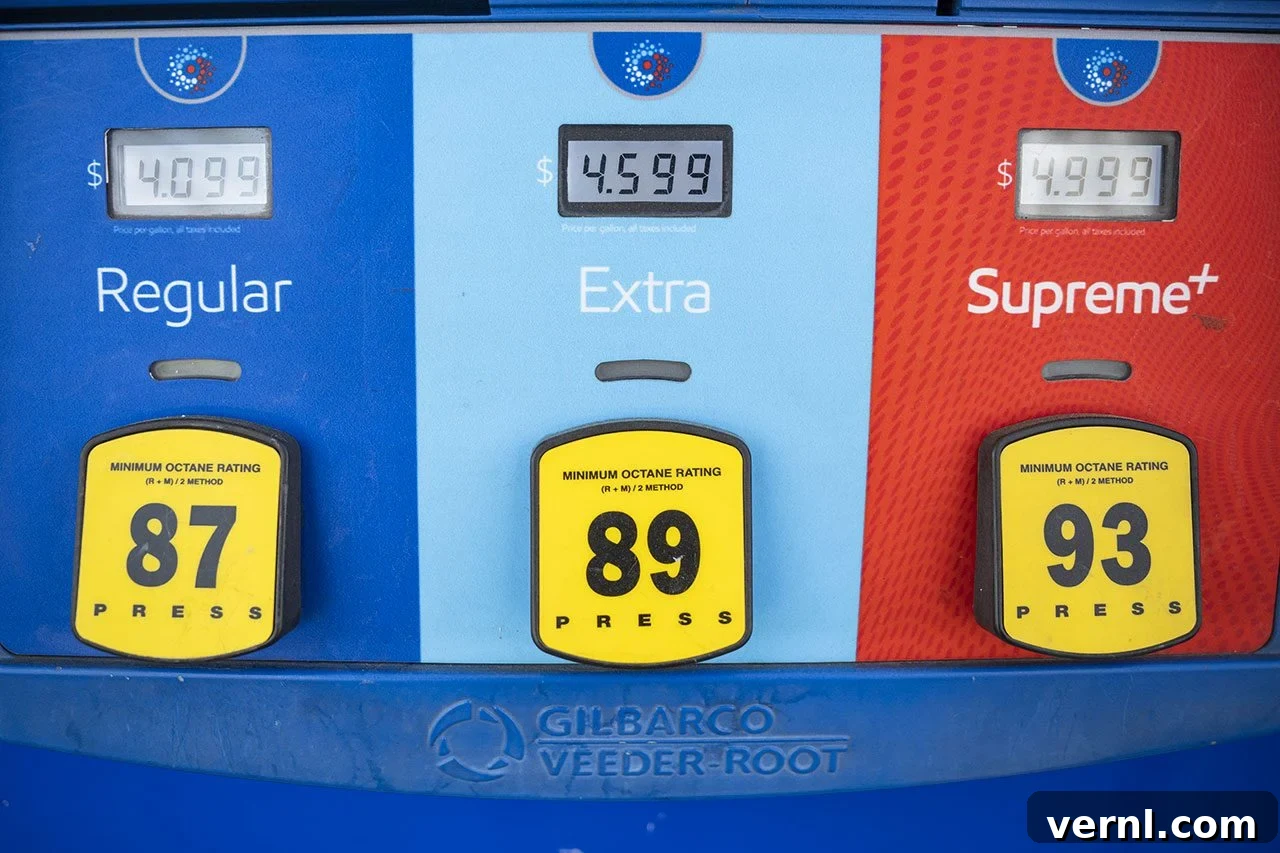
If you’ve ever stood at a gas pump and wondered whether your car truly needs the button labeled “Premium,” you’re not alone. Gasoline nozzles typically offer a small range of octane numbers—commonly from 85 to 93—and that choice can cost you a few cents to a dollar or more per gallon.
Those numbers are octane ratings. They don’t indicate how much energy is in the gasoline, how powerful the fuel is, or how clean it will keep your engine. Instead, octane ratings primarily describe how resistant the fuel is to engine knock, also called pre-ignition. Understanding this distinction can help you save money and choose the correct fuel for your vehicle.
Below is a clear explanation of what octane numbers mean and why choosing the right octane matters for fuel economy, engine performance, and long-term reliability.
What Does “Octane” Actually Mean?
A gasoline engine needs three things to run: air, fuel, and spark. Air mixes with vaporized gasoline in the cylinder, a spark ignites that mixture, and the controlled combustion pushes the piston down, rotating the crankshaft and producing power.
Under certain conditions, parts of the fuel–air mixture ahead of the flame front can become hot and compressed enough to ignite by themselves. When that uncontrolled ignition occurs, it creates additional combustion fronts that collide inside the cylinder. The result is the metallic knocking or pinging sound commonly called “knock.”
Knock disrupts proper combustion timing. Depending on when it happens, it can cause the piston to move prematurely or insufficiently, reducing efficiency and potentially harming pistons, bearings, spark plugs, and other engine components if it happens repeatedly or severely.
Octane rating measures how resistant a fuel is to this premature ignition. Higher-octane fuels resist knock more effectively; they’re harder to ignite under pressure. That resistance is important in engines that generate higher cylinder pressures—such as those using turbocharging, supercharging, or higher compression ratios—because those conditions raise the risk of pre-ignition.
In North America, gasoline engines are typically designed to run on fuels with octane ratings between 85 and 93. Some engines have a strict requirement, while others can run fine on a wide range of octanes. The engine’s design, compression ratio, and induction method determine which octane is appropriate.
Decoding the Octane Numbers at the Pump
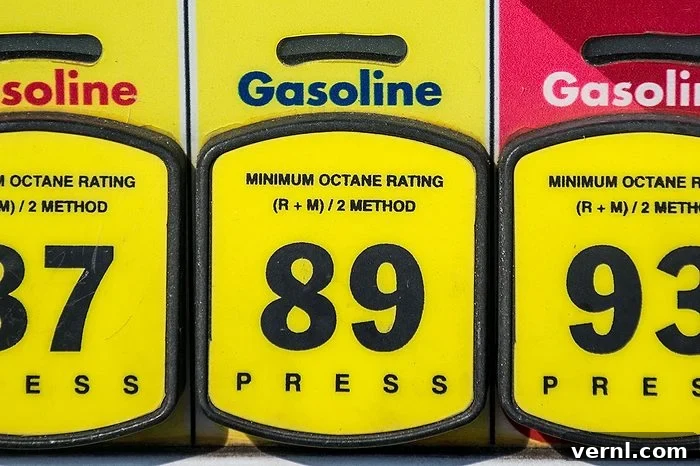
At the pump you’ll typically see two to four octane options. In the U.S., the number displayed is the Anti-Knock Index (AKI), commonly shown as the average of RON and MON: “(R+M)/2” or “(RON+MON)/2.” RON is the Research Octane Number, and MON is the Motor Octane Number. The AKI is calculated by adding RON and MON and dividing by two, which is why U.S. octane numbers can differ from those shown in countries that list only RON.
These ratings come from standardized test procedures. RON is measured at lower engine speeds with conditions that encourage knock, while MON is measured at higher speeds and more severe conditions. Because the MON test is more demanding, it typically yields a lower number than the RON. The two values are averaged to produce the AKI reading you see on pumps.
Why Do Some Vehicles Require Premium Fuel?
Higher octane does not automatically mean more power. This is the biggest misconception about premium gasoline. Putting 93-octane fuel into a vehicle designed for 87 octane will not increase power unless the engine’s control system is designed to take advantage of the higher resistance to knock.
High-performance and many modern efficient engines often use higher compression ratios, turbocharging, or aggressive ignition timing—features that raise cylinder pressures and temperatures and increase the risk of knock. These engines may be calibrated to perform and run safely only on higher-octane fuel. In those cases, premium fuel allows the engine to reach its intended power and efficiency without risking damaging pre-ignition.
Because many newer vehicles use smaller, turbocharged engines to improve efficiency, it’s increasingly common for everyday cars, trucks, and SUVs to recommend or require higher octane fuel even if they aren’t marketed as sports or performance cars.
Does Higher Octane Help a Car That Doesn’t Need It?
For the most part, higher-octane fuel offers little or no benefit in engines that are not designed to use it. Some manufacturers tune engines to vary timing and take advantage of higher-octane fuel to produce a modest increase in output when premium fuel is used. Mazda’s SKYACTIV engines are an example where different timing behavior can change horsepower depending on octane.
Most modern engines have knock-detection systems that adjust timing to avoid damage, so the potential performance difference is limited unless the engine specifically benefits from higher octane. Hybrid vehicles, which often operate at lower and more consistent engine speeds for efficiency, generally derive little benefit from premium fuel.
Is It Worth Saving Money by Using Lower-Octane Fuel?
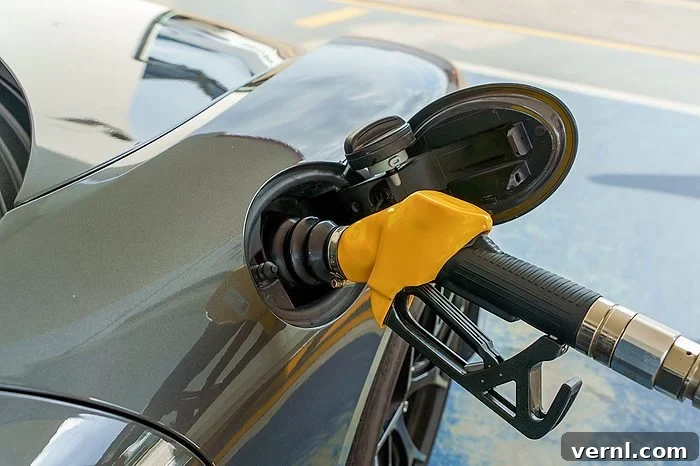
In most cases, yes. If your vehicle’s owner’s manual specifies regular octane, using premium fuel usually won’t improve fuel economy, reduce engine deposits, or enhance performance enough to justify the added cost. Most cleaning of combustion chambers and deposits happens as a result of normal combustion, not because of the pump grade. Additive packages in fuels can have modest effects on deposits, but they don’t change the octane-related properties that prevent knock.
Always follow the manufacturer’s recommendation: if the owner’s manual states that higher-octane fuel is required or recommended for your engine, use it. If not, the lowest octane that meets the vehicle’s specification will typically save you money without harming the engine.
The Short Version
Octane rating is a measure of a fuel’s resistance to premature combustion (knock), not its power or energy content. Use higher-octane fuel when your vehicle’s manufacturer requires or recommends it. For most cars built to run on regular octane, switching to premium delivers little benefit and costs more at the pump. Choosing the correct octane for your engine is a simple way to avoid unnecessary fuel expenses while protecting engine health.
Sources
- ASTM International standards for Research Octane Number and Motor Octane Number
- Federal Trade Commission guidance on fuel rating rules
RELATED:
- Do You Know What That Little Button on Your Seat Belt Is For?
- What Those Lines on Your Backup Camera Really Tell You
- Here’s What The Small Panel On Your Car’s Front Bumper Is For