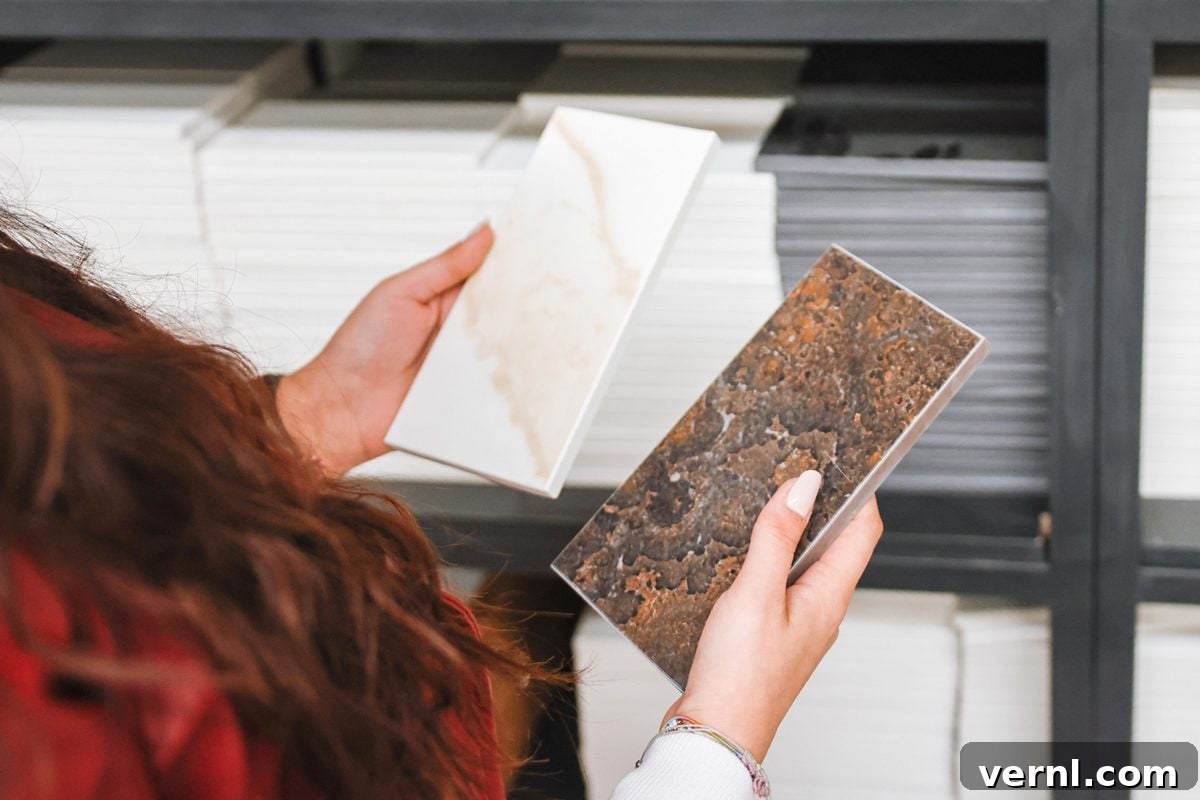
The Ultimate Guide to Selecting Tile: Materials, Sizes, and Design Tips for Your Home
Choosing the perfect tile for your home renovation or new construction project is a thrilling step in realizing your design vision. However, it’s also a decision that carries significant weight and responsibility. Given that tile installation can be a substantial investment and altering it later is both costly and disruptive, making an informed choice from the outset is crucial. Your selection should begin with a clear understanding of your personal aesthetic and budgetary constraints, followed by a careful consideration of materials and tile sizes that perfectly align with your vision for the space.
This comprehensive guide dives deep into the diverse world of tile, exploring the various types you’ll encounter. We’ll examine how each material and size can profoundly influence your project’s final look, overall cost, and long-term maintenance requirements. To ensure you make the best decision for your home, we’ve gathered expert-based insights from leading professionals in the tile industry: Fiorella Cosgrove of Cortina Tile, Elizabeth Legault from Best Tile, and Schannon Yodice of That Tile Chick. Their collective wisdom will illuminate the path to selecting tile that not only looks stunning but also performs exceptionally for years to come.
Navigating Tile Materials: Aesthetics, Durability, and Maintenance
The vast array of tile materials available today offers options to suit every taste, budget, and functional need. From the opulent appeal of natural stone to the practical affordability of engineered alternatives, tile materials span a wide spectrum in terms of price, installation complexity, and ongoing maintenance. When it comes to longevity, almost all properly installed tile, with the rare exception of extremely low-quality products, is designed to endure for decades. The reality, however, is that many tiles fall out of style long before they ever genuinely need to be replaced. To safeguard your investment and minimize future rip-outs, consider embracing timeless tile designs that will maintain their allure through evolving trends.
Marble Tile: Timeless Elegance with Specific Care
Marble tile embodies classic luxury, instantly elevating any space with its unique veining and sophisticated appearance. It is a versatile material frequently utilized for flooring, countertops, lavish shower walls, and elegant backsplashes. While undeniably beautiful, marble is not a low-maintenance option. It demands diligent cleaning with pH-neutral products and consistent, regular sealing to protect its porous surface from staining and etching. Fiorella Cosgrove advises, “You can use it anywhere, just know your traffic pattern.” She notes, “It’s typically used in less trafficked areas like powder rooms or as decorative accents. However, we also see a high demand for marble in backsplashes, entryways, and sophisticated hearth surrounds due to its undeniable visual impact.” Understanding its care requirements is key to enjoying marble’s enduring beauty.
Granite Tile: Robustness Meets Natural Beauty
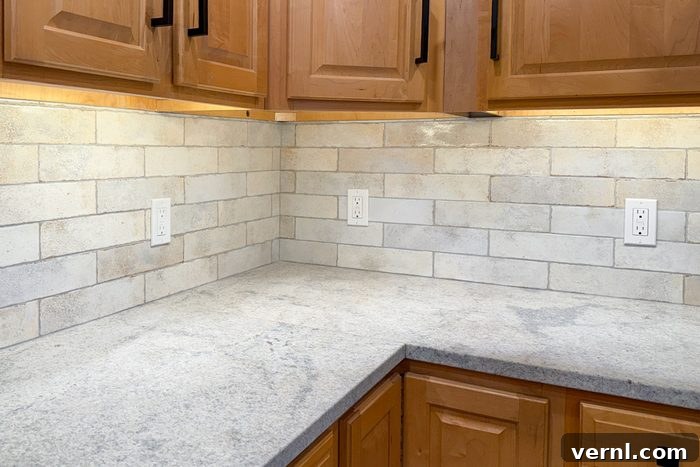
Granite tile stands as a testament to durability and natural resilience. As an igneous rock, it is significantly harder and notably less porous than marble, making it an excellent choice for demanding environments. This inherent strength makes granite a popular selection for high-traffic flooring installations in busy kitchens, welcoming entryways, and functional bathrooms. Beyond floors, it is also widely appreciated for its use in backsplashes and shower walls, where its resistance to moisture and wear is a significant advantage. While granite will also benefit from regular sealing to maintain its pristine condition and enhance its protective qualities, it inherently offers superior stain resistance compared to marble, making it a more forgiving option for active households.
Ceramic Tile: Versatile, Durable, and Affordable
Ceramic tile remains a perennial favorite among homeowners and designers alike, cherished for its remarkable durability and cost-effectiveness. Crafted from fired clay with a glazed surface, ceramic tile is an incredibly versatile material that excels in high-traffic areas throughout the home. Fiorella Cosgrove elaborates, “It’s a fired clay with a glazed surface,” which makes it an exceptional partner for radiant floor heating systems. This combination allows ceramic tile to distribute warmth evenly and efficiently across the entire floor surface, creating a comfortable and inviting atmosphere. Available in an extensive array of sizes, styles, and vibrant colors, ceramic tile offers unparalleled design flexibility. Its relative ease of cutting and installation also makes it a friendly option for both professional installers and experienced DIY enthusiasts.
Porcelain Tile: The Pinnacle of Durability and Water Resistance
Porcelain tile is a sophisticated, man-made material renowned for its extraordinary hardness and near-imperviousness to water. Engineered from denser clays and fired at higher temperatures than ceramic tile, porcelain achieves a superior level of durability and impermeability. “It’s made from minerals, so is far less porous,” explains Fiorella Cosgrove, highlighting its key advantage. This exceptional density and low porosity make porcelain an incredibly popular and reliable choice for challenging applications, including exterior installations, moisture-rich bathrooms, and bustling kitchens. Furthermore, its inherent toughness ensures it holds up exceptionally well even in the most high-traffic areas, resisting chips, scratches, and wear over time, making it a long-lasting and practical investment.
Glass Tile: A Touch of Brilliance and Artistic Flair
Glass tile brings a unique aesthetic to any space, celebrated for its ability to reflect light and add a luminous, often jewel-like quality to surfaces. It is primarily used as a feature wall, a captivating backsplash, or an elegant accent, where its translucence and wide range of colors can truly shine. However, it is crucial to note that glass tile is never suitable for flooring applications due to its inherent fragility and lack of structural integrity underfoot. Its installation requires specialized skills and tools. Schannon Yodice emphasizes, “Glass tile is a special tile and should be installed by someone skilled with that material, as it takes special blades, cutting techniques and installation techniques.” Professional installation is highly recommended to ensure proper handling, cutting, and setting, which prevents cracking and ensures a flawless finish that maximizes its artistic potential.
Mastering Tile Sizes for Aesthetic and Functional Impact
While virtually any size of tile *could* technically be used in a particular application, certain sizes inherently lend themselves better to specific situations, profoundly impacting both the aesthetic and functional outcome of a space. The visual effect you wish to achieve within a room will heavily influence the most appropriate tile size to select, as Fiorella Cosgrove wisely points out. A critical consideration for any tile project, particularly for floors, is the amount of grout required: smaller tiles inherently mean more grout lines, which translates to increased cleaning and maintenance demands over time. Understanding the impact of tile size on both design and upkeep is essential for a successful project.
Mosaic Tile: Detail, Grip, and Artistic Freedom
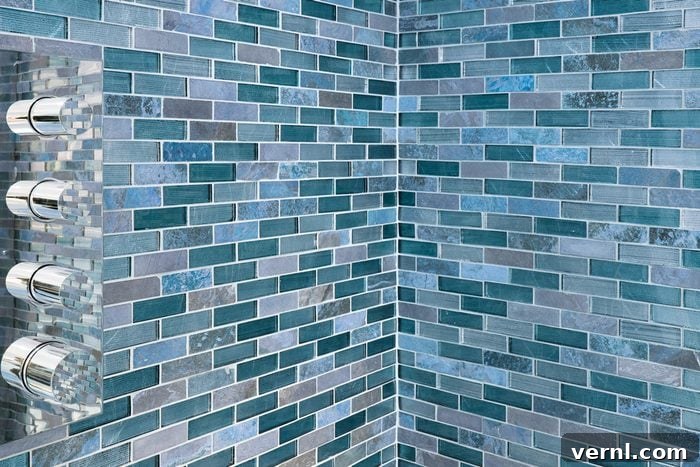
Mosaic tiles, characterized by their small dimensions and typically mounted on connective netting for easier installation, are a remarkably popular and versatile choice for specific applications. Their diminutive size makes them exceptionally well-suited for shower floors, where their numerous grout lines provide superior slip resistance – a critical safety feature in wet environments. Elizabeth Legault highlights another key benefit for shower installations: “For showers with a center drain, the floor will need to be pitched.” She adds, “Mosaic tiles are easier to create this pitch due to their small size,” allowing for more precise contouring to ensure proper water drainage. Beyond functional advantages, mosaic tiles are also extensively used for creating intricate accent features, decorative borders, and visually stunning feature walls, offering endless opportunities for artistic expression.
Subway Tile: A Classic Reimagined for Modern Spaces
The iconic subway tile, originally popularized in early 20th-century New York City subway stations, continues to be a dominant trend in contemporary home design. While its classic 3×6-inch format remains a beloved choice, today’s homeowners are increasingly exploring larger interpretations of this timeless style. Elizabeth Legault observes, “People are moving to slightly bigger subways, like 3×12’s and 2 ½ x 8’s, but it’s still primarily used for shower walls and backsplashes.” These expanded dimensions offer a fresh take on the traditional look, providing a slightly more modern and streamlined aesthetic while retaining the clean lines and versatile appeal that make subway tile such a enduring favorite for kitchens and bathrooms.
12×12 Tile: The Resurgence of a Traditional Favorite
After a period of reduced popularity in favor of larger formats, the classic 12×12-inch tile is experiencing a significant revival, signaling a shift in design preferences. According to Elizabeth Legault, this traditional square format is making a strong comeback, particularly for specific design aesthetics. “Checkerboard floors are starting to see a resurgence, and people are using 12x12s to get that look,” she explains. This return to a more symmetrical, often contrasting, pattern demonstrates the enduring appeal of traditional design elements. The 12×12 tile offers a balanced proportion that can feel both classic and contemporary, depending on the chosen material, color, and grout, making it a versatile option for various rooms and styles.
12×24 Tile: A Contemporary Standard for Spaciousness
The 12×24-inch tile has emerged as an incredibly popular and versatile choice in modern interior design, favored for its ability to create a sense of spaciousness and sleekness. This elongated rectangular format is most frequently specified for flooring, where its dimensions help to minimize grout lines and create a more continuous, expansive look, particularly in open-plan areas. However, its aesthetic appeal and practical benefits extend beyond floors; 12×24 tiles are also commonly used on shower walls, contributing to a clean, contemporary feel in bathrooms. Elizabeth Legault provides insight into its widespread appeal, stating, “The larger tiles need less grout, which means less maintenance.” This reduced maintenance, combined with its modern aesthetic, largely explains why the 12×24 tile has become a go-to option for many homeowners seeking a sophisticated yet practical solution.
Large Format Tile: The Bold Statement of Modern Design
The biggest and arguably most impactful trend in tile sizing today is the widespread adoption of large format tiles, defined as any tile exceeding 12×24 inches. This category encompasses a vast range of dimensions, with tiles becoming progressively larger to create truly expansive and visually seamless surfaces. “We’re seeing things larger and larger,” confirms Fiorella Cosgrove, highlighting the accelerating popularity of this trend. The appeal lies in the minimalist aesthetic they provide: “Larger tiles look more modern and sleek – and people don’t like lots of grout.” These oversized tiles are incredibly versatile, finding applications on backsplashes, floors, and shower walls, where they minimize visual breaks and contribute to a contemporary, sophisticated ambiance. However, it’s important to acknowledge that the installation of large-format tiles is inherently more complex and typically requires specialized tools, handling techniques, and often, professional installation to ensure a perfect, durable finish.
Essential Considerations for Your Tile Project
Beyond simply choosing a material and size, several other critical factors should influence your tile selection to ensure your project’s success and your long-term satisfaction. Thoughtful consideration of these elements early in the planning process can prevent costly mistakes and ensure your chosen tile performs beautifully in its intended environment.
Budgeting for Tile: Material vs. Installation Costs
When setting your tile budget, it’s crucial to consider more than just the cost per square foot of the tile itself. Installation costs can vary dramatically depending on the tile material, size, complexity of the layout, and the experience level of the installer. For instance, natural stone or large format tiles typically require more specialized installation techniques and therefore can have higher labor costs than standard ceramic tiles. Always get detailed quotes for both materials and installation to understand the true total investment.
Maintenance Expectations and Longevity
Different tile materials come with varying maintenance requirements. Are you prepared for the regular sealing and careful cleaning that marble demands, or would you prefer the low-maintenance ease of porcelain? Consider your lifestyle and how much time you’re willing to dedicate to tile care. While most tiles are built to last decades, as mentioned, aesthetic trends change. Choosing a timeless design and a durable material will maximize your tile’s longevity and ensure it remains a beautiful feature in your home for years.
Slip Resistance and PEI Rating: Safety and Durability
For areas prone to moisture, such as bathrooms, showers, and outdoor spaces, slip resistance is a paramount safety concern. Look for tiles with textured surfaces or specific ratings for slip resistance. Furthermore, the PEI (Porcelain Enamel Institute) rating is an essential metric, particularly for glazed tiles. This rating indicates a tile’s resistance to abrasion and wear, making it crucial for determining suitability for different traffic levels. A PEI of 1 is for wall tile, while a PEI of 5 is for heavy commercial use, guiding you to select a tile that can withstand the specific foot traffic of your intended space.
Frequently Asked Questions About Tile
Navigating the world of tile can bring up many questions. Here are answers to some of the most common inquiries to help clarify your choices.
Can I use the same tile for both my bathroom floor and shower walls?
“Yes, you can use the same tile for bathroom floors and walls if that tile is suitable for that space,” explains Schannon Yodice. “It depends on the project and use.” It’s critical to verify that the chosen tile meets the durability and slip-resistance requirements for a floor, especially in a high-traffic bathroom. For example, while many floor tiles can be used on walls, a tile designed specifically for walls might not be durable enough to withstand the foot traffic and moisture exposure of a main bathroom floor.
What is a PEI rating, and why does it matter?
Established by the Porcelain Enamel Institute, a PEI rating is a crucial measurement of a glazed tile’s durability and resistance to abrasion from foot traffic. Fiorella Cosgrove details the scale: “PEI ratings are one to five. One is wall tile, two is light residential traffic like a bathroom, three is any residential room, four is light commercial use, and five is heavy commercial traffic like bus stations or airports. It’s all about glaze strength.” Understanding this rating ensures you select a tile tough enough for its intended application, preventing premature wear and tear.
How do I choose the right grout color and width for my tile?
Choosing grout color can dramatically alter the final look of your tiled surface. A contrasting grout color will highlight each individual tile, creating a more dynamic pattern, while a matching grout color will create a more seamless and uniform appearance, especially with larger tiles. Grout width is largely determined by tile size and desired aesthetic; smaller tiles or those needing to accommodate subfloor movement often require wider grout lines. Keep in mind that lighter grouts show dirt more easily, while darker grouts can make a space feel smaller. Epoxy or urethane grouts offer superior stain resistance and durability for high-traffic or wet areas.
Meet Our Tile Industry Experts
- Fiorella Cosgrove is the insightful manager of Cortina Tile in West Springfield, Massachusetts, a reputable family-run business with a legacy in the tile industry.
- Elizabeth Legault serves as a knowledgeable design consultant at Best Tile in West Springfield, Massachusetts, assisting clients in bringing their tile visions to life.
- Schannon Yodice is an experienced contractor and the engaging host of YouTube’s popular channel ThatTileChick, where she provides detailed how-to videos for homeowners and DIY enthusiasts. She is also the founder of the Online Tile Academy, an educational platform dedicated to teaching students professional tile installation techniques, including waterproof shower systems.
Discover More Home Improvement Insights
- 7 Signs You’re Over-Decorating
- 18 Cheap Decor Ideas That Look Expensive
- 14 Traditional-Style Home Decor Ideas That are Still Cool