The Definitive Guide to Air Duct Cleaning: When, Why, and How Much It Costs
Many homeowners believe that routine air duct cleaning is a standard part of home maintenance, akin to changing air filters or cleaning gutters. However, the truth about its necessity and benefits is often misunderstood. When you enlist the services of a professional air duct cleaning company, you’ll witness specialized equipment, most notably a powerful truck-mounted vacuum cleaner. This immediate display of heavy-duty machinery should be your first indication that this isn’t a task typically suited for a weekend DIY project. The significant investment in such equipment is a primary reason why the national average cost for professional duct cleaning typically ranges between $450 to $1,000.
While this cost might seem substantial, it may very well be an expense you don’t even need to incur. Extensive studies conducted by reputable organizations, including the Environmental Protection Agency (EPA) and the Canada Mortgage and Housing Corporation, have consistently shown that routine air duct cleaning offers only a minimally beneficial effect on overall indoor air quality. In some scenarios, it can even exacerbate existing problems by stirring up undisturbed dust and allergens, making the air quality temporarily worse. Therefore, the EPA explicitly recommends professional duct cleaning only under very specific circumstances, which we will explore in detail.
Key Indicators: When Professional Air Duct Cleaning is Essential
Rather than a routine preventive measure, professional air duct cleaning should be considered a targeted solution for identifiable problems within your HVAC system. The EPA outlines three critical situations where hiring a professional is not just recommended, but often necessary to safeguard your home’s air quality and system integrity. Understanding these triggers is crucial for making an informed decision about this specialized service.
- Excessive Dust Buildup: This is perhaps the most common reason for considering professional intervention. If you observe an unusually high volume of dust visibly circulating through your registers, or if accumulated dust is interfering with the proper operation and efficiency of your HVAC system, it’s time to investigate. Such buildup might be the result of years of neglect, particularly if the system hasn’t been cleaned in a very long time. However, it can also rapidly accumulate following major home renovations or remodeling projects, which often release significant amounts of construction dust into the air. This excessive particulate matter not only compromises air quality but can also strain your HVAC components, leading to decreased efficiency and potential breakdowns.
- Substantial Mold Growth: The presence of mold within your ductwork is a serious concern that necessitates immediate professional attention. Mold thrives in damp, dark environments, and once established, it can release spores into your home’s air, potentially causing respiratory issues, allergies, and other health problems for occupants. You might detect a musty odor emanating from your vents, or even visually spot mold growth on or around the registers. A more thorough inspection with a flashlight might reveal mold colonies on the interior walls of the ducts. If mold is confirmed, merely cleaning the ducts isn’t enough; the underlying moisture problem that feeds the mold must also be identified and eliminated to prevent recurrence.
- Pest Infestations: Discovering evidence of rodents or other vermin in your ductwork is another clear signal for professional cleaning. Pests like mice, rats, insects, or even birds can nest in air ducts, leaving behind droppings, urine, fur, nesting materials, and deceased bodies. These contaminants can introduce bacteria, viruses, and allergens into your indoor air, posing significant health risks. Furthermore, pests can damage ductwork by chewing through insulation or the ducts themselves, leading to air leaks and reduced HVAC efficiency. In such cases, professional cleaning is vital to remove biohazards and restore hygienic conditions.
In each of these specific instances, only certified and experienced professionals possess the specialized equipment and expertise to effectively address the problem. It’s important to note that even with professional cleaning, you may have preparatory work to complete before their arrival. For instance, if you’re dealing with a significant mold problem, the source of moisture feeding it must be eradicated first, which might involve repairing leaks, improving ventilation, or adding insulation around the ducts. Similarly, if an infestation is present, you’ll need to hire a licensed exterminator to completely remove the pests and seal entry points before any cleaning can safely commence. These prerequisite services typically involve additional costs beyond the duct cleaning itself.
Understanding the Investment: Air Duct Cleaning Cost Factors
Determining the precise cost of air duct cleaning can be challenging because the most accurate metric — the number of linear feet of ductwork — is often impractical for technicians to measure upfront. Consequently, professionals typically rely on more accessible methods to estimate the job’s total expense. These primary pricing strategies include assessing the overall square footage of your home or counting the number of supply and return vents.
Pricing by Square Footage
One prevalent method for calculating duct cleaning costs is based on your home’s total square footage. On average, you can expect to pay anywhere from $0.20 to $0.40 per square foot. To put this into perspective, a modest 1,200-square-foot house might incur costs ranging from $240 to $500, while a larger 3,000-square-foot residence could see prices climb from $600 to $1,200. This method often provides a straightforward way for homeowners to gauge potential costs. When quotes are given using this standard, reputable cleaners typically include the comprehensive cleaning of all registers, the interiors of the main duct runs, and critical HVAC components such as the air handler, coils, and blower motor. However, it is paramount to clarify what exactly is encompassed in the quoted price. Some less scrupulous companies might offer an enticingly low per-square-foot rate that excludes these essential “extras,” leading to an unexpected increase in your final bill. Always request a detailed breakdown of services to avoid any hidden charges. You can also research the cost of house cleaning to compare general home service expenses.
Pricing by Vents
Another common approach to pricing is based on the number of vents in your home. This method often differentiates between supply vents, which deliver conditioned air, and return vents, which draw air back into the system. On average, cleaning a supply vent may cost between $25 and $50, while return vents, often larger and potentially dirtier, might range from $40 to $75. Using this standard, the average quote for a smaller home with approximately eight vents would be roughly comparable to the cost for a 1,200-square-foot house. Similarly, a larger home featuring twenty or more vents would see costs align with those for a 3,000-square-foot property. While this method can seem more granular, it’s crucial to exercise caution. Some companies might present a deceptively low initial estimate based solely on the number of vents, only to “tack on” a significant additional whole-house flat fee or charge extra for cleaning the main trunk lines or other critical components. Always obtain a clear, itemized quote to prevent any last-minute surprises.
Additional Factors Influencing Cost
Beyond the primary pricing methods, several other elements can influence the total cost of your air duct cleaning service. The overall complexity of your ductwork, including multiple HVAC units or unusually long and intricate runs, can increase labor time and thus cost. Accessibility is another key factor; if ducts are difficult to reach in tight spaces or crawl spaces, the job becomes more challenging and expensive. Furthermore, if the technician identifies minor repairs during the cleaning process, such as sealing leaking seams or patching small holes, these services will be added to your bill. The severity of contamination also plays a role; heavily soiled ducts, extensive mold remediation, or removing significant pest debris will naturally require more intensive work. Lastly, the geographical location and the reputation of the service provider can affect pricing, with companies in high-cost-of-living areas or those with stellar reputations often charging premium rates.
Choosing the Right Professional: Essential Questions to Ask
Hiring a contractor for any home service, especially one as specialized as air duct cleaning, requires careful due diligence. Before committing to any company, it’s imperative to ask a series of pointed questions to ensure you’re entrusting your home to a qualified, reputable, and reliable professional. Your initial inquiries should always cover their general qualifications, licensing, and insurance. It is absolutely critical to request and verify proof of liability insurance, as this protects you from financial responsibility should any accidents or damage occur on your property during the cleaning process. Additionally, inquire about how long the contractor has been in business, as longevity often speaks to stability and experience. Always ask for a list of recent references that you can contact directly via phone, text, or email to assess their past work quality and customer satisfaction.
Beyond these general inquiries, specific questions tailored to air duct cleaning professionals will help you differentiate between top-tier service providers and those to approach with caution:
- What chemicals do you use during the cleaning process? Obtain a comprehensive list of all cleaning agents, disinfectants, or deodorizers they intend to use. It is your responsibility to research these chemicals to ensure they are safe for your home environment, for children, pets, and individuals with respiratory sensitivities. Prioritize companies that use EPA-approved products or non-toxic alternatives where possible.
- How much do you charge for minor repairs, such as resealing leaking seams or small patches? Understanding the cost for incidental repairs upfront can prevent unexpected charges. A reputable company will be transparent about these potential add-on services and their pricing.
- How will you control dust and prevent cross-contamination during the cleaning process? A professional company should have a clear methodology for containing dust and debris. This typically involves covering floors with clean drop cloths, protecting walls and sensitive trim with plastic guards, and utilizing powerful negative pressure systems to ensure dust is extracted from your home, not spread throughout it. They should also detail their process for preventing the spread of contaminants from dirty ducts to clean areas of your home.
- Do you conform to cleaning standards established by the EPA or the National Air Duct Cleaners Association (NADCA)? While the EPA provides valuable guidance and recommendations on air duct cleaning, they do not offer certification for cleaning companies or individuals. However, the NADCA is the recognized industry authority that establishes comprehensive standards for HVAC system cleaning and provides professional certification. Your absolute best bet for ensuring quality workmanship, adherence to best practices, and ethical conduct is to seek out an NADCA-certified cleaning company. This certification signifies that technicians have undergone specialized training and adhere to stringent guidelines.
- Do you provide a visual inspection or documentation once the work is complete? A truly reputable and transparent company will offer to perform a post-cleaning visual inspection, often using remote cameras, to allow you to see the results of their work. They should also be willing to provide “before and after” images or video footage as proof of their thoroughness and to guarantee their service. This offers peace of mind and tangible evidence of a job well done.
Maintaining Healthy Ducts: What Homeowners CAN Do (DIY)
The question of whether you can undertake air duct cleaning yourself often arises. For a comprehensive, whole-house duct cleaning that meets professional standards, the answer is generally no. Achieving the level of cleanliness required by organizations like NADCA demands placing the entire HVAC system under negative pressure, a process that relies on a large, high-powered, truck-mounted vacuum system. This highly specialized equipment is simply not something the average homeowner possesses or can easily rent.
However, this doesn’t mean you are powerless in maintaining the cleanliness and efficiency of your ductwork. You can absolutely play an active role in keeping your ducts in good condition and potentially avoiding the need for professional cleaning altogether, provided there are no major issues like mold or infestations. By regularly implementing a simple DIY cleaning regimen, you can significantly reduce dust buildup and improve your indoor air quality. Here’s how you can maintain your ducts using common household tools like a standard vacuum cleaner, a dedicated dryer vent cleaning brush, and some paper towels:
- Clean Vent Covers: Start by carefully removing all your vent covers (registers) throughout the house. These often accumulate a significant amount of dust and grime. Wash them thoroughly with warm, soapy water, rinse them clean, and allow them to dry completely before reinstallation. While the covers are off, use a damp paper towel or microfibre cloth to wipe away any visible dirt or dust from around the vent openings themselves.
- Brush Out Duct Interiors: Arm yourself with a flexible dryer vent cleaning brush. Gently insert the brush into each duct opening and push it in as far as it can comfortably reach. Methodically brush the insides of the ducts, rotating the brush to loosen any clinging dust, pet hair, or debris. Don’t be afraid to lightly tap on the sides of the visible ductwork with the brush to dislodge stubborn particles. This action helps to break up compacted dust and make it easier to remove.
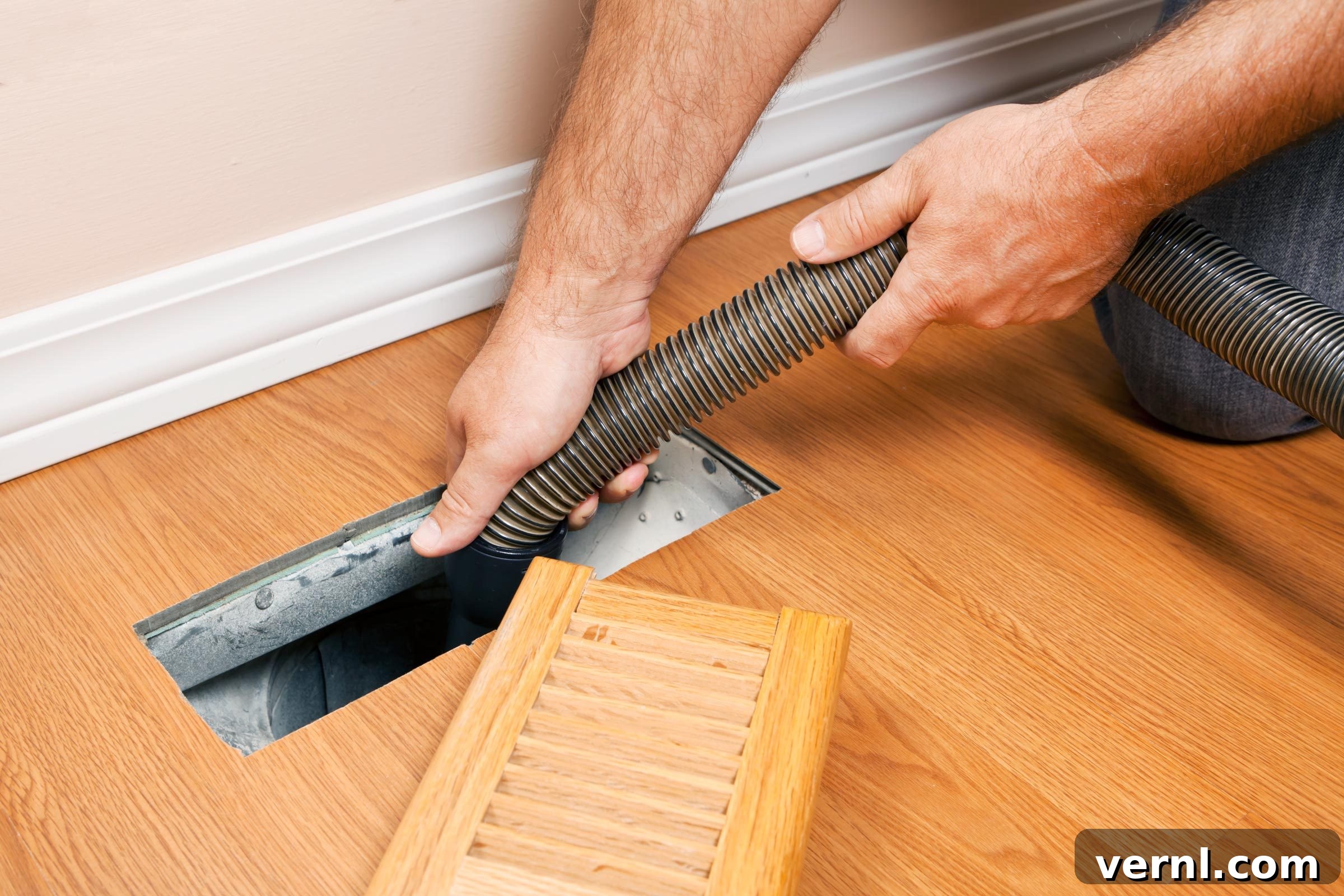
- Vacuum Loose Debris: After brushing, attach the brush attachment or a crevice tool to your vacuum cleaner hose. Insert the hose into each duct opening, reaching as far as possible, and thoroughly vacuum up all the loosened dust and debris. Work systematically to ensure you cover as much of the accessible duct surface as possible. For deeper reaches, you might consider attaching extensions to your vacuum hose if available.
- Change Air Filters Regularly: This is arguably the single most important DIY task for maintaining healthy ducts and overall HVAC system health. Air filters are your HVAC system’s first line of defense against dust, pollen, pet dander, and other airborne particulates. A dirty filter restricts airflow, forcing your HVAC system to work harder, which reduces efficiency and can lead to premature component wear. More critically, a clogged filter allows more contaminants to bypass it and accumulate directly in your ductwork and on internal HVAC components. Consult your HVAC system’s manual for recommended filter change frequencies, but a general rule of thumb is every 1 to 3 months, or more often if you have pets, allergies, or live in a dusty environment. Invest in quality filters with appropriate MERV (Minimum Efficiency Reporting Value) ratings for your system to capture finer particles effectively.
- Control Humidity and Seal Leaks: Beyond direct cleaning, proactive measures significantly contribute to duct health. Maintain optimal indoor humidity levels (typically between 30-50%) to prevent mold growth. Consider using a dehumidifier in damp areas. Regularly inspect your ductwork for visible leaks or gaps, especially at connections. Sealing these leaks with mastic sealant or metallic tape not only prevents dust and moisture intrusion but also improves HVAC system efficiency.
By understanding when professional intervention is truly necessary and by consistently implementing simple DIY maintenance practices, homeowners can ensure a healthier indoor environment and a more efficient HVAC system for years to come.