Climbing Vines: Enhancing or Endangering Your Home’s Exterior?
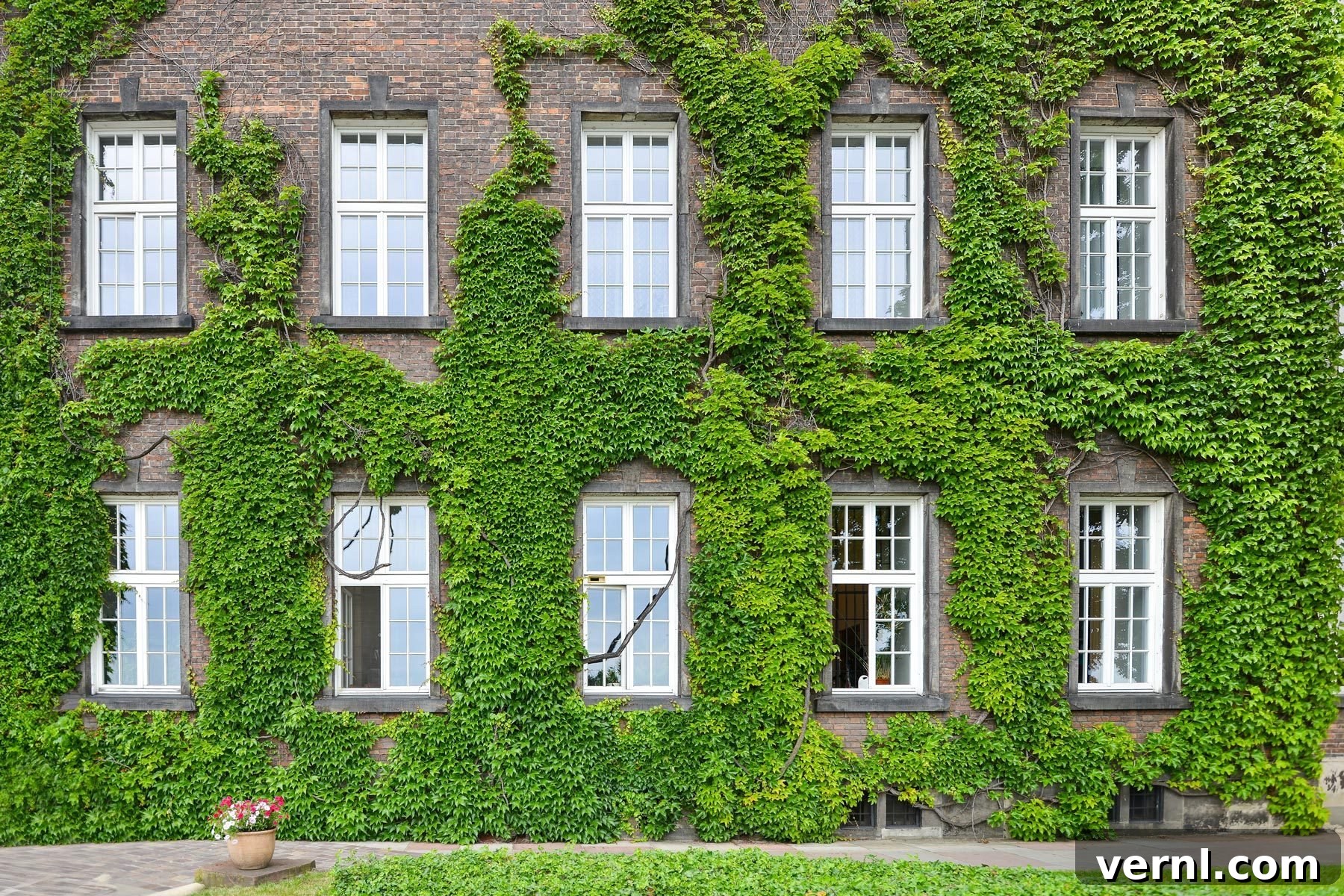
Vines possess an undeniable allure, gracefully ascending surfaces and transforming ordinary walls into verdant canvases. Their natural tendency to seek support, entwining themselves around structures, can lend a timeless elegance or a rustic charm to any home. From the ivy-clad walls of historic universities to the quaint cottages adorned with flowering climbers, the aesthetic appeal of vines is clear. They can soften harsh architectural lines, provide a sense of established age, or even help a structure blend seamlessly into its natural surroundings.
However, this lush, captivating greenery often comes with a hidden cost – a potential threat to your home’s structural integrity and long-term health. The very nature of a vine’s growth, its persistent search for a foothold, can initiate a cascade of issues ranging from minor cosmetic damage to severe structural compromises. Understanding these implications is crucial for homeowners considering adding vining plants to their property or those managing existing growth.
This comprehensive guide delves into the pros and cons, offering expert insights and practical advice to help you make informed decisions about cultivating climbing plants near your home. Read on to uncover the intricate relationship between vining plants and your house, ensuring both beauty and durability.
Should You Allow Vines to Grow Directly on Your House? An Expert Perspective
For most homeowners, the unequivocal answer to whether you should encourage vines to grow directly on your house is a resounding “no.” If your home is currently vine-free, it’s best to keep it that way. Introducing vining plants to your exterior walls is often an invitation to significant long-term maintenance challenges and potential structural damage.
The primary concern stems from the relentless growth habits of many vine species. These plants are not merely decorative; they are vigorous biological entities driven to climb and spread. This inherent drive translates into consistent, often demanding, care and pruning requirements. Neglect can quickly lead to an unruly green takeover, with vines running roughshod over your home’s exterior surfaces.
One of the most insidious problems caused by vines is moisture retention. As they cover walls, they create a dense, protective layer that traps moisture against the building material. This constant dampness fosters an ideal environment for mold, mildew, and, most critically, rot. Wooden siding, window frames, and trim are particularly vulnerable to rot, which can severely compromise the structural integrity of your home. Even masonry can suffer, as constant moisture can lead to efflorescence or the breakdown of mortar.
Moreover, aggressive climbing vines are notorious for seeking out and infiltrating weak points in a structure. They will explore cracks in stucco, gaps in siding, and loose mortar joints in brickwork to gain a stronger foothold. Once established, their continuous growth and expansion can widen these existing imperfections, exacerbating cracks and causing new ones. Their tendrils and adhesive pads can also lift paint, dislodge siding, and penetrate window seals, creating pathways for water intrusion into your home’s interior.
The danger extends beyond the main walls. Many ambitious vines will ascend all the way to the eaves and gutters, where they can cause substantial damage. They can clog gutters, preventing proper drainage and leading to overflowing water that can damage fascias and foundations. Furthermore, their weight can pull gutters away from the house, and their roots can penetrate roofing materials, leading to leaks.
Jeffery Iles, PhD., a distinguished professor and chair of Iowa State University’s Department of Horticulture and a woody plant specialist, emphatically states, “An established vine can result in undesirable moisture retention and buildup along the wall surface. I would never recommend vines to be used in this fashion.” He further elaborates on their inherent nature to exploit weaknesses: “It stands to reason that vining and twining plants probably don’t do masonry, siding and other types of building coverings any favors. In fact, they are quite resourceful at finding cracks and crevices to gain a foothold, but in doing so, may cause damage, especially when it comes to removing the vines.” This expert consensus underscores the serious risks associated with allowing vines direct contact with your home’s structure.
Managing Existing Vines: To Remove or Not to Remove?
If you’ve recently purchased a home adorned with established climbing vines, or if they have simply been a long-standing feature of your property, you might be facing a dilemma: should you remove them? While the initial instinct might be to eliminate a potential threat, the expert advice often leans towards caution, suggesting that it may be best to leave them undisturbed.
The reason for this cautionary approach lies in the tenacious methods by which vines attach themselves to surfaces. Many common house-climbing vines, such as ivy and creeping fig, utilize specialized structures like aerial roots or root-like holdfasts (also known as peds) to firmly adhere to walls. These powerful adhesive structures are designed for maximum grip, allowing the vine to ascend vertically without external support. While effective for the vine, they can cause significant damage to building materials if forcibly removed.
As Jeffery Iles explains, “Removing the vines, even if killed before removal, may cause damage to the structure they are growing on during removal.” Attempting to tear these vines away from a wall can pull off paint, rip away pieces of stucco or siding, and even dislodge bricks or mortar. At the very least, their removal often leaves behind unsightly scars, remnants of the holdfasts that are next to impossible to clean completely, permanently altering the appearance of the exterior.
Specific Challenges with Stucco and Brick
The National Gardening Association specifically highlights the vulnerability of stucco to vine damage. “Any plant that actually attaches itself to stucco has the potential to damage the stucco,” they report. Ivy and creeping fig are singled out as particularly problematic due to their sticky peds. Once these peds attach, they create an incredibly strong bond, making them “next to impossible to remove, even if you pull down the plants.” The act of removing the plant often takes chunks of the stucco with it, necessitating costly repairs.
Similarly, the Brick Industry Association warns that removing these types of vines from brickwork is not only difficult but can also lead to severe damage to the mortar joints. Such damage may require extensive repointing – the process of repairing or replacing mortar between bricks – or other specialized masonry repairs. This can be a labor-intensive and expensive undertaking, far outweighing the initial aesthetic benefits of the vines.
Real Estate Implications
From a real estate perspective, established vines on a home can be a significant red flag for potential buyers and home inspectors. A thorough home inspection will likely identify the presence of vines as a concern, especially if there are signs of moisture damage, structural compromise, or areas where the vines have already begun to lift or penetrate building materials. As Dr. Iles wisely advises, “I wouldn’t purchase a home covered in vines unless my building inspector assured me there had been no structural damage.” The perception of potential damage, or the actual discovery of it, can negatively impact a home’s resale value and even deter prospective buyers, leading to renegotiations or lost sales.
Safe Alternatives: Supporting Vines Away from Your Home
If your heart is set on incorporating the beauty of climbing plants into your landscape, the safest and most recommended approach is to grow them on freestanding structures, well away from the main dwelling or garage. As Iles suggests, “In my opinion, vines are better used on freestanding structures.”
Excellent examples of suitable support structures include:
- Trellises: Often lattice-like, trellises provide an ideal framework for climbing plants.
- Arbors: Archways that can create an inviting entrance or focal point in a garden.
- Pergolas: Open structures with a roof of rafters, perfect for creating shaded outdoor living spaces.
- Fences: A robust fence can be an excellent canvas for certain vining plants.
- Sturdy Posts or Pillars: Independent structures offering vertical support.
These structures can be purchased ready-made from garden centers or custom-built using materials like netting, wire, PVC pipe, or wood. When selecting or constructing a support, it is crucial to ensure it is robust enough to bear the mature weight of the vine, which can be substantial for vigorous growers. Furthermore, strategically position these supports far enough away from the home or garage to allow for ample air circulation. This separation helps prevent moisture buildup against your home and ensures that the vines cannot easily bridge the gap to attach themselves to your walls.
Problematic Vines to Approach with Extreme Caution
Even when planted on freestanding supports, certain vine species are so aggressive and invasive that they can still become significant landscape management headaches. Their rapid growth and vigorous spreading habits make them difficult to control, and they can quickly overwhelm gardens, choke out native plants, and even damage the very structures they are meant to adorn. To save yourself considerable future effort and potential ecological issues, it’s best to avoid these problematic vines entirely.
- Chinese Wisteria (W. sinensis) & Japanese Wisteria (W. floribunda): These non-native wisteria species are notorious for their incredibly fast and aggressive growth. While beautiful in bloom, they can quickly overpower even robust trellises, girdling trees, and spreading prolifically through the landscape via seeds and underground runners. Their woody stems can become exceptionally thick and heavy, capable of twisting and distorting metal fences or collapsing weaker structures.
- American Wisteria (W. frutescens): While less aggressive than its Asian counterparts, American wisteria is still a formidable grower, capable of reaching lengths up to 40 feet. It requires substantial, heavy-duty support and consistent, rigorous pruning to maintain a manageable size and prevent it from sprawling uncontrollably.
- Oriental Bittersweet (Celastrus orbiculatus): This highly invasive vine is a serious threat to native ecosystems. It wraps tightly around host plants, girdling and eventually killing trees and shrubs by cutting off their water and nutrient supply. Its vibrant berries, while attractive, contribute to its widespread dispersal by birds. It is incredibly difficult to eradicate once established.
- Japanese Honeysuckle (Lonicera japonica): A pervasive invasive species, Japanese honeysuckle quickly forms dense mats that smother other vegetation. It twines aggressively, shading out native plants and altering habitats. While its fragrant flowers are appealing, its ecological impact is overwhelmingly negative, and it should be avoided in most landscaping contexts.
- Porcelain-berry (Ampelopsis glandulosa var. brevipedunculata): Often mistaken for grapevines due to its similar leaf structure, porcelain-berry is another highly invasive species. It grows rapidly, forming dense tangles that can smother other plants and small trees. Its distinctive, multi-colored berries are dispersed by birds, leading to its rapid spread.
- Virginia Creeper (Parthenocissus quinquefolia): Although a native plant, Virginia creeper can be quite vigorous and aggressive, particularly in shaded areas. It adheres to surfaces with strong adhesive pads, similar to ivy, which can cause damage if allowed to grow on structures. While not as destructive as true invasive species, its growth habit warrants careful management and strict containment to appropriate support structures.
Annual Vines: A Season of Beauty Without the Commitment
For homeowners who desire the beauty and vertical interest of climbing plants without the long-term commitment or potential for structural damage, annual vines are an excellent starting point. These delightful plants complete their entire life cycle within a single growing season, meaning they typically have a modest reach and are naturally self-limiting. They offer a fantastic way to experiment with vertical gardening and provide vibrant seasonal displays.
Annual vines are renowned for their rapid growth, quickly covering trellises, fences, or arbors with lush foliage and an abundance of blooms. They can be strategically used to soften the appearance of utilitarian garden structures, create an ephemeral backdrop for shorter plants, or add dynamic bursts of color, texture, and height to any garden design. Beyond their aesthetic contributions, many annual vines also serve as valuable resources, providing essential wildlife habitat, shelter, and rich nectar and pollen sources for a wide array of pollinators, including bees, butterflies, and hummingbirds.
Popular Annual Vines to Consider for Your Garden:
- Balloon Vine (Cardiospermum halicacabum): Known for its charming, puffy, balloon-like seed pods, this vine offers delicate foliage and small white flowers.
- Black-eyed Susan Vine (Thunbergia alata): A popular choice with cheerful orange, yellow, or white flowers, each featuring a distinctive dark “eye.” It’s relatively compact and thrives in full sun.
- Canary Creeper (Tropaeolum peregrinum): Features unique, bright yellow flowers resembling canary wings, creating a whimsical effect. Its delicate foliage is also attractive.
- Cypress Vine (Ipomoea quamoclit): A hummingbird magnet, this vine produces brilliant red, star-shaped flowers and delicate, fern-like foliage.
- Firecracker Vine (Ipomoea lobata): Also known as Spanish Flag, this vine boasts striking flower clusters that transition from red to orange to yellow, resembling tiny firecrackers.
- Moonflower (Ipomoea alba): A truly enchanting vine with large, fragrant white flowers that unfurl dramatically at dusk and remain open through the night, perfect for evening gardens.
- Morning Glory (Ipomoea nil, I. purpurea, I. tricolor): A classic favorite, morning glories offer a breathtaking display of trumpet-shaped flowers in a kaleidoscope of blues, purples, pinks, and whites, opening with the morning sun.
- Passionflower (Passiflora caerulea): While some species are perennial in warmer climates, many are grown as annuals for their incredibly intricate and exotic flowers, which also attract pollinators.
Perennial Vines: Enduring Beauty with Proper Management
Perennial vines offer the advantage of returning year after year, eliminating the need to replant them each spring. This characteristic allows them to establish deeper root systems and achieve significantly larger sizes than annual vines, sometimes growing into truly impressive specimens. Their enduring nature makes them ideal for creating permanent vertical garden features, adding privacy, screening undesirable views, or softening the harsh lines of garden walls and fences (think of the iconic ivy at Wrigley Field, but on a more manageable, detached scale).
While perennial vines require careful planning due to their mature size and longevity, selecting the right candidate and providing it with suitable, robust support away from your dwelling ensures they can thrive beautifully without posing a threat to your home. With thoughtful placement and regular maintenance, these long-lived climbers can become stunning and impactful elements of your landscape for many years.
Recommended Perennial Vines for Thoughtful Cultivation:
- American Bittersweet (Celastrus scandens): Unlike its invasive Oriental cousin, American bittersweet is a native vine known for its attractive fall berries. It is vigorous but less aggressive and can be managed with proper support and pruning.
- Clematis (Clematis spp.): One of the most beloved perennial vines, Clematis offers an incredible diversity of flower forms, sizes, and colors. From large, showy blooms to delicate bells, there’s a Clematis for nearly every taste. They are generally well-behaved and thrive on trellises and arbors.
- Five-leaf Akebia (Akebia quinata): A fast-growing vine with distinctive five-leaflet foliage and fragrant, unique purplish-brown flowers in spring. It can provide dense screening and is relatively easy to manage on a sturdy support.
- Trumpet Creeper (Campsis radicans): A vigorous native vine known for its striking, trumpet-shaped orange or red flowers that are highly attractive to hummingbirds. It requires strong support and regular pruning to keep its exuberant growth in check.
- Climbing Hydrangea (Hydrangea anomala subsp. petiolaris): This elegant vine offers beautiful white lacecap flowers in summer and attractive exfoliating bark in winter. It adheres with aerial roots, making it crucial to provide a sturdy, freestanding structure like a robust arbor or a heavy-duty fence rather than a wall.
- Boston Ivy (Parthenocissus tricuspidata): While often seen clinging to walls, Boston Ivy, like Virginia Creeper and Climbing Hydrangea, uses adhesive pads. If desired for a specific aesthetic, it should be trained on incredibly robust, detached support systems that can withstand its adhesive power and considerable weight without compromising the main structure.
Providing the Proper Support for Your Climbing Plants
Successfully integrating vines into your landscape, especially the more vigorous perennial types, hinges on providing them with the correct support from the outset. A well-chosen and properly installed support system will guide the vine’s growth, prevent it from becoming unruly, and ensure it thrives without damaging your property. Here are essential considerations for supporting your vines:
- Match Support Size to Mature Vine Potential: This is arguably the most critical factor. A small, inexpensive trellis designed for annuals will be quickly overwhelmed by a large, woody perennial vine like wisteria or trumpet creeper. Always research the mature size and weight of your chosen vine and select a support structure that is proportionally robust and large enough to accommodate its full potential. For heavy vines, think about structural steel, thick wooden beams, or custom-built, heavily anchored pergolas rather than a simple garden-center trellis.
- Align Support Type with the Vine’s Climbing Mechanism: Different vines climb in different ways, and your support should cater to their specific needs.
- Twining Vines (e.g., Honeysuckle, Wisteria, Morning Glory): These vines climb by wrapping their stems or tendrils around narrow objects. They benefit from vertical poles, strings, wires, or thin lattice work that they can easily coil around.
- Tendril Climbers (e.g., Clematis, Grapes, Passionflower): These vines produce specialized tendrils that seek out and wrap around slender supports. They thrive on netting, thin wires, or trellises with numerous small openings.
- Scramblers/Leaners (e.g., Climbing Roses, Bougainvillea): These vines don’t actively climb but have thorns or stiff stems that allow them to lean and grow through other plants or structures. They require tying and training onto sturdy fences, arbors, or walls where they can be securely attached.
- Adhesive Climbers (e.g., Ivy, Virginia Creeper, Climbing Hydrangea): These vines produce aerial roots or adhesive pads that stick directly to surfaces. As discussed, these should generally be avoided on house walls due to potential damage. If used on a detached, dedicated masonry structure, ensure the structure is robust and the vine is regularly managed to prevent spreading to unintended areas.
- Actively Train Your Vines for Optimal Growth: Don’t simply plant a vine and expect it to magically grow exactly where you want it. Young vines require guidance and training.
- Initial Direction: Gently guide young stems towards the support structure and loosely tie them with soft garden ties or twine. Avoid using anything that could girdle the stem as it grows.
- Pruning for Shape: Regularly prune your vines to encourage branching, maintain a desired shape, and direct growth. Remove any errant shoots that attempt to grow away from the support or towards your home.
- Redirecting Growth: Keep a vigilant eye on the vine as it matures. Use wires, clips, or ties to encourage growth in a particular direction and, crucially, to direct it away from vulnerable areas like gutters, downspouts, window frames, and electrical wires. Consistent monitoring and redirection are key to preventing problems.
- Air Circulation: Ensure the vine is not growing too densely against its support or neighboring plants, which can restrict airflow and promote fungal diseases. Proper spacing allows for healthier growth.
Frequently Asked Questions About Vines and Home Exteriors
Can vines damage metal fences?
While most slender or annual vines are unlikely to cause significant damage to a robust metal fence, fast-growing, thick-stemmed woody vines like wisteria can indeed be problematic. As these vigorous climbers mature, their substantial woody stems can exert immense pressure as they wrap around or grow through metal components. This constant pressure can twist, bend, or even crush fence pickets, railings, and posts, disfiguring the fence over time if the vine is allowed to grow to its full potential without rigorous pruning and management. Furthermore, dense growth can trap moisture, potentially accelerating rust on painted or coated metal fences.
Will vines affect the resale value of a home?
The impact of vines on a home’s resale value is multifaceted and largely dependent on their condition and the perception of potential buyers. A meticulously maintained vine, gracefully adorning a detached arbor or trellis, can significantly enhance curb appeal, adding a touch of charm and sophistication that may attract certain buyers. However, an unruly vine, one that is clearly growing on the house itself, or worse, causing visible damage (such as lifting siding, cracked stucco, or clogged gutters), will almost certainly negatively impact the home’s value. Such issues are major red flags during a home inspection and can lead to lower offers, demands for costly repairs, or even deter buyers entirely due to concerns about hidden damage and future maintenance burdens.
Can vines attract pests or insects to my home?
Yes, vines can attract a variety of pests and wildlife to your home, sometimes leading to undesirable consequences. Flowering vines, especially during their bloom cycle, are excellent attractants for beneficial pollinators like bees, butterflies, and hummingbirds. While this is generally a positive aspect for garden ecosystems, the dense foliage of many vines also provides ideal shelter and nesting sites for a range of other creatures. This can include spiders, wasps, and other insects that might then find their way into your home. More concerningly, thick vine growth can offer cover and pathways for rodents (mice, rats, squirrels) to climb onto your roof, access attics, or find entry points into your house, potentially leading to infestations and further structural damage. Regular inspection and pruning can help mitigate these risks.
About the Expert
Jeffery K. Iles is a highly respected professor and chair of the Iowa State University Department of Horticulture. He holds a B.S. degree from Michigan State University, an M.S. from Penn State University, and a Ph.D. from Iowa State University. Dr. Iles is a recognized specialist in woody landscape plant evaluation, as well as landscape plant establishment and maintenance. Throughout his distinguished 30-year career, he has garnered more than a dozen professional awards for his contributions to horticulture and landscape design.
Sources
- Iowa State University: Perennial Vines
- NC State Extension: Passiflora caerulea
- University of Maryland Extension: Invasive in your Woodland
- NC State Extension: Wisteria frutescens
- The Brick Industry Association: Ivy on Brickwork
- National Gardening Association:Vines to Cover Stucco Walls