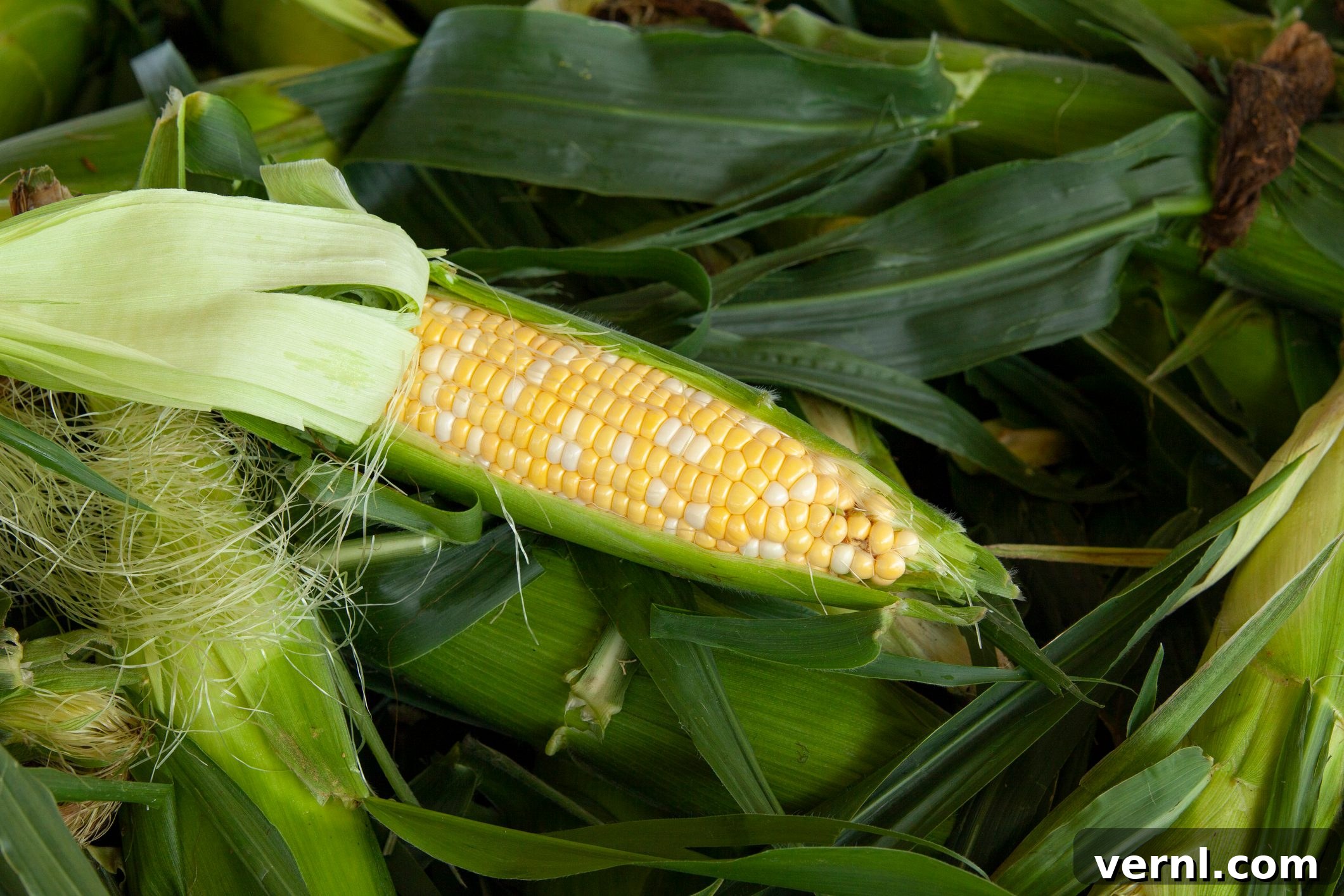
Growing your own sweet corn is one of the most rewarding experiences a gardener can have, bringing the taste of summer directly to your table. Many believe that cultivating corn requires vast fields, but with careful planning and a little know-how, even a small backyard plot can yield an abundance of juicy, tender ears. The secret lies in understanding corn’s fundamental needs and optimizing your garden space for its unique growth habits.
Corn thrives under specific conditions: it demands full sun exposure, rich and fertile soil, and consistent moisture. Crucially, successful corn production hinges on effective pollination. As Susan Schuefele, Production Agriculture Leader at the University of Massachusetts Amherst Extension, explains, “Each kernel is a fruit, botanically speaking, and so must be fertilized. This happens when pollen from the tassels blows onto the silk.” This intricate process means that the spacing and layout of your corn plants are far more vital than one might initially assume for a successful harvest.
Recalling childhood memories, I remember asking my father why he never grew corn in our garden. His response was simple: “You need a big garden to grow corn.” Later, armed with my own patch of earth and a passion for gardening, I discovered that this common misconception could be overcome. By understanding a few basic requirements and implementing smart gardening techniques, anyone can grow corn in a smaller garden and enjoy the unparalleled flavor of fresh-picked sweet corn.
This comprehensive guide will walk you through every step, from selecting the right variety and preparing your soil to planting, nurturing, and finally harvesting your golden bounty. Get ready to transform your backyard into a sweet corn haven!
How to Plant Corn for a Bountiful Harvest
Regardless of whether you choose sweet corn for eating, ornamental corn for fall decorations, or popcorn for a healthy snack, all corn varieties share fundamental requirements for optimal growth. Adhering to these guidelines will set the stage for a successful season.
- Select an Ideal Location with Full Sun: Corn is a sun-loving plant, requiring a minimum of six to eight hours of direct sunlight daily to perform photosynthesis efficiently and produce large, well-filled ears. Choose the sunniest spot in your garden. As a “heavy feeder,” corn benefits immensely from nutrient-rich soil. If possible, plant your sweet corn in an area where you previously grew beans, peas, or other legume vegetables. These plants have the unique ability to fix nitrogen in the soil, leaving behind a natural fertility boost that corn will readily utilize.
- Timing is Everything: Wait Until Your Garden is Frost-Free: Corn is highly sensitive to cold temperatures and will not tolerate frost. It also prefers warmer soil temperatures for germination, typically above 60°F (15°C). Planting too early in cold, wet soil can lead to poor germination rates, stunted growth, and increased susceptibility to diseases. Consult local first and last frost dates for your region and aim to plant two to three weeks after the last expected frost, once the soil has adequately warmed up.
- Prepare Your Soil for Optimal Growth: Before sowing seeds, thorough soil preparation is crucial. Begin by removing all weeds, which can compete with young corn seedlings for vital nutrients and water. Next, significantly enrich your soil by incorporating a generous amount of organic compost. Compost improves soil structure, enhances drainage, increases water retention, and provides a slow-release supply of essential nutrients. Schuefele advises, “Test your soil before planting to determine your soil pH, and if your soil is deficient in any particular plant nutrients.” A soil test is an invaluable tool, revealing your soil’s current nutrient profile and pH level, allowing you to make targeted amendments for ideal growing conditions (corn generally prefers a pH between 6.0 and 7.0).
- Master the Art of Block Planting for Better Pollination: Unlike many vegetables that thrive in single, long rows, corn benefits significantly from being planted in blocks. This arrangement maximizes the chances of successful wind pollination. Plant your corn in blocks at least three rows wide, with a minimum row length of eight feet to create a dense stand. Space rows approximately 18 inches apart within the block. Within each row, sow four or five seeds one inch deep in “hills” (small mounds of soil) spaced about one foot apart. Once seedlings germinate and reach a few inches tall, thin them to two healthy seedlings per hill to ensure adequate space and resources for each plant. Schuefele emphasizes, “Planting corns in blocks instead of long rows can help ensure adequate pollination and production of full ears.” This method dramatically increases the likelihood of pollen reaching all the silks, leading to fully formed, kernel-filled ears.
- Adjust Planting Depth for Later Plantings: If you are planting later in the season, when soil temperatures are higher and moisture can evaporate more quickly, consider burying your seeds slightly deeper—approximately two inches deep. This deeper planting helps to ensure the seeds remain in sufficiently moist soil to prevent them from drying out during the critical germination phase.
- Consider Choosing the Right Corn Variety: For backyard gardeners, especially those with limited space, selecting the right corn variety is key. Look for shorter, early-maturing varieties, which tend to be more compact. Varieties labeled “sugar-enhanced (SE)” or “supersweet (SH2)” offer exceptional sweetness and often have a longer shelf life after harvest, making them excellent choices for home gardens.
Nurturing Your Corn: Growing and Care Essentials
Once your corn is planted, consistent care throughout its growing cycle is paramount. Following these steps will help ensure robust growth, strong stalks, and ultimately, a successful and abundant harvest of sweet, flavorful ears.
Watering
Corn is a thirsty plant, especially during critical growth stages. It requires about one inch of water per week, either from rainfall or irrigation. This need becomes even more pronounced when the tassels begin to emerge, during silking, and most importantly, when the ears are actively forming and filling out. Inconsistent watering during these periods can lead to poorly developed ears with missing kernels. If your garden doesn’t receive this amount of rain, plan to deep-water your corn patch. Aim for slow, deep watering methods like drip irrigation or soaker hoses, which deliver water directly to the root zone and minimize evaporation, rather than overhead sprinkling which can promote fungal diseases.
Weeding
Weeds are formidable competitors for resources. They vie with your corn plants for soil nutrients, water, and sunlight, all of which are crucial for healthy corn development. Regular weeding, especially when corn plants are young, is essential. Lightly cultivate the soil around your corn plants to remove any weeds, being extremely careful not to disturb the shallow corn roots, which can be easily damaged. Applying a layer of organic mulch, such as straw or wood chips, around the base of your corn plants can significantly suppress weed growth, conserve soil moisture, and help regulate soil temperature, providing multiple benefits with less effort.
Fertilizing
Given that corn is a heavy feeder, supplementary fertilization is often necessary in many home gardens to support its rapid growth and ear development. The most effective approach is to perform a soil test before planting, as this will pinpoint any specific nutrient deficiencies in your soil. Based on these results, you can apply the appropriate fertilizer. For general purposes, a balanced organic fertilizer labeled for vegetable gardens, with equal parts nitrogen, phosphorus, and potassium (NPK), is a safe and effective choice. Nitrogen is particularly important for strong stalk and leaf growth, while phosphorus aids in root development and ear formation, and potassium contributes to overall plant health and disease resistance. Consider a side-dressing of compost or a nitrogen-rich organic fertilizer when the plants are about knee-high to give them an extra boost during their growth spurt.
Pollinating
The magic of corn production largely depends on wind pollination. When the corn plants begin to show tassels—the feathery, pollen-producing structures at the very top of the plant—the wind carries this pollen. It then drifts down onto the silks, which are the sticky, hair-like strands emerging from the tips of the just-forming ears below. Each silk is connected to a single potential kernel; for an ear to be fully formed with no gaps, every single silk must receive a grain of pollen. This is precisely why planting corn in blocks instead of one long, single row is so beneficial, as it significantly increases the chances of adequate pollen distribution and successful fertilization. In very small plots or during periods of calm weather, some gardeners may even gently shake the stalks to aid in pollen dispersal or lightly brush tassels over silks. Also, be mindful of cross-pollination between different corn varieties. To prevent undesirable genetic mixing, which can affect taste, color, or maturity, “Cross-pollination can be prevented by distance and windbreaks, or by time, so that they are not flowering at the same time. This can be accomplished by planting varieties of very different maturity dates or by planting in successions, with 14 days or more between plantings,” explains Schuefele. This strategy ensures that different types of corn are not releasing or receiving pollen concurrently.
Controlling Pests and Diseases
A few common pests can target corn, but with vigilance, they can be managed effectively. Corn earworms are frequently encountered pests. These caterpillars primarily become a problem later in the summer, so many home gardeners can largely avoid them by planting earlier in the season. When earworms do appear, they are usually found only in the tip of the ear, making the simple act of cutting off the affected tip a good, safe, and effective option. For more widespread issues, organic solutions like Bacillus thuringiensis (Bt) can be used. European corn borers are another common pest; these caterpillars tunnel into corn stalks and ears, weakening the plant and damaging the crop. Early planting and ensuring strong, healthy plants can help deter them. Beyond insects, other animals are fond of corn. Schuefele notes, “Other than these insect pests corn is enjoyed by other animals including birds, raccoons and bears. Netting and electric fencing can help deter these critters.” Bird netting can protect ripening ears from birds, while more robust fencing or motion-activated sprinklers might be necessary for larger mammals like raccoons. Vigilance and early intervention are key to integrated pest management.
Supporting Corn Stalks
While corn stalks are generally sturdy, strong winds and heavy rainfall can sometimes cause them to fall over, especially when laden with developing ears. To provide extra support, consider “hilling” soil up around the base of the stalks when they are about 18-24 inches tall. This creates a stronger anchor for the roots. For individual plants showing signs of instability, staking with bamboo poles or sturdy rebar can prevent breakage and ensure upright growth.
Extending Your Harvest
To enjoy fresh sweet corn throughout the entire summer, employ a technique known as successive planting. This involves planting a new block of corn approximately every two weeks. Before you start, check the seed packet of your chosen variety to determine its “days to maturity.” This will help you plan your planting schedule effectively, ensuring you don’t plant your last block too late and risk a harvest before your first frost. Alternatively, you can plant several varieties with different maturity dates (e.g., early, mid, and late season varieties) all at once to achieve a staggered harvest.
How Long Does It Take to Grow Corn?
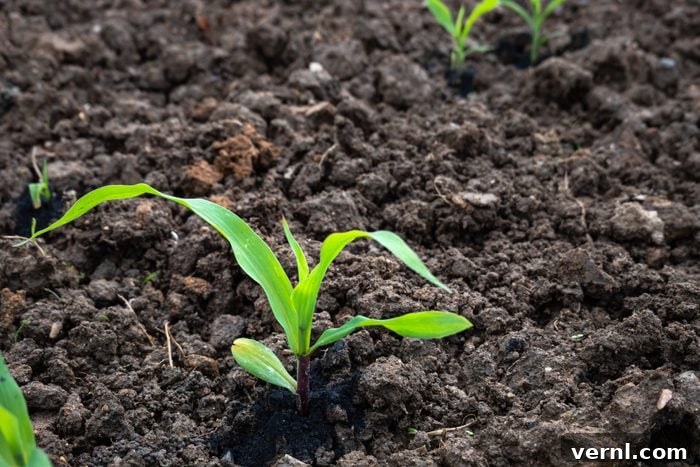
The journey from a tiny seed to a ripe, succulent ear of sweet corn typically spans two to three months, or approximately 60 to 90 days. The precise amount of time required for maturity is heavily dependent on the specific variety of corn you choose, as well as prevailing weather conditions throughout the growing season. Fortunately, seed packets almost always provide the number of days from sowing to harvest, offering a reliable guide for your planning.
For instance, the popular ‘Honey and Cream’ hybrid sweet corn generally matures in about 84 days after germination. If you’re looking for a slightly quicker harvest, ‘Inferno’ hybrid sweet corn is ready in approximately 73 days. For those who prioritize an even faster turnaround, ‘Silver N Gold’ hybrid sweet corn can be harvested in roughly 65 days. Choosing varieties with different maturity dates can also be a clever strategy to extend your harvest window, allowing you to enjoy fresh corn over a longer period.
How to Harvest Corn at Peak Sweetness
Knowing exactly when to harvest corn is crucial for capturing its peak sweetness and flavor. Timing is everything, as even a day or two can make a significant difference in quality. “Corn is ready to be harvested 16 to 22 days after you see the first silks developing,” advises Susan Schuefele. This window provides a good general guideline, but there are several other visual and tactile cues to look for.
One of the most reliable signs that your corn is ready for picking is when the silks, which were once pale green, have turned brown and dried out, but are not yet brittle. At this stage, the husks surrounding the ear should still be a vibrant, dark green, feeling firm and plump, not dried or yellowed. The ear itself should feel firm and full when gently squeezed, indicating that the kernels inside are fully developed.
To verify ripeness with certainty, perform the “milk stage” test. Carefully pull back a small section of the husk near the tip of an ear, being gentle not to damage the kernels. Gently puncture a kernel with your thumbnail. If the liquid that emerges is milky white and creamy, your corn is perfectly ripe and at its sweetest stage. If the liquid is clear and watery, the corn needs more time to mature. If it’s thick and pasty, you’ve likely waited a little too long, and the sugars may have begun converting to starch.
Once you’ve confirmed an ear is ripe, harvesting is straightforward. Grab the ear firmly, pull it downwards, and then twist it sharply. It should snap cleanly from the stalk. Keep in mind that once a stand of corn begins to show ripe ears, most of the remaining ears on that plant will ripen within about a week or so. Schuefele emphasizes the urgency: “Harvesting at the proper stage (milk stage) is critical in maintaining quality. Under warm summer growing conditions, mature sweet corn will only remain at the optimum harvest stage for one to two days and should be picked daily.”
To ensure you enjoy the absolute sweetest corn possible, cook and eat it as soon as you harvest it. The natural sugars in sweet corn begin to convert rapidly into starch the moment the ear is picked, significantly affecting both its taste and texture. If immediate consumption isn’t possible, blanching and freezing your freshly picked corn is an excellent way to preserve its peak sweetness for enjoyment later in the year.
Frequently Asked Questions About Growing Corn
What type of corn should I grow in a small garden?
For a small backyard garden, choosing the right variety is crucial. We highly recommend short, early-maturing varieties of sweet corn. Look for specific types labeled as “sugar-enhanced (SE)” or “supersweet (SH2)” as these hybrids offer exceptional sweetness, tender kernels, and often boast a longer shelf life after harvest, which is ideal for home gardeners. Some popular shorter varieties include ‘Northern Xtra-Sweet’ or ‘Ambrosia’. While sweet corn is a popular choice, if you’re interested in making your own popcorn or growing striking ornamental corn for seasonal decorations, those varieties can also thrive in smaller plots, provided you follow the spacing and care guidelines.
Can I grow corn in containers?
Absolutely, growing corn in containers is a viable option for those with extremely limited garden space, such as patios or balconies. However, it requires careful attention to container size and watering. Each corn plant needs a substantial amount of root space, so plan for containers that are at least 12 inches deep and 12 inches wide per plant. Ideally, providing an 18-inch depth and width per plant will allow for a more robust root system and better yield. Choose high-quality potting mix that offers good drainage while retaining moisture. Because container plants dry out more quickly, consistent and frequent watering will be essential, especially during hot weather and when the plants are tasseling and silking. Remember to still plant in a block formation (e.g., three plants in a large rectangular planter) to facilitate pollination.
Can I save corn seeds for next year’s planting?
You can save seeds from open-pollinated (heirloom) corn varieties. However, for hybrid varieties (like most “supersweet” or “sugar-enhanced” types), saving seeds is generally not recommended. Hybrid seeds will not reliably produce plants true to the parent type; you’ll likely get a mix of characteristics from previous generations, and the quality, sweetness, and vigor might be significantly reduced. If you wish to save seeds, select disease-free, open-pollinated varieties and ensure they are isolated from other corn types to prevent cross-pollination. This is particularly important for sweet corn, as cross-pollination with field corn or popcorn can result in starchy, undesirable kernels.
Why are my corn ears gappy or have missing kernels?
Gappy corn ears with missing kernels are almost always a sign of incomplete or insufficient pollination. Each silk strand on a corn ear needs to receive a grain of pollen to form a kernel. Common reasons for poor pollination include: planting in a single long row instead of a block (reducing pollen contact), extremely calm weather during the silking stage (not enough wind to carry pollen), very hot or dry conditions during pollination (which can make pollen infertile), or having an insufficient number of plants to produce enough pollen. Ensuring block planting, proper spacing, adequate moisture, and considering manual pollination during calm spells can help mitigate this issue.
About the Expert
Our expert insights throughout this guide come from Susan Schuefele, the esteemed Production Agriculture Leader at the University of Massachusetts Amherst Extension. Her extensive knowledge and practical experience provide invaluable guidance for both novice and experienced gardeners aiming for a successful corn harvest.