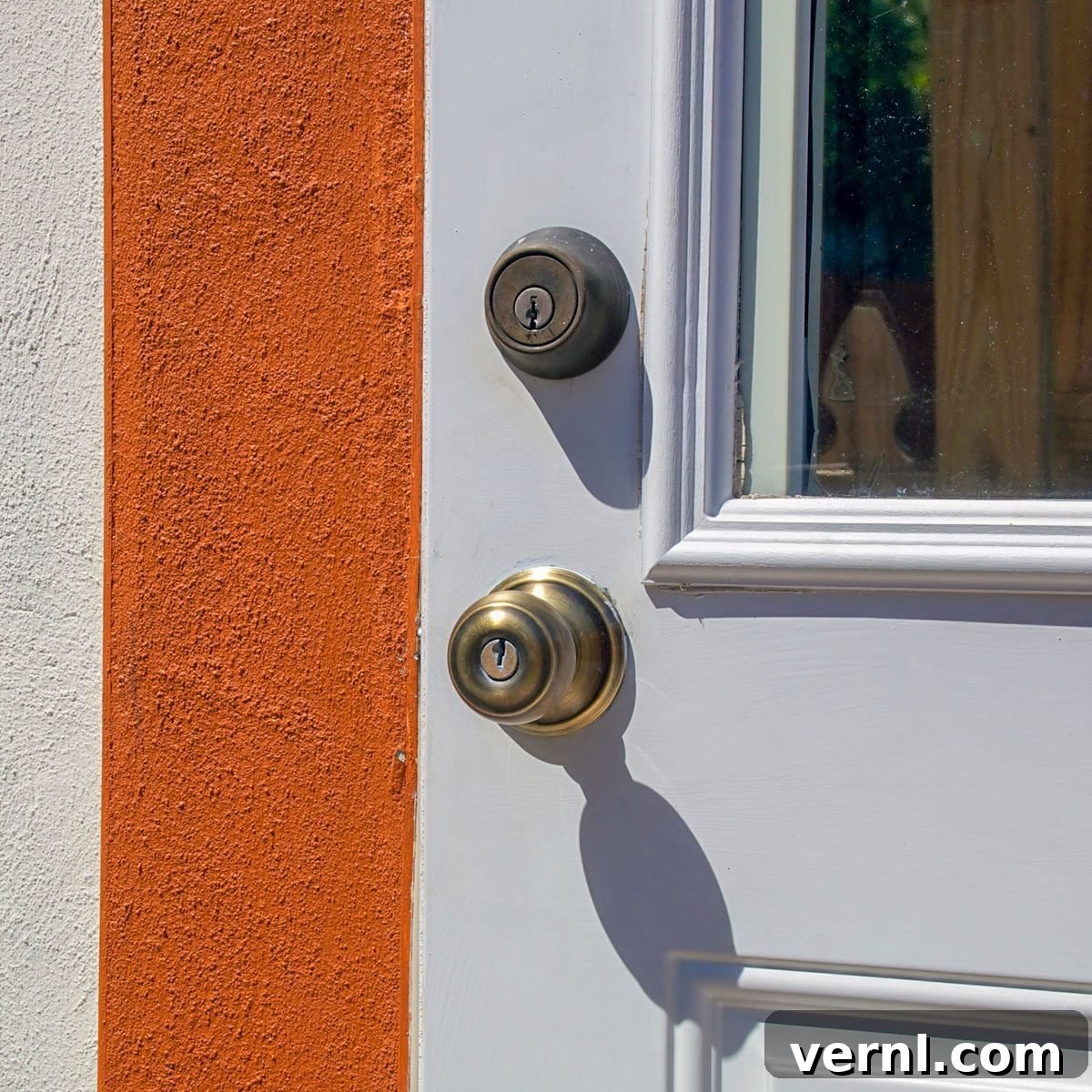
Keep Your Home Secure: A Comprehensive Guide to Deadbolt Lubrication and Maintenance
Your deadbolt lock is a cornerstone of your home’s security, providing peace of mind and protection for your family and belongings. You likely engage it multiple times a day without a second thought, taking its reliable operation for granted. However, like any mechanical device, deadbolts require occasional attention to perform optimally. One day, you might find yourself frustrated as your deadbolt jams, refusing to turn or retract, leaving you with a security concern or an inconvenience. The good news is that a jammed deadbolt rarely signals a need for complete replacement. More often than not, it simply requires a quick, effective lubrication to restore its smooth functionality. In just a few minutes, you can have your deadbolt working as good as new, ensuring your home remains secure and accessible.
This comprehensive guide will walk you through the simple process of lubricating your deadbolt, from choosing the right product to applying it effectively to both the lock cylinder and the bolt mechanism. We’ll also delve into why deadbolts jam, the importance of regular maintenance, and troubleshooting tips to keep your locks in prime condition.
Why Do Deadbolts Jam and What Are the Benefits of Lubrication?
Deadbolts are exposed to a variety of elements and forces that can lead to jamming or stiff operation. Over time, dust, dirt, and debris can accumulate inside the intricate mechanisms of the lock cylinder and bolt assembly. These tiny particles act as abrasives, increasing friction and making it harder for the components to move freely. Additionally, the internal parts of a deadbolt are constantly rubbing against each other during use. Without proper lubrication, this metal-on-metal contact causes wear and tear, eventually leading to stiffness, grinding, or outright jamming. Environmental factors such as humidity and temperature fluctuations can also play a role, contributing to corrosion or making lubricants less effective over time.
Regular lubrication offers a multitude of benefits that extend beyond simply unjamming a stuck lock:
- Enhanced Security: A smoothly operating deadbolt is a reliable deadbolt. When your lock functions without a hitch, it ensures your home is consistently secured, deterring potential intruders who might target homes with visibly faulty or difficult-to-operate locks.
- Extended Lifespan: Friction is the enemy of any mechanical system. By reducing friction between moving parts, lubrication minimizes wear and tear, significantly extending the operational life of your deadbolt. This means fewer costly replacements and repairs down the line.
- Smooth and Effortless Operation: Imagine turning your key with ease, feeling the satisfying click as the bolt retracts or extends without any struggle. Lubrication restores this effortless operation, making daily entry and exit more convenient and enjoyable.
- Prevention of Future Jams: Proactive maintenance is key. Regular lubrication prevents the buildup of friction and debris, nipping potential jamming issues in the bud before they become a frustrating problem.
- Corrosion Protection: Many modern lock lubricants also offer some degree of corrosion protection, which is particularly beneficial for exterior doors exposed to varying weather conditions.
Choosing the Right Lubricant for Your Deadbolt
When it comes to lubricating a deadbolt, not all products are created equal. The right choice can make all the difference in performance and longevity. Our top recommendation is a dry Teflon lube spray. This type of lubricant is superior for several reasons:
- Clean Application: Dry Teflon lube sprays on wet, allowing the lubricating agent to penetrate deep into the lock mechanism. The solvent then quickly evaporates, leaving behind a dry, slippery film of PTFE (Polytetrafluoroethylene), commonly known as Teflon.
- Resists Dust and Dirt: Unlike wet or oily lubricants, the dry film of Teflon does not attract and trap dust, dirt, and other airborne contaminants. This is crucial for locks, as accumulated grime can lead to future jamming issues.
- Long-Lasting Performance: The durable Teflon coating provides long-lasting lubrication, reducing friction and ensuring smooth operation for an extended period.
- Versatile: Dry Teflon sprays are safe for most lock components and won’t gum up over time.
Why Avoid Other Lubricants?
- Graphite: Traditional lock lubrication often involved powdered graphite. While it is a dry lubricant, it can be incredibly messy to apply, staining hands and clothing. More importantly, graphite can accumulate over time, potentially clumping up and exacerbating rather than solving the problem in some modern, intricate lock mechanisms. While effective in some older, simpler locks, dry Teflon is generally a cleaner and more effective choice for most contemporary deadbolts.
- Oil-Based Lubricants (e.g., WD-40, household oils): While products like WD-40 are excellent penetrating oils for freeing rusted parts, they are not ideal for long-term lock lubrication. Their oily nature acts like a magnet for dust and dirt, leading to a gummy buildup inside the lock over time. This sticky residue can eventually cause the lock to seize up completely, requiring extensive cleaning or even replacement. Household oils (like cooking oil) are even worse, as they can become rancid and solidify.
Tools You’ll Need:
- Dry Teflon Lube Spray
- Your Deadbolt Key
- Flat-Blade Screwdriver (for deeper lubrication, if needed)
- Clean Cloth or Paper Towel
Step-by-Step Guide to Lubricating Your Deadbolt
You can often resolve a jammed or stiff deadbolt without disassembling the entire lock. We’ll start with the simplest solution and progress to a slightly more involved method if necessary.
Lube the Lock Cylinder
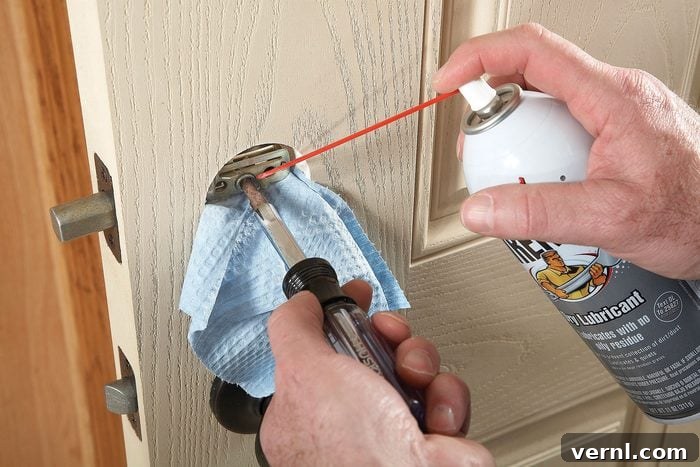
The lock cylinder is the part of your deadbolt where you insert the key. Often, friction and accumulated debris within this mechanism are the primary culprits behind a sticky lock. Addressing this first can quickly resolve the issue.
- Preparation: Ensure the keyway is free of any visible obstructions like lint or small debris. You can use a can of compressed air for a quick blast if available, but it’s not strictly necessary. Have your dry Teflon lube spray and your key ready.
- Apply Lubricant to the Keyway: With the deadbolt cylinder still installed in the door, carefully aim the nozzle of your dry Teflon lube spray directly into the keyway (the slot where you insert your key). Give it a short, precise burst of spray. Avoid over-saturating; a quick spray is usually sufficient.
- Work in the Lubricant: Immediately after spraying, insert your deadbolt key fully into the keyway. Twist the key back and forth vigorously several times, as if locking and unlocking the deadbolt. You should feel the key turning more smoothly with each rotation. Remove the key and reinsert it a few times, continuing to twist. This action helps to distribute the lubricant evenly throughout the internal pins and springs of the cylinder, allowing the Teflon to coat all moving parts effectively.
- Test and Observe: After working in the lubricant, test the deadbolt several times with the key to see if the jam is resolved and if the operation is smooth. If it still feels sticky or the bolt doesn’t retract/extend easily, proceed to the next step.
- Clean Excess: Use a clean cloth or paper towel to wipe away any excess lubricant that may have dripped from the keyway or accumulated on the key. This prevents it from attracting dust externally.
Lube the Bolt Mechanism
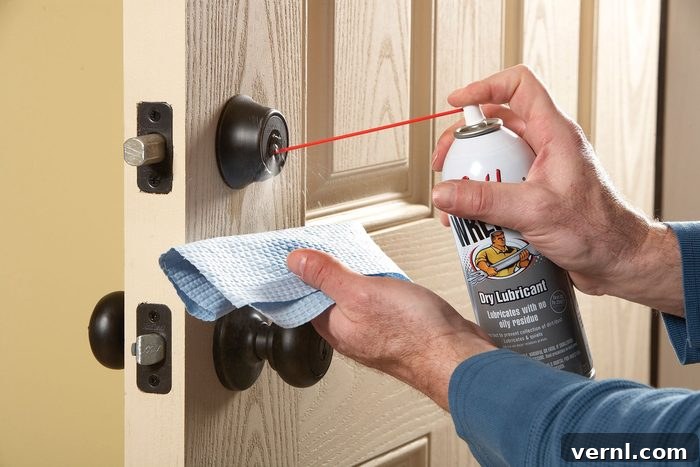
If lubricating the lock cylinder alone didn’t completely resolve the issue, the problem likely lies within the bolt mechanism itself – the part that extends and retracts into the door frame. This step requires a minor disassembly, but it’s still well within the capabilities of most DIY enthusiasts.
- Access the Bolt Mechanism: On the edge of your door, you will see the faceplate of the deadbolt and typically two screws that hold the entire assembly together. Use a Phillips or flat-blade screwdriver (depending on the screw type) to remove these two screws. Once the screws are out, gently pull the entire lock cylinder assembly (the part you just lubricated the keyway of) away from the door. You don’t need to completely detach it, just pull it far enough to expose the bolt mechanism that runs into the side of the door. The bolt mechanism itself is typically housed in a metal casing on the edge of the door.
- Saturate the Bolt Mechanism: With the bolt mechanism exposed, generously saturate it with your dry Teflon lube spray. Pay particular attention to the moving parts – where the bolt slides in and out of its housing, and any visible springs or levers. Ensure the spray penetrates all the internal moving components.
- Work the Lubricant In: Using a flat-blade screwdriver, carefully insert it into the slot or hole in the bolt mechanism that you would typically use to manually operate the bolt (if your deadbolt has such a feature). Alternatively, you can often grab the bolt itself and twist it back and forth or push it in and out manually. This action helps distribute the lubricant thoroughly, coating all the internal gears, springs, and sliding surfaces that control the bolt’s movement. You should feel the mechanism becoming smoother with each movement.
- Inspect for Obstructions: While the bolt mechanism is exposed, take a moment to visually inspect it for any obvious physical obstructions, bent parts, or excessive wear. Sometimes, a small piece of wood chip or metal shaving can cause a jam. Remove any visible debris.
- Reinstall the Lock Cylinder: Once you are satisfied with the lubrication and smooth operation of the bolt mechanism, carefully guide the lock cylinder assembly back into its position on the door. Ensure the bolt mechanism engages correctly with the internal parts of the lock cylinder. Reinsert and tighten the two screws you removed earlier. Do not overtighten, as this can bind the lock.
- Final Test: With everything reassembled, test the deadbolt thoroughly from both sides of the door using your key. It should now operate smoothly and effortlessly, extending and retracting fully without any sticking.
Check and Lubricate the Strike Plate
Sometimes, the issue isn’t the deadbolt mechanism itself, but rather friction or misalignment with the strike plate on the door frame. If your deadbolt is still a bit sticky after the above steps, or if the bolt seems to catch on the frame, consider this additional step:
- Inspect Alignment: Close the door slowly and observe how the deadbolt lines up with the hole in the strike plate on the door frame. If it doesn’t align perfectly, the bolt might be scraping against the plate, causing friction. While lubrication can help temporarily, a significant misalignment might require adjusting the strike plate or door hinges.
- Lubricate the Strike Plate Opening: Spray a small amount of dry Teflon lubricant directly into the bolt hole on the strike plate. This will reduce any friction as the deadbolt enters and exits the frame, ensuring a smoother operation.
Troubleshooting Common Deadbolt Issues Beyond Lubrication
While lubrication solves the vast majority of sticky or jammed deadbolt problems, there are instances where the issue might stem from other causes. If, after thorough lubrication, your deadbolt still isn’t performing optimally, consider these additional troubleshooting steps:
- Key Difficult to Insert/Remove: If the key itself is hard to insert or remove, ensure it’s not bent or damaged. Sometimes, simply cleaning the key with a cloth can help. If the issue persists, the internal pins might be severely worn or misaligned, which lubrication may only temporarily mask.
- Bolt Doesn’t Fully Extend or Retract: This could indicate significant internal wear of the deadbolt’s components, or a more serious misalignment of the door or frame. If lubrication doesn’t fix it, the lock may be nearing the end of its life, or the door needs adjustment.
- Deadbolt Operates Smoothly But Doesn’t Secure the Door: If the key turns easily and the bolt moves freely, but it doesn’t properly engage with the strike plate to secure the door, the problem is likely with the door frame or the strike plate’s alignment. Check if the strike plate is loose, if its screws need tightening, or if the hole for the bolt is too shallow or misaligned.
- Damaged Key: A bent, worn, or incorrectly cut key can cause a deadbolt to jam. Try using a spare key if you have one. If the spare works smoothly, your primary key may be the culprit.
Frequency of Deadbolt Lubrication
For optimal performance and longevity, a good rule of thumb is to lubricate your deadbolts once or twice a year. However, this frequency can vary based on several factors:
- Usage: Highly trafficked doors, such as a main entry door, may benefit from more frequent lubrication (e.g., every 3-6 months) compared to a rarely used deadbolt on a storage shed.
- Environment: Deadbolts exposed to harsh weather conditions (extreme heat, cold, high humidity, or salty air), or those in dusty or sandy environments, will likely need more frequent attention.
- Signs of Trouble: Don’t wait for your deadbolt to completely jam. If you start to notice any stiffness, grinding, or resistance when turning the key, or if the key becomes harder to insert or remove, it’s a clear signal that it’s time for lubrication.
When to Call a Professional Locksmith
While most deadbolt issues can be resolved with simple lubrication, there are situations where professional help is warranted. Don’t hesitate to call a certified locksmith if:
- Lubrication Doesn’t Work: If, after following all the lubrication steps, your deadbolt remains jammed, stiff, or faulty.
- Visible Damage: The lock appears visibly broken, bent, or has fractured components.
- Key Breaks in Lock: This is a common and frustrating issue that requires specialized tools for removal.
- Door or Frame Misalignment: If the core issue is the door not aligning with the frame, which prevents the bolt from engaging properly, a locksmith can often diagnose and suggest solutions, or you might need a carpenter.
- Security Concerns: If you suspect the lock has been tampered with, or if you feel uneasy about its security.
- Complex Installations or Rekeying: For changing locks, installing new deadbolts, or rekeying existing ones, a professional locksmith ensures proper installation and security.
Conclusion
Your deadbolt plays an indispensable role in safeguarding your home. Far from being a set-it-and-forget-it component, it benefits immensely from simple, routine maintenance. A few minutes dedicated to proper lubrication can prevent frustrating jams, extend the life of your lock, and most importantly, ensure your home remains a secure sanctuary. By understanding why deadbolts jam, choosing the right lubricant, and following our step-by-step guide, you empower yourself to tackle common issues with confidence. Make deadbolt lubrication a regular part of your home maintenance routine, and enjoy the peace of mind that comes with a perfectly operating, reliable home security system.