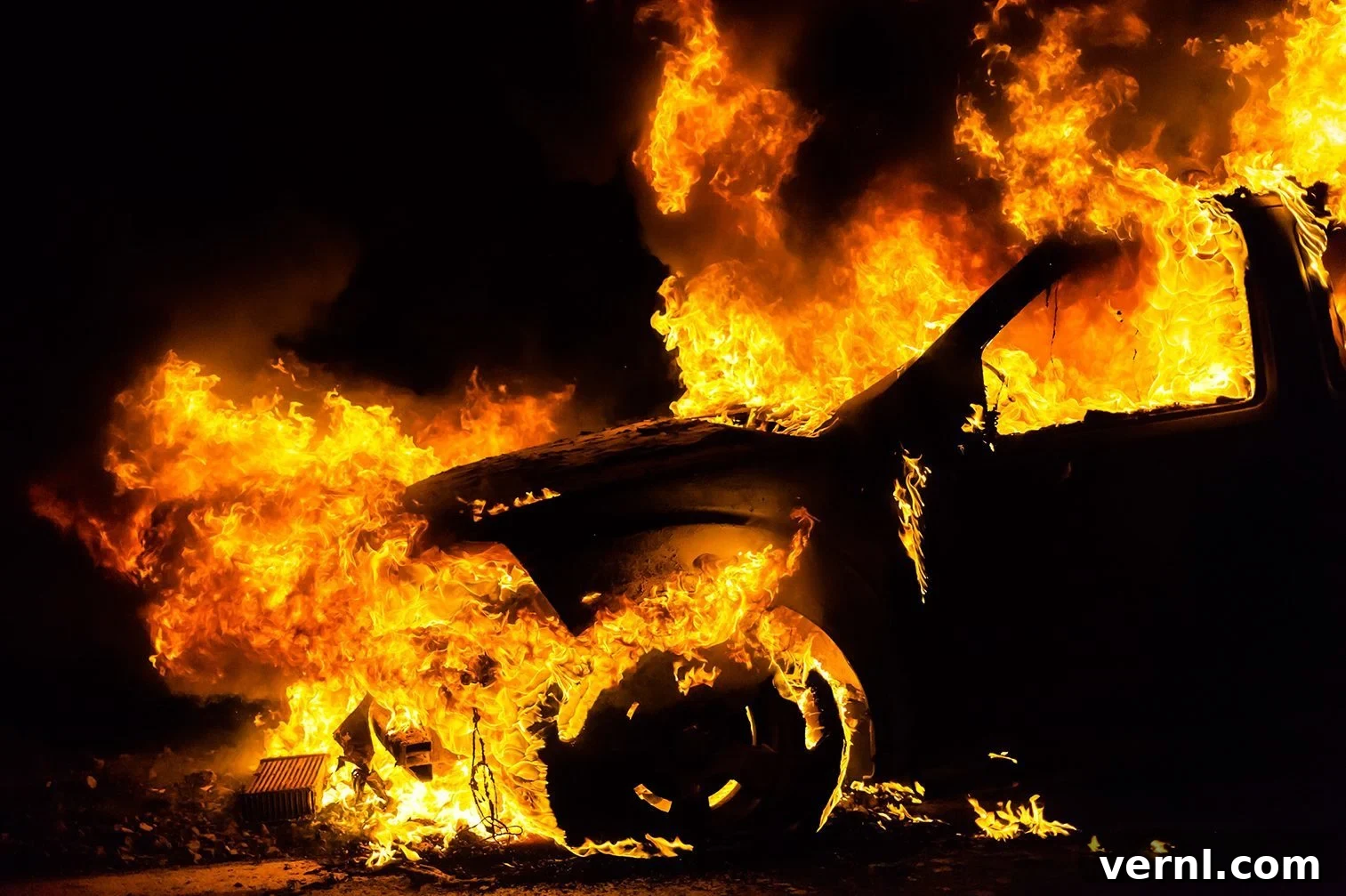
Electric vehicles (EVs) have rapidly transformed the automotive landscape over the last decade. While their presence on our roads is undeniably growing, with sales seeing a substantial increase over the past eight years, they still represent a relatively small fraction of the total vehicle fleet in the U.S. As of recent data, they account for less than two percent of all vehicles. This novelty often leads to misconceptions, particularly when highly publicized incidents, such as EV battery fires or recalls, create an impression that these modern vehicles are inherently more dangerous than their gas-powered counterparts. This article aims to cut through the noise, providing a factual and comprehensive look at what you truly need to know about electric vehicle safety and the risk of fires.
Dispelling the Myth: Are Electric Vehicle Fires More Common Than Gas Car Fires?
The notion that electric vehicles are more prone to fires than traditional gasoline-powered cars is a widespread misconception, but it’s one that objective data quickly debunks. According to Kelley Blue Book, a widely respected and reliable source in the automotive industry, the answer is a definitive no.
Traditional internal combustion engine (ICE) vehicles, which run on gasoline, carry an inherent fire risk due to the nature of their fuel and various operational components. While an ICE vehicle does use a 12-volt lead-acid battery primarily to start the engine and power auxiliary systems, its electrolyte — a blend of sulfuric acid and distilled water — rarely ignites under normal conditions. The real dangers in a gas car stem from other factors:
- Highly Combustible Fluids: Gasoline itself is incredibly flammable. Beyond the fuel tank, an ICE vehicle is a complex system involving numerous other flammable fluids, including engine oil, transmission fluid, power steering fluid, and brake fluid. Leaks from these systems, particularly onto hot engine components or exhaust pipes, can quickly escalate into a blaze.
- Electrical System Malfunctions: A faulty electrical system, worn wiring, or a short circuit can produce sparks. When these sparks come into contact with spilled gasoline or other flammable liquids, ignition can be instantaneous and severe.
- Extreme Heat from Engine Components: An improperly functioning engine, whether backfiring or running roughly, can cause the catalytic converter to overheat dramatically, reaching temperatures as high as 1,400 degrees Fahrenheit. While the converter itself won’t ignite, this extreme heat can easily ignite anything in its vicinity, including nearby vehicle components, dry road debris, or any leaking fluids from a poorly maintained engine.
- Collisions: In the event of a severe collision, fuel lines can rupture, leading to gasoline spills that are easily ignited by sparks from damaged electrical components or friction.
It’s important to note that many EVs also incorporate a 12-volt lead-acid battery for powering conventional accessories like lights and the radio, mirroring ICE vehicles in this respect. However, the primary energy source in an EV is its high-voltage lithium-ion battery. These batteries contain organic solvents and gases that are easily flammable, along with an oxygen-rich electrolyte. While these components present a theoretical fire risk, modern EV battery designs and sophisticated management systems are engineered to mitigate these dangers effectively, making actual incidents rare.
The Data Speaks: How Common Are Electric Vehicle Battery Fires?
When examining the frequency of vehicle fires, available data consistently indicates that EV battery fires are remarkably rare, especially in comparison to vehicles powered by internal combustion engines or even hybrids.
The National Fire Protection Association (NFPA), in conjunction with the Bureau of Transportation Statistics (BTS), reports an average of approximately 170,000 vehicle fires annually in the U.S. Crucially, these general statistics do not initially differentiate between ICE vehicles and EVs, lumping all types together. The causes of these fires are generally categorized as follows:
- Approximately 45% are attributed to mechanical malfunctions or neglect.
- Roughly 23% result from electrical wire or cable insulation failures.
- About 5% are due to collisions or vehicles overturning.
- The remaining 27% stem from carelessness or unintentional actions.
Safety Note: Given these statistics, it’s a wise precaution to keep a fire extinguisher in your vehicle, regardless of its powertrain type.
To provide a clearer, differentiated perspective, AutoinsuranceEZ conducted a comprehensive analysis, leveraging data from the National Transportation Safety Board (NTSB), the Bureau of Transportation Statistics (BTS), and government recall information. Their findings revealed significant differences in fire incidence rates across vehicle types per 100,000 vehicles:
- Hybrid Vehicles: These vehicles exhibited the highest fire rate, with an average of 3,475 fires per 100,000 vehicles. This elevated rate is often attributed to the inherent complexity of integrating two distinct powertrains—a gasoline engine and an electric motor with its battery system—which can potentially introduce more points of failure and thermal management challenges.
- Internal Combustion Engine (ICE) Vehicles: Gas-powered cars showed a substantially lower fire incidence compared to hybrids, with 1,530 incidents per 100,000 vehicles. While lower than hybrids, this figure still highlights the significant fire risks associated with flammable fuels and hot engine components.
- Electric Vehicles (EVs): Remarkably, EVs demonstrated the lowest fire rate by a considerable margin, with only 25 fires per 100,000 vehicles. This statistic underscores the advanced safety measures and robust engineering present in modern EV battery systems.
To put these figures into perspective, AutoinsuranceEZ’s data indicates that ICE vehicles are more than 60 times more likely to catch fire than an EV. Even more strikingly, hybrid vehicles are over 130 times more likely to experience a fire compared to an electric vehicle. Considering there are approximately two million EVs on U.S. roads, these statistics imply that fewer than two out of every 1,000 EVs will ever experience a fire. These numbers powerfully demonstrate that EVs are, statistically, among the safest vehicle types on the road in terms of fire risk.
Understanding the Triggers: What Starts an EV Battery Fire?
While statistically rare, EV battery fires do occur under specific circumstances, and understanding their causes is crucial for both prevention and emergency response. The primary triggers generally fall into two main categories: severe physical impact and thermal runaway.
Post-Crash Impact and Short Circuits
According to an NTSB report, a significant number of lithium-ion EV battery fires have been observed following severe collisions. During a high-impact crash, the high-voltage battery packs, typically located in the vehicle’s undercarriage, can be punctured or crushed. This physical damage can lead to internal short circuits within the battery cells or between the wiring and cables that connect them.
A spark generated from such a short circuit can then ignite the battery’s flammable organic solvents and gases. Once a single cell catches fire, the intense heat generated can rapidly spread to adjacent cells, creating a chain reaction. This process, where one overheated cell causes others to overheat and ignite, is a critical step in the propagation of an EV battery fire.
Thermal Runaway: The Self-Propagating Heat Cycle
Thermal runaway is another major cause of EV battery fires and is a phenomenon inherent to lithium-ion batteries across various applications, from electric vehicles to smartphones and laptops. According to UL Research Institutes, thermal runaway is “a phenomenon in which the lithium-ion cell enters an uncontrollable, self-heating state.” In simpler terms, it’s a vicious cycle where heat generated within a battery cell cannot dissipate quickly enough, leading to an exponential increase in temperature that ultimately results in fire or explosion.
A multitude of factors can trigger thermal runaway, including:
- Manufacturing Defects: Imperfections in battery cell production can lead to internal short circuits that initiate localized heating.
- Poor Battery Design and Ventilation: Inadequate design can compromise the battery’s ability to dissipate heat efficiently, especially during demanding operations like rapid charging or aggressive driving.
- Overcharging or Discharging: Pushing a battery beyond its recommended voltage limits (overcharging) or draining it excessively (over-discharging) can stress the cells and generate excessive heat.
- External Heat Sources: Exposure to extreme external temperatures or direct heat can elevate the battery’s internal temperature to critical levels.
- Physical Damage: Even minor damage that doesn’t immediately cause a fire can compromise the battery’s internal structure, leading to delayed thermal runaway.
Modern EVs are equipped with sophisticated Battery Management Systems (BMS) that continuously monitor cell temperatures, voltage, and current to prevent thermal runaway. However, in extreme cases or instances of system malfunction, this critical safety mechanism can be overwhelmed.
The Challenge for First Responders: Is It Harder to Extinguish an EV Fire?
The unique characteristics of lithium-ion battery fires present significant challenges for first responders, making them inherently more difficult and resource-intensive to extinguish compared to gasoline-fueled car fires.
Self-Sustaining and Intense Heat
Once the organic solvents and flammable gases within an EV battery ignite, they feed on the oxygen-rich electrolyte, creating a self-sustaining and intensely hot fire. This chemical reaction is difficult to interrupt. A common internet myth suggests that water cannot extinguish an EV battery fire; this is false. Water can and is used, but it’s not a simple dousing.
According to Chief Palmer Buck of The Woodlands Township in Austin, TX, a typical gasoline-fueled car fire can often be extinguished with approximately 500 gallons of water, an amount commonly carried on standard fire trucks. In stark contrast, extinguishing an EV battery fire can require 3,000 gallons or even significantly more. This massive volume of water isn’t just to extinguish surface flames but, more critically, to rapidly cool the battery pack and prevent or stop thermal runaway. The goal is to bring the battery’s internal temperature down to a safe level to halt the self-propagating chemical reaction.
Specialized Training and Equipment
Due to these distinct characteristics, firefighters require specialized training to effectively manage EV fires. This training includes understanding the specific risks, identifying the signs of thermal runaway, and knowing how to apply water and specialized firefighting foams correctly. These foams are designed to enhance cooling and create a barrier, further assisting in the suppression process. Thermal imaging cameras are also crucial tools, allowing first responders to monitor the battery’s temperature and identify hot spots, guiding their efforts.
High Voltage Dangers
Another significant danger to first responders is the presence of high-voltage electrical systems in EVs. Damaged high-voltage lines in a burning vehicle can pose a severe electrocution risk. To mitigate these dangers, all major EV manufacturers have collaborated with the NFPA to create Emergency Response Guides (ERGs). These detailed guides provide critical information, including schematics of the vehicle’s high-voltage components and specific steps for safely disabling the electrical system, allowing firefighters to work more securely around the vehicle.
The unique challenges posed by EV fires necessitate continuous adaptation in firefighting techniques, equipment, and training to ensure the safety of both emergency personnel and the public.
Proactive Measures: How To Reduce the Chance of an EV Battery Fire
While EV battery fires are rare, taking proactive steps can further minimize risk and also contribute to extending the life of your vehicle’s battery. Modern electric vehicles are equipped with sophisticated systems and offer numerous tools to help owners monitor their vehicle’s health.
Utilize Built-in Monitoring Tools
Daily monitoring of your battery’s condition is a powerful preventative measure. Your EV likely has numerous built-in interactive visual tools that provide detailed graphic data about the charging system’s health. Pay attention if the high-volt battery warning light comes on and power down your vehicle if it indicates a serious issue. These tools often display:
- Detailed energy usage information.
- High voltage power flow diagrams.
- Current charging status and estimated time to full charge.
- Efficiency history, showing how your driving impacts energy consumption.
- Estimated driving range, dynamically adjusted based on factors like temperature, driving practices, electrical load from accessories, and road conditions.
Consider Third-Party Monitoring Apps
Beyond the manufacturer’s tools, third-party applications are available that can connect to your vehicle’s battery management system (BMS). These apps often deliver a more comprehensive monthly health report, offering insights and predictive analytics that can help you catch potential issues before they become critical.
Regular Inspections and Maintenance
Maintaining your EV with diligence is key to its longevity and safety:
- Post-Impact Inspection: Always have the underside of your car thoroughly inspected after an accident, even a minor one, or if you’ve driven over significant road debris. Damage to the battery pack enclosure, even if superficial, can compromise its integrity.
- Recall Checks: Regularly check if your vehicle is under a safety or battery recall. You can also subscribe at Recall.gov to receive automatic notifications from the NHTSA and other government agencies about any vehicle-related recalls.
- Routine Battery Checks: As part of your regular maintenance schedule, have your EV batteries checked for any signs of leakage, corrosion, or physical damage.
- Battery Coolant Levels: Frequently check the battery coolant levels. The cooling system is vital for maintaining optimal battery temperatures and preventing overheating.
- Software Updates: Ensure your battery management system (BMS) software is always up-to-date. Manufacturers often release updates to improve battery efficiency, safety protocols, and thermal management algorithms.
Best Practices for Charging
Charging habits play a significant role in battery health and safety:
- Allow Cooling Time: Let the battery completely cool down, especially after a long drive or fast charging, before initiating a new charge cycle. Charging a hot battery can increase stress and heat.
- Park in the Shade: Whenever possible, park your EV in the shade, particularly during hot weather. This helps keep the battery pack cooler, reducing the thermal load before charging.
- Use Approved Chargers: Always use only approved, compatible Level 1 and 2 battery chargers. Generic or uncertified chargers may not adhere to safety standards and could potentially damage your battery or electrical system.
- Inspect Charging Cords: Never use a charging cord plug that is cracked, damaged, or shows signs of wear. Damaged cords can create electrical hazards.
- Ventilated Charging Area: Always charge your EV in a well-ventilated area. While the risk of gas emissions is low, good ventilation is always prudent for any electrical equipment.
- Optimal Charge Range (20-80%): Aim to keep the battery charged between 20 and 80 percent for daily use. Charging to 80 percent leaves ample room for energy from regenerative braking to be safely captured without overcharging the battery, thereby reducing the likelihood of overheating.
- Disconnect When Charged: If you are not using scheduled charging, disconnect your EV once it reaches its desired charge level, especially if you follow the 80% rule.
- Check Weather Conditions: Check weather conditions before charging, especially outdoors. Avoid charging the battery in heavy rain or during electrical storms, unless the charging equipment is specifically rated for such conditions.
The Future is Safe: Are EV Batteries Safe?
Yes, unequivocally. Despite being a relatively nascent technology, electric vehicle battery safety has seen substantial and continuous advancements. The concerns surrounding EV battery fires are often disproportionate to their actual occurrence, largely due to the rapid evolution of battery technology and vehicle engineering.
Current lithium-ion batteries in EVs are vastly more sophisticated than earlier versions. Significant strides have been made with the addition of more sensitive sensors that monitor every aspect of the battery’s performance, from individual cell temperatures to voltage fluctuations. Better construction methods, including enhanced packaging, reinforced structures, and improved thermal management systems, make EV batteries less prone to overheating and thermal runaway. Furthermore, the development of more stable solid electrolytes is a key area of research, promising even greater safety. These improvements are systematically making EV batteries more robust and reliable.
Looking ahead, the future of EV battery technology promises even higher levels of safety. We can anticipate the widespread adoption of next-generation solid-state batteries. These innovative batteries replace the flammable liquid organic electrolytes found in current lithium-ion batteries with solid, non-flammable alternatives, drastically reducing the risk of fire. Beyond solid-state technology, researchers are exploring and developing lighter, safer materials for battery components, moving away from potentially flammable materials. Innovations include advanced composites like carbon fiber and even surprisingly sustainable options derived from natural sources, such as crab shells, which offer excellent structural integrity and non-flammable properties.
The automotive industry, in collaboration with material scientists and battery engineers, is committed to continuously enhancing EV safety. As these advancements become standard, electric vehicles will only become an even safer and more reliable mode of transportation, further cementing their role in a sustainable future.