Unlock Your Full DIY Potential: Why Two Cordless Tool Battery Systems Are Better Than One
For many years, my approach to home maintenance and DIY tasks around my Indiana home was refreshingly simple. My toolkit primarily consisted of a basic set of Black+Decker cordless tools – a reliable drill/driver, a versatile reciprocating saw, and a practical circular saw. These served me faithfully through countless minor repairs, from tightening hinge screws on cabinet doors and mending floor trim to the satisfying installation of a floating shelf. It was an entry-level setup that perfectly met the needs of a casual homeowner.
However, as my enthusiasm for woodworking grew and my home improvement aspirations became more ambitious, I gradually expanded my cordless tool collection. My loyalty remained with the Black+Decker ecosystem, primarily to avoid the added expense and complexity of investing in another battery platform. My garage, at times, became a vibrant tableau of black and orange, reminiscent of a committed Harley-Davidson enthusiast’s collection.
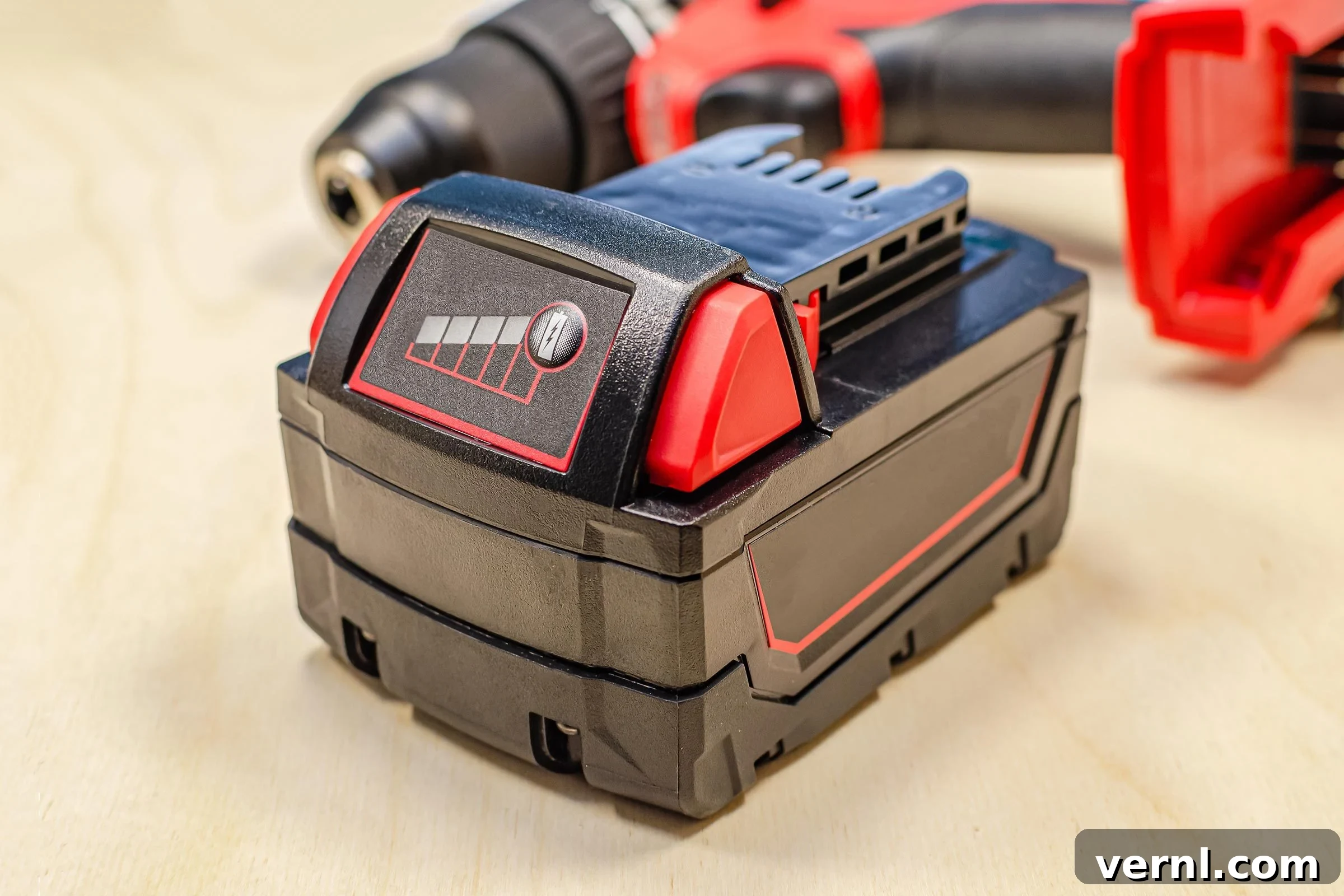
But recently, unforeseen circumstances compelled me to integrate a second battery system into my workshop, and the revelation has been profound. I’m now convinced that most serious DIYers, woodworkers, and home improvement enthusiasts could significantly benefit from strategically investing in at least two distinct 18V/20V tool lineups. This isn’t just about having more tools; it’s about optimizing performance, expanding capabilities, and, surprisingly, achieving long-term cost savings. Let’s explore why this approach could transform your DIY journey.
Embarking on Your Cordless Tool Collection Journey
If you’re just beginning your venture into buying cordless power tools, it’s a pivotal moment that warrants careful consideration. The market is vast and varied, offering an array of options for every skill level and budget. Before making your initial purchases, ask yourself these fundamental questions: What is your realistic budget for power tools? How frequently do you anticipate using these tools? What types of projects are you most likely to undertake now, and what might you aspire to tackle in the future? Answering these will guide you toward the most appropriate initial investment.
Choosing Your First Tool System: Balancing Performance and Budget
Unless you are a professional tradesperson who relies on tools daily for your livelihood, there’s often no immediate need to invest in the most powerful and premium tool systems offered by top-tier brands like Milwaukee, DeWalt, or Makita. These brands excel in raw power, durability, and advanced features, but they come with a commensurate price tag.
For the occasional weekend warrior or the budding woodworker, mid-range and entry-level options often provide excellent value. Brands such as Craftsman or Porter Cable offer robust performance suitable for a wide array of common DIY tasks. For instance, you might find a comprehensive four-pack of Black+Decker tools for around $150. A comparable kit from a premium brand like Makita, Ridgid, or DeWalt could easily set you back double or even triple that amount, highlighting the significant price differences across the market segments.
However, if your projects demand consistent power, extended runtimes, and superior ergonomics – perhaps you use your tools multiple times a week or even daily – then spending the extra money upfront on a higher-quality system is a wise long-term investment. You’ll undoubtedly appreciate the increased power, enhanced durability, and improved comfort during prolonged use. Always research each brand’s offerings to ensure they provide the specific tools you anticipate needing. For example, if you’re restoring an old Mustang in your driveway, an impact ratchet will likely become indispensable. Does your chosen tool system offer one? Thinking ahead about specialized tools can save you from future compatibility headaches.
Understanding Retailer Exclusivity and Tool Ecosystems
Another critical factor to consider is where you typically purchase your tools, as many retailers have exclusive partnerships with specific brands. This retail exclusivity can significantly impact your choices and future expansions within a particular battery system. For instance, Harbor Freight exclusively carries its Bauer and Hercules 20V tool systems. Similarly, major home improvement stores like Menards, The Home Depot, and Lowe’s each stock a unique selection of 20V tool systems.
If you decide to invest in a Craftsman 20V system, for example, remember that The Home Depot does not typically carry this brand. Likewise, you won’t find Makita 20V tools readily available at Lowe’s. Being aware of these distribution channels from the outset can prevent frustration and ensure you have consistent access to additional tools and replacement batteries within your chosen lineup. It’s not just about the tool itself, but the entire ecosystem, including accessories and spare parts, that a brand and its retailers support.
When It’s Time to Embrace a Second Battery-Powered Tool System
My journey into a multi-battery system wasn’t planned; it was necessitated by an evolving set of project demands and the limitations of my existing setup. While I have no fundamental complaints about the quality or value of my Black+Decker tools relative to their price point – they served me reliably for years – their primary limitation became apparent: they didn’t offer the full spectrum of specialized tools I eventually required for more advanced woodworking.
The Catalyst for Change: A Broken Router and Missing Options
Earlier this year, a critical piece of my woodworking arsenal, the collet on my ancient corded DeWalt router, finally gave out. To my dismay, the company no longer manufactured replacement parts for this model, and even an exhaustive search on eBay yielded no viable solutions. Knowing that I desired the convenience and flexibility of a cordless replacement, I faced a dilemma. Since Black+Decker, my established battery system, didn’t offer a cordless router option that met my needs, I realized that I had reached a pivotal moment: it was time to invest in a second battery system.
My initial inclination was to explore Ryobi, given the brand’s expansive and widely available tool lineup, which ranges from essential nail guns and pipe cutters to specialized items like paint sprayers. However, when I visited my local home improvement store to test them out, the Ryobi router simply didn’t feel right in my hand. Given how frequently I use a router in my woodworking projects, ergonomics and comfort are paramount. It was immediately a non-starter.
After thorough online research, coupled with physically handling various options in person, I ultimately selected a new DeWalt router. This decision wasn’t made in isolation; I also seized the opportunity to pick up a DeWalt 20V drill/driver set, which conveniently came with two batteries, as well as a versatile 20V oscillating multitool. The immediate difference in power and overall build quality between my trusted old Black+Decker drill and the new DeWalt was striking. This experience solidified my belief in the strategic benefit of diversification, and I fully anticipate expanding my DeWalt collection significantly in the near future.
Strategic Savings: How Multiple Battery Systems Can Be More Cost-Effective
At first glance, the idea of maintaining two separate battery systems might seem counterintuitive to saving money; it appears to be a more expensive proposition. However, when approached strategically, this multi-system model can actually lead to substantial long-term savings. The core principle lies in building a more comprehensive and optimized tool lineup without needing the absolute top-tier, professional-grade version of every single tool you own.
The Tiered Approach: Performance Where It Counts, Value Where It Makes Sense
The beauty of a dual-battery system lies in its ability to implement a “tiered approach” to your tool collection. You can designate your primary system for high-use, performance-critical tools where power, precision, and durability are paramount. This would typically include your main drill/driver, impact driver, circular saw, and perhaps a router – tools that are frequently subjected to demanding tasks and warrant a higher investment.
Your secondary system, then, can be allocated for less frequently used, specialized, or lower-power-demand tools where “good enough” performance from a more budget-friendly brand suffices. Consider this scenario: you need to replace drywall. You could purchase DeWalt’s rotary cut-out tool for around $199, or opt for Ryobi’s version, which typically retails for closer to $60. If you only work with drywall once in a blue moon, why spend more than three times the amount for a tool that will spend most of its life in storage?
The same logic applies to other specialized tools. If you only anticipate grabbing a deep-cut bandsaw a handful of times a year, would you rather invest more than $400 in Milwaukee’s high-performance 18V tool, or less than $150 for a Ryobi equivalent? While the Ryobi model might lack some of the raw power, advanced features, or durability of the Milwaukee, that’s often a sacrifice most DIYers are willing to make to save a significant sum on a tool used sparingly. This strategy allows you to get the job done efficiently without overspending on features you won’t fully utilize.
This approach isn’t about compromising quality across the board; it’s about making smart, informed decisions based on usage frequency and performance requirements. You get the best of both worlds: robust performance for your workhorse tools and cost-effective solutions for your occasional or specialized needs. Furthermore, having multiple batteries across different systems ensures you’re never left waiting for a single battery to charge, significantly boosting your workshop’s overall efficiency and productivity.
While I can’t turn back time and convince my younger self to embrace a multi-battery system from the start, I certainly won’t be selling or giving away my dependable Black+Decker 20V tools. They still perform admirably for many tasks, and I’ll continue to use them until their batteries eventually reach their end of life. Indeed, I envision a future where I might even add a third battery type to the mix, perhaps a Ryobi system, whenever an upcoming project specifically demands a tool that only they offer effectively and affordably. The evolving landscape of DIY demands an evolving tool strategy, and for me, that means strategic diversification.