The Ultimate Guide to Safest Space Heaters: Expert-Approved Choices & Essential Safety Tips
As winter’s chill descends, the allure of a warm, cozy home becomes irresistible. Space heaters, while offering a welcome embrace of warmth, also carry a significant responsibility. Alarming statistics from the National Fire Protection Association (NFPA) reveal that space heaters are implicated in nearly eight out of ten home heating fire deaths and seven out of ten injuries. This stark reality underscores the critical importance of not only choosing a safe space heater but also understanding how to use it correctly.
As an electrician with years of experience encountering various electrical equipment, and a self-proclaimed space heater enthusiast, I dedicate considerable time to researching and personally testing the best and safest options before making any purchase. You, however, may simply want reliable warmth without the extensive research. This guide compiles rigorous testing data collected with room thermometers in my own drafty home, alongside invaluable insights from leading experts. We consulted Brad Roberson, President of AireServ Heating & Air Conditioning, for comprehensive heating expertise, and Sergey Nikolin, an experienced electrician and President at Product Air Heating & Cooling LLC, for the most current safety recommendations.
Whether you’re in the market for a new space heater or curious about the safety of your existing unit, this comprehensive guide provides everything you need to make an informed, safe choice for a warm and secure winter.
Safest Space Heater for the Bedroom: Quiet Warmth for Restful Nights
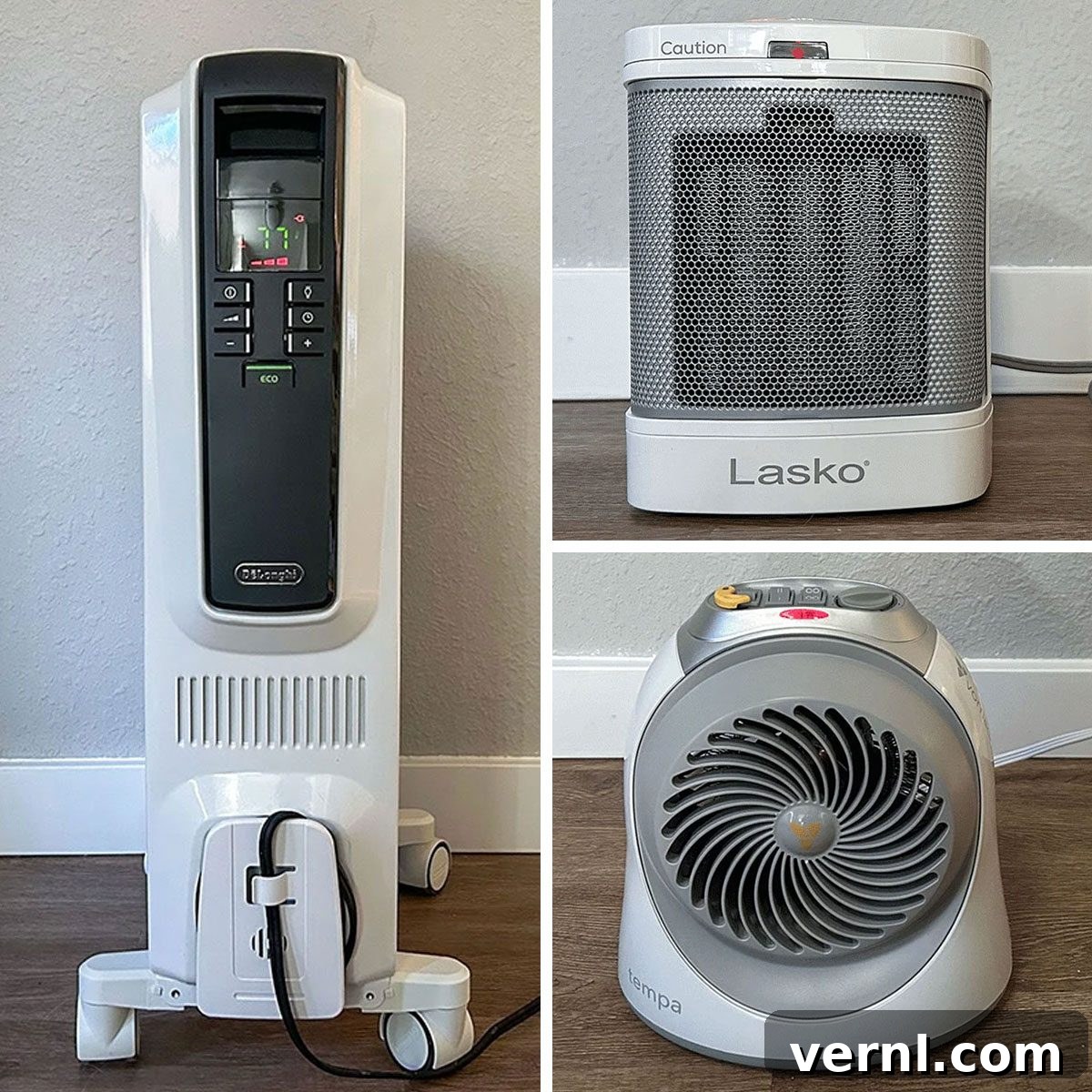
DeLonghi Dragon Digital Full-Room Radiant Heater

Image Credit: ALLY CHILDRESS FOR FAMILY HANDYMAN
Pros:
- Radiant heating technology effectively retains room heat for longer durations, minimizing temperature fluctuations.
- Emits heat upwards, which helps reduce drafts and creates a more consistent comfort zone.
- Boasts an attractive, sleek design that elegantly mimics the appearance of a traditional radiator, blending seamlessly into most decors.
- Operates very quietly, making it ideal for bedrooms where undisturbed sleep is paramount.
- Equipped with smooth roller feet, ensuring effortless mobility between rooms.
Cons:
- Its substantial size and higher price point may be a consideration for some budgets and smaller spaces.
- The exterior can get hot to the touch, requiring caution, especially in homes with curious children or pets.
Shop on Amazon
Dimensions: 16.4 x 10.3 x 26.1 inches | Weight: 26.6 pounds | Maximum temperature: 82 degrees F | Heat output: 1500 watts
Combining space heaters with bedrooms presents unique safety challenges. The presence of flammable materials like clothing, curtains, and bedding, coupled with the reduced awareness of occupants during sleep, significantly elevates the risk of injury and fatality from overnight heating fires, according to the NFPA. For this reason, Roberson advises, “It’s generally not recommended to leave a space heater on overnight due to safety concerns.”
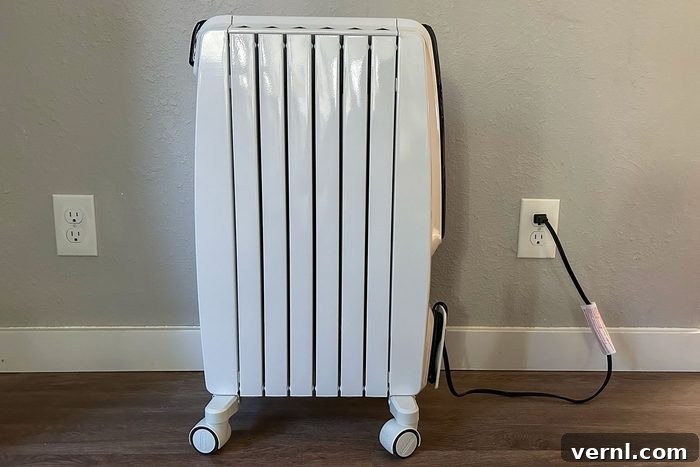
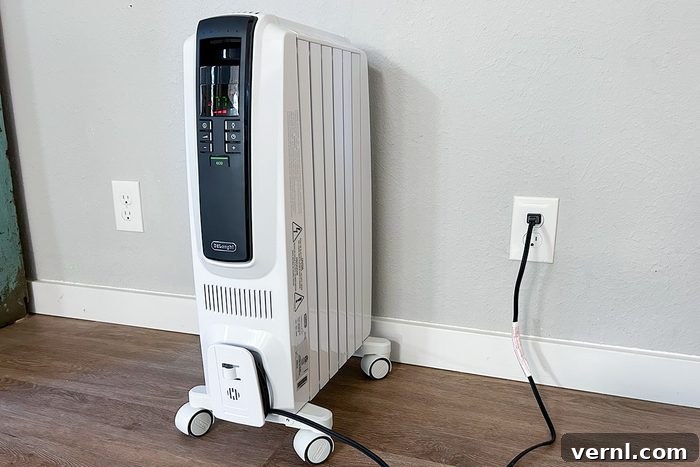
However, many individuals utilize their bedrooms as multi-functional living spaces, not solely for sleeping. If this describes your situation, you deserve a safe and effective way to stay warm! The DeLonghi Dragon Digital Full-Room Radiant Heater stands out as an exceptional choice for bedrooms. This oil-filled heater generates heat much like a traditional radiator, emanating warmth rather than blowing hot air, which is a crucial distinction for bedroom safety. Roberson explains, “Oil-filled space heaters are considered safer than others because they don’t have exposed heating elements,” significantly reducing the risk of accidental ignition.
During my personal testing, this elegant and remarkably quiet heater proved incredibly effective. While it takes a little longer to reach its peak temperature compared to fan-forced models, the gradual and consistent warmth it provided was undeniable. After just an hour, my bedroom temperature increased by 5 degrees Fahrenheit, creating a gentle and pervasive warmth. The integrated shutoff timer is a critical safety feature, offering peace of mind should you accidentally drift off to sleep. Strategically placed under my drafty bedroom window, the DeLonghi Dragon dramatically mitigated the cold currents, transforming a chilly space into a comfortable retreat.
Safest Space Heater for the Bathroom: Instant Warmth Where You Need It Most
Lasko Ceramic Bathroom Heater

Image Credit: SHERI KAZ FOR FAMILY HANDYMAN
Pros:
- Remarkably compact size, making it perfect for smaller bathroom spaces and easy storage.
- Features incredibly simple operation with a single, large-button control, ideal for bleary-eyed mornings.
- Heats up the space very quickly, providing immediate comfort.
- An affordable option, offering excellent value without compromising on essential safety features.
Cons:
- Generates a slightly higher noise level compared to other premium heaters on this list.
- Its heating capacity is primarily limited to small spaces, making it less suitable for larger rooms.
Shop on Wayfair
Shop on Ace Hardware
Shop on Amazon
Dimensions: 6 x 6.59 x 7.65 inches | Weight: 3.24 pounds | Maximum temperature: N/A – high and low settings only | Heat output: 1500 watts
While winter ushers in ideal sleeping temperatures, the transition from a warm bed to a chilly bathroom can be quite jarring. The Lasko ceramic bathroom heater is a compact yet powerful solution designed to rapidly eliminate the cold from your bathroom air. This affordable and efficient unit is a true dynamo.
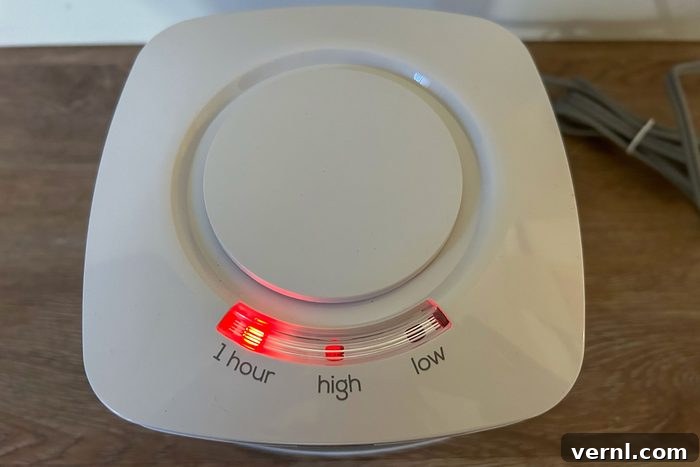
For those seeking the best space heater for your bathroom, Lasko proves to be an excellent brand. In my testing, this heater swiftly transformed my medium-sized bathroom from a cool 69 degrees Fahrenheit to a comfortable 75 degrees in just 30 minutes, further climbing to 81.3 degrees within an hour. Even for brief bathroom visits, the air quickly became pleasantly warm. Its user-friendly controls, featuring one large button, are particularly appreciated during early, sleepy mornings.
Crucially, recognizing the inherent dangers of combining water and electricity, this heater incorporates an advanced safety feature: an Appliance Leakage Current Interrupter (ALCI) directly on the plug. Similar to the safety mechanisms found on hair dryers, ALCI devices continuously monitor the electrical current flowing to and from the appliance. Should any abnormality or imbalance be detected, the ALCI immediately cuts power to the heater, effectively preventing potential electrical shocks. This vital safety component makes the Lasko ceramic bathroom heater a remarkably secure option for wet environments.
Safest Space Heater for Homes with Kids: Peace of Mind for Nurseries and Playrooms
Vornadobaby Tempa Nursery Heater

Image Credit: ALLY CHILDRESS FOR FAMILY HANDYMAN
Pros:
- Equipped with multiple, robust safety features specifically designed for children’s environments, offering unparalleled peace of mind.
- Operates quietly compared to other fan-driven heaters, minimizing disruption in a nursery.
- The protective grille remains tolerably warm, even on its highest heat setting, significantly reducing burn risk.
- Features smart, hidden, and covered cord storage to prevent curious little hands from tampering.
Cons:
- Lacks a numerical thermostat, relying instead on a dial with settings, which may require some familiarity.
- The bright red power light could potentially be a minor annoyance for babies who require complete darkness for sleep.
Shop on Wayfair
Shop on Lowe’s
Shop on Amazon
Dimensions: 12.8 x 11 x 9.7 inches | Weight: 3.8 ounces | Maximum temperature: 125 degrees F | Heat output: 900 watts
Babies possess a limited ability to regulate their own body temperature, prompting many parents to utilize space heaters to maintain warmth in nurseries. However, deploying a space heater in a child’s room demands an even higher degree of safety vigilance, particularly as infants grow and become more mobile. Curious crawlers and adventurous toddlers can easily knock over traditional heaters or suffer burns from hot surfaces. Always consult your pediatrician before introducing any space heater into a baby’s room, and critically, ensure your baby does not overheat while sleeping.
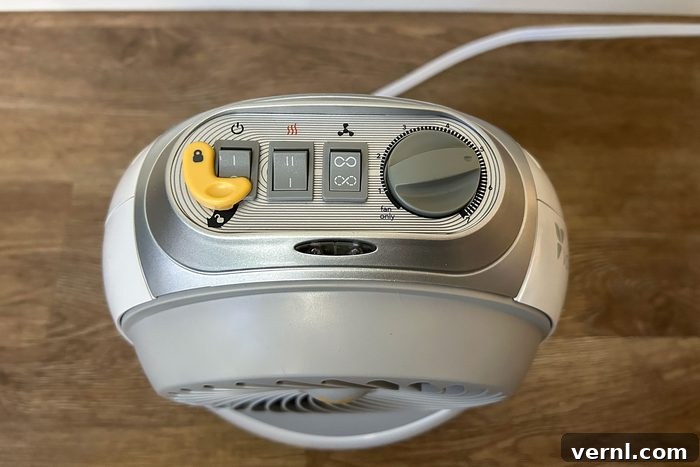
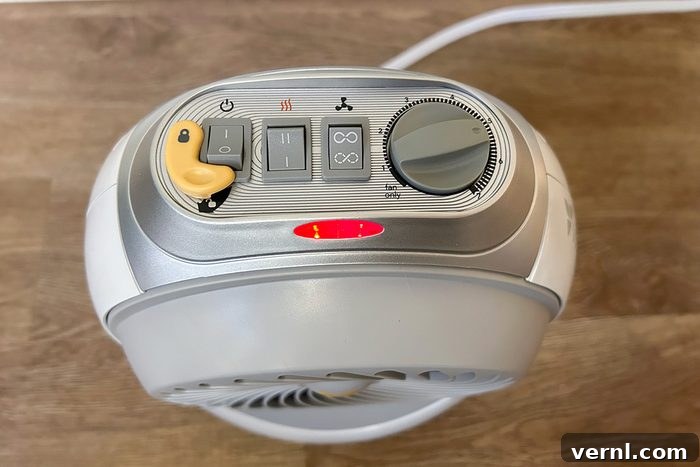
If maintaining consistent warmth in your nursery is a necessity, the highly acclaimed Vornadobaby Tempa nursery heater is an excellent choice. While direct testing on a baby is naturally not possible, I rigorously evaluated this heater’s temperature consistency by locking it in my bedroom for an extended period. The last thing any parent needs is a wildly fluctuating nursery heater causing nighttime worries. I also subjected it to various impacts to thoroughly test its array of safety features.
The results were impressive. After setting the Vornadobaby Tempa thermostat to a medium level (setting “4” on its intuitive dial), my bedroom temperature steadily rose from 66.1 to 70.3 degrees Fahrenheit within an hour, maintaining a stable temperature between 70 and 71 degrees for a full six hours. The power switch incorporates a child-proof lockout feature, and its anti-tip mechanism is incredibly sensitive, instantly shutting off the heater at the slightest movement or tilt. Furthermore, even after hours of continuous operation, the protective grille remained only tolerably warm to the touch, significantly minimizing any burn risk to curious little hands.
What Makes Space Heaters Unsafe? Understanding the Risks
When issues arise with space heaters, they are most frequently attributed to user error rather than inherent product flaws. Common mistakes include draping clothing or blankets over the unit, leaving heaters plugged in and unattended, or overloading electrical circuits by plugging in too many devices. While all electrical appliances carry some degree of risk – from a washing machine flooding a basement to a toaster short-circuiting – the data unequivocally places space heaters in a category of their own concerning home fire hazards.
Before delving into specific risks, Roberson emphasizes a fundamental rule for safe operation: always “purchase your space heater from a reputable retailer and use it according to factory directions.” Once you’ve secured a quality, certified product, it’s crucial to remain mindful of these critical factors during operation:
Electrical Load: The Hidden Danger of Overloaded Circuits
A standard 1,500-watt space heater draws a substantial 12.5 amps at 120 volts. This is a significant draw, representing the maximum continuous load permitted by the National Electric Code (NEC) on a 15-amp circuit. What does this mean for your home? If you plug a space heater into a wall outlet in your bedroom, it demands nearly the entire capacity of that circuit. Consequently, all other devices on that same circuit – including your lights, television, gaming console, or phone charger – should ideally be moved to a different circuit to prevent overload.
Overloaded circuits pose a severe fire hazard. They can cause electrical wiring to overheat, leading to degradation of insulation, damaged electrical connections, and ultimately, a potential electrical fire. Every circuit in your home is protected by a circuit breaker, which is rated to safely handle a specific electrical load. Electricians, like myself, meticulously perform load calculations to ensure safe usage. A single space heater, by virtue of its high wattage, can instantly exceed the rated capacity of a typical 15-amp household circuit simply by being plugged in and turned on.
For the utmost safety, it is strongly recommended to use a dedicated circuit for your space heater, ensuring it is the only appliance drawing power from that circuit. Furthermore, always plug the space heater directly into a wall outlet. Never use power strips, surge protectors, or extension cords. As Nikolin explains, “Space heaters pull 1,500 watts or more so the [extension] cords can overheat. Your space heater should always be plugged into a dedicated wall outlet,” as extension cords and power strips are not designed to safely handle the continuous high current drawn by most space heaters, leading to potential overheating and fire risks.
Ignition of Nearby Items: Maintaining a Safe Distance
While space heater safety has seen remarkable advancements, some models still utilize exposed coil heating elements combined with a fan to distribute warmth (a design often found in garage space heaters). These coils, which can glow red hot, are typically guarded but not always fully enclosed. Flammable materials such as curtains, bedding, clothing, or even papers that accidentally come into close proximity can easily ignite. Even safer ceramic and oil-filled models, despite their enclosed heating elements, generate significant heat and can still ignite combustible materials if proper precautions are not observed.
It is imperative to maintain a safe zone around your space heater. Never pile clothes, blankets, or stack boxes near a space heater. Avoid placing the unit where it directly blows hot air onto anything flammable, adhering strictly to the recommended 3-foot clearance from all combustible items. Furthermore, keep space heaters well away from children and pets, especially models that become hot to the touch, to prevent accidental burns or tip-overs.
Choosing the right type of space heater for your specific needs is crucial. Different designs and functionalities present varying risks, and the placement in your home significantly impacts safety. Therefore, selecting a model that precisely fits your individual situation and adheres to all safety guidelines is paramount.
How to Use a Space Heater Safely: Essential Guidelines for Responsible Operation
The safety of a space heater ultimately rests in the hands of its user. If you choose to augment your home’s warmth with a space heater, adopting rigorous safety precautions is non-negotiable. First and foremost, avoid relying on a space heater as the sole or primary source of heat for your entire home.
Nikolin advises, “Use it to add a bit more warmth but not to replace your home’s main heating system. A space heater is a supplement heat. They are ideal for keeping you warm while you are sitting at the desk, working in the garage or relaxing in a small living room. The key thing is to be in the same room with the heater.” This emphasizes the importance of using space heaters for targeted, supplemental heating in occupied spaces.
In addition to ensuring you are always present in the same room as your operating space heater, strictly adhere to all manufacturer directions and keep the following crucial safety tips in mind:
- Maintain a Safe Clearance: Always position space heaters at least 3 feet (approximately 1 meter) away from any flammable objects, including curtains, bedding, furniture, papers, and clothing. This creates a critical safety buffer against accidental ignition.
- Stable Placement: Place the heater on a solid, flat, and level surface, preferably the floor. Avoid placing it on unstable surfaces like rugs, carpets with deep pile, tables, or cabinets where it could easily tip over.
- Direct Plug-In: Always plug space heaters directly into a dedicated wall receptacle outlet. Never use extension cords, power strips, or multi-outlet adapters. These devices are not designed to handle the high electrical load of a space heater and can overheat, melt, or cause a fire.
- Unplug When Unattended: Make it a strict habit to turn off and unplug space heaters whenever you leave the room, even for a short period, or when going to bed. This simple step significantly reduces the risk of fires occurring without immediate detection.
- Regular Inspection: Periodically inspect the heater’s cord for any signs of fraying, damage, or overheating. If the cord feels unusually warm to the touch, unplug the heater immediately and discontinue use.
- Proper Sizing: Ensure the space heater is appropriately sized for the room you intend to heat. An undersized heater will run constantly and inefficiently, while an oversized heater can quickly overheat a small space.
What to Look for When Buying a Safe Space Heater: Key Features for Informed Choices
Ready to embark on your quest for warmth? Arm yourself with the following information and prioritize these essential features when shopping for a space heater to ensure maximum safety and effectiveness.
Certification: Your Guarantee of Safety Standards
The National Electric Code (NEC) mandates that all space heaters be “listed.” This term signifies that the product has been rigorously tested and certified by an accredited, independent testing laboratory, such as Underwriters Laboratories (UL) or Intertek (ETL). A “listed” designation assures consumers that the space heater manufacturer adheres to stringent safety standards published by a recognized safety standard organization. Always look for a clear stamp or mark indicating UL, ETL, or other recognized listing symbols directly on the appliance or its packaging before purchasing. This certification is your fundamental assurance of a product’s baseline safety.
Automatic Shutoff: Dual Protection Against Hazards
Recall the sobering space heater fire statistics: eight out of ten deaths and seven out of ten injuries. These figures highlight the critical need for built-in safety mechanisms. A truly safe space heater must possess features that automatically shut it off in hazardous situations. Look for models equipped with two primary types of automatic shutoff:
- Tip-Over Protection: This essential feature immediately turns off the heater if it is accidentally knocked over or tilted. This is particularly vital in homes with children, pets, or in high-traffic areas where accidental bumps are more likely.
- Overheat Protection: This mechanism detects when the internal components of the heater reach an unsafe temperature (e.g., due to blocked air vents, prolonged operation, or a malfunction) and automatically shuts the unit down to prevent overheating and potential fires.
The good news is that if a space heater bears a reputable listing mark (like UL or ETL), it is guaranteed to include these vital automatic shutoff features. Always verify the presence of such certifications before making your purchase.
Heat Output and Sizing: Matching the Heater to Your Space
When selecting a space heater, carefully review its specified coverage area, which is typically listed in square footage on the product box or online description. A common mistake is to purchase a heater that is either too small or too large for the intended space. For instance, if you require an energy-efficient space heater for a sprawling, damp basement, a compact bathroom heater will be woefully inadequate and inefficient, forced to run constantly without achieving desired warmth. Conversely, a powerful, open-coil garage heater is entirely inappropriate and dangerous for a confined bedroom.
Embrace the “Goldilocks approach” when choosing a space heater: select one that is just right for your specific space. An appropriately sized heater will operate more efficiently, provide consistent warmth, and reduce unnecessary strain on the unit and your electrical system. If you have extremely limited space, particularly in a bathroom, consider alternatives such as a heat lamp for your bathroom, which offers targeted, immediate warmth without the footprint of a traditional space heater.
Frequently Asked Questions About Space Heater Safety
What is the safest heater to leave on overnight?
Generally, it is not recommended to leave any space heater on if you are not actively monitoring it, especially while you are sleeping. However, if circumstances necessitate overnight heating, oil-filled, radiant space heaters are considered relatively safer than ceramic convection (hot air) types, according to Roberson. This is primarily because oil-filled units have fully enclosed heating elements, reducing the risk of accidental ignition. Both of these options are significantly safer than open-coil heaters, which should never be considered for overnight use.
Are ceramic space heaters safe?
Yes, ceramic heaters are considered safe, provided they are listed by a recognized testing laboratory (like UL or ETL) and operated correctly according to manufacturer instructions. Unlike older models with exposed metal coils, ceramic heaters generate warmth by blowing air across heated ceramic plates. This design inherently reduces the risk of accidental contact burns and fire compared to exposed coil heaters. However, maintaining proper clearance around the heater to ensure unobstructed airflow is still crucial to prevent overheating and ensure safe operation.
Are any space heaters safe to leave unattended?
Although the temptation to leave your space heater running when you’re not in the room can be strong, Nikolin strongly advises against it. The primary reason is that an unattended heater poses a significant fire risk if it malfunctions, tips over, or ignites nearby materials. While leaving the room for a very short period might be acceptable if your model features robust safety mechanisms like tip-over and overheat protection, extended periods of absence or leaving a heater on overnight are highly discouraged. Constant vigilance is the best safety measure.
What is the safest space heater for health?
Any listed space heater can be safely used for health as long as it’s operated properly and maintained. However, prolonged use of certain types of space heaters, particularly those that blow hot air, can contribute to dry air, which may exacerbate respiratory issues or cause discomfort. “When you run it three to four hours nonstop, you often notice dryness in the eyes and may even start to sneeze,” says Nikolin. If you are concerned about respiratory issues or dryness caused by heated air and dust circulation, ensure the heater is not placed too close to you. Incorporating a humidifier into your heating strategy can effectively combat dry air, improve overall air quality, and help alleviate irritants in the environment.
Why You Should Trust Us: Expertise You Can Rely On
At Family Handyman, our commitment is to deliver high-quality content crafted by writers with deep expertise and practical experience in their respective fields, further enhanced by consultation with relevant, qualified experts. For this comprehensive guide, Ally Childress drew upon her invaluable experience as a licensed electrician. She conducted thorough, hands-on testing, meticulously collecting granular temperature data points for each individual space heater using a portable room thermometer to ensure objective and precise evaluations.
To further bolster the accuracy and reliability of our recommendations, we also consulted Brad Roberson, President of AireServ Heating & Air Conditioning, a leading authority in home heating. His expert insights provided critical, up-to-date information to help you make well-informed and sound purchasing decisions. Melissa Lee, our Content Updates Editor, contributed extensive additional research to this piece, leveraging her more than six years of experience in commerce journalism with a specialization in home and DIY content.
Sources
- Brad Roberson, President of AireServ Heating & Air Conditioning
- National Fire Protection Association (NFPA), Home Heating Safety
- Sergey Nikolin, President of Product Air Heating & Cooling LLC