Essential Strategies to Prevent Laundry Room Flooding
The modern home often features the convenience of a second-floor laundry room, strategically placed on the same level as bedrooms. This design eliminates the laborious task of hauling heavy baskets of clothes up and down stairs, making laundry day significantly easier. While this architectural choice offers undeniable comfort, it also introduces a critical vulnerability: the potential for catastrophic water damage should something go awry. A simple leak can quickly escalate into a full-blown flood, impacting multiple levels of your home and leading to extensive repairs.
As Josh Rudin, owner of ASAP Restoration, frequently observes, “We get calls for flooded laundry rooms all the time. Usually, it has something to do with the hoses, either the water supply line or the transport line, which ejects the spent water into your sewage system.” Understanding the common culprits behind these incidents is the first step toward proactive prevention. Fortunately, avoiding laundry room flooding is often simpler than you might think, with a few diligent practices and smart installations.
What Causes Laundry Room Flooding?
Washing machines, while indispensable, are complex appliances with several potential points of failure that can lead to leaks or outright floods. Identifying these common issues is crucial for effective prevention and swift action if a problem arises.
- Hose Failures: The hoses connecting your washing machine to the water supply and drain system are under constant pressure and are often the weakest link. They can dislodge from their connections due to vibration, rupture from age or material fatigue, or simply disconnect if not properly secured. Both the supply lines (hot and cold water) and the discharge hose (carrying wastewater) are susceptible.
- Clogged Floor Drains: Many laundry rooms are equipped with a floor drain designed to capture minor leaks. However, if this drain becomes clogged with lint, soap residue, hair, or other debris, it cannot perform its function when needed, allowing water to accumulate and spread across the floor.
- Faulty Valves or Seals: The shut-off valves for the washing machine’s water supply can wear out over time, leading to slow drips or significant leaks. Similarly, internal seals within the washing machine itself, such as those around the drum or pump, can degrade, causing water to escape the unit.
- Machine Malfunctions: Though less common, the washing machine itself can fail. This could involve a malfunctioning water inlet valve that continuously fills the tub, a cracked tub, a faulty pump, or other internal component failures that compromise its ability to contain water.
- User Error: As Melanie Powers, president at Goodberlet Home Services, points out, “It could also be because you put too much clothing in the washing machine or too much detergent.” Overloading the machine can cause an imbalance, leading to excessive vibrations and potential dislodgement of hoses, or even cause water to slosh out of the tub during agitation or spin cycles. Using too much detergent, especially in high-efficiency machines, can create an excessive amount of suds that may overflow the machine or clog the drain system.
Proven Strategies to Prevent Laundry Room Flooding
Proactive measures are your best defense against the headache and expense of a flooded laundry room. Implementing these tips can significantly reduce your risk of water damage.
Diligently Maintain and Upgrade Hoses
The hoses connected to your washing machine are critical components that demand regular attention. They are often made of rubber, which can degrade and become brittle or crack over time due to constant water pressure, temperature fluctuations, and chemical exposure from detergents. “In some environments, these hoses and tubes will only last a few years before they begin to show signs of wear and tear,” advises Josh Rudin. “That can lead to ruptures when pressurized or during draining.”
Visually inspect your washing machine hoses at least once a year, looking for cracks, bulges, fraying, kinks, or leaks around the connections. Even if they appear fine, consider replacing standard rubber hoses every three to five years. When you buy new washing machine hoses, invest in no-burst versions. These are typically sheathed with braided stainless steel, providing an extra layer of protection against ruptures. Always install new hose washers (gaskets) with new hoses to ensure a tight, leak-free seal. Hand-tighten the hoses firmly, then turn on the water supply and carefully check for any leaks. If you detect dripping, gently tighten further by hand or with pliers, being careful not to overtighten, which can strip threads or damage the hose.
Practice Responsible Washing Habits
User error is a common cause of minor leaks that can escalate. Simple adjustments to your laundry routine can make a big difference.
- Load Size: Avoid overloading your washing machine. Overstuffing can unbalance the drum, causing the machine to vibrate excessively and potentially dislodge hoses. It can also lead to water splashing over the rim during agitation or spin cycles, especially if the machine’s suspension is worn.
- Detergent Usage: Use the correct amount of detergent for your load size and machine type. Too much detergent, particularly in high-efficiency (HE) machines, generates excessive suds that can overflow the machine or create blockages in the drain system, preventing proper water evacuation.
- Clean Filters and Drains: Regularly clean your washing machine’s lint filter and check its drain pump filter (if accessible). Accumulated lint and debris can obstruct drainage, causing water to back up and overflow. Also, ensure your laundry room floor drain is clear of obstructions.
- Level the Machine: An unbalanced washing machine not only creates more noise and vibration but also increases the risk of component wear and hose dislodgement. Use a level and adjust the machine’s feet to ensure it sits perfectly stable on the floor.
Install a Moisture Meter and/or Recessed Washer Box
For enhanced protection, consider smart home solutions and specialized plumbing fixtures that can mitigate damage rapidly.
- Moisture Meter with Shut-off: A moisture detection device, often referred to as a smart leak detector or moisture meter, can be placed on the floor near your washing machine. When it detects water, it sends an alert to your smartphone and, crucially, can be connected to an automatic shut-off control valve installed on your main water line or directly on the washer’s supply lines. This system provides an immediate response, cutting off the water supply at the first sign of a leak, thereby preventing significant flooding.
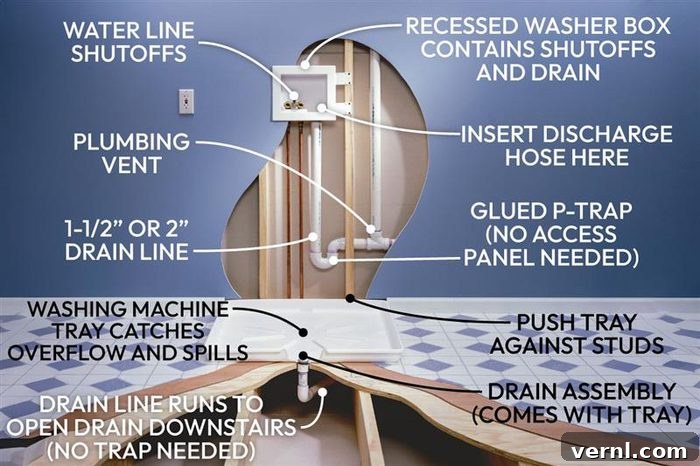
- Recessed Washer Box: A recessed washer box is a practical and aesthetically pleasing solution. Installed directly in the wall behind the washing machine, these boxes feature specialized plumbing fittings with integrated shutoff valves for the hot and cold water supply hoses. They also provide a secure drain connection for the washer’s discharge hose, neatly concealing all plumbing connections within the wall cavity. This keeps hoses less prone to accidental dislodgement and makes the shut-off valves easily accessible. For convenient access and servicing, mount the bottom of the box at about the same level as the top of the washing machine control panel. Be sure to choose a box that includes robust shutoff valves.
Create a Catch Basin System
Despite best efforts, leaks can still occur. A catch basin provides a secondary layer of protection to contain and manage escaped water, minimizing its spread and potential damage.
“This can help prevent flooding, but it doesn’t necessarily mean it is totally out of the realm of possibilities,” says Rudin, emphasizing that while effective, it’s not a foolproof solution against all flood scenarios. Encapsulating systems are essentially basins designed to catch water from the machine or, in some comprehensive setups, from the entire laundry room floor. These systems can either hold the water for manual removal or transport it out of the area.
A common example is a dedicated drain pan placed directly under the washing machine. These pans are typically made of plastic or metal and are designed to hold several gallons of water. For maximum effectiveness, the drain pan can be plumbed directly into your home’s main waste line, allowing any leaked water to be automatically diverted. Alternatively, it can be routed to a nearby laundry tub, a floor drain, or even outside through the walls, ensuring the water is safely carried away before it can cause damage. Ensure the pan is properly sized for your machine and fits tightly against the framing of the back wall, with drywall running down to meet it for a seamless installation.
Turn Off the Water When Not in Use
This simple habit is one of the most effective ways to prevent catastrophic hose failures. Washing machine hoses are under constant pressure when the water supply is open, which accelerates wear and increases the risk of rupture. By turning off the water to the supply hoses when the washing machine isn’t in use, you relieve this constant pressure, significantly extending the life of your hoses and reducing the chance of a burst.
While manually turning off two separate valves for each hose is possible, it can be cumbersome, making it a habit many people neglect. A more practical and convenient solution is to install a single-lever shut-off valve on the supply lines. This allows you to cut off both hot and cold water with a single, easy motion. Even better, purchasing a recessed washer box with one built-in streamlines the process, making it a quick and effortless step to perform after every laundry cycle or when leaving home for an extended period.
How to Clean Up a Flooded Laundry Room
Even with the best preventive measures, accidents can happen. Knowing how to react quickly and effectively can minimize damage and prevent secondary issues like mold growth.
For minor, recently occurred flooding:
- Safety First: Immediately unplug the washing machine and any other electrical appliances in the area. Then, locate and shut off the water supply to the washing machine (using the individual valves or a single-lever shut-off valve) to stop the flow.
- Remove Water: Use old towels, mops, or a wet-dry vacuum to remove as much standing water from the floor as possible. Work quickly to prevent water from seeping into baseboards, walls, and flooring.
- Thorough Drying: Once the visible water is gone, the area must be dried completely to prevent the growth of mildew and mold. Open windows and doors for ventilation. Use fans to circulate air and a dehumidifier to extract moisture from the air and absorbent materials. This drying process may take several days, so be patient and thorough. Ensure all surfaces, including beneath the washing machine and any nearby cabinets, are dry to the touch.
For severe or long-standing flooding:
If you didn’t catch the flood quickly, or if a huge amount of water has accumulated, the moisture could have permeated into the walls, subflooring, and ceiling (if it’s an upstairs laundry room). Depending on your climate and the amount of time the moisture has been present, this creates an ideal environment for mold growth, which can pose significant health risks and structural damage. In such cases, professional intervention is often necessary. You may need to remove saturated carpeting, cut out and replace water-damaged drywall up to two feet past the flood mark, and sand down exposed studs in the walls to properly remediate and prevent mold contamination from taking hold, as Rudin cautions. Attempting to dry out heavily saturated structural components without professional equipment and expertise is often ineffective and risky.
Why Does My Laundry Room Keep Flooding?
If your laundry room is experiencing repeated flooding, it’s a clear signal that there’s an underlying, persistent problem that requires immediate attention. Ignoring recurring leaks can lead to escalating damage, structural compromise, and severe mold issues over time. Several factors could be contributing to this frustrating cycle:
- Chronic Hose Issues: Despite replacements, new hoses might be of poor quality, installed improperly (overtightened or loose), or subject to continuous vibration causing them to dislodge.
- Persistent Clogs: If your floor drain or the washing machine’s internal drain system repeatedly clogs, it suggests an ongoing issue with lint accumulation, soap scum buildup, or even a deeper plumbing blockage further down the waste line.
- Aging or Faulty Valves: Repeated leaks from supply valves could indicate systemic wear and tear on your plumbing fixtures. If one valve fails, others might be close behind.
- Failing Washing Machine: A machine that consistently leaks, even after minor repairs, might be nearing the end of its life. Internal components like tub seals, pumps, or water inlet valves can continuously fail due to age or manufacturing defects.
- Consistent User Error: If family members are regularly overloading the machine or using excessive detergent, these habits will continue to cause overflows. Educating everyone using the laundry facilities is crucial.
- Poor Installation/Leveling: An improperly installed or perpetually unbalanced washing machine can put undue stress on hoses and internal components, leading to recurring issues.
“Flooding that happens regularly is a problem that needs to be addressed immediately before more damage occurs and before mold growth gets out of control,” stresses Rudin. Regular leaks, even minor ones, can be symptoms of worn gaskets, damaged internal washer components, or fundamental problems with your home’s water lines or drainage system that need expert diagnosis.
When To Call a Professional
While many minor leaks can be handled by a proactive homeowner, certain situations unequivocally call for professional intervention. Hesitating to call an expert can turn a manageable problem into a much larger, more expensive disaster.
- Undetermined Leak Source: If you’ve diligently checked the common culprits but still can’t pinpoint the source of the leak, a professional plumber or appliance technician has the expertise and specialized tools to accurately diagnose the problem.
- Large-Scale Flooding: A significant flood, especially one that has spread beyond the immediate laundry area or if you suspect water has permeated into walls, subflooring, or ceilings, requires immediate professional attention. Water damage technicians are equipped to handle large volumes of water and prevent structural damage.
- Suspected Mold Growth: If you notice a musty odor, visible mold, or have reason to believe that water has been sitting for more than 24-48 hours, it’s crucial to call a mold remediation specialist. Mold can spread rapidly and poses health risks, requiring specialized containment and removal procedures.
- Limited Access to Damaged Areas: If the leak origin or water damage is behind walls, under floors, or in difficult-to-reach areas, professionals have the tools to access and repair these hidden issues without causing unnecessary damage to your home.
- Specialized Equipment Needed: Water damage restoration companies have access to industrial-grade air movers, powerful dehumidifiers, and advanced water extraction tools that are far more effective than typical consumer-grade equipment. These tools are essential for thorough drying, which is critical to prevent secondary damage like mold.
“Cleaning up an upstairs laundry room flood is a challenging task, and this is why people usually make an insurance claim and then call professionals to do the work for them,” says Rudin. Their expertise ensures that the cleanup is thorough, all affected areas are properly dried, and potential long-term issues are mitigated, providing peace of mind and protecting your investment in your home.
About the Experts
- Josh Rudin is the owner of ASAP Restoration in Tempe, Arizona. He founded the company in 2008 as a single-person operation, and it has since grown into one of the city’s leading disaster mitigation specialists, known for its rapid response and comprehensive restoration services.
- Melanie Powers is the president at Goodberlet Home Services. This female-owned company has been serving parts of Illinois and Indiana since 1982, offering a wide range of essential home services, including plumbing, construction, electrical, and HVAC repair, with a strong commitment to quality and customer satisfaction.