
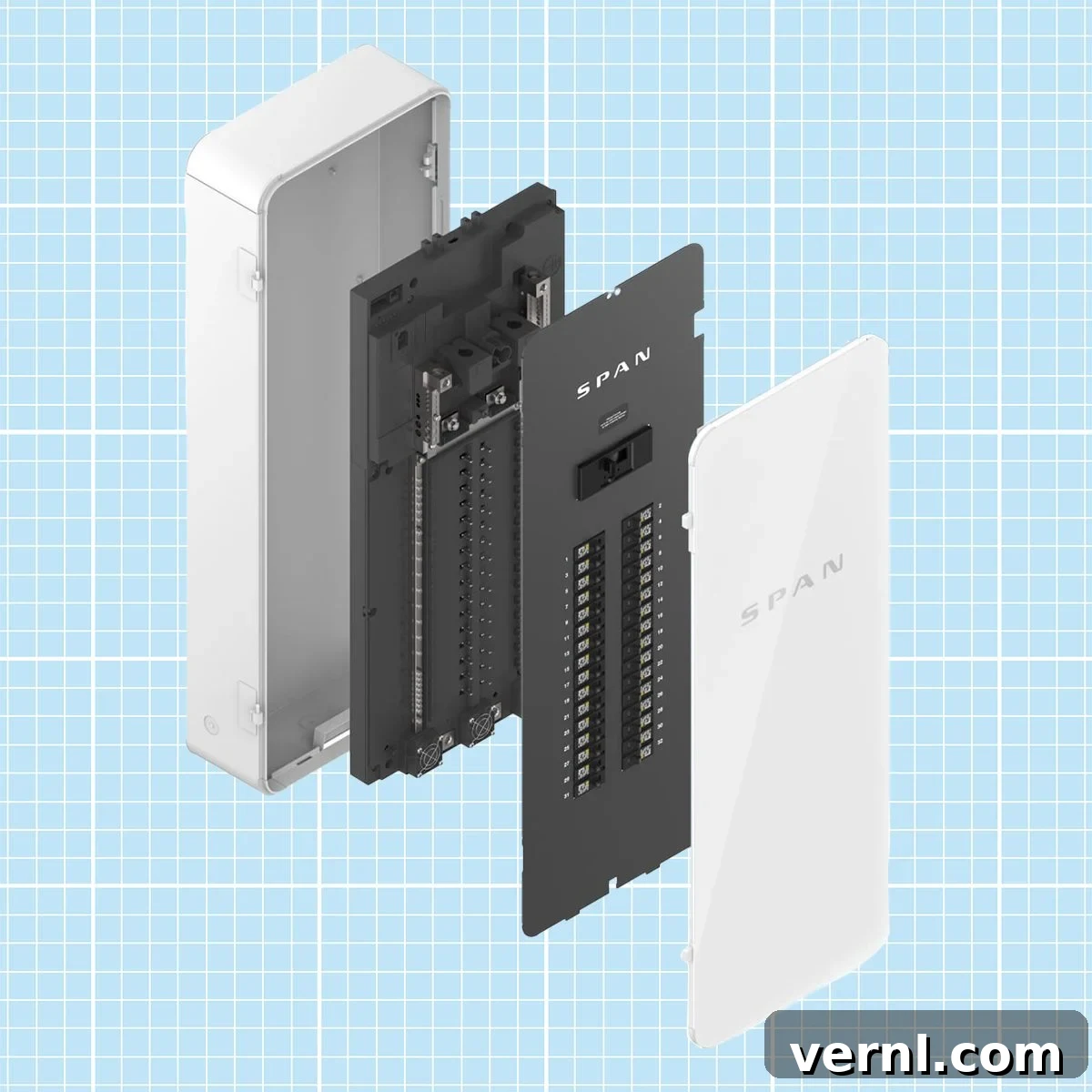
Our homes’ electrical systems are intricate networks, and at their core lies the service panel – traditionally a seemingly static box of toggle switches. For decades, its fundamental design, established when resettable circuit breakers replaced fuses in the mid-20th century, remained largely unchanged. However, we are now on the cusp of a revolutionary transformation: the advent of the digital, smart electrical panel. This innovation promises to redefine how we interact with and manage our home electricity, making our systems more intelligent, efficient, and responsive to the demands of the modern world.
This monumental shift is not merely a technological whim; it’s a necessity driven by the accelerating trend of home electrification. Across North America and globally, homes are moving away from fossil fuels, spurred by two critical factors: the dwindling global supply of non-renewable resources and the undeniable environmental impact of burning them. Governments worldwide are responding with policies that incentivize, and increasingly mandate, the replacement of traditional gas furnaces, stoves, and even gasoline-powered automobiles with their electric counterparts. This transition places unprecedented demands on residential electrical infrastructure, making the static, analog service panel an outdated solution.
Adding to this imperative is the growing desire among cost-conscious and environmentally aware homeowners to achieve greater energy independence and sustainability. Many are actively supplementing grid power with clean, renewable energy sources like solar panels and wind turbines, often paired with sophisticated battery storage systems. These setups allow homeowners to capture, store, and utilize their own generated power, reducing reliance on the grid and potentially lowering energy bills. In such a dynamic, multi-source energy environment, the need for an intelligent, adaptive control center to manage these diverse power flows becomes not just advantageous, but absolutely critical.
In response to this emerging need, several forward-thinking manufacturers have already introduced sophisticated smart panels to the market. Industry giants such as Schneider Electric and Eaton, alongside innovative startups like Koben and the San Francisco-based Span, are leading this charge. These pioneers are not just upgrading existing technology; they are fundamentally reimagining the service panel. As master electrician John Williams attests, the reliability of these advanced panels has significantly improved in recent years. “Such brand-name equipment has been thoroughly evaluated and subjected to exhaustive testing by UL, ETL, CSA, or other reputable testing laboratories,” he explains, providing a crucial assurance of quality and safety for consumers.
While the smart electrical panel represents the future, it’s true that not every home requires one immediately, particularly those with conventional panels in good working order and minimal electrification plans. However, as the electrification movement gains momentum, these advanced control systems are poised to become as commonplace and indispensable as the traditional analog breaker panel is today. They are an essential component of the modern, sustainable, and resilient home, preparing our residences for a future powered by clean energy and intelligent management.
What Exactly Defines a Smart Electrical Panel?
Superficially, a smart electrical panel might resemble a more streamlined, aesthetically pleasing version of its conventional predecessor. However, its operational principles and core functionality are radically different. Gone are the rows of manual toggle switches that characterize traditional circuit breakers. In a smart panel, these are replaced by digital circuit breakers, each a sophisticated electronic component capable of precise control and real-time data communication. Each digital breaker communicates seamlessly with a central data control center, an intelligent hub that continuously monitors the entire electrical load on the panel. This central intelligence allows the system to turn individual breakers on or off as needed, not just in response to an overload, but also based on programmed preferences, energy availability, and real-time demand.
A key feature of these smart panels is their ability to conduct a comprehensive load analysis in real time. This means the panel isn’t just reacting to problems; it’s constantly assessing energy consumption across all circuits, identifying patterns, and predicting potential issues. This invaluable data is then made accessible to the homeowner, typically through an intuitive mobile application or a direct interface on the panel itself. Homeowners can program the panel with specific energy management strategies. For instance, during a power outage, you might prioritize essential circuits to preserve battery life for critical appliances. During peak energy hours, when electricity prices are often highest, you could program the panel to automatically reduce power consumption by temporarily shutting off non-essential loads or shifting high-draw activities to off-peak times. This granular level of load management is absolutely crucial for homes that integrate multiple energy sources—such as grid electricity, solar power, wind generation, and battery storage—while simultaneously powering a household full of electric appliances, including electric vehicles (EVs), heat pumps, and induction cooktops. Understanding these dynamics also extends to making informed choices about new home appliances and their energy demands.
While a smart panel connects to a home’s existing electrical circuitry in much the same way as a conventional panel, the specific design, advanced features, and user functionality can vary significantly between manufacturers. For example, the Span panel, which is highly favored by leading solar installation companies like Sunrun, incorporates a built-in switch that automatically and seamlessly disconnects the home from the utility grid the moment a power outage occurs. This critical safety feature ensures that the home’s battery backup system can safely and immediately take over, providing uninterrupted power without the risk of backfeeding electricity onto the grid and endangering utility workers.
The Span panel further exemplifies intelligent energy management with its innovative three-tiered circuit classification system designed to maximize battery life during an outage. Circuits are categorized as “Must have,” “Nice to have,” and “Not essential.” When grid power fails, all “Not essential” circuits (such as those for decorative lighting or seldom-used outlets) are immediately shut down to conserve energy. “Nice to have” circuits (like those for entertainment systems or secondary heating) remain active until the battery charge drops to a predetermined level, often 50%. This intelligent prioritization ensures that critical functions remain powered for as long as possible, providing homeowners with peace of mind and extended resilience during unforeseen power disruptions.
Smart Electrical Panel: Unveiling the Pros and Cons
The introduction of smart electrical panels marks a paradigm shift in home energy management, analogous to the transformative impact smartphones had on everyday communications. Integrating a smart panel into your home electrical system offers a compelling array of benefits:
- Significantly Lower Energy Costs: Smart panels empower homeowners to optimize energy consumption like never before. By providing real-time data on usage patterns, identifying energy-hungry appliances, and allowing for dynamic load management, they enable smarter decisions. Homeowners can program the panel to draw more power from solar or battery storage when electricity prices from the grid are high (during peak hours) and charge batteries when prices are low (off-peak). This strategic shifting of loads can lead to substantial savings on monthly utility bills, especially in areas with time-of-use (TOU) billing structures.
- More Efficient Energy Usage: Beyond cost savings, smart panels promote overall energy efficiency. They help homeowners understand where their energy is going, revealing insights that were previously hidden. By precisely monitoring and controlling individual circuits, these panels can prevent energy waste from phantom loads or unnecessary power consumption. They can also seamlessly integrate with other smart home devices, creating a holistic ecosystem that optimizes energy use across the entire household.
- Automatic Switching Between Energy Sources: For homes with solar, wind, and battery storage, a smart panel acts as a sophisticated conductor. It intelligently manages the flow of electricity, automatically switching between grid power, renewable energy generation, and battery discharge based on predefined preferences, current energy prices, and availability. This ensures that you’re always using the most cost-effective and sustainable energy source at any given moment, maximizing the return on investment for your renewable energy systems and enhancing your home’s energy resilience.
- Remote Diagnosis and Proactive Problem Solving: One of the most significant advancements is the ability for smart panels to monitor electrical health in real time. They can detect subtle anomalies, potential circuit overloads, or even identify developing issues before they become major problems. This data can be accessed remotely via a mobile app, allowing homeowners or electricians to diagnose issues from anywhere. This proactive approach not only saves time and money on service calls but also significantly enhances the safety of the electrical system by identifying and alerting to potential hazards.
- Enhanced Safety Features: Beyond traditional breaker trip mechanisms, smart panels often include more sophisticated safety features. They can provide granular fault detection, pinpointing exact circuit issues, and even offer self-diagnostics that might prevent nuisance trips or identify wiring problems before they escalate.
- Future-Proofing Your Home: As electrification accelerates, homes will require more robust and intelligent electrical infrastructure. A smart panel ensures your home is ready for future additions like more EV chargers, additional heat pumps, or expanded renewable energy systems, making it a wise investment for long-term sustainability and value.
However, this advanced technology comes with certain downsides, primarily related to cost and complexity:
- Higher Initial Investment: The most significant drawback is the cost. The price of a smart panel itself is considerably higher than that of a conventional panel, typically ranging from $2,000 to $5,000, compared to $400 to $800 for a standard unit. This higher cost reflects the advanced digital components, communication capabilities, and sophisticated software embedded within the smart panel.
- Potential for a Service Upgrade: Beyond the panel’s cost, installation may necessitate a complete service upgrade. If your current home is rated for 100-amp service, the increased electrical demands of a fully electrified home—including EV charging, heat pumps, and induction cooking—will almost certainly require an upgrade to 200 amps or even more. This upgrade is a complex undertaking, involving the replacement of the main service cable with a heavier gauge one, and potentially modifications to the meter base and other utility connections. The entire project, including the panel and service upgrade, can cost anywhere from $1,300 to $3,000, or potentially more depending on local labor rates and the complexity of the existing infrastructure.
- Initial Complexity and Learning Curve: While designed to be user-friendly, the advanced features and programming options of a smart panel might present a slight learning curve for some homeowners. Understanding the various settings, energy reports, and optimization strategies might require a bit of initial effort.
- Reliance on Connectivity: Most smart panel features rely on an active internet connection for remote access, data reporting, and over-the-air updates. While the core electrical functions will still operate without internet, the “smart” aspects would be limited during an internet outage.
- Data Privacy Concerns: As with any smart home device that collects data, there can be concerns about data privacy and how personal energy consumption patterns are stored and utilized. Reputable manufacturers generally have robust privacy policies, but it’s a factor to consider.
The silver lining, however, is that if you are seriously contemplating the full electrification of your home – replacing gas appliances with electric alternatives, or planning to install an electric vehicle charging system – a service upgrade will likely be an unavoidable necessity anyway, regardless of whether you choose a smart panel. In this context, investing in a smart panel alongside the required upgrade transforms a mandatory expense into an opportunity for significant long-term energy savings, enhanced control, and superior home management.
Who Stands to Benefit Most from a Smart Electrical Panel Upgrade?
In essence, virtually every homeowner can derive some level of benefit from a smart electrical panel, particularly in terms of enhanced energy awareness and potential savings. For a grid-tied house with a perfectly functional conventional panel and no immediate plans for major electrical overhauls, a smart panel might currently be considered a luxury upgrade. However, for individuals and families in specific situations, a smart panel transcends luxury and becomes more of a crucial necessity:
- Installing a Solar, Wind, or Other Renewable Energy System and Tying it to the Grid: If you’re investing in a home renewable energy system, a smart panel is an indispensable component. It acts as the central brain, seamlessly integrating your solar or wind generation with grid power. It optimizes the flow of electricity, ensuring you maximize self-consumption of your clean energy, sell excess power back to the grid at opportune times, and draw from the grid only when necessary. This intelligent management not only maximizes your energy savings but also enhances the overall efficiency and return on investment of your renewable system.
- Integrating a Battery Backup System: For homes with battery storage, a smart panel is paramount for effective energy management and resilience. It intelligently manages the electrical load during grid outages, prioritizing essential circuits and conserving battery power to extend run time. Beyond outages, it can be programmed to charge your batteries during off-peak hours (when electricity is cheaper) and discharge them during peak hours (when electricity is more expensive), further reducing your utility costs and contributing to grid stability.
- Electrifying Your House and Replacing Fossil Fuel Appliances: The journey towards an all-electric home involves introducing high-draw appliances like electric vehicle chargers, heat pumps for heating and cooling, and induction cooktops. These significantly increase your home’s overall electrical load. A smart panel becomes vital for managing this increased demand, preventing overloads, and intelligently balancing electrical usage across different circuits. It ensures your home can handle the power requirements of modern electric appliances without tripping breakers or requiring constant manual intervention, often necessitating the aforementioned service upgrade to accommodate the higher amperage.
- Tech-Savvy Homeowners Seeking Advanced Control: For those who embrace smart home technology and desire granular control over their living environment, a smart panel offers unparalleled capabilities. It integrates seamlessly into a wider smart home ecosystem, allowing for centralized management of lighting, climate control, security, and now, energy.
- Homeowners Building New Homes or Undergoing Major Renovations: For new constructions or substantial renovations, installing a smart panel from the outset is a proactive and cost-effective decision. It future-proofs the home, avoids the complexities and costs of retrofitting later, and ensures optimal energy management from day one.
One of the most compelling perks of a smart panel is the unparalleled ability to connect to and control it remotely. This allows you to manage your home’s power system and diagnose potential issues from virtually anywhere in the world. Imagine being able to turn individual breakers on and off, monitor energy usage, or receive instant alerts about electrical problems, all from your smartphone or tablet, whether you’re at work, away on vacation, or simply in another room.
For instance, if you rent out a section of your house as an Airbnb while you’re traveling, you can remotely activate the power to that specific part of the house just before your guests arrive and shut it off after they depart, ensuring energy savings and peace of mind. Similarly, if your house is vacant during the cold winter months while you enjoy a sunny vacation, you can remotely monitor local weather conditions. Should a severe cold spell hit, you could activate the heat for crucial periods to prevent your plumbing from freezing, and then turn it off again when the danger passes, all without needing to be physically present. While exploring these remote control capabilities, it’s also an excellent opportunity to learn about “energy vampires”—appliances that continue to drain electricity even when in standby mode, contributing to unnecessary 24-hour power consumption. A smart panel can help you identify and mitigate these hidden energy drains, offering even greater savings.
This level of remote control and intelligent management, accessible from your mobile device, truly embodies the definition of convenience and efficiency in modern living. It’s a key component of sophisticated smart home wiring that empowers homeowners with unprecedented control over their most vital utility. The digital electrical panel is not just an upgrade; it’s an intelligent gateway to a more efficient, resilient, and sustainable home.
Next, you might be interested in exploring a homeowner’s guide to an AC fuse box for historical context and understanding the evolution of electrical protection.