
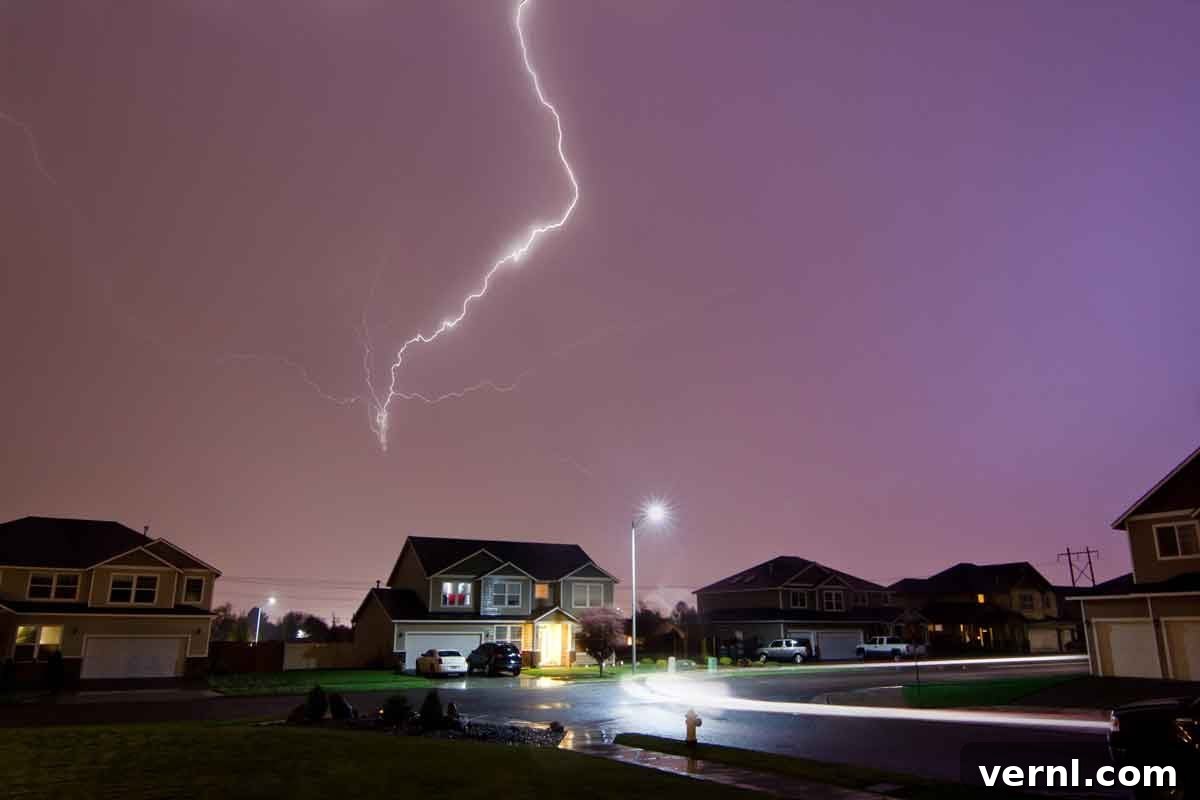
Lightning strikes are a natural phenomenon that, while statistically rare for an individual, pose a significant and costly threat to homes. In the U.S., the odds of being directly struck by lightning in your lifetime (assuming you live to 80) are quite low, approximately 1 in 15,300. However, the probability of your home being impacted by lightning is considerably higher, affecting about one in every 200 houses annually. This translates to a substantial number of claims; last year alone, over 70,000 lightning damage claims were filed by U.S. homeowners, with the average cost nearing $30,000 per incident.
The destructive power of a lightning strike extends beyond visible damage like fires or structural compromise. It can also induce a severe electrical surge that travels through your home’s wiring, frying sensitive appliances and expensive electronics. Implementing a few crucial safety measures can mitigate these risks, saving you thousands of dollars in repairs and countless headaches. A well-protected home might weather a strike unnoticed, but without adequate defenses, you could face hefty repair bills, some of which may not even be covered by your insurance.
Understanding Electrical Surges and Whole-Home Surge Protection
Electrical surges, or transient voltages, are sudden, brief spikes in electrical current or voltage that can occur in various ways, including power outages, short circuits, or switching operations within the electrical grid. While many factors can cause surges, lightning is by far the most powerful and destructive source. A lightning strike, even if it doesn’t directly hit your house, can generate an enormous electromagnetic pulse that induces a surge in nearby power, phone, or cable lines, which then travel into your home’s electrical system.
These surges can cause immediate, catastrophic damage to appliances and electronics. Even smaller, repetitive surges, often imperceptible to the homeowner, can gradually degrade the internal components of your devices over time, shortening their lifespan until they eventually fail. This cumulative damage is often overlooked but can be just as costly as a single, large event.
To effectively protect your home from these damaging electrical spikes, the primary solution is the installation of robust Surge Protective Devices (SPDs) in conjunction with a reliable electrical grounding system. SPDs are designed to detect excessive voltage, block it, and safely divert it away from your home’s sensitive electrical components. They primarily utilize components like metal oxide varistors (MOVs) to achieve this by essentially clamping down on high voltages and shunting the excess energy.
It’s a common and dangerous misconception that general-purpose power strips offer sufficient protection against strong electrical surges. While a standard power strip provides additional outlets, it typically lacks adequate surge protection capabilities. True surge protectors, on the other hand, create a barrier between your electrical system and the devices plugged into them. However, even point-of-use surge protectors (the ones you plug into an outlet) are no match for the immense energy of a lightning-induced power surge and should not be considered a substitute for comprehensive whole-house surge protection.
Whole-house surge protectors, also known as Type 2 SPDs, are installed directly at your home’s main electrical panel. These devices provide the first and most critical line of defense, protecting all circuits and appliances connected to the panel from external surges. While investing in a whole-home surge protector can range from $300 to $600 for the device and installation, this upfront cost is negligible when compared to the potential thousands of dollars in damages it can prevent. Protecting expensive items like refrigerators, HVAC systems, smart home devices, and entertainment systems easily justifies the investment.
Given the critical role of SPDs in your home’s electrical safety, it is strongly recommended to hire a licensed and qualified electrician for their installation. These devices must be properly connected to your home’s main electrical panel to be effective. Before installation, the electrician should also meticulously check your home’s existing electrical grounding system. A robust and properly maintained grounding system is paramount because SPDs often divert excess voltage surges into the earth through this pathway. Ensuring that your grounding system is updated, in excellent working condition, and provides a low-resistance path to the earth is absolutely vital for the SPD to function as intended and for overall electrical safety. The average fee for an inspection and professional installation often falls around $175, a small price for significant peace of mind.
While a whole-house surge protective device is the cornerstone of robust home protection, it can be effectively supplemented by point-of-use SPDs (surge-protection power strips). These are ideal for sensitive electronics like computer workstations, home theater systems, or medical equipment, offering an additional layer of localized protection closer to the device itself. This layered approach provides comprehensive defense against surges originating from both outside and inside your home.
Lightning Rods: Intercepting the Fury
Lightning creates an incredible amount of power and heat, and for centuries, humanity has sought ways to mitigate its destructive force. Lightning rods, formally known as air terminals, represent a proven solution employed by residential and commercial buildings alike to safely intercept and redirect these powerful electrical currents. The concept, famously pioneered by Benjamin Franklin, involves providing a preferred path for lightning to follow, thereby protecting the structure beneath.
Here’s how a typical lightning rod system works: One or more metallic rods, usually made of copper or aluminum, are strategically placed at the highest points of your home or building (much like on iconic structures such as the Empire State Building). These air terminals are connected to a robust main conductor cable, typically made of braided copper, which runs down the side of the building. This conductor is then linked to one or more grounding electrodes, usually long metal rods buried deep underground, or a comprehensive grounding plate. Through this carefully engineered low-resistance path, the immense voltage and current of a lightning strike are safely channeled into the Earth, effectively bypassing and protecting the building structure and its contents.
However, it’s crucial to understand that even the most advanced lightning rod systems are not entirely fail-safe. While highly effective at intercepting direct strikes, they cannot prevent all forms of lightning-related damage. At extremely high voltages or due to unique atmospheric conditions, some energy may still induce secondary effects or side flashes that can affect unprotected parts of a home. Furthermore, the effectiveness of a lightning rod system is heavily reliant on professional design and installation, adhering to strict industry standards like NFPA 780. An incorrectly installed system, with inadequate grounding or improper conductor placement, can ironically exacerbate damage rather than prevent it. Such complex systems can also be quite an investment, with a multi-rod copper system for an average home costing approximately $1,500 or more, including professional installation.
Other Essential Protection Methods and Best Practices
Even with advanced safeguards like whole-home surge protectors and lightning rod systems, there are additional precautions and behavioral changes you can adopt to enhance your home’s safety during a lightning storm. The simplest and most immediate defense against an impending surge is often the most effective: unplugging your devices. Developing a clear lightning plan with your family ensures that everyone knows which major appliances and sensitive electronics need to be protected or disconnected.
Devices to Prioritize for Unplugging:
- Televisions and Home Entertainment Systems: These are highly susceptible to surge damage due to multiple connections (power, cable, antenna).
- Computers and Laptops: Critical for work and personal data, they contain sensitive components easily fried by surges.
- Gaming Systems: Consoles and their peripherals are electronic investments that benefit from disconnection.
- Charging Stations and Power Banks: While often overlooked, devices connected to chargers can still conduct surges.
- Portable Appliances: Toasters, blenders, hair dryers, and other small plug-in devices should be disconnected when not in use during a storm.
- Modems and Routers: Essential for internet connectivity, these can be damaged through phone or cable lines.
- Corded Telephones: Old-school landlines can also conduct surges into the home.
Some large appliances, such as your washer, dryer, oven, and refrigerator, are often permanently wired or too cumbersome to unplug before every storm. In these instances, the best practice is to avoid using these plugged-in appliances during the peak of the storm. Engaging a washing machine, for example, creates additional electrical activity that could potentially attract or worsen the impact of a surge.
For those comfortable with basic electrical work, certain types of surge protective devices, such as whole-panel surge arrestors, can be installed directly at your main electrical panel. These devices offer robust protection against over-voltage and help prevent fires. They are surprisingly affordable, often costing less than $100 depending on your home’s size and protection requirements. However, DIY installation should be approached with extreme caution, as improper handling of electrical panels can be very dangerous. If you have any doubts about your ability to safely install such a device, it is always best to consult or hire a professional electrician. For plug-in appliances and devices, investing in surge-protected power strips remains a budget-friendly and effective preventative measure, offering an essential layer of localized defense and providing considerable peace of mind.
Beyond active protection, several other practices contribute to overall lightning safety. Regularly scheduled electrical inspections by a certified electrician can identify potential vulnerabilities in your home’s wiring, grounding system, and outdated components. These inspections ensure that your entire electrical infrastructure is up to code and capable of handling modern electrical demands and protecting against external threats. Furthermore, understanding the nuances of your homeowner’s insurance policy regarding lightning damage is crucial. Documenting your installed protection systems and maintaining records of professional installations can often streamline claims processing and, in some cases, may even qualify you for reduced premiums.
Finally, preparedness also includes personal safety during a lightning storm. Always follow advice to stay indoors, avoid contact with electrical appliances or plumbing fixtures, and steer clear of windows and doors. While primarily focused on protecting people, these measures indirectly safeguard your home by preventing human interaction with potentially electrified surfaces or objects. By combining robust physical protection systems with smart behavioral precautions, you can significantly reduce the risks and potential damages that lightning poses to your home and family.