
The Majestic Tulip Tree: A Comprehensive Guide to Planting and Care
Prized for their exceptional growth rate, towering height, and distinctive ornamental qualities, Tulip Trees (scientifically known as Liriodendron tulipifera) stand out as a highly sought-after shade tree, particularly across the Eastern United States. These robust and relatively low-maintenance giants hold a special place in American arboriculture, even earning the distinction of being the state tree for Indiana, Kentucky, and Tennessee. While their charming spring flowers and vibrant autumnal foliage offer undeniable appeal, their suitability varies by region. Tulip trees are best suited for expansive properties that offer ample open space, as these majestic specimens require considerable room to flourish and reach their full potential. Join us as we explore the ideal environments for tulip trees, delve into effective planting strategies, and uncover essential care tips, drawing insights from Sharon Yiesla, a distinguished Plant Knowledge Specialist at The Morton Arboretum.
Understanding the Tulip Tree: A Closer Look at Liriodendron tulipifera
Despite its common name, the Tulip Tree, often referred to as Tulip Poplar, is a magnificent member of the magnolia family (Magnoliaceae), not closely related to true tulips or poplars. It is one of the largest native trees of North America, frequently soaring to heights exceeding 100 feet, with some exceptional specimens reaching up to 150-190 feet. Remarkably, young tulip trees can exhibit astonishing growth, sometimes adding as much as 24 inches in height in a single year, making them a superb choice for rapid landscape development.
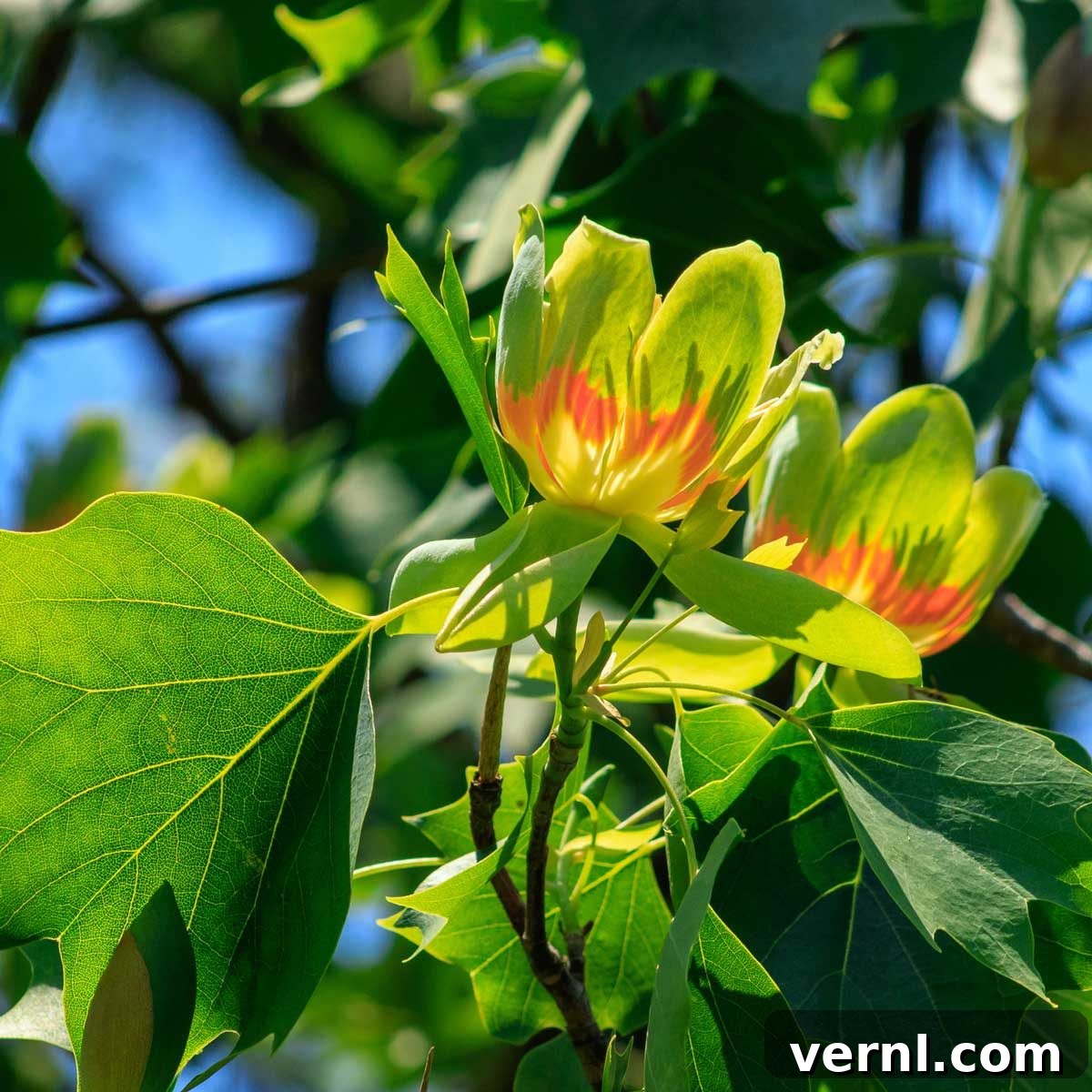
The name “Tulip Tree” perfectly encapsulates its most striking feature: the exquisite, tulip-shaped flowers that emerge in late spring or early summer. These blossoms, typically a beautiful blend of greenish-yellow with an orange band at the base, are often hidden high within the upper canopy of mature trees (usually 15 years or older), adding a delightful surprise for those who look up. As Sharon Yiesla points out, “The flowers not only bring unique beauty to the landscape, but they also serve as a vital nectar source for a diverse array of pollinators, including many species of bees, beetles, and even flies. The ruby-throated hummingbird, a common visitor, also frequents these blossoms for their sweet nectar. Later in the season, the tree’s distinctive seeds provide a crucial food source for various birds, mice, and squirrels, underscoring its significant ecological role.”
Following the stunning floral display, the flowers give way to unique, upright, cone-shaped fruit structures known as samaras. These samaras are composed of numerous winged seeds that persist on the tree through fall and into winter, eventually scattering to aid in propagation. In autumn, the tree’s distinctive, four-lobed leaves transform into a brilliant golden-yellow, creating a spectacular seasonal display that further enhances its ornamental value.
Optimal Environments: Where Tulip Trees Truly Thrive
To ensure the health and vigor of a Tulip Tree, understanding its preferred environmental conditions is paramount. These adaptable giants thrive in specific settings, making careful site selection crucial for their long-term success.
Tulip Trees flourish best in locations that receive full sun, meaning at least six hours of direct sunlight per day. While they tolerate some partial shade, especially in hotter climates, full sun encourages the most robust growth and abundant flowering. However, they can show signs of stress, such as scorched leaves or reduced vitality, if exposed to extreme, prolonged heat, particularly when combined with insufficient moisture. They prefer a moist, temperate climate and exhibit remarkable hardiness, suitable for regions where average minimum winter temperatures remain above -30 degrees Fahrenheit, corresponding to USDA Plant Hardiness Zones 4 through 9. This wide range makes them viable across much of the continental U.S., but careful consideration of local microclimates is always advised.
Soil quality plays an equally critical role in the prosperity of a Tulip Tree. They prefer moist, slightly acidic (pH 6.0-7.0), and well-draining soil. Loamy soils rich in organic matter are ideal. These trees are notably intolerant of drought conditions; insufficient moisture, especially during dry spells or their establishment period, can quickly lead to discolored leaves, premature leaf drop, and overall decline. Conversely, while they appreciate moisture, poorly draining, waterlogged soils can lead to root rot and other fungal diseases, highlighting the importance of proper drainage. Tulip Trees also exhibit a strong intolerance to salt, rendering them generally unsuitable for coastal locations where saline air or soil is present, or for urban areas where road salt is frequently used, as salt exposure can severely damage their root systems and foliage.
Another important characteristic to consider is the tree’s branch structure. Tulip Trees possess branches that can be somewhat brittle, especially as they mature and become less flexible. Consequently, it is best to site these trees in locations protected from high winds or other extreme weather conditions that could cause limb breakage. Avoiding planting near homes, power lines, or high-traffic areas is often recommended to mitigate potential hazards from falling branches, reinforcing their suitability for large, open landscapes.
Caring for Your Tulip Tree: Essential Practices for Healthy Growth
Once established, Tulip Trees are relatively low-maintenance, but consistent care, especially during their younger years, ensures a strong and healthy specimen for decades to come.
Planting Your Tulip Tree
Selecting the right location is the first and most critical step. Choose a site with full sun, ample space for mature growth (at least 30-40 feet away from structures), and well-draining, slightly acidic soil. The best time to plant a tulip tree is in the spring or early fall when temperatures are moderate. Dig a hole that is two to three times wider than the root ball and just as deep. Carefully remove the tree from its container, gently loosening any circling roots. Place the tree in the center of the hole, ensuring the root collar (where the trunk meets the roots) is level with or slightly above the surrounding soil. Backfill the hole with the original soil, gently tamping to remove air pockets. Water thoroughly immediately after planting to settle the soil around the roots.
Watering
Consistent moisture is vital, particularly for newly planted trees and during dry spells. For the first few years, consider providing supplemental irrigation of five to seven gallons per week, especially throughout the summer and early fall. A good rule of thumb is to water when the top two to three inches of soil feel dry to the touch. Deep and infrequent watering is more beneficial than shallow, frequent watering, as it encourages roots to grow deeper, making the tree more drought-tolerant in the long run. Reduce watering frequency in cooler, wetter periods.
Fertilizing
While mature Tulip Trees in healthy soil rarely require fertilization, it can be advantageous in specific situations. Fertilizing a newly planted tulip tree for its first few years can significantly promote vigorous root establishment and overall healthy growth. For mature trees, a targeted fertilization can encourage more abundant flowering, particularly if bloom production has been sparse. Apply a slow-release granular fertilizer specifically formulated for acidic soil in early spring before new growth emerges. A second, lighter application can be beneficial in mid-spring if flower development appears slow or if the tree shows signs of nutrient deficiency, such as pale leaves or stunted growth. Always follow manufacturer instructions for application rates to avoid over-fertilization, which can harm the tree.
Mulching
Applying a two- to four-inch layer of organic mulch, such as shredded bark, wood chips, or compost, around the tree’s base offers numerous benefits. Mulch helps retain soil moisture, suppresses weed growth that competes for nutrients and water, moderates soil temperature, and slowly releases organic matter into the soil as it decomposes. Ensure the mulch layer extends out to the tree’s drip line (the area beneath the outermost branches) but avoid piling it directly against the trunk, creating a “donut” shape instead of a “volcano” to prevent moisture buildup and potential rot.
Pest Control
Tulip Trees are generally robust but can occasionally be susceptible to infestations from specific pests. The two most common are tulip-tree aphids and tulip-tree scales. Tulip-tree aphids are small, soft-bodied insects, typically pink or green, that feed in large colonies on plant sap. Tulip-tree scales are larger, roughly 1/4-inch-long insects with distinctive green or orange-pink bodies, also sap-feeders. Both pests excrete a sticky substance called honeydew, which can coat leaves, attract sooty mold, and indicate an infestation. Early detection is key. For minor infestations, a strong stream of water can dislodge aphids. For more severe cases, consider insecticidal soap, neem oil, or horticultural oils. Introducing beneficial predator insects like lady beetles or pirate bugs can also provide effective biological control. Always identify the pest accurately before applying any treatment.
Disease Control
Tulip Trees can be prone to developing cankers, which manifest as discolored depressions, lesions, or deformities on branches or the trunk, often resulting from fungal or bacterial infections. These can be exacerbated by environmental stress or physical damage. When identified, prompt action is crucial. Remove the entire affected branch by pruning back to healthy wood, ensuring a clean cut. After each cut, sterilize your cutting tool’s blade with rubbing alcohol or a bleach solution to prevent the inadvertent spreading of the infection to other parts of the tree or to other plants. If the infection is severe or widespread, or if cankers appear on the main trunk, consulting a certified arborist is highly recommended. In some cases, targeted fungicides or bactericides may be an option, but prevention through good cultural practices and avoiding wounds is always the best defense.
Mastering the Art of Pruning a Tulip Tree
Given their rapid growth and the somewhat brittle nature of their branches, periodic and strategic pruning is essential for maintaining the health, safety, and aesthetic appeal of a Tulip Tree. Proper pruning encourages strong branch structure, minimizes the risk of breakage, and removes diseased or dead wood.
The optimal time to prune a Tulip Tree is annually between late winter and early spring, specifically before new leaf growth emerges and before the first flowers have formed. This timing allows the tree to heal quickly and minimizes stress. For smaller, accessible branches, use sharp, clean pruning shears or loppers. For higher branches, a pole pruner can be effective.
It is strongly recommended to consider hiring a professional arborist if the tree’s size makes it difficult or unsafe to make controlled cuts from the ground or a ladder. Generally, any tree taller than 15 feet, or one located near structures, power lines, or high-traffic areas, warrants the expertise of a professional to ensure safety and proper technique. An arborist can also assess the tree’s overall health and identify any structural weaknesses that might not be obvious to an untrained eye.
Key pruning techniques include:
- Thinning out Dense Clusters: Remove select branches from areas where they are growing too closely together. This allows for better air circulation, reduces the sail effect that high winds can have on the canopy, and prevents branches from rubbing against each other, which can create wounds and potential entry points for disease.
- Addressing Weak Crotch Angles: Trim back or remove branches that have narrow “crotch angles” (the pocket formed where a branch meets the trunk or another limb) less than 35 degrees. These narrow angles typically indicate a weak attachment point and are highly susceptible to breaking off when exposed to strong winds, heavy ice, or snow loads. Aim for wider, U-shaped crotch angles which signify stronger branch attachments.
- Removing Dead, Damaged, or Diseased Branches: This is a year-round task. Promptly remove any branches that are dead, broken, showing signs of disease (like cankers or unusual discoloration), or are rubbing against other branches. Deadwood is not only unsightly but can also harbor pests and diseases. When removing diseased branches, do so as soon as they are discovered, regardless of the time of year, and remember to sterilize your cutting tool’s blade between each cut to prevent the spread of pathogens.
- Shaping and Balancing: Trim back or remove branches that detract from the desired natural shape and balance of the tree. This helps maintain an aesthetically pleasing form and promotes even growth. Avoid “topping” the tree (cutting off the main leader), as this can severely stress the tree and lead to weak, undesirable growth.
Propagating Your Own Tulip Tree: Expanding Your Landscape
Propagating Tulip Trees can be a rewarding endeavor, allowing you to grow new trees from existing ones. This can be done effectively through seeds or cuttings.
Propagating From Seeds
Tulip Tree seeds are encased within the unique samaras and can be harvested in the fall from mature trees. These seeds, once properly prepared, can be used to propagate new tulip trees the following spring.
Begin by collecting samaras after they have transitioned to a light beige or brownish color, indicating maturity. Bring them indoors and keep them in a dry place for a few days to allow the seeds to naturally separate from the papery fruit. You may need to gently break apart the samara clusters to release the individual winged seeds.
- Stratification is Key: Tulip Tree seeds require a period of cold stratification to break dormancy and prepare them for germination. This process mimics the natural winter conditions they would experience in their native habitat. To stratify, mix the seeds with an equal amount of moist (not wet) peat moss, sand, or vermiculite. Place this mixture in a sealed plastic bag or container and refrigerate at temperatures between 34°F and 41°F (1°C to 5°C) for 60 to 90 days. Check periodically to ensure the medium remains moist. This cold, moist period signals to the seed that winter has passed, and it’s safe to germinate in the spring.
- Sowing the Seeds: After the last anticipated frost in spring, the stratified seeds are ready for planting. You can either transfer them into individual nursery pots filled with a slightly acidic, well-draining potting mix or sow them directly into a prepared bed in the ground. If sowing directly, choose an area with well-draining, slightly acidic soil that receives ample sunlight. Bury the seeds no deeper than three times the length of the seed itself, typically about 1/4 to 1/2 inch deep. Space them a few inches apart if sowing multiple in a bed.
- Post-Sowing Care: Keep the soil consistently moist but never waterlogged. Overwatering can lead to mold growth or cause the seeds to rot. Germination can be slow and sporadic, so patience is required. Once seedlings emerge, ensure they receive adequate light and protection from harsh elements. Young seedlings will be delicate and should be gradually hardened off before permanent transplanting into the garden.
Propagating From Cuttings
While seed propagation is more common, Tulip Trees can also be propagated from cuttings, though success rates can be more variable. Softwood cuttings taken in late spring/early summer generally root better than hardwood cuttings.
In late spring to early summer, when the tree is actively growing, select a healthy, semi-hardwood branch that is about 6-12 inches long and about the thickness of a pencil. Make a clean cut just below a leaf node (the point where a leaf attaches to the stem). Remove the leaves from the bottom half of the cutting, leaving two to four leaves at the top.
- Apply Rooting Hormone: Dip the cut end of the prepared cutting into a powdered or liquid rooting hormone. This significantly increases the chances of root development. Tap off any excess hormone.
- Prepare Potting Medium: Fill a nursery pot with a sterile, well-draining rooting medium, such as a mix of peat moss and perlite or sand. Make a hole in the center of the medium with a pencil or stick.
- Insert the Cutting: Carefully insert the treated end of the cutting about two to four inches into the rooting medium, ensuring good contact. Gently firm the medium around the base of the cutting.
- Create a Humid Environment: To promote humid conditions and prevent the cutting from drying out, cover the pot and cutting with a clear plastic bag or place it under a humidity dome. Ensure the plastic does not touch the leaves. You can support the plastic with stakes.
- Provide Indirect Light: Place the pot in a protected area that receives bright, indirect light. Avoid direct sunlight, which can overheat the cutting. Keep the rooting medium consistently moist but not soggy.
- Check for Roots: After approximately one to two months, you can gently tug on the cutting. If you feel resistance, it indicates that roots are developing. Continue to maintain the humid environment until a strong root system has formed.
- Transplant After Last Frost: Keep the rooted cutting in its protected location over winter if necessary. As Sharon Yiesla advises, “Tulip Tree has a fleshy root system and so is better planted in spring.” Transplant the young tree into the ground after the last frost of the following spring, ensuring the soil and light conditions are suitable for its long-term growth.
Frequently Asked Questions About Tulip Trees
Do tulip trees drop a lot of debris?
Yes, Tulip Trees can be considered somewhat messy, especially at certain times of the year. They drop their attractive, tulip-shaped flowers in late spring to early summer, followed by their distinctive cone-shaped seed pods (samaras) throughout early summer and into fall. In autumn, their large, golden-yellow leaves contribute to the debris. This shedding makes them less ideal for planting over patios, driveways, or near swimming pools unless regular cleanup is not a concern.
Is a tulip tree a good tree for small yards?
No, Tulip Trees are generally not a suitable option for small yards or confined spaces. Their enormous mature size, both in height (often over 100 feet) and spread (up to 40-50 feet wide), requires considerable space to grow without causing issues with structures, overhead lines, or neighboring properties. Their extensive root system also needs room to spread without compacting or interfering with foundations.
How fast do tulip trees grow?
Tulip Trees are renowned for their remarkably fast growth rate, especially in their early years. Under ideal conditions, young trees can grow as much as 18-24 inches (or even more) in a single year, establishing themselves quickly in the landscape. This rapid growth continues for many years, making them an excellent choice for quickly establishing a large shade canopy.
What is the lifespan of a tulip tree?
With proper care and suitable growing conditions, Tulip Trees are long-lived species. They typically live for 100 to 200 years, with some exceptional specimens reaching even greater ages, making them a lasting legacy in any landscape.
Why are my tulip tree’s leaves turning yellow or falling prematurely?
Premature yellowing or dropping of leaves in a Tulip Tree is often a sign of environmental stress, most commonly insufficient moisture or drought. These trees are highly sensitive to dry conditions. Other potential causes include nutrient deficiencies (though less common in healthy soil), root damage, or pest infestations like aphids or scales. Ensuring consistent, adequate watering, especially during dry periods, is often the first step to address this issue.
About the Expert
- Sharon Yiesla is a Plant Knowledge Specialist at The Morton Arboretum, a renowned tree research and conservation center dedicated to studying and protecting trees.