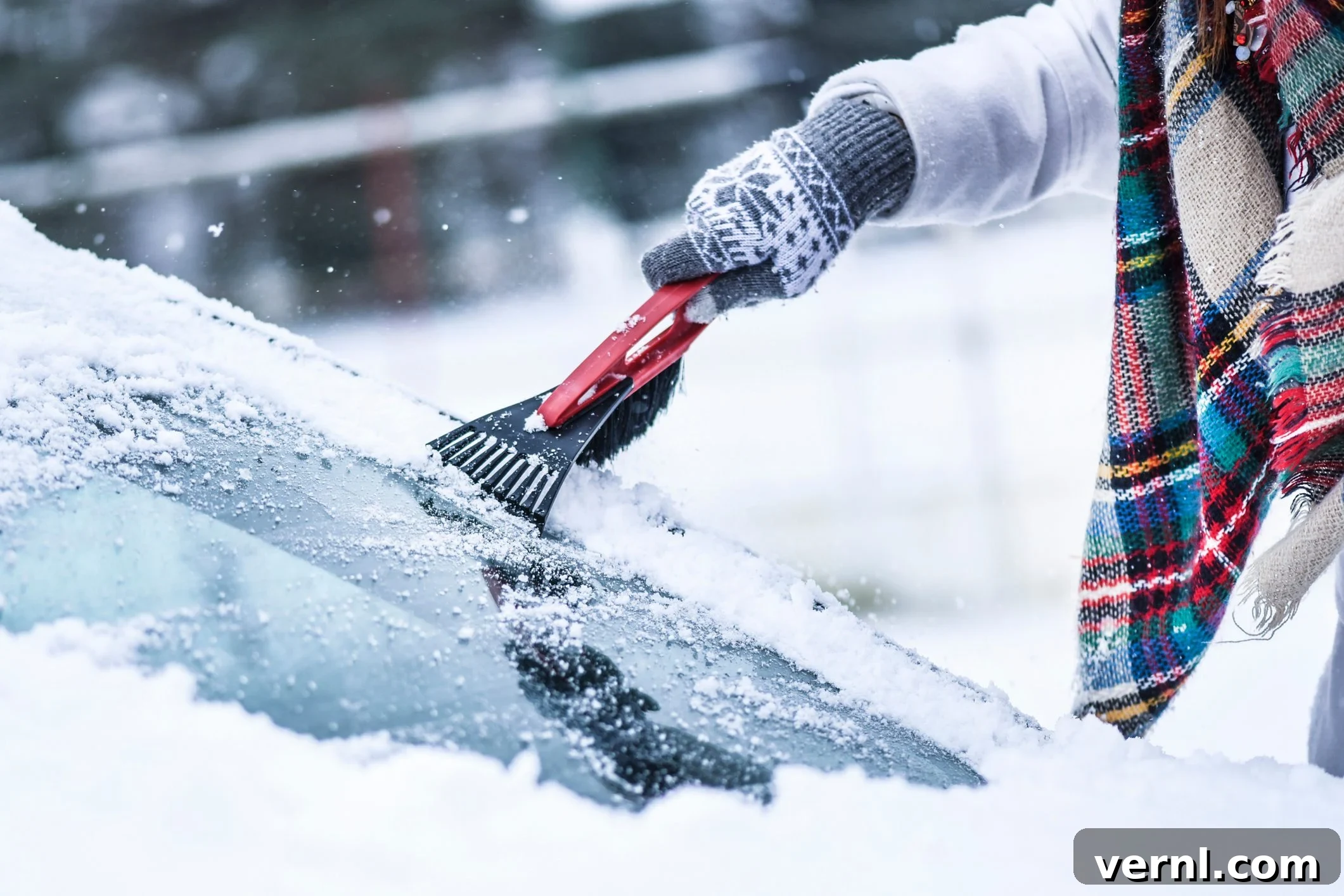
If you’re a diligent DIYer living in regions where temperatures frequently plummet below freezing, you’ve undoubtedly encountered your fair share of winter driving challenges. Among the most critical aspects of ensuring safe winter travel is the effective removal of ice from your windshield. While it might seem like a straightforward task, tackling a stubbornly icy windshield can actually be quite demanding. From relentlessly scraping thick layers of frost and ice to dealing with frozen wiper blades, there’s more to this winter chore than simply grabbing a scraper.
The secret to simplifying this daunting job lies in proactive preparation: assembling the right tools and materials well before the first significant cold snap hits. A dependable ice scraper, an effective de-icing solution, and a little forethought can dramatically reduce both the time and effort required to clear your vehicle. This comprehensive guide will walk you through eight of our best strategies and practical tips to help you maintain a crystal-clear, ice-free windshield, ensuring safe and confident driving throughout the entire winter season. By following these methods, you’ll be well-equipped to tackle whatever frosty conditions come your way, transforming a frustrating morning ritual into a manageable part of your winter routine.
Prioritize Pre-Winter Windshield Preparation
Before winter even begins its icy assault, taking a few proactive steps can make a significant difference in your daily battle against frost and ice. Start by ensuring your windshield wiper fluid reservoir is filled with a high-quality, cold-weather formula designed to resist freezing at low temperatures. Standard washer fluid can freeze on contact with a cold windshield, exacerbating the problem rather than solving it. Next, inspect your wiper blades. Worn, cracked, or hardened blades won’t effectively clear snow or ice and can even scratch your windshield. Replace them with new, ideally winter-specific blades that are more robust and flexible in cold conditions.
Consider applying a rain-repellent treatment, such as Rain-X, to your windshield. These treatments create a hydrophobic barrier that causes water, sleet, and even light snow to bead up and roll off, making it much harder for ice to adhere firmly to the glass. This can significantly reduce the amount of scraping needed. Finally, if possible, adjust your parking habits. Parking your vehicle facing east can allow the morning sun to naturally assist in melting some of the overnight frost, giving you a head start on your clearing efforts. These simple preparatory steps can save you valuable time and effort when the deep freeze truly sets in.
Keep Your Wipers Tipped Up
One of the easiest and most effective preventative measures you can take is to lift your windshield wipers off the glass when your vehicle is parked outdoors in freezing conditions. Wipers left in their normal position are highly susceptible to freezing directly onto the windshield due to condensation, melting snow, or freezing rain. When this happens, attempting to pry them loose can be a struggle, often resulting in damage to the delicate rubber wiper blades, which can tear or crack. Worse, forcing frozen wipers can strain or even damage the wiper motor and linkage mechanism, leading to costly repairs. Furthermore, if you manage to free them, the frozen rubber might still be stiff and ineffective at clearing your windshield.
By simply flipping your wipers up and away from the glass, you prevent them from adhering. This small action ensures they remain free and flexible, ready to perform their job effectively when you start your vehicle. It also protects the wiper blades from premature wear and tear caused by ice damage, extending their lifespan and maintaining optimal visibility. Make this a habit every time you park your car overnight or for extended periods in cold, wet weather.
Remove Snow First for Efficiency
More often than not, before you can even begin to tackle the ice, you’ll encounter a substantial blanket of snow covering your windshield and vehicle. Prioritizing snow removal is crucial, not just for visibility but also for safety. My preferred tool for this initial sweep is a large, heavy-duty push broom. While dedicated vehicle snow brushes are certainly fine and a must-have for targeted clearing, their smaller size can make clearing a heavily snow-covered car a lengthy process. A push broom, with its long handle and wide bristled head, dramatically reduces the time spent, transforming minutes of clearing into mere seconds.
Its extended reach allows for easy access to not only the windshield but also the roof, hood, and trunk. Removing snow from the entire vehicle is paramount to prevent it from flying off as you drive, creating a dangerous hazard for other motorists. I find it incredibly convenient to keep a push broom leaning against a wall outside my front door throughout the winter months, making it the first tool I grab. Always remember to clear all windows—front, rear, and side—along with your mirrors, ensuring comprehensive visibility and compliance with road safety regulations before you even start driving.
Activate Your Defroster Early
As soon as you’ve successfully cleared the bulk of the snow from your vehicle, the next crucial step is to get inside, start the engine, and activate your defroster. Turn your heater to its maximum warmth setting and ensure the airflow is directed specifically to the defrost vents, which are typically located at the base of the windshield. This action initiates a flow of warm air over your windshield from the inside, a process that is often far more effective and less abrasive than external scraping alone. The gentle, consistent heat helps to melt the ice and any remaining snow from the inside out, softening its grip on the glass and making subsequent manual removal much easier and safer.
For vehicles equipped with them, also activate your rear window defogger and any heated side mirrors. These features utilize embedded heating elements to quickly melt ice and condensation, providing crucial visibility to the rear and sides of your vehicle. While your defroster works its magic, you can proceed with external clearing tasks. This internal warming strategy is a foundational element of efficient ice removal, reducing the risk of scratching your windshield and preserving your wiper blades.
Score Thick Ice Layers First
Once your vehicle’s defroster has had a few minutes to start warming the windshield from the inside, it’s time to address any particularly stubborn layers of ice. This is where a high-quality snow brush equipped with a robust scraper end truly shines. If you’re dealing with anything more than a light dusting of frost, typically an eighth of an inch or more of ice, employing a scoring technique will prove invaluable. Use the serrated or toothed edge of your scraper to gently but firmly carve parallel grooves into the thick ice layer on the outside of your windshield.
The purpose of scoring is to create multiple weak points within the ice. These grooves allow the warmth from your internal defroster, as well as any de-icing solutions, to penetrate deeper and more rapidly into the ice mass. By increasing the surface area exposed to heat and chemicals, the scored ice will melt through faster than the surrounding intact ice. This causes the large sheets of ice to fracture and break away in smaller, more manageable chunks, making the final scraping process much quicker and less strenuous. This strategy minimizes the effort required and prevents you from having to repeatedly apply heavy pressure across the entire windshield.
Utilize a Robust and Ergonomic Scraper
With the ice strategically scored and actively thawing from the inside thanks to your defroster, it’s time to effectively remove the loosened ice. For this critical step, the quality of your ice scraper cannot be overstated. A flimsy, poorly designed scraper will only add to your frustration and make the job more difficult. Invest in a robust, well-designed scraper featuring a sturdy handle, a comfortable grip, and a sharp, durable wedge-shaped blade. Many high-quality scrapers feature blades made of durable plastic or even brass, which is effective without scratching glass.
When scraping, hold the scraper at a shallow angle to the windshield—ideally between 15 and 30 degrees—and apply steady, even pressure. Work in overlapping strokes, starting from the top and working your way down, or from the center outwards. Avoid excessive force, as this can potentially damage your windshield or the scraper itself. If you find the ice is still stubbornly clinging despite your efforts, give your vehicle’s heater a few more minutes to continue softening it. Alternatively, consider using a spray de-icer (as discussed in the next section) to further chemically melt the ice, making it easier to lift away without excessive physical effort. A good scraper is an indispensable tool in your winter arsenal, making efficient work of even the most challenging ice layers.
Deploy Alcohol-Based Spray De-Icer
When time is of the essence, or you’re facing exceptionally thick and recalcitrant ice, an alcohol-based spray de-icer can be an absolute lifesaver. These specialized sprays contain chemical agents, primarily alcohol, that effectively lower the freezing point of water and chemically melt ice on contact. The alcohol content also plays a crucial role in preventing the melted ice from quickly re-freezing into a new layer of frost, a common issue with plain water. Simply spray a generous amount directly onto the icy areas of your windshield and other affected surfaces, allow it to sit for a minute or two, and watch as the ice begins to dissolve or soften considerably, making it much easier to scrape away.
Beyond the windshield, spray de-icer is incredibly versatile for various other winter vehicle woes. Car doors frequently freeze shut in frigid conditions, sealing you out. A targeted, concentrated stream of de-icer sprayed into the cracks around your doors, particularly focusing on the door seals and lock mechanisms, can often quickly free them. It’s also excellent for unfreezing stubborn door locks or even side mirrors where careful manual scraping is difficult. Keep a can of de-icer in your glove compartment or winter emergency kit; it’s a small investment that can save you significant frustration on frosty mornings.
Thoroughly Check Under Your Wipers
One frequently overlooked but critical area during windshield ice removal is the space just below the glass, where the wiper arms and blades are mounted, often referred to as the cowl area or wiper well. The design and contours of many vehicles create a natural collection point for runoff water, melting snow, and freezing rain in this particular spot. This accumulation can quickly re-freeze into a thick, hidden buildup of ice that, if left unattended, can severely interfere with the proper function of your wiper blades. Ice in this area can prevent your wipers from resting flat against the windshield, causing them to chatter, skip, or fail to clear the lower portion of your view effectively.
To address this, ensure your wipers are tipped upright, if you haven’t already done so as a preventative measure. Then, carefully chip away any accumulated ice with your scraper. You might be surprised by the amount of ice you find lurking here. Taking the extra moment to clear this hidden ice pocket ensures your wipers have a full range of motion and can properly clear your entire windshield, maintaining optimal visibility and preventing potential damage to your wiper system. It’s a small step that yields significant benefits for overall winter driving safety.
Never Overlook Your Mirrors
While clearing your windshield is paramount, it’s easy to forget about your vehicle’s mirrors due to their smaller size. However, driving with obscured or icy side and rear-view mirrors is a major safety hazard, significantly impairing your ability to monitor traffic, change lanes, and park safely. Therefore, diligence in clearing your mirrors is just as important as clearing your windshield.
Begin by gently brushing away any loose snow from your mirrors. Then, proceed to scrape away any ice on your mirrors with extreme care. Mirror glass can be more fragile than windshield glass, and applying too much pressure or using an aggressive scraping technique can easily scratch or even crack the mirror. Moreover, applying heavy force might inadvertently knock the mirror out of its calibrated position, requiring tedious readjustment. For this reason, spray de-icer is an excellent option for clearing mirrors. It melts the ice without requiring physical contact, ensuring you don’t accidentally damage the mirror or alter its angle. If your vehicle has heated side mirrors, activate them simultaneously with your defroster to speed up the process and minimize the need for manual intervention.
FAQs: Your Winter Windshield Questions Answered
Should I use hot water to remove ice from a windshield?
Absolutely not. Using hot or even warm water to remove ice from a windshield is a highly risky practice that should be avoided at all costs. The sudden and extreme temperature change between the very cold glass and the hot water can cause what’s known as thermal shock. This shock can lead to the glass cracking, splintering, or even shattering, especially if your windshield has pre-existing chips or microscopic damage. This damage is often irreparable and can necessitate a costly windshield replacement. Furthermore, once the hot water cools down to the ambient freezing temperature, it will inevitably re-freeze, likely leaving you with an even thicker and more challenging layer of ice than you started with. Stick to safer, more effective methods like your vehicle’s defroster, ice scrapers, and de-icing sprays.
What can I do if I don’t have a dedicated ice scraper?
If you find yourself in a pinch without a proper ice scraper, your first line of defense should be your vehicle’s defroster. Start your car, turn the heater to maximum warmth, and direct the airflow to the defrost setting. This will work to soften or melt the ice from the inside out, making it much easier to remove. Once the ice has begun to soften, you can improvise a scraper using objects with a hard, flat, plastic edge. Common household items like an old credit card, a sturdy plastic spatula, a CD case, or even the edge of a plastic loyalty card can be used. Exercise extreme caution, applying gentle, even pressure to avoid scratching the glass. Always ensure the improvised tool is clean and free of abrasive particles. Alternatively, if available, an aerosol windshield de-icer spray is an excellent chemical solution that can melt ice without the need for any physical scraping, offering a quick and damage-free way to clear your view. Remember, these are temporary solutions; always aim to have a robust ice scraper in your winter car kit.
How can I prevent ice from building up on my windshield overnight?
Preventing ice buildup overnight is often more effective than battling it in the morning. One popular method is to cover your windshield. You can use a dedicated windshield cover, a large sheet of cardboard, or even a towel placed over the glass and secured with your wipers and by closing the car doors on the edges. This creates a barrier that prevents moisture from freezing directly onto the glass. Another tip is to ensure your windshield is as clean as possible before parking, as dirt and grime can give ice more surfaces to adhere to. If your car has a remote start feature, consider starting it 10-15 minutes before you plan to leave to give the defroster a head start. Lastly, ensure your windshield washer fluid reservoir is always topped up with a quality winter-grade fluid, as a quick spray can sometimes help dislodge light frost.