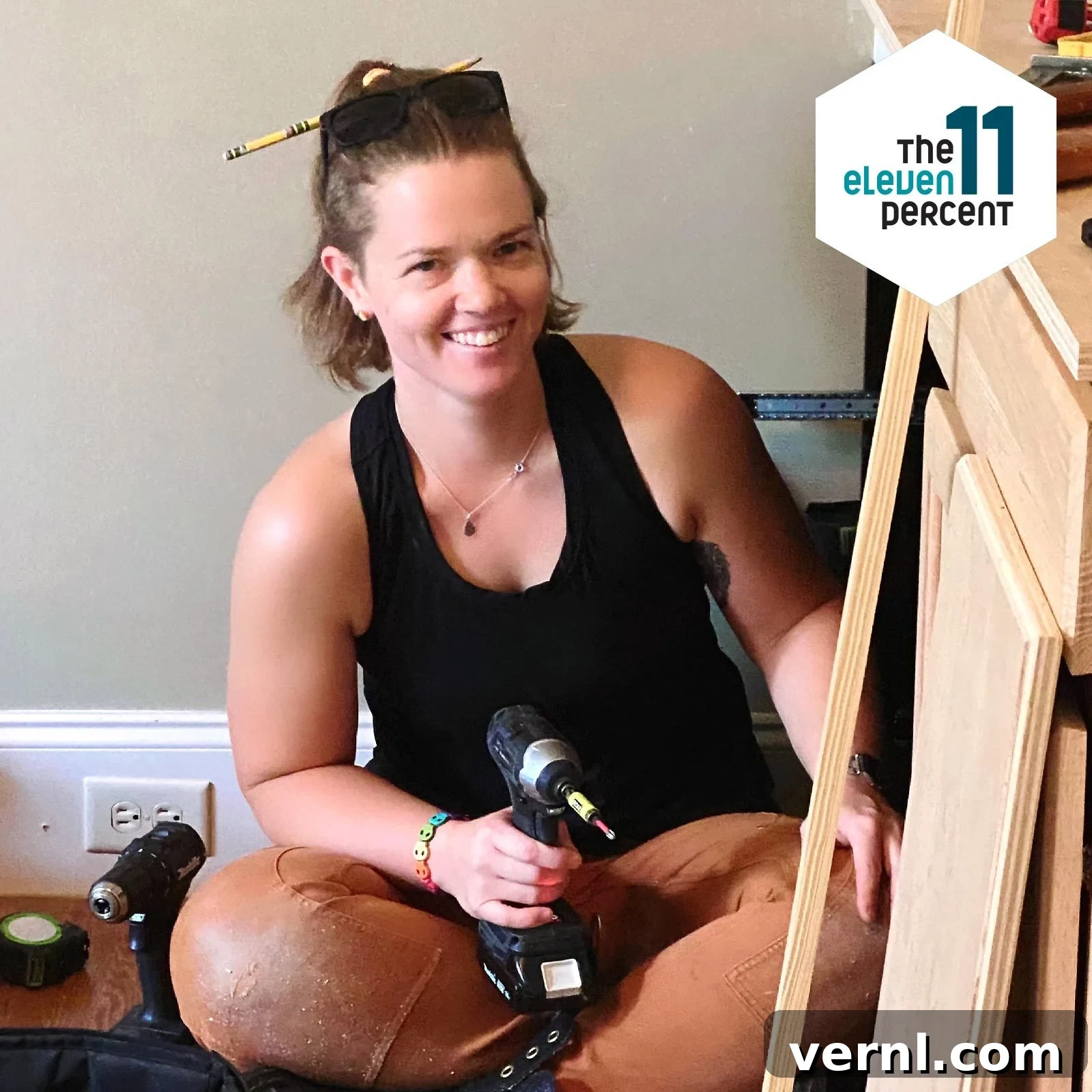
This illuminating FH series shines a spotlight on the remarkable women who represent a growing, yet still modest, 11 percent of the robust construction workforce across the U.S. Our aim is to bring their compelling career journeys and unique perspectives to the forefront, celebrating their contributions to a traditionally male-dominated industry. Do you know an inspiring woman in the trades whose story deserves to be told? We encourage you to reach out to us here.
Eight years ago, Kat Christie transformed a deeply ingrained childhood passion for tinkering and problem-solving into a professional calling. Her journey began not in construction, but as a skilled technician specializing in espresso machines. This initial foray into mechanical repair unexpectedly ignited a profound curiosity and an unyielding desire to master the intricacies of home repair. Recognizing this burgeoning passion, she took a significant step in 2017, enrolling in and successfully completing a comprehensive Handyman Certificate Course at York College in Queens, New York. This accomplishment was not merely an academic achievement; it was a foundational milestone towards realizing her ambitious dream of establishing and operating her very own handywoman business.
In 2019, Christie officially launched She Fixed That, a testament to her dedication and entrepreneurial spirit. The timing proved serendipitous, as she transitioned to full-time operations the following year, just as the global pandemic began to reshape daily life. With millions confined to their homes, many found themselves contemplating long-postponed renovation projects, addressing neglected repairs, or needing help with the assembly of new home office essentials. This unique set of circumstances created an unprecedented demand for skilled home repair services, allowing her nascent business to not only survive but thrive remarkably. “From the smallest tasks like patching a small hole in a wall to intricate furniture assembly, expertly hanging TVs and crafting elegant gallery walls, or even building custom pantries and library walls – no two days are ever alike,” Christie reflects, highlighting the dynamic and diverse nature of her work.
A new chapter unfolded for Kat in 2021 when she relocated from New Jersey to the vibrant city of Birmingham, Alabama. Demonstrating her adaptability and business acumen, she swiftly re-established She Fixed That in her new environment. Her observation on the demand for her services holds true regardless of geography: “Whether up north or down south, people consistently seek to hire women. And notably, women are particularly keen to hire other women,” she states. This insight underscores a powerful and evolving market niche, one that Kat firmly believes “exists everywhere,” driven by a desire for a different kind of professional interaction in home services.
We recently had the privilege of sitting down with Kat Christie to delve deeper into her experiences and gather her invaluable perspectives on the current landscape of the residential handyperson business, particularly from the vantage point of a successful woman in the trades.
Q: How did you get into fixing things?
A: It’s quite a journey, especially since I graduated with a philosophy degree! So, naturally, here we are, right? Ha! All jokes aside, my inclination towards understanding how things work, and my passion for hands-on creation, has been a lifelong companion. As a child, I was less interested in traditional toys and more captivated by the mechanics of construction. I’d “borrow” my brother’s prized Legos, K’Nex, and Lincoln Logs, often for extended periods. My curiosity wasn’t limited to building; I remember dismantling our old VCR, driven by an insatiable need to comprehend its internal mechanisms. The joy of constructing elaborate forts with anything at hand – pillows, sticks, cardboard boxes – was a constant theme in my early years, fostering an intuitive understanding of structure and stability.
Later in life, while navigating my career in the bustling coffee industry, the occasional breakdown of our espresso machines became an unexpected learning opportunity. Whenever the company dispatched a technician, I eagerly awaited the arrival of one particular tech, Jay. He was incredibly patient, profoundly knowledgeable, and frankly, just a cool person. I’d relentlessly pick his brain, fascinated by the intricate internal components of the machines. His willingness to share his expertise sparked a desire within me: I wanted to be just like him. He represented a practical mastery that resonated deeply with my innate tinkering spirit.
Fast forward several years, and that aspiration materialized. I secured a job as a technician, repairing those very same coffee machines. That role remains one of the most fulfilling jobs I’ve ever had. I transformed into a true “road warrior,” traveling to various locations, diagnosing, and fixing problems, effectively keeping America caffeinated. The sense of purpose and the tangible impact of my work made me feel like a superhero. I still reminisce about those days with immense fondness and a touch of nostalgia, recalling the satisfaction of bringing complex machinery back to life.
The profound realization I gained from that experience is that once you grasp the fundamental principles of how core components like a boiler, a valve, a flow meter, or a switch function, that knowledge becomes universally transferable. These principles are not confined to coffee machines; they apply across a vast spectrum of mechanical systems. This understanding empowered me to see the world differently, recognizing the common threads that connect everything from cars and washing machines to water heaters and beyond. It’s this foundational mechanical literacy that truly launched my career in comprehensive repair.
Q: What are some of your favorite fix-it jobs?
A: My professional heart truly lies in mechanical repair and carpentry. Given my extensive prior experience as an espresso machine technician, I find immense satisfaction in small-appliance repair. There’s a detective-like thrill in the process.
One of my favorite parts is the hunt – meticulously scouring obscure corners of the internet for a rare service manual that might contain an elusive exploded-parts diagram. This is often followed by sifting through various troubleshooting forums online, piecing together clues to diagnose a problem and pinpoint the precise fix. In our current disposable culture, there’s an exceptional satisfaction in restoring something old to perfect working order. Whether it’s the intricate process of rewiring a vintage lamp, bringing its warm glow back to life, or the delicate dissection and restoration of an antique mortise lock, making something functional again feels like a small victory against planned obsolescence.
Carpentry, on the other hand, presents an inverse challenge – here, I build and create rather than disassemble and repair. Yet, even in construction, issues inevitably arise. While perhaps not as dramatic as the heightened scenarios often depicted on HGTV, these moments still demand keen problem-solving and troubleshooting skills. I particularly enjoy the precision and artistry involved in coping trim. Achieving an invisible joint, where two pieces of wood seamlessly meet as if they were one, is incredibly satisfying and a hallmark of true craftsmanship.
However, my absolute favorite fix-it job isn’t tied to a specific type of task or material. It’s about the impact I have on a client’s daily life. It’s when a client has endured and worked around a seemingly minor but consistently irritating issue for months, or even years – be it a stubbornly stuck drawer, a wobbly door knob, a door that refuses to latch properly, or a broken hinge. You name it, I’ve seen it. When my fix brings an immediate sense of ease, relief, and smooth functionality back into their daily routines, that’s when I know I’ve truly done my job well. It’s the moment comfort returns to their home, making everyday life just a little bit better.
Q: Tell us about a project that stood out.
A: One carpentry project that truly stands out in my memory, and one of which I am exceptionally proud, involved creating a bespoke gentleman’s closet within a magnificent historic home here in Birmingham. The core challenge was to construct what I affectionately called a “fraternal twin” – a new bookcase that would flawlessly complement and mirror an existing, intricately detailed bookcase. This wasn’t merely about building; it was about seamlessly integrating the new into the old, respecting the historical integrity of the home while delivering modern functionality.
To achieve this, I had to meticulously match the exact trim profiles and overall shape of the original piece. This involved carefully milling stock lumber to precise specifications, ensuring that the new case appeared as if it had always been a part of the home’s architecture. The ultimate goal was an utterly seamless integration, which meant scribing the trimwork to the often imperfect, undulating plaster walls, a common characteristic of historic properties. This technique allows for a perfect fit, even when surfaces aren’t perfectly straight or plumb, creating the illusion of a built-in piece.
The process was undoubtedly marked by a cycle of trial and error. There were moments of frustration, moments that elicited tears, but also profound moments of joy and, yes, a few cuss words muttered under my breath when things didn’t go as planned! Despite the inherent difficulties, the final result was absolutely beautiful, exceeding both my expectations and the client’s. Now, when the client entertains friends, he delights in playing a game: “Guess Which One Is Original?” The ultimate triumph for me is that people genuinely cannot discern which bookcase is the original and which is my creation. This project was a significant stretch for my skills, pushing me beyond my comfort zone and, as a direct result, I experienced considerable growth as a craftswoman.
Q: Who is your main clientele?
A: My primary clientele is predominantly women – a diverse group that includes busy moms, independent single women, resilient divorcees, thoughtful retirees, and members of the LGBTQ+ community. As a proud member of the gay community myself, I find that my clients often feel an immediate sense of ease and comfort interacting with me. This shared understanding or perceived relatability helps to foster an open and trusting environment, which is paramount in a service business where I am frequently invited into people’s most private spaces – their homes. This demographic often seeks out services that prioritize clear communication, respect, and a non-judgmental approach, qualities I strive to embody in every interaction.
Q: How has being a woman helped your business?
A: Being a woman has undeniably been a significant advantage for my business, creating a distinct and valuable niche. I consistently hear from clients that they specifically hire me because I am a woman. There’s a pervasive perception that I am more approachable, which immediately sets a comfortable tone for our interactions. Women clients, in particular, often express that they feel entirely at ease asking me any question, no matter how basic or complex, knowing with certainty that I will respond respectfully and without a hint of judgment. This open line of communication is vital, as it allows for clear understanding and mutual trust, which are cornerstones of any successful client relationship.
Furthermore, if I genuinely don’t know the answer to a question or the solution to a problem, I am always honest and transparent about it. I never bluff or pretend. Instead, I commit to researching the issue thoroughly and promptly getting back to them with accurate information or a viable solution. This level of transparency deeply fosters trust, which I consider my most valuable asset. I dedicate everything in my power to protect, project, and respect that trust. It’s incredibly rewarding when first-time clients, having just met me, feel comfortable enough to leave me alone in their home and even insist that I “make myself at home.” This level of confidence speaks volumes about the rapport and security I strive to build with each person I serve.
I should also note that while I operate in a field traditionally dominated by men, I have been fortunate not to experience direct discrimination on account of my gender. Of course, I frequently encounter curious stares and sometimes receive questioning glances when I walk into a home improvement store dressed in my work clothes – a sight that, unfortunately, still seems uncommon to some. However, these interactions are often quickly followed by encouraging high-fives or heartfelt accolades like, “Yeah, girl. You get it!” These moments, though small, are powerful affirmations that demonstrate a growing acceptance and even admiration for women carving out their space in the trades, acknowledging the skill and dedication required.
Q: What’s your impression of gender diversity in the trades?
A: My impression of gender diversity in the trades is overwhelmingly positive and encouraging, marking a significant shift from previous years. I’m actively witnessing more and more women who are not only expressing interest in the trades but are also taking concrete steps to pursue that interest. Reflecting on my earlier career as a field technician, I recall how frequently female clients would express surprise and admiration upon seeing me. They would often exclaim, “Oh, my gosh, I didn’t even know that they hired women! I would absolutely love to do something like that.” In those moments, if my company was actively hiring, I would always enthusiastically direct them to apply, hoping to inspire and empower them to follow their curiosity.
Today, this burgeoning trend is palpable across various sectors. I observe more female lube technicians, a growing number of women in field technician roles, female painters, and various other skilled tradespeople making their mark. Beyond direct professional interactions, I connect with a vibrant community of female DIYers through platforms like Instagram. I engage with them, offering guidance through their projects, answering their questions, and directing them to valuable resources that can further their skills and confidence.
What’s truly remarkable is the emergence of entire online communities dedicated to handywomen, female DIY enthusiasts, tradeswomen, and even trans-handy people. These spaces, found across various social media platforms, offer invaluable support, shared knowledge, and a sense of belonging that was once scarce. Moreover, I’ve distinctly noticed a significant evolution in language. People are becoming far more mindful and intentional about avoiding the default masculine pronoun “he” when referring to a tradesperson. This shift, though seemingly subtle, is profoundly significant. It reflects a deeper cultural awareness and a move towards inclusive language that acknowledges and validates the presence and contributions of all genders in the skilled trades, breaking down ingrained biases one word at a time.
Q: What changes do you hope are on the horizon?
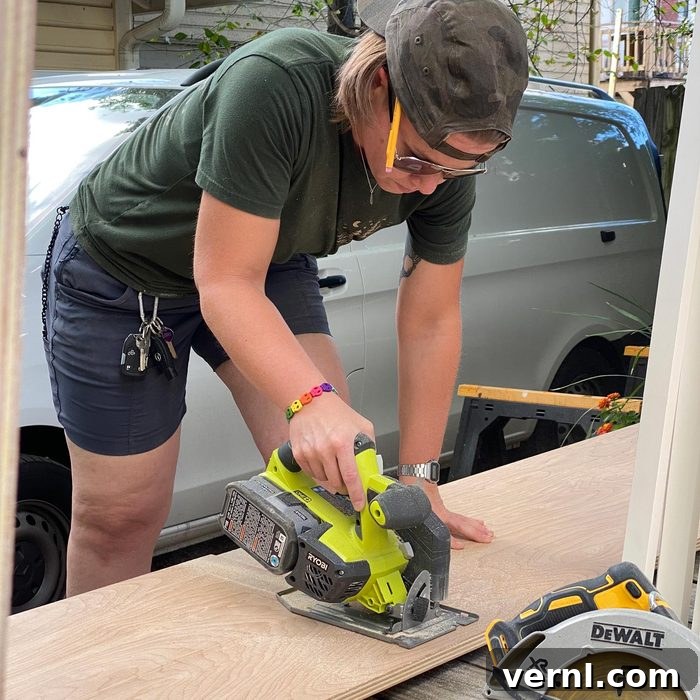
A: On the horizon, I fervently hope to see a more profound and widespread recognition from brands that women constitute a real, serious, and influential demographic, particularly concerning workwear and tools. While we are starting to see some movement in this direction, it’s not quite where it needs to be. It’s still a common reality for me to shop in the men’s section for much of my workwear, even though my closet now happily contains an array of high-quality women’s items from pioneering brands like Duluth, Carhartt, and Dovetail.
Why not see Mother’s Day tool deals that are genuinely meaningful? And I’m not talking about those generic, often patronizing, pink tool sets. I envision tool companies going a step further, truly considering women in their ergonomic designs. Women are discerning consumers; they conduct thorough research and are keenly interested in acquiring the absolute best or the most appropriate tool for any given job. Factors like grip, overall weight, and power are just as crucial to them as they are to any male tradesperson, impacting comfort, safety, and efficiency.
Beyond products, I want to cultivate a future where little girls inherently know that being a tradesperson is a celebrated and viable career path they can confidently choose. This vital shift begins in the earliest stages – in children’s books that portray diverse role models and extends into the strategic messaging of marketing departments, ensuring that the image of a skilled tradesperson is inclusive and aspirational for all genders.
Ultimately, my biggest dream is to reach a point where I can expand She Fixed That and hire a dedicated team of talented women. Furthermore, I aspire to create an educational legacy by teaching hands-on classes and workshops specifically designed for women and members of the LGBTQ+ community. My vision is to establish a truly safe and empowering space where individuals can feel comfortable to learn, to be inspired, to build practical knowledge, and to freely ask questions without hesitation or judgment. This would be a profound way to contribute to the growth and empowerment of these communities within the trades.
Q: Any advice for how people can generally make themselves more handy?
A: For anyone looking to cultivate their handiness, the first and most practical step is to seek out knowledge and guidance. If your immediate social circle doesn’t include a handy friend or mentor you can lean on for advice and assistance, then it’s time to cast a wider net and find other individuals who are willing to share their expertise. This is precisely where the vast resources of the internet become a phenomenal asset! YouTube, for instance, is an incredible, free resource, offering a seemingly endless library of step-by-step video tutorials for virtually any repair or building project you can imagine. Similarly, reputable DIY websites, such as the Family Handyman, provide comprehensive guides, articles, and tips from experienced professionals.
Beyond these platforms, there are countless social media accounts and active Facebook groups specifically dedicated to home improvement, DIY projects, and skilled trades. These communities are invaluable, providing a space where you can connect with like-minded individuals, ask questions, share your progress, and learn from others’ experiences. The collective knowledge and support within these online groups can be a game-changer for budding DIYers, offering encouragement and practical solutions.
If you’re more of a “paper person” and prefer tangible resources, the Black+Decker series offers an excellent starting point. Their book, The Complete Photo Guide To Home Repair, is a fabulous springboard. It’s replete with clear, detailed photographs that make complex tasks much more digestible for beginners. For those seeking a more advanced, contractor-centric, and in-depth resource that covers broader renovation principles, I highly recommend picking up Renovation, by Litchfield and Harley. This book is a comprehensive bible for anyone serious about understanding the intricacies of home building and remodeling, offering a wealth of technical information and best practices.
Q: What are your pro-specific tools?
A: As a professional handywoman, my toolkit is meticulously curated, each item chosen for its reliability, efficiency, and ergonomic comfort. My absolute favorite screwdriver is the indispensable Klein 11-in-1. It’s a versatile workhorse, featuring multiple bits neatly stored within its handle, ensuring I always have the right head for most common fasteners. In a real pinch, I can even pop one of its bits into my drill, adding to its utility. Complementing this, I rely heavily on my Makita subcompact drill and driver set. These tools are exceptionally durable, packed with impressive power despite their compact size, and boast a fabulous weight balance that minimizes fatigue during extended use. For someone like me, having small hand grips is crucial for control and comfort, and these Makita tools fit perfectly, making them a joy to operate.
My Husky 15-in-1 painter’s tool is another vital piece of equipment. Its versatility is unmatched, allowing me to tackle a wide array of tasks: from gently prying off delicate trim and effortlessly opening stubborn paint cans and boxes, to meticulously scouring old caulk and scraping off stickers. It even ingeniously integrates a small flat-head screwdriver tip, perfect for removing screws on switch plates without needing to switch tools. It’s a true multi-tasker that saves time and effort.
For those incredibly tight spots where space is at a premium, this little 90-degree ratcheting pocket screwdriver has been an absolute lifesaver. I use it constantly, particularly when assembling furniture that features delicate plastic bits where a powerful drill, even with adjusted torque, would provide too much force and risk damage. The ratcheting feature is a game-changer, significantly reducing hand fatigue during repetitive tasks and allowing for precise control.
Then there’s my Kat paw (see what I did there?), also known as my trusted pry bar. This tool is incredibly versatile, allowing me to gain leverage even in the most cramped or challenging spaces. Its robust design is perfect for everything from removing stubborn nails to separating glued components with minimal damage. Finally, my nail/staple puller is a true godsend. The leverage I can achieve with this tool is quite remarkable, making quick work of extracting even deeply embedded fasteners. What truly sets it apart is its thoughtful head design, which minimizes damage to the workpiece, preserving the integrity of the surface I’m working on.
Kat Christie Bio
Kat Christie is the passionate and driven owner of She Fixed That handywoman services, bringing over eight years of extensive, hands-on experience to the world of professional repair. Her career path is a testament to dedication and continuous learning.
She embarked on her professional journey as a field technician, specializing in the intricate repair of commercial coffee equipment. Her exceptional skill, unwavering commitment, and inherent leadership qualities quickly led to her promotion as a lead technician, and subsequently, to a regional manager role. Despite her practical expertise, Kat further solidified her foundational knowledge by earning a comprehensive Handyman Certificate from York College. Even now, she remains a voracious learner, constantly poring over technical manuals, instructional videos, and industry resources to deepen her knowledge and broaden her practical experience.
While her primary professional focus lies in mechanical repair and the meticulous artistry of finish and trim carpentry, Christie operates with a profound belief that no job is ever too small if it genuinely makes a positive difference in a person’s life. She is deeply committed to providing transparent, trustworthy, and highly professional services to all her clients. Her long-term vision includes creating a safe, inclusive, and empowering educational space for women and members of the LGBTQ+ community, where they can learn practical skills and build confidence in the trades.
Born and raised in the bustling New York metropolitan area, Kat Christie currently resides and works alongside her partner out of their beautiful, character-filled historic home in Birmingham, Alabama. A proud dog momma and an aspiring knitter, she finds joy in the outdoors, has a passion for cooking, and is always appreciative of a good, old-fashioned dad joke, embodying a vibrant blend of professional skill and personal charm.
Writer Karuna Eberl Bio
Karuna Eberl is a distinguished and regular contributor to FamilyHandyman.com, bringing a rich and diverse background to her storytelling. For the past quarter-century, she has excelled as a freelance journalist and filmmaker, dedicating her craft to sharing compelling narratives about people, the wonders of nature, travel adventures, fascinating scientific discoveries, and significant historical events. Eberl’s exceptional talent has garnered her numerous accolades for her impactful writing, her insightful Florida Keys Travel Guide, and her critically acclaimed documentary, The Guerrero Project, showcasing her versatility and profound ability to connect with diverse audiences through various mediums.
[cf]skyword_tracking_tag[/cf]