

The Indispensable Pipe Wrench: Your Guide to a Plumber’s Best Friend
In the vast world of tools, few are as instantly recognizable and fundamentally crucial as the pipe wrench. For professionals and DIY enthusiasts alike, this robust hand tool is a cornerstone for any task involving pipes, fittings, and stubborn connections. Whether you’re a seasoned plumber, an HVAC technician, or simply tackling a home renovation project, understanding the intricacies of a pipe wrench is essential for efficiency and safety.
This comprehensive guide delves into everything you need to know about pipe wrenches – from their fundamental design and operational principles to selecting the right type for your specific needs, ensuring safe usage, and mastering techniques to achieve professional results. Prepare to unlock the full potential of this heavy-duty workhorse.
What Exactly is a Pipe Wrench? Defining an Essential Tool
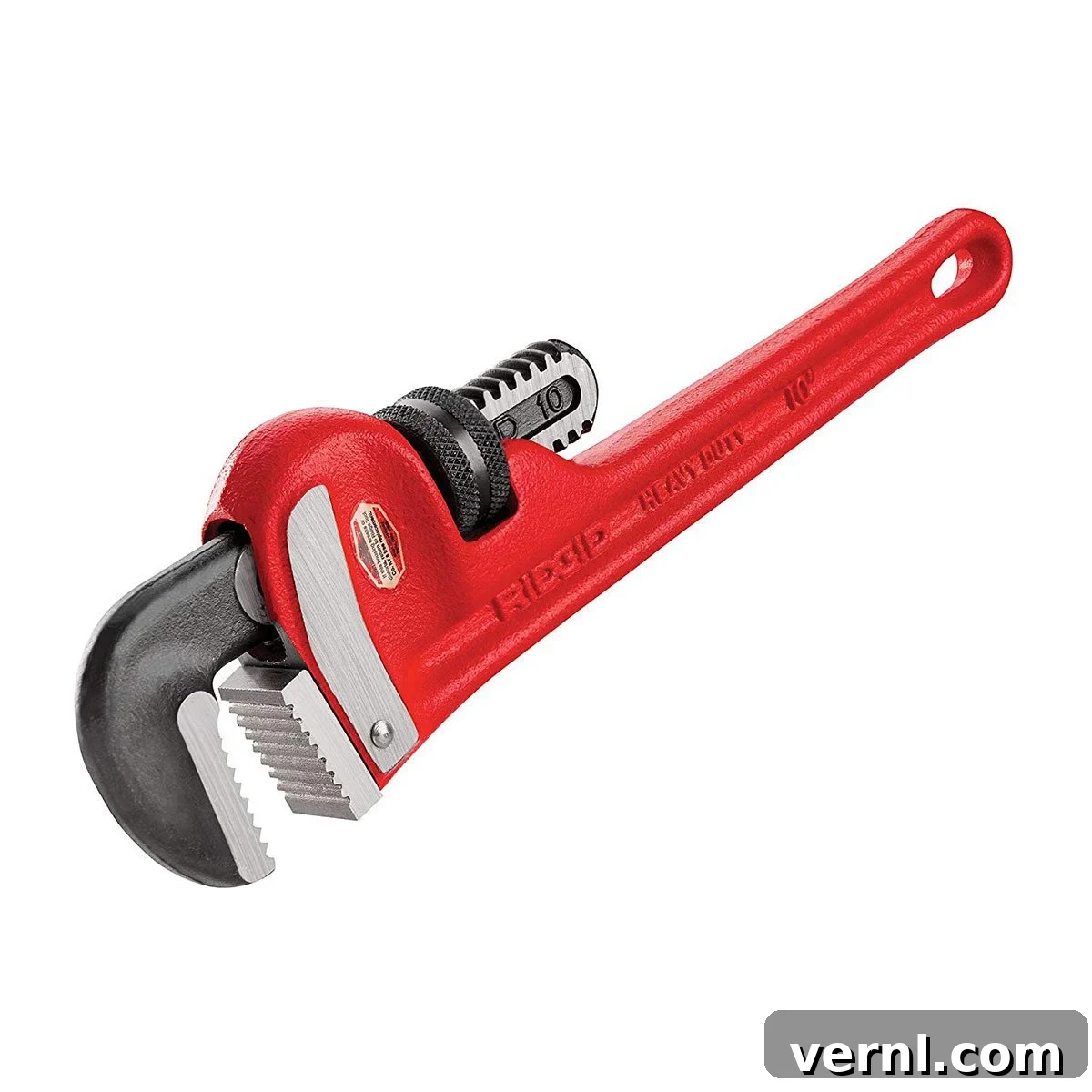
At its core, a pipe wrench is an adjustable wrench specifically engineered for gripping and turning cylindrical objects, primarily pipes and pipe fittings. Unlike other wrenches that grip parallel surfaces (like nuts and bolts), a pipe wrench features two serrated jaws designed to dig into the curved surface of a pipe, providing an unparalleled, non-slip grip. This unique design is paramount when working with threaded pipes, such as galvanized steel, black iron, or similar metal conduits, which often require significant torque to connect or disconnect.
The distinctive feature of a pipe wrench is its ‘ratchet-like’ action. The top, or ‘hook,’ jaw is adjustable and articulates, allowing the teeth to bite firmly into the pipe when turning in one direction, while slightly releasing when rotated in the opposite direction. This mechanism enables the user to reposition the wrench without having to completely remove it from the pipe, making the process of tightening or loosening connections significantly more efficient.
Key Components of a Standard Pipe Wrench:
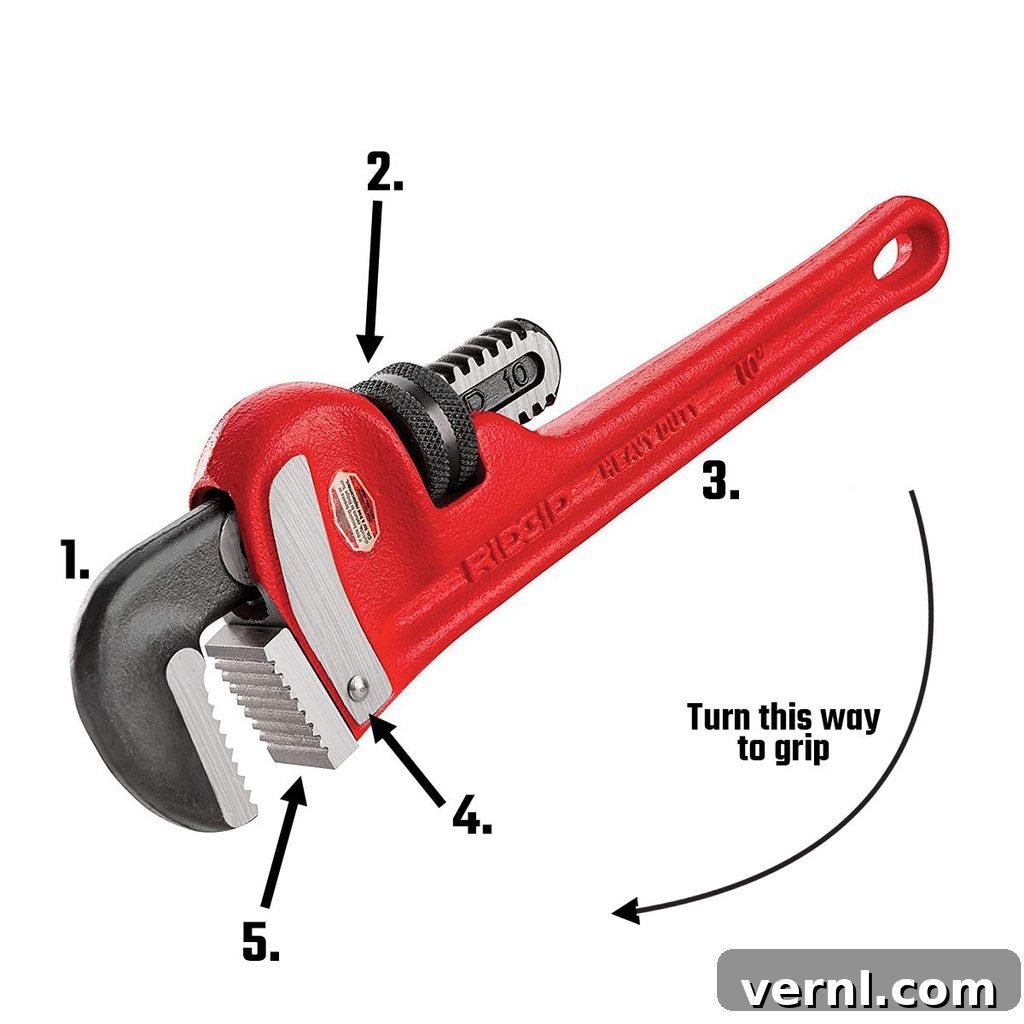
Understanding the anatomy of your tool is the first step to mastering its use. While specific designs may vary, the fundamental parts of a pipe wrench remain consistent:
- Hook Jaw: This is the movable, upper jaw, featuring sharp, aggressive teeth. It adjusts to accommodate different pipe sizes and bites into the pipe surface to provide grip.
- Adjustment Nut: A knurled or hexagonal nut that rotates along the handle’s body to move the hook jaw up or down, effectively opening or closing the wrench’s mouth to fit the pipe.
- Body (Handle): The main structural component of the wrench, providing leverage and a comfortable grip. It houses the adjustment mechanism and connects the jaws.
- Pin: A robust pin or rivet that secures the hook jaw to the main body, allowing it to pivot and move.
- Heel Jaw: The stationary, lower jaw, also equipped with serrated teeth. It works in conjunction with the hook jaw to establish a firm, three-point contact grip on the pipe.
- Spring Assembly (Internal/Not Always Visible): An internal spring mechanism often assists in the quick repositioning of the hook jaw, contributing to the tool’s ratcheting action and ease of use.
Though less common, some specialized pipe wrenches may feature a separate head assembly that can be detached and interchanged with the main body, offering versatility for specific tasks or confined spaces. Often colloquially referred to as “monkey wrenches” in some regions, pipe wrenches are indispensable tools for a broad spectrum of professionals, including plumbers, HVAC technicians, oil rig workers, drillers, general contractors, and even dedicated DIY enthusiasts who frequently work with threaded piping systems.
Mastering the Operation: How to Effectively Use a Pipe Wrench
Operating a pipe wrench might seem straightforward, but proper technique is vital for safety, efficiency, and preventing damage to both the pipe and the tool. Here’s a detailed breakdown of how to use it effectively:
The Basics of Operating a Pipe Wrench:
- Positioning the Wrench: Begin by placing the pipe wrench onto the pipe so that the mouth of the jaws (the opening between the hook and heel jaws) is facing the direction you intend to turn the pipe. For tightening, the open jaw should point in the direction of rotation; for loosening, it should point opposite. This ensures the teeth ‘bite’ properly and engage with the rotational force.
- Centering the Pipe: It is crucial that the pipe is centered securely within the jaws. Aim for a three-point contact: the pipe should be firmly gripped by both the heel jaw and the hook jaw, rather than just the tips of the jaws. This maximizes grip and minimizes the risk of slippage, which can strip the pipe or cause injury.
- Adjusting for a Snug Fit: Rotate the adjustment nut to bring the jaws together, ensuring they fit snugly around the pipe. The goal is a firm, non-wobbly fit, but avoid overtightening the nut before applying torque, as the wrench’s design is meant to tighten its grip as force is applied.
- Applying Force: Once positioned correctly and snugly adjusted, apply smooth, consistent force to the wrench handle in the desired direction. Use your body weight and maintain a stable stance. Avoid sudden jerks, which can cause slippage or loss of balance. Leverage the ratcheting action by slightly releasing pressure and repositioning the handle for another pull without removing the wrench from the pipe.
Crucial Safety Tips for Using Pipe Wrenches:
Working with pipe wrenches often involves significant force and potential hazards. Adhering to safety guidelines is paramount:
- Protect Your Hands: The aggressive teeth of a pipe wrench can leave sharp burrs on metal pipes where the jaws dig in. Always wear heavy-duty work gloves to prevent cuts, abrasions, and to provide a more secure grip on the tool.
- Eye Protection is Non-Negotiable: When turning old or rusted pipes, debris, rust flakes, or even small metal fragments can dislodge and become airborne. Always wear ANSI-approved safety glasses or goggles to protect your eyes.
- Maintain a Stable Stance: Applying substantial torque to a pipe wrench requires a firm footing. Ensure you have a balanced stance and a clear path in case the wrench slips or the pipe breaks loose suddenly. Avoid working on ladders or unstable surfaces if possible.
- Avoid “Cheater Bars”: While tempting to increase leverage, extending the handle of a pipe wrench with an additional pipe (a “cheater bar”) can be extremely dangerous. It can overstress the wrench, causing it to break, or lead to excessive torque that damages the pipe, fittings, or even structural elements. Use the appropriately sized wrench for the job instead.
- Inspect Your Wrench: Before each use, quickly inspect the wrench for any signs of damage, such as worn or chipped jaws, a bent handle, or a faulty adjustment mechanism. A damaged tool can fail unexpectedly.
- Beware of Over-tightening: While a pipe wrench is designed for tight connections, excessive force can damage threads, crack fittings, or even distort the pipe itself. Understand the appropriate torque for the material you are working with.
Exploring the Diverse World of Pipe Wrenches: Types and Variations
Pipe wrenches are not a one-size-fits-all tool. They come in a variety of configurations, each designed to excel in different scenarios. Understanding these differences allows you to select the optimal tool for any plumbing challenge.
Variations in Pipe Wrench Design and Functionality:
- Sizes and Jaw Capacity: Pipe wrenches are manufactured in a wide range of sizes, typically measured by the length of the handle, from as small as six inches to over four feet. Each size is designed to work efficiently within a limited range of pipe diameters. A smaller wrench is ideal for tight spaces and smaller pipes (e.g., 1/8″ to 1″ diameter), while a larger wrench provides the necessary leverage and jaw capacity for bigger pipes and fittings (e.g., 2″ to 6″ diameter or more). Choosing the correct size is crucial for proper grip and leverage.
- Material Composition: Iron vs. Aluminum:
- Cast Iron: Traditionally, most heavy-duty pipe wrenches are made from durable cast iron. These wrenches are known for their exceptional strength, ability to withstand immense torque, and longevity. They are generally heavier but offer maximum durability for demanding industrial and commercial applications.
- Aluminum: Lighter-bodied pipe wrenches, often made from high-strength aluminum alloys, have become popular for their reduced weight. This significantly decreases user fatigue, especially during overhead work or prolonged use. While aluminum wrenches are robust, they typically cannot handle as much extreme torque as their iron counterparts and might be more susceptible to damage under severe stress. They are excellent for general plumbing and HVAC work where weight reduction is a priority.
- Hook Jaw Configuration and Body Angles: The angle at which the hook jaw is positioned relative to the body can vary, offering different access points:
- Straight Pipe Wrench: The most common type, where the jaws are parallel to the handle. Highly versatile for general-purpose gripping and turning.
- End Pipe Wrench: Features jaws that are perpendicular to the handle. This design is invaluable for working in extremely tight spaces, close to walls, or when pipes are recessed.
- Offset Pipe Wrench: The jaws are set at an angle (often 45 or 90 degrees) to the handle. This provides superior access in confined or awkward locations, such as overhead piping or around existing obstacles.
- Tightening and Loosening Mechanisms: While the basic screw mechanism is standard, some models feature quick-adjust nuts or spring-loaded jaws that allow for faster adjustments, especially beneficial when frequently changing pipe sizes. Compound leverage pipe wrenches are also available, designed with an additional pivot point to multiply the turning force, making them ideal for exceptionally stubborn or seized pipes.
- Specialized Pipe Wrenches (Brief Mention):
- Strap Wrench: Uses a heavy-duty strap instead of metal jaws to grip polished or delicate pipes without marring the surface.
- Chain Wrench: Employs a chain that wraps around large diameter pipes, providing a secure grip for industrial applications.
What Makes a Quality Pipe Wrench Stand Out?
Investing in a high-quality pipe wrench is an investment in safety, efficiency, and longevity. Here’s what sets a superior tool apart:
- Exceptional Strength and Durability: A good pipe wrench is built to last. This means a robust body made from high-grade cast iron or forged aluminum, coupled with heat-treated alloy steel jaws that resist wear, chipping, and deformation even under heavy loads. The materials should be capable of withstanding significant torque without failing.
- Smooth and Precise Adjustments: The adjustment nut should turn smoothly and effortlessly, allowing for quick and accurate sizing of the jaws to the pipe. There should be minimal play or wobble in the moving parts, ensuring a stable grip and preventing frustrating slippage during operation.
- Sharp, Aggressive Serrated Jaws: The teeth on both the hook and heel jaws must be sharp, well-defined, and hardened. These aggressive serrations are what provide the crucial “bite” into the pipe, preventing slippage and ensuring maximum torque transfer. High-quality wrenches retain their sharpness over time, maintaining their gripping power.
- Ergonomics and Balance: While a heavy-duty tool, a good pipe wrench will have a handle designed for a comfortable grip, reducing hand fatigue during prolonged use. Good weight distribution contributes to better control and leverage.
- Reputation and Craftsmanship: Brands with a long-standing history of producing professional-grade tools often signify superior quality. For instance, RIDGID is renowned for manufacturing exceptionally durable and reliable pipe wrenches, a testament to their commitment to quality and professional standards.
Advanced Pipe Wrench Techniques and Essential Tips for Professionals
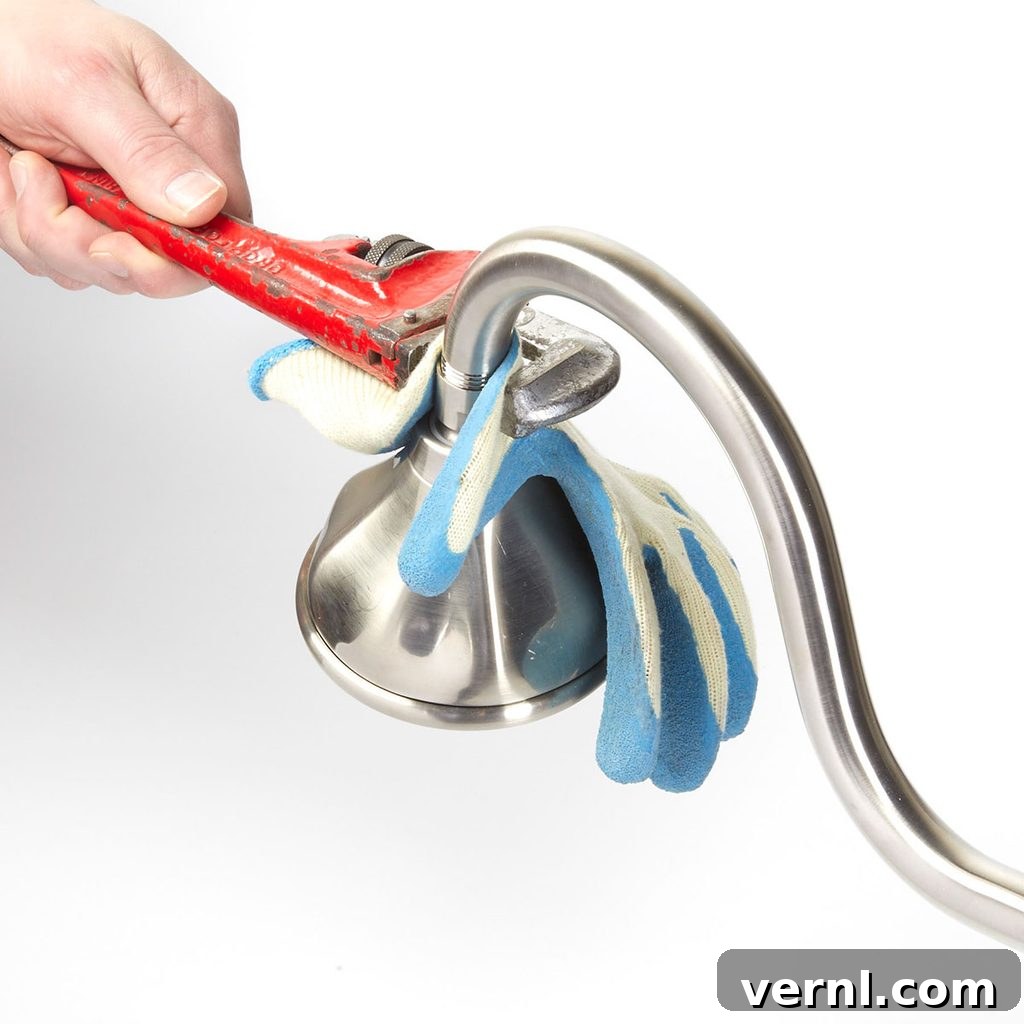
Beyond the basics, a few expert techniques can elevate your pipe wrench usage, ensuring cleaner work and prolonging the life of your materials:
- Preventing Marring and Scarring: For more delicate, visible, or finished plumbing fixtures (like chrome-plated pipes, polished brass, or painted surfaces), the aggressive teeth of a pipe wrench can cause irreparable damage. To prevent unsightly marks or scratches, use a protective barrier. A thick cloth, a piece of rubber, or specialized jaw protectors can be placed between the wrench jaws and the pipe surface. This allows the wrench to grip without direct contact, preserving the aesthetic integrity of the material.
- The Two-Wrench Technique: When working on existing pipe runs or disassembling old, stubborn connections, it’s often necessary to use two pipe wrenches. One wrench grips the pipe or fitting you wish to turn, while the second wrench (often called a “backup” or “counter-torque” wrench) grips an adjacent pipe or fitting to prevent the entire pipe run from twisting. This counter-torque action absorbs the force, protecting the integrity of the overall plumbing system and preventing damage to walls or other structural elements.
- Breaking Loose Seized Connections: For pipes or fittings that are rusted, corroded, or seized, a pipe wrench alone might not suffice. Before applying excessive force, consider using a penetrating oil to loosen the threads. Apply the oil liberally and allow it to soak in for some time. In some cases, gently warming the connection with a heat gun (with extreme caution and proper ventilation for safety) can also help expand the outer fitting, making it easier to break loose.
- Regular Maintenance: To ensure your pipe wrench remains in top working condition, periodically clean the jaws to remove accumulated debris and rust. Lubricate the adjustment nut and moving parts with a light oil to keep the action smooth. Store your wrench in a dry place to prevent rust, especially on the serrated teeth.
Conclusion: The Enduring Legacy of the Pipe Wrench
The pipe wrench, with its simple yet ingenious design, continues to be an essential tool in countless trades and households. Its robust construction, powerful grip, and versatile applications make it indispensable for anyone working with pipes and fittings. By understanding its components, mastering proper usage techniques, prioritizing safety, and selecting the right type of wrench for the job, you can tackle even the most challenging plumbing tasks with confidence and efficiency.
Whether you’re a professional facing a tough commercial installation or a DIYer fixing a leaky faucet, the pipe wrench remains a reliable ally, proving that sometimes, the simplest tools are truly the most powerful.
For more expert advice and invaluable tricks to simplify your plumbing projects, explore additional resources and guides.
Get more plumbing tips here.