Imagine trying to explain the concept of a “medicine cabinet” to someone living in the 1800s. Their reaction would likely be one of profound bewilderment. In an era long before mass-produced pharmaceuticals and readily available personal care products, medical practices were vastly different. People visited physicians or apothecaries who meticulously stored and prepared their potent elixirs, carefully measured herbs, and specialized medications within large, often ornate, apothecary cabinets. It was exceedingly rare for a typical household to possess a sufficient quantity of these remedies, or even the designated space, to justify a dedicated storage unit within their own homes. The idea of a personal, domestic repository for medicines simply didn’t align with the medical and social norms of the time.
The early 20th century, however, ushered in a transformative era for healthcare and consumer goods. With the advent of industrialization and advancements in chemistry, medicines began to be mass-produced, standardized, and distributed on a broad scale. This made pharmaceuticals significantly more accessible and affordable for the general population. As households started accumulating a wider range of over-the-counter remedies, prescription drugs, and an expanding array of personal hygiene products, the need for a convenient and centralized storage solution became evident. This surge in personal medicinal supplies spurred the evolution of the apothecary cabinet into the familiar fixture we now recognize as the home medicine cabinet – an indispensable component of nearly every modern bathroom.
In contemporary home design, maximizing functionality and optimizing storage space are paramount, particularly within high-traffic areas like the bathroom. Every modern bathroom, regardless of its dimensions, benefits immensely from intelligent storage solutions that help maintain order and cleanliness. Consequently, the medicine cabinet has transitioned from a mere storage unit to an essential and standard bathroom fixture, offering crucial space for daily essentials. Whether you are outfitting a new home, undertaking a complete bathroom renovation, or simply looking to upgrade your current setup, the market boasts an extensive selection of medicine cabinets tailored to complement any bathroom style and accommodate any spatial constraint. Furthermore, many models are designed with straightforward installation processes, making them remarkably DIY-friendly and empowering homeowners to enhance their space with relative ease and efficiency.
What Is a Medicine Cabinet? Defining an Indispensable Bathroom Fixture
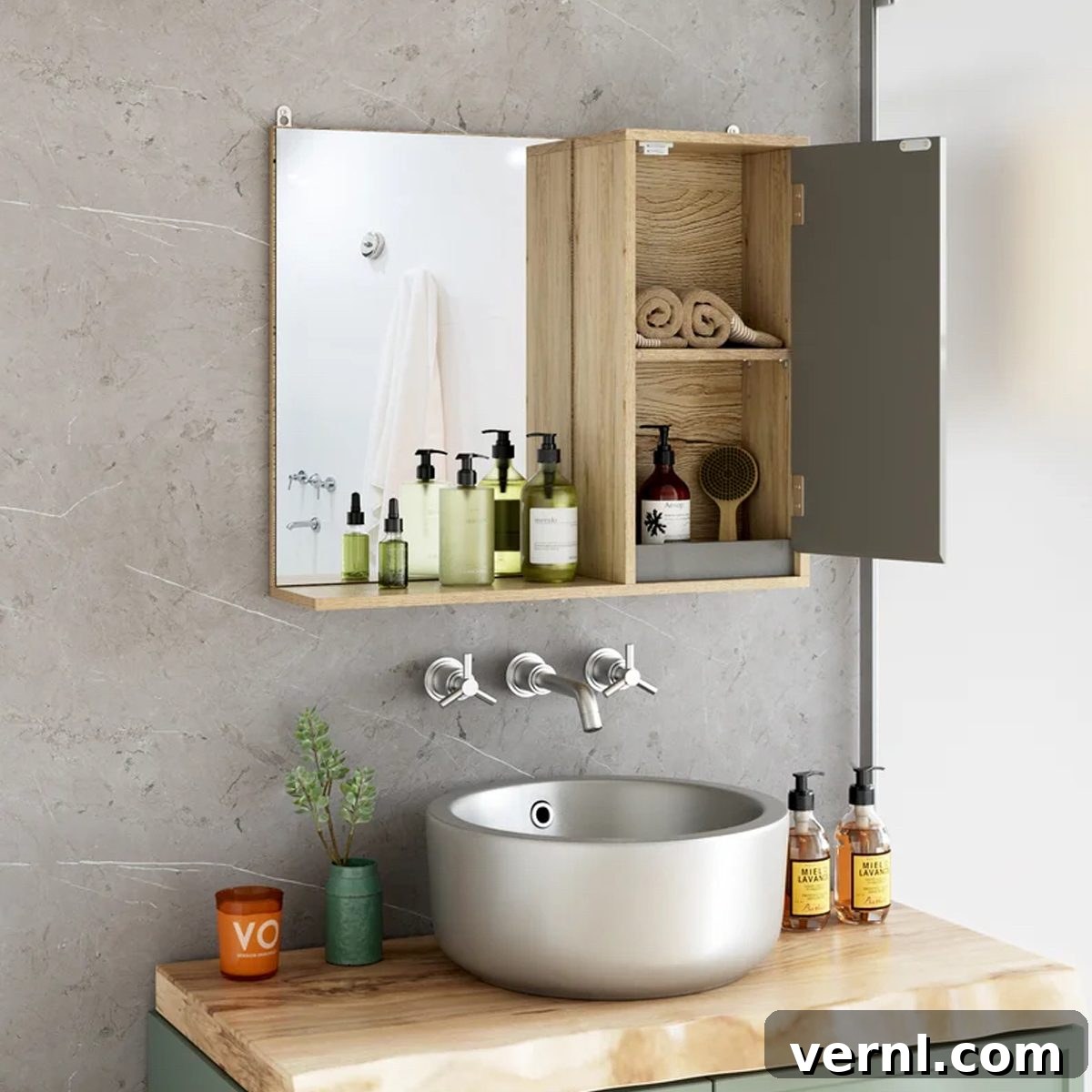
Fundamentally, a medicine cabinet is a compact, rectangular unit typically designed for wall-mounting, specifically designated for the organized storage of medications, toiletries, first-aid supplies, and other small personal care items. It’s crucial to distinguish it from larger bathroom cabinets, which are generally intended for bulkier necessities such as towels, cleaning products, or oversized bottles of shampoo and conditioner. Medicine cabinets are almost universally installed directly above the bathroom sink, usually positioned at a comfortable eye level for adults. This strategic placement ensures easy access for daily routines while simultaneously keeping potentially harmful substances safely out of the reach of young children. For an added layer of security, especially in homes with curious toddlers or for safeguarding valuable items, many contemporary medicine cabinets are now equipped with integrated locking mechanisms.
One of the most significant advantages of incorporating a medicine cabinet into your bathroom design is its unparalleled effectiveness in reducing and eliminating bathroom countertop clutter. Countertops can quickly become overwhelmed by an unsightly assortment of bottles, tubes, brushes, and jars, detracting significantly from the bathroom’s overall cleanliness and aesthetic appeal. A typical medicine cabinet, characterized by its relatively shallow depth—ranging from approximately four to seven inches—is perfectly sized to manage your daily prescription medications, over-the-counter remedies, dental hygiene products, contact lens solutions, cosmetics, and other small personal items without protruding excessively into the room’s usable space. While it may not be deep enough to accommodate bulkier appliances like a hairdryer or a large family-sized bottle of shower gel, its dimensions are ideal for keeping those smaller, frequently used items neatly organized, discreetly stored, and readily accessible.
Beyond its utilitarian storage capabilities, the modern medicine cabinet serves a critical dual function in both bathroom utility and aesthetic integration. Given its prime and central location directly above the sink, which naturally offers a full-frontal facial view, numerous designs ingeniously incorporate mirrors into their doors. This feature effectively transforms the cabinet into a multi-purpose fixture, often eliminating the need for a separate wall-mounted vanity mirror. Further enhancing both functionality and visual appeal, an increasing number of medicine cabinets now feature integrated lighting, providing optimal, shadow-free illumination essential for detailed grooming tasks such as makeup application, shaving, or contact lens insertion. In this manner, a medicine cabinet not only complements but frequently elevates the overall functionality and design harmony of the bathroom vanity area. It is increasingly common to find medicine cabinets offered as part of a cohesive, matching set with the bathroom vanity, ensuring a unified and polished look for your entire bathroom space.
Exploring the Diverse Types and Materials of Medicine Cabinets
Medicine cabinets are available in a broad spectrum of dimensions and mounting styles, catering to various bathroom layouts, personal preferences, and design aesthetics. While their standard heights typically fall between 20 to 22 inches, widths can vary considerably, from compact 15-inch units perfectly suited for single-basin vanities to more expansive 40-inch models designed to gracefully span double-basin setups. A clear understanding of the two primary types of medicine cabinets is essential for making an informed and functional choice:
- Recessed Medicine Cabinets: The Seamless Space Saver
A recessed medicine cabinet represents an elegant and highly efficient space-saving solution, meticulously engineered to fit snugly within a precisely cut opening in your bathroom’s drywall or plaster. This clever design allows the main body of the cabinet to be inserted directly into the wall cavity, nestling securely between the wall studs. The result is a remarkably flush, integrated appearance where only the front trim, the cabinet door, and any integrated mirror remain visible. This creates a sleek, minimalist aesthetic that is particularly advantageous for smaller bathrooms where every inch of floor space is precious, or for maintaining an uncluttered, streamlined look. Because the majority of the cabinet structure is concealed within the wall, manufacturers often utilize practical and durable materials like plywood or medium-density fiberboard (MDF) for the unseen frame. While offering superior spatial efficiency, the internal storage depth of recessed cabinets is inherently limited by the standard width of residential wall framing and drywall, typically allowing for a maximum depth of around four inches. This depth is perfectly adequate for most medications, small toiletries, and flat items, but it’s an important consideration for those who require deeper storage for bulkier products. - Surface-Mounted Medicine Cabinets: The Versatile and Accessible Choice
In contrast, a surface-mount medicine cabinet offers greater flexibility in terms of installation and often provides enhanced storage capacity. This type of cabinet is designed to hang directly onto the exterior surface of the drywall or plaster, causing it to project slightly from the wall. Unlike its recessed counterpart, the entire cabinet structure, including its decorative frame, is fully visible and becomes an integral part of the bathroom’s visual design. This mounting style allows for significantly greater internal storage depth, frequently reaching seven inches or even more, which provides ample space for a wider array of items that might not fit in a shallower recessed unit. Surface-mounted cabinets are especially advantageous in situations where cutting into the wall is problematic due to the presence of plumbing pipes, electrical wiring, or structural beams. Their decorative frames also offer a wonderful opportunity to enhance the bathroom’s overall style, as they are available in countless finishes, materials, and designs to perfectly match existing décor and vanity styles.
Materials: Crafting Durability and Style
Beyond their mounting style, medicine cabinets are constructed from a variety of materials, each offering distinct advantages in terms of aesthetics, durability, maintenance requirements, and overall cost:
- Wood: Timeless Appeal and Customization Potential
Wood remains an enduringly popular material for medicine cabinets, cherished for its ability to impart warmth, natural texture, and a sense of timeless elegance to a bathroom. Oak is a particularly common choice due to its inherent durability and attractive grain patterns, but manufacturers and custom craftsmen utilize a wide array of other species, including elegant maple, rich cherry, versatile birch, or even exotic hardwoods for a truly bespoke look. The paramount consideration for any wooden cabinet in a humid bathroom environment is a high-quality, moisture-resistant finish. This protective coating is crucial for preventing warping, swelling, cracking, and the development of mildew, thereby ensuring the cabinet’s longevity. Wood cabinets offer extensive customization options, as they can be stained to highlight their natural beauty, painted in a myriad of colors to match specific décor, or left natural for a rustic charm, fitting seamlessly into styles from traditional to farmhouse to transitional. - Stainless Steel: Modern Sleekness and Unrivaled Durability
For homeowners who gravitate towards a contemporary, minimalist, or industrial aesthetic, stainless steel medicine cabinets are an exceptional choice. Their sleek, reflective surface and inherently monochromatic appeal integrate flawlessly with modern design schemes, projecting a clean, sophisticated, and professional look. Stainless steel is celebrated for its outstanding durability, its remarkable resistance to rust and corrosion, and its ability to maintain a brilliant, shiny patina even in the consistently high-humidity conditions typical of a bathroom. It is also incredibly hygienic, easy to clean, and requires minimal maintenance, making it a highly practical and long-lasting option that retains its aesthetic appeal for years. - Aluminum: Lightweight Strength and Corrosion Resistance
Aluminum presents a compelling alternative metal option, striking a balance between lightweight construction and commendable corrosion resistance. While generally not quite as robust as its stainless steel counterpart, aluminum is significantly lighter, which can considerably simplify the installation process, especially for larger units. It shares stainless steel’s appeal for cleanliness, modern aesthetics, and ease of maintenance but often exhibits a slightly more matte or brushed finish. Aluminum cabinets are a practical and durable choice for those seeking the benefits of metal—such as resistance to moisture and rust—without the heavier weight, offering a reliable and stylish solution for the bathroom environment. - Molded Plastic: The Practical and Budget-Friendly Option
For budget-conscious consumers or those seeking a highly practical and low-maintenance solution, molded plastic medicine cabinets provide an accessible and functional choice. While often perceived as a more basic option, good quality plastic units can offer surprising durability, resist moisture effectively, and maintain their appearance for a considerable period. They are inherently resistant to rust, mildew, and swelling, making them perfectly suited for the humid conditions of a bathroom. However, it is important to distinguish between high-quality plastics engineered to resist yellowing, brittleness, and degradation over time, and more inexpensive options that might show signs of wear, discoloration, or structural weakness after only a few years of continuous exposure to bathroom conditions. Plastic cabinets are typically very lightweight, which further simplifies their installation.
A Comprehensive Guide to Buying the Perfect Medicine Cabinet
Selecting the ideal medicine cabinet for your bathroom involves a nuanced decision-making process that extends far beyond mere aesthetic appeal. It’s about finding a unit that offers optimal functionality, guarantees long-term durability, and integrates seamlessly into your existing bathroom design and lifestyle. When embarking on your shopping journey, several critical factors warrant close consideration to ensure your chosen cabinet perfectly meets all your practical and stylistic needs.
Prioritizing Size and Strategic Placement
Of all the considerations, selecting the correct dimensions is paramount. The medicine cabinet should ideally be the same width as, or slightly narrower than, your bathroom vanity to ensure visual harmony and balance within the space. Equally crucial is meticulous attention to the vertical space available for installation. The cabinet must fit comfortably between your bathroom backsplash and any vanity lights positioned above it, leaving ample clearance for the cabinet door to open smoothly and fully without any obstruction or interference. Precise measurements of your available wall space, encompassing both horizontal and vertical dimensions, are absolutely essential before finalizing a purchase. Furthermore, consider the cabinet’s depth; while surface-mounted units offer greater storage capacity, ensure it doesn’t protrude excessively into the room, especially in high-traffic areas or smaller bathrooms where space is at a premium.
Key Features and Thoughtful Design Elements to Consider
- Mirrors: Beyond Simple Reflection
The integrated mirror feature offers significant versatility and design potential. Some medicine cabinets feature a classic, frame-inset mirror, while others are entirely mirrored, providing a sleek, frameless aesthetic that can visually expand a smaller bathroom by reflecting light and space. Fully mirrored cabinets can also serve as the primary vanity mirror, effectively streamlining your bathroom’s design and reducing the need for additional fixtures. Consider advanced mirror features such as integrated LED lighting (either front-lit for direct task illumination or back-lit for an ambient halo effect), anti-fog technology for clear reflections even after hot showers, or even built-in magnification sections for detailed grooming tasks. - Number of Doors: Enhancing Access and Aesthetics
While single-door cabinets are ubiquitous, many contemporary designs incorporate two or even three doors. Multi-door configurations provide segmented access to interior shelving sections, which can be highly advantageous for organizing different types of items, separating contents for multiple users, or simply creating a more symmetrical aesthetic. Smaller doors also inherently have a reduced swing radius, making them less likely to accidentally impede movement or “bonk” someone’s head in a busy bathroom. They can also contribute to a more sophisticated, furniture-like appearance, especially in wider vanity setups. - Shelving: Maximizing Storage Flexibility and Organization
The interior shelving system is a critical component for practical organization. Prioritize cabinets that offer adjustable shelving, as this allows you to customize the storage height to accommodate various bottle sizes, tall sprays, or small jars, thereby maximizing the cabinet’s overall utility. Some innovative designs even include exposed shelving or small cubbies located beneath the main cabinet door, providing easy, open access to frequently used items like toothbrushes, daily vitamins, or facial cleansers, blending convenience with dedicated, semi-open storage. - Hinges: Ensuring Smooth Operation and Wide Accessibility
The quality and type of hinges significantly impact the cabinet door’s swing, functionality, and longevity. Many cabinets offer reversible door mounting, allowing you to choose whether the door opens from the right or left side, which is crucial for accommodating diverse bathroom layouts and personal preferences. Standard hinge swings typically range from 107 to 110 degrees, which is generally sufficient to clear most sinks. However, for enhanced accessibility, particularly in shared bathrooms or for wide cabinets, consider hinges that allow for a more expansive 170-degree swing. This wider opening allows the door to nearly touch the back wall, providing completely unobstructed access to the cabinet’s contents and making it considerably easier for two people to comfortably use the sink area simultaneously. Look for soft-close hinges for a quieter, more luxurious user experience, preventing slamming and extending the life of the cabinet. - Integrated Lighting: Illumination, Ambiance, and Safety
Modern medicine cabinets frequently feature integrated lighting, predominantly energy-efficient LED technology, offering superior illumination for grooming tasks. This lighting can be configured in various ways: front-lit (shining directly outwards for task lighting), back-lit (creating an ambient halo effect around the cabinet), or internal lighting that automatically activates when the door opens, making contents easier to find. Dimmable options and color temperature control (from warm to cool light) can further enhance the bathroom’s ambiance and practical utility, allowing you to set the mood or optimize lighting for specific tasks. - Advanced Features and Smart Technology: Modern Convenience
High-end medicine cabinets are increasingly incorporating advanced features and smart technology for ultimate convenience. These can include defoggers for the mirror (eliminating steam after a shower), internal electrical outlets for charging electric toothbrushes or shavers directly inside the cabinet, USB charging ports for mobile devices, or even integrated Bluetooth speakers for an enhanced audio experience. Consider these advanced options if you prioritize cutting-edge technology and maximum convenience in your bathroom. - Security and Safety Features: Peace of Mind
For households with young children, or simply to secure valuable prescription medications, locking mechanisms are a crucial consideration. Some cabinets come equipped with simple key locks, while others feature more advanced digital keypads or magnetic locking systems. Additionally, child-safe latches can be easily added to non-locking cabinets for extra peace of mind. - Cost: Balancing Budget with Quality and Features
The price spectrum for medicine cabinets is incredibly wide. While you can find basic, budget-friendly options starting around $30 for simple plastic models, the cost can escalate significantly for high-end units crafted from premium materials, featuring extensive smart technology, or boasting bespoke designs, potentially reaching $1,000 or more. The average cost for a quality, feature-rich medicine cabinet typically hovers around $200. It’s generally a wise investment to spend a bit more on a cabinet, as this often translates to superior materials, better craftsmanship, enhanced durability, and additional features that contribute significantly to both functionality and long-term satisfaction.
Demystifying Medicine Cabinet Installation: A Step-by-Step Guide
Installing a medicine cabinet can range from a relatively straightforward DIY project for the moderately handy homeowner to a more complex undertaking requiring professional assistance, depending primarily on the type of cabinet and whether you are replacing an existing unit or installing a new one from scratch. Understanding the distinct processes for both surface-mounted and recessed cabinets is fundamental to a successful installation.
Installing a Surface-Mount Medicine Cabinet: The Simpler Approach
Installing a surface-mount medicine cabinet is generally considered the less complicated of the two primary methods, making it an excellent choice for DIY enthusiasts. The fundamental steps typically involve:
- Locate Wall Studs: Begin by using a reliable stud finder to accurately locate the vertical wall studs in the desired mounting area. Attaching the cabinet directly to these structural elements provides the most secure and stable installation.
- Mark and Level the Placement: Carefully mark the desired height and width of the cabinet on the wall using a pencil. Crucially, employ a spirit level to ensure that all markings are perfectly horizontal and vertical. This step is vital for achieving a professional and aesthetically pleasing finish.
- Drill Pilot Holes: Based on the cabinet’s mounting instructions, precisely drill pilot holes into the wall studs at the marked locations. These pilot holes prevent wood splitting and make driving screws easier.
- Mount the Cabinet Securely: With assistance if needed, carefully lift the cabinet and align its mounting points with the pre-drilled pilot holes. Drive appropriate screws (typically provided by the manufacturer or chosen for the cabinet’s weight and wall material) through the back of the cabinet and firmly into the wall studs to secure it in place.
- Perform Final Adjustments: Once mounted, re-check the cabinet for levelness. Make any minor adjustments or tighten screws as necessary to ensure a snug and perfectly aligned installation.
This method avoids the need for cutting into the wall and is often ideal for renters, those with limited DIY experience, or situations where wall interference is a concern.
Installing a Recessed Medicine Cabinet: A More Involved Project
Installing a recessed medicine cabinet in a location where one did not previously exist is a more involved and often complex process, frequently requiring a higher level of skill and meticulous planning. This method fundamentally changes the wall structure.
- Measure and Precisely Mark the Opening: Begin by precisely measuring the exact dimensions of the cabinet’s recessed body. Transfer these measurements to the wall, carefully marking a perfect rectangle in your desired location.
- Thoroughly Locate Studs and Obstructions: Before making any cuts, use a stud finder to identify the precise location of all wall studs within and surrounding your marked area. More critically, use a borescope or other non-invasive methods to diligently check for any hidden electrical wires, plumbing pipes, or HVAC ducts within the wall cavity. This pre-cutting step is absolutely non-negotiable and paramount for safety, preventing serious damage or injury.
- Carefully Cut the Opening: Once confident that the area is clear, use a utility knife, drywall saw, or an oscillating multi-tool to carefully cut out the marked section of drywall or plaster. Exercise extreme caution to avoid accidentally cutting into any unseen pipes or wires.
- Frame the Opening (if Necessary): If the opening doesn’t perfectly align with existing studs, or if you had to cut through an existing stud, you will need to install horizontal or vertical framing pieces (often referred to as “blocking”) between the existing studs to create a robust, secure, and appropriately sized opening for the cabinet. This typically involves cutting and securing 2×4 lumber.
- Reroute Utilities (If Encountered): Should you uncover pipes or electrical wires directly in the path of your cabinet, this is the point where the project’s complexity significantly increases. It is strongly recommended to call a licensed electrician and/or plumber to safely and professionally reroute these utilities. Attempting to reroute plumbing or electrical systems without proper expertise can be extremely dangerous and lead to severe structural or functional problems.
- Test Fit and Mount the Cabinet: Once the wall opening is clear, properly framed, and any utilities are rerouted, test fit the medicine cabinet into the cavity to ensure it slides in smoothly and fits perfectly. Once satisfied with the fit, secure the cabinet to the newly installed framing using appropriate screws, meticulously following the manufacturer’s specific instructions.
- Apply Finishing Touches: For a seamless and polished appearance, apply caulk or install trim around the edges of the cabinet where it meets the wall, if necessary.
While more challenging and potentially requiring professional help, the integrated, flush look of a recessed cabinet is often considered worth the additional effort and investment.
Optimizing Medicine Cabinet Height and Strategic Placement
Proper and ergonomic placement of your medicine cabinet is critical for both aesthetic harmony and practical comfort in the bathroom. The ideal medicine cabinet height is largely dependent on the height of your bathroom counter or vanity and the average height of the primary users of the bathroom. As a widely accepted general guideline, the top edge of the cabinet should typically be positioned between 70 to 72 inches (approximately 178 to 183 cm) off the finished floor. This elevation usually ensures that the mirror, if integrated, is comfortably at eye-level for most adults, providing optimal visibility for daily grooming routines.
Equally important is ensuring adequate clearance around the cabinet for both functionality and safety. A minimum of a nine-inch gap (approximately 23 cm) between the bottom edge of the cabinet and the top of your sink’s backsplash is generally recommended. This crucial space provides sufficient room for a conveniently located GFCI (Ground-Fault Circuit Interrupter) outlet. A GFCI outlet is essential for safely plugging in electrical grooming tools such as hairdryers, electric shavers, or toothbrushes, preventing water-related electrical hazards in a wet environment. Furthermore, it is absolutely vital not to overlook the necessary space between the top edge of the cabinet door and any overhanging vanity light fixtures. Meticulously ensure that the cabinet door can open fully and freely without striking or impeding the light fixture, as this could cause damage to both the cabinet and the lighting unit. Always factor in the precise height and projection of any existing or planned light fixtures when determining your medicine cabinet’s vertical placement to avoid future frustrations and functional limitations.
Maintaining and Organizing Your Medicine Cabinet for Longevity and Efficiency
To ensure your medicine cabinet remains a functional, hygienic, and aesthetically pleasing asset to your bathroom for years to come, regular maintenance and thoughtful organization are absolutely essential. A well-cared-for cabinet not only looks better but also functions more efficiently, contributing to a more serene and tidy bathroom environment.
- Routine Cleaning: Make it a habit to regularly wipe down shelves, the interior walls, and the cabinet frame with a mild all-purpose cleaner and a soft cloth. For mirrored doors, use a streak-free glass cleaner to maintain their pristine shine. If you have a stainless steel cabinet, utilize appropriate stainless steel cleaners to preserve its luster and prevent smudges or water spots.
- Regular Decluttering: Periodically dedicate time to review the contents of your cabinet. Safely dispose of any expired medications (always check local guidelines for proper pharmaceutical disposal methods). Remove items that are no longer used, have dried out, or genuinely belong elsewhere in your home. An uncluttered cabinet is a functional cabinet.
- Leverage Organization Aids: Maximize your cabinet’s storage potential by utilizing small bins, drawer dividers, clear acrylic organizers, or tiered shelves. These tools help keep similar items grouped together, prevent bottles from toppling over, and make it significantly easier to find what you need quickly.
- Implement “First-In, First-Out” (FIFO): When stocking new items, particularly for over-the-counter medications, skincare products, and toiletries with expiration dates, place older items towards the front of the shelf. This ensures they are used first, minimizing waste and ensuring product freshness.
- Prioritize Child Safety: If your cabinet features a locking mechanism, ensure it is consistently engaged, especially if you have young children in the household. For non-locking cabinets, store any potentially hazardous items on the highest shelves, completely out of a child’s reach. As an additional measure, consider installing child-proof latches on cabinet doors for enhanced peace of mind.
By adhering to these simple maintenance and organization practices, your medicine cabinet will continue to serve as an invaluable, efficient, and attractive storage solution in your bathroom for many years to come.