
The Ultimate Guide to Replacing Your Old Toilet: Solving Flange and Rough-In Challenges with an Offset Solution
After decades of reliable, albeit inefficient, service, the time eventually comes for an old toilet to be retired. For many homeowners, this necessary upgrade presents a unique opportunity to enhance bathroom efficiency, aesthetics, and hygiene. However, the process isn’t always as straightforward as simply swapping out one unit for another. Our recent experience with an aging fixture, characterized by its rust-stained bowl, chipped porcelain, and notorious water-guzzling habits—consuming roughly three times the water of a modern counterpart—brought to light two prevalent and often perplexing challenges that can derail a smooth toilet replacement project.
- The existing toilet flange, the critical component that securely connects the toilet to the drain pipe embedded in the floor, had suffered significant deterioration. This level of disintegration is a common issue with older plumbing installations, often due to age, material degradation, and environmental factors.
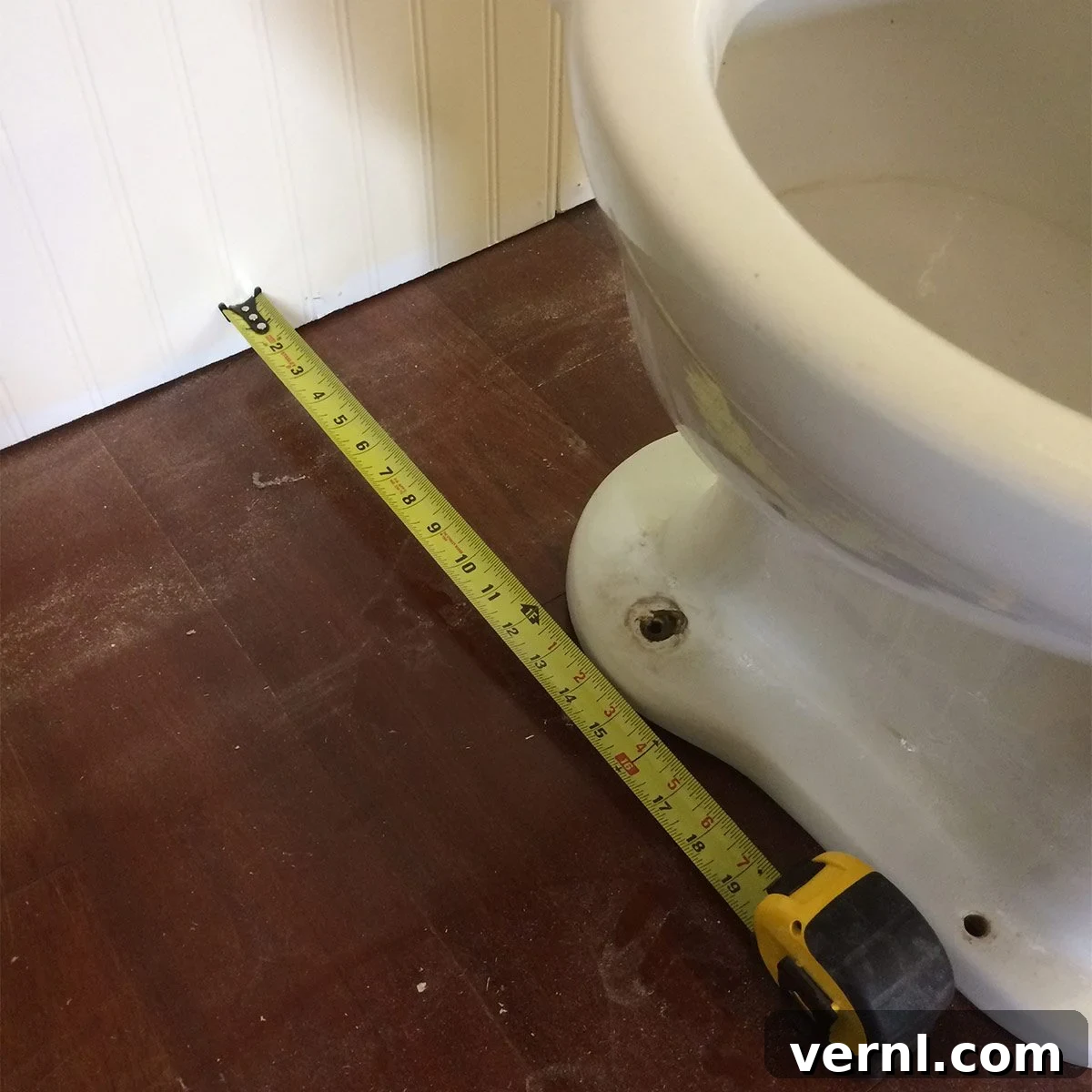
- The old toilet featured a “14-inch rough-in.” This specific measurement refers to the distance from the finished wall behind the toilet to the center of the drain pipe (and thus, the toilet bolts). While 12-inch rough-in models dominate today’s market, finding a 14-inch version for a new toilet can be challenging and often comes with a substantial premium, sometimes doubling the standard price for the same model. The prospect of spending more for a less common size was, to say the least, unappealing.
These two hurdles, a compromised flange and an uncommon rough-in dimension, might seem daunting. However, with the right knowledge and a clever plumbing component, a seamless and cost-effective solution is well within reach for any DIY enthusiast or seasoned homeowner.
The Imperative for Upgrading Your Old Toilet: Beyond Just Aesthetics
Replacing an ancient toilet isn’t merely about aesthetics or resolving visible damage; it’s a strategic investment in your home’s efficiency and your family’s comfort. Modern toilets are engineered with sustainability and performance in mind, offering significant advantages over their predecessors. Older toilets, especially those manufactured before 1994, often use between 3.5 and 7 gallons per flush (GPF). In stark contrast, today’s high-efficiency toilets (HETs) typically use 1.28 GPF or even less, translating into substantial water savings over time. For a family of four, upgrading to an HET can save thousands of gallons of water annually, directly impacting your utility bills and reducing your environmental footprint. Beyond the financial and ecological benefits, new toilets offer superior flushing power, improved bowl cleanliness, and often more comfortable designs, making them a cornerstone of any modern bathroom renovation.
Unearthing Common Challenges: Flange Disintegration and Rough-In Discrepancies
Before diving into the solution, it’s crucial to understand the challenges that frequently arise when replacing an older toilet. These issues, if not properly addressed, can lead to persistent leaks, foul odors, and ongoing frustration.
The Silent Threat Beneath: Understanding Your Toilet Flange
The toilet flange is a critical, yet often overlooked, component in your bathroom’s plumbing system. It’s a ring-shaped fitting, typically made of PVC, ABS plastic, or cast iron, that anchors the toilet to the floor and forms a watertight seal with the drainpipe. A wax ring or a foam gasket sits between the toilet base and the flange, creating the final seal that prevents water and sewer gases from escaping. Over many years, especially with changes in temperature, moisture exposure, or even aggressive chemical cleaners, older flanges can corrode, crack, or disintegrate entirely. A failing flange can manifest through several alarming symptoms:
- Leaks: Water pooling around the base of the toilet is a clear indicator.
- Sewer Gas Odors: A compromised seal allows unpleasant smells to permeate your bathroom.
- Loose Toilet: If your toilet rocks or shifts, it could be due to a broken or improperly seated flange, leading to an unstable fixture.
- Floor Damage: Persistent leaks can rot subflooring, requiring costly repairs beyond just the toilet replacement.
Addressing a disintegrated flange is not optional; it’s a fundamental step in ensuring a leak-free and odor-free bathroom. While replacing a standard flange involves careful work, it’s a manageable DIY task for those comfortable with basic plumbing.
The Rough-In Riddle: Decoding Toilet Dimensions
Another common obstacle, and one that often catches homeowners by surprise, is the toilet’s “rough-in” dimension. This measurement dictates how far the toilet will sit from the back wall and is paramount for proper installation. To determine your existing toilet’s rough-in, simply measure from the finished wall behind the toilet to the center of the toilet’s floor bolts. It’s important to measure from the finished wall, not just the studs, as baseboards and drywall add crucial distance.
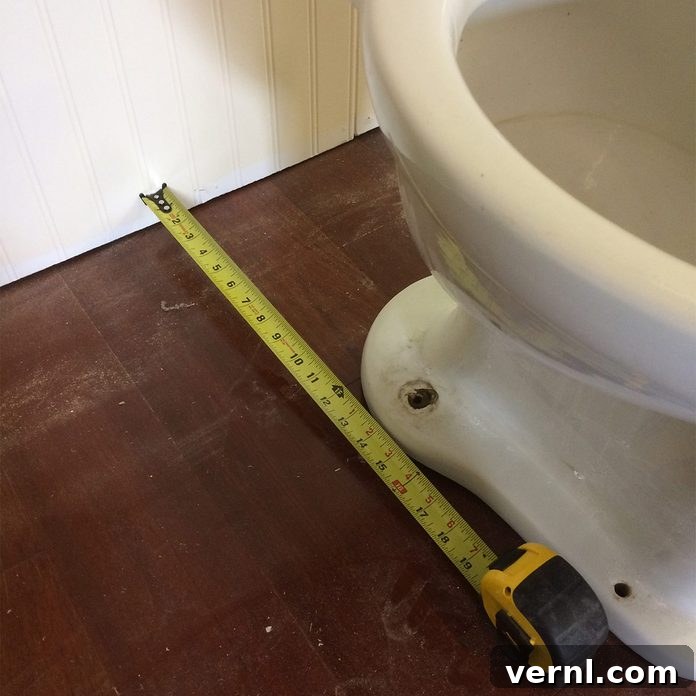
The vast majority of toilets sold today are designed for a 12-inch rough-in. However, older homes or specific bathroom layouts might feature a 10-inch or, as in our case, a 14-inch rough-in. This discrepancy can lead to significant problems: a toilet with an incorrect rough-in won’t fit properly against the wall, leaving an unsightly gap or preventing the toilet from being installed at all. Furthermore, attempting to force an ill-fitting toilet can damage the new fixture or the plumbing. Manufacturers produce a limited number of 10-inch and 14-inch rough-in models, and these specialized versions almost invariably come with a higher price tag. This premium can easily add hundreds of dollars to your project cost, making the replacement significantly more expensive than anticipated.
The Ingenious Solution: Embracing the Offset Toilet Flange
Fortunately, both the problem of a deteriorated flange and the challenge of an incompatible rough-in dimension can be elegantly resolved with a single, innovative product: the offset toilet flange. This ingenious plumbing component is readily available at most home improvement centers and is a lifesaver for tricky toilet installations.
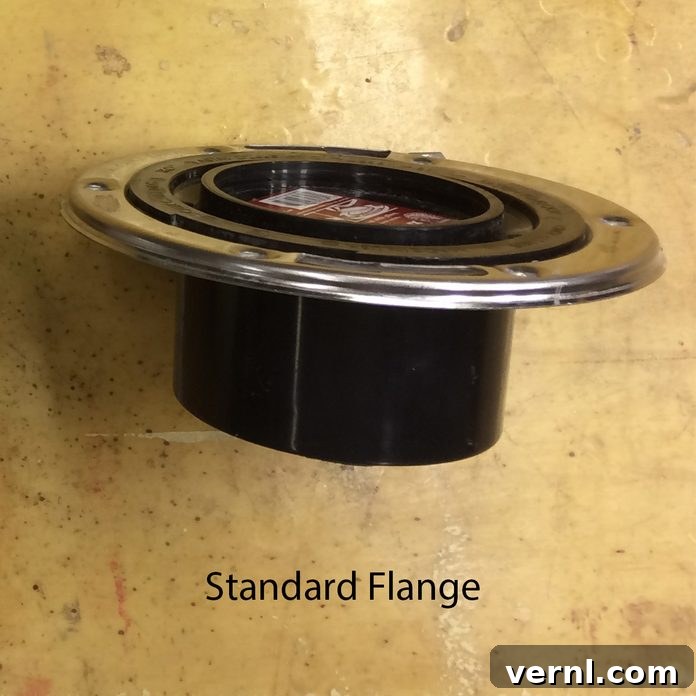
Unlike a standard toilet flange, which features a perfectly centered opening for the waste pipe, an offset flange has its opening intentionally shifted off-center. This clever design allows you to adjust the precise placement of the toilet by a couple of inches in any direction—left, right, forward, or backward. This flexibility is invaluable in various scenarios:
- Correcting Rough-In Issues: An offset flange can effectively convert a 14-inch rough-in to a 12-inch, or vice-versa, without requiring major demolition and re-plumbing of the drainpipe. This is its primary advantage and a significant cost-saver, eliminating the need for expensive specialized toilet models.
- Aligning with Existing Structures: If you’re installing a new vanity or shower, or if the original drainpipe placement was slightly off-center, an offset flange provides the necessary wiggle room to align your toilet perfectly within the space, enhancing both aesthetics and functionality.
- Renovation Flexibility: During a bathroom remodel, if you decide to move a wall slightly or adjust the layout, an offset flange offers a degree of forgiveness, allowing minor adjustments to the toilet’s position without extensive plumbing modifications.
- Easier Installation: Sometimes, even with a standard rough-in, an offset flange can make aligning the toilet bolts and setting the toilet easier, particularly in tight spaces.
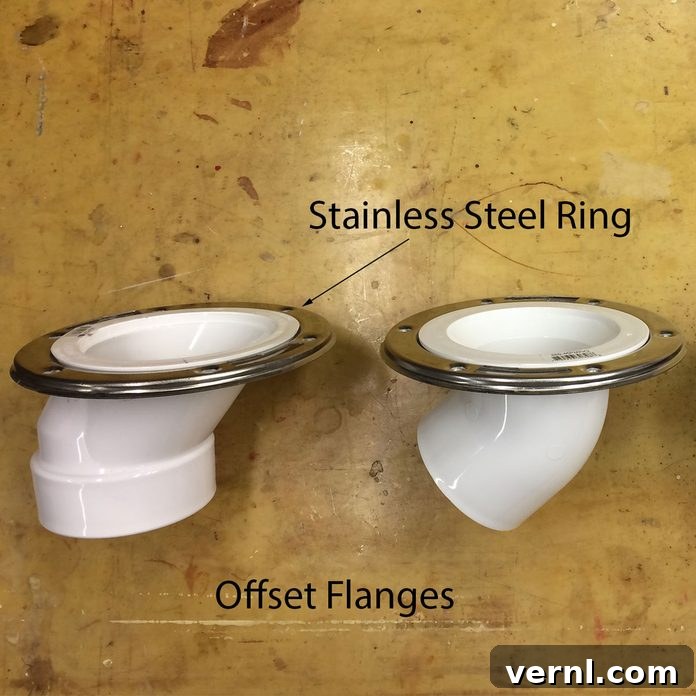
The installation of an offset flange is similar to that of a standard flange, involving securing it to the subfloor and connecting it to the waste pipe. However, the critical difference lies in its ability to shift the toilet’s effective center, providing the adaptability needed for challenging installations. This single component transforms what could be a complex and costly plumbing ordeal into a manageable DIY project.
Choosing the Right Flange: Materials and Durability for Long-Term Performance
When selecting your new toilet flange, whether standard or offset, paying attention to the material and construction is crucial for long-term durability. Flanges are typically made from PVC, ABS plastic, or occasionally cast iron for older systems. While all-plastic versions are widely available and generally more affordable, a superior choice for any homeowner seeking lasting peace of mind is a flange equipped with a stainless steel ring.
These flanges, featuring a robust stainless steel ring integrated into the plastic body, typically cost a few dollars more than their all-plastic counterparts. However, this small additional investment yields significant benefits. The stainless steel ring provides enhanced structural integrity, preventing the flange from cracking or breaking under the stress of tightening toilet bolts or from the weight and movement of the toilet over time. Plastic flanges, especially older ones, are prone to becoming brittle and fracturing, leading to a loose toilet, compromised wax seal, and inevitable leaks. A stainless steel ring eliminates this vulnerability, ensuring a consistently stable and secure connection for decades to come. Even for the most budget-conscious homeowner, the long-term value and avoidance of future repairs make the stainless steel ring flange an unquestionably good deal.
A Step Towards a Modern, Efficient, and Trouble-Free Bathroom
Replacing an old, inefficient toilet is a commendable home improvement project that contributes to water conservation, reduces utility bills, and enhances bathroom aesthetics and functionality. While challenges like disintegrated flanges and non-standard rough-in measurements can emerge, they are not insurmountable obstacles. By understanding these common issues and leveraging innovative solutions like the offset toilet flange, homeowners can navigate the replacement process with confidence and efficiency.
The journey from a rusty, water-guzzling relic to a sleek, water-efficient modern toilet is more than just an aesthetic upgrade; it’s an intelligent move towards a more sustainable and problem-free home. With careful planning, the right tools, and the ingenious offset flange, you can ensure your new toilet is installed securely, efficiently, and precisely, providing years of reliable service and comfort.
— Gary Wentz, Editor in Chief