
Vacuuming and carpet cleaning often rank high on the list of least favorite household chores. Yet, as a 21st-century homeowner, you truly are fortunate. Our ancestors could scarcely have imagined the convenience of robotic vacuum cleaners, let alone the effortless glide of modern upright vacuums across various floor types. The evolution of home cleaning technology has been remarkable, transforming what was once a laborious, time-consuming task into something far more manageable.
Indeed, today’s vacuums and carpet cleaning machines represent a significant leap from the rudimentary, self-propelled sweepers of the early 20th century. We’ve moved beyond the era where horse-drawn buggies were needed to transport bulky, gas-powered cleaning equipment, with hoses snaking through windows! Such cumbersome processes are thankfully a distant memory.
Modern carpet cleaning machines are not only easily accessible but also far less unwieldy. Moreover, professional carpet cleaning companies have refined their methods to a precise science, offering deep and efficient cleaning solutions. However, there are numerous situations where you might prefer to clean your carpet without relying on a machine at all. Perhaps you need to address a spill or refresh your carpet immediately, want to save money on rentals or professional services, or simply wish to embrace a DIY challenge to see what you can accomplish with a little effort. Regardless of your motivation, successful carpet cleaning by hand demands patience, attention to detail, and a proper technique to achieve optimal results and maintain your carpet’s longevity.
Curious about how to effectively clean your carpet without a specialized machine? The fundamental principles remain consistent and are crucial for preventing damage and ensuring a truly clean finish:
- Use Cleaners and Soaps Sparingly: Over-application of cleaning solutions can lead to excessive residue, which can attract more dirt, make your carpet feel sticky, and be incredibly difficult to rinse out. Less is often more when it comes to detergents.
- Rinse Away All Solution: Any cleaning agent used during the process must be thoroughly rinsed from the carpet fibers. Residual soap can leave a dull film, attract future dirt, and potentially damage the carpet over time. Complete rinsing is key to a truly clean and soft carpet.
- Ensure Adequate Drying: This step is paramount. Trapped moisture is the primary culprit behind severe issues such as unpleasant odors, the growth of mold or mildew, and even potential damage to your subfloor. Proper and swift drying is essential for the health and integrity of your carpet and home environment.
How to Spot Clean Carpet Without a Machine: Quick Fixes for Common Spills
Often, a complete carpet overhaul isn’t necessary; you might just need to tackle a few minor spot cleanings here and there. For small and recent carpet stains, a simple, effective DIY method can work wonders. Lauren Bowen, Director of Franchise Operations at Two Maids & A Mop, recommends a practical approach: “Fill a spray bottle with 1/4 cup white vinegar, one tablespoon dish soap, and water,” she advises. “Spray the stain generously, ensuring it’s well-covered but not saturated, and then blot it consistently with a clean, absorbent towel until the stain is completely removed.” This gentle yet effective solution targets many common household stains without harsh chemicals.
After applying any carpet cleaning solution or soap, it is critical to follow up with a light rinse using clean water. This step removes any remaining suds and cleaning product residue that could otherwise attract dirt or leave a sticky feel. Once rinsed, thorough drying is essential to prevent moisture-related problems. Use dry towels to absorb as much moisture as possible, then allow the area to air dry completely, ideally with good ventilation.
When embarking on spot cleaning, keep these expert tips in mind to maximize your success and protect your carpet:
- Act Quickly and Consistently: Addressing stains as soon as they happen, or as soon as you notice any discoloration, significantly increases your chances of complete removal. The longer a stain sits, the more it can set into the carpet fibers, making it harder to lift. Cleaning and organizing expert Michelle Hansen, owner of Practical Perfection, often recommends a trusted product like Folex Carpet Spot Remover for effective stain treatment, highlighting the importance of having a reliable product on hand.
- Always Test Cleaning Products: Before applying any cleaning product or homemade solution to a prominent area, whether it’s a store-bought cleaner or a DIY concoction, always test it in a small, inconspicuous spot of your carpet. This ensures that your carpet is colorfast and won’t be discolored or damaged by the solution. Craig Gjelsten, Vice President of Operations for Rainbow International Restoration, a Neighborly company, advises letting the test spot dry completely before proceeding with wider application.
- Blot, Don’t Rub: As you tackle those stubborn spots, it can be tempting to apply a lot of “elbow grease” and rub vigorously. Resist this urge! Light, consistent blotting is far more effective and less damaging than heavy rubbing. Leanne Stapf, Chief Operating Officer of The Cleaning Authority, explains why: “Rubbing a stain could cause it to spread, pushing the stain deeper into the carpet fibers or fabric, making it much more difficult to lift. Instead, you should blot a stain with either a paper towel or a clean washcloth. This action effectively soaks up and transfers the liquid from the carpet into the cloth, rather than scrubbing it further into the fabric.” Use a clean part of your towel for each blot to avoid reapplying the stain.
Whole-Room Carpet Cleaning Without a Machine: A Detailed Manual Approach
Disclosure: It’s important to understand that cleaning your entire carpet by hand, without the aid of a machine, is a significantly time-intensive process. This is not a quick chore. Be prepared to block off ample time – likely more than you initially anticipate – to ensure the job is done thoroughly and effectively. The effort, however, can be incredibly rewarding, leaving your carpet refreshed and revitalized.
Diana Rodriguez-Zaba, President of ServiceMaster by Zaba, a certified carpet cleaning company, outlines a comprehensive hand-cleaning method using readily available items: baking soda, a gentle carpet shampoo, plenty of water, and an abundance of clean towels. This method truly does require a significant number of towels, so it’s a good idea to gather all you have and perhaps even ask friends or family if you can borrow some old, clean ones. The more towels, the more efficiently you can absorb moisture and lift dirt.
Step-by-Step Guide to Hand-Cleaning Your Entire Carpet:
- Prepare the Carpet with Baking Soda: Begin by liberally sprinkling baking soda over the entire carpet surface. Allow it to sit for at least 15-30 minutes, or even longer for particularly stale odors. Baking soda is a natural deodorizer, effectively absorbing odors trapped within the carpet fibers. After it has settled, vacuum the carpet thoroughly to remove the baking soda along with any loose dirt, dust, and debris. This initial step sets the stage for a deeper clean.
- Prepare and Apply Cleaning Solution: In a clean spray bottle, mix approximately two drops of a low-suds carpet shampoo with warm water. Shake gently to combine the ingredients without creating excessive foam. Lightly spray this mixture over a small section of the carpet, taking extreme care not to oversaturate the fibers. The goal is to dampen the carpet just enough for the cleaner to penetrate, not to soak it. Oversaturation can lead to excessive drying times and potential moisture problems.
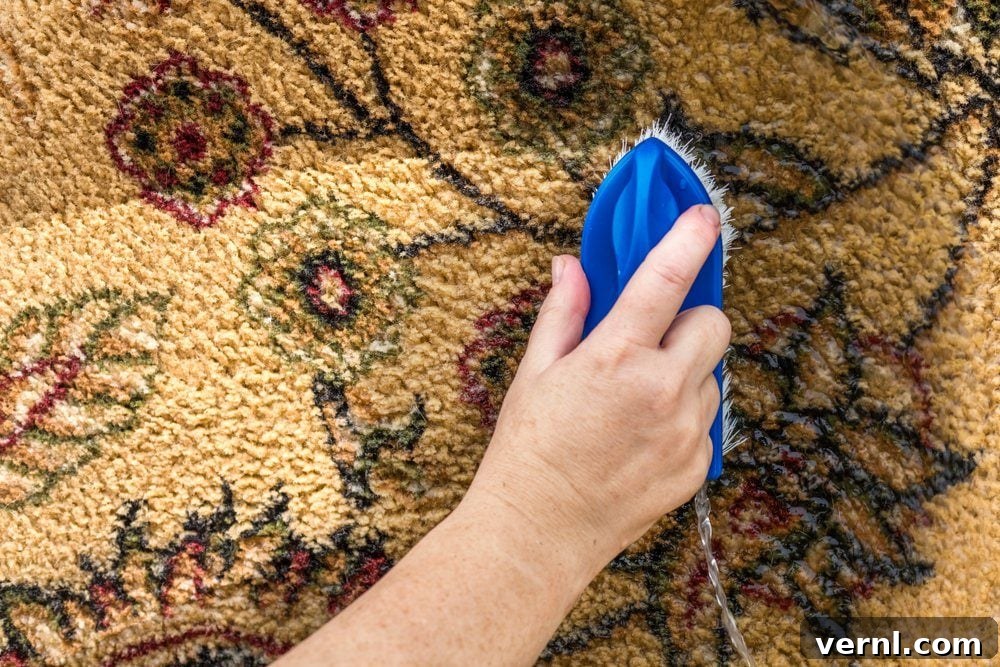
- Agitate and Loosen Dirt: Using a dedicated carpet brush (one with soft bristles is ideal to avoid damaging the fibers), gently brush over the sprayed area. Work the brush in multiple directions to effectively agitate the carpet fibers and loosen any trapped dirt and grime. This action brings embedded dirt to the surface, making it easier to remove.
- First Moisture Removal (Blotting): Immediately after brushing, take a stack of clean, dry, absorbent towels and firmly blot the treated area. Apply pressure by standing or kneeling on the towels to maximize moisture absorption. Change towels frequently as they become damp or soiled, ensuring you are lifting dirt and moisture, not just spreading it. This is a crucial step for removing the cleaning solution and the dirt it has lifted.
- Rinse with Fresh Water: Once you’ve blotted away most of the cleaning solution, fill a separate clean spray bottle with fresh, plain water. Lightly spray the same area you just cleaned. This step is essential for rinsing out any remaining soap residue that might still be clinging to the carpet fibers. Residual soap can attract dirt faster and make your carpet feel stiff or sticky.
- Second Moisture Removal (Final Blotting): Grab another set of clean, dry towels and repeat the blotting process. Press down firmly to absorb as much of the rinse water as possible. The more moisture you can extract at this stage, the faster your carpet will dry and the less risk you’ll have of mold or mildew development. Continue blotting until the towels come up nearly dry.
- Finish with Carpet Grooming: To complete your cleaning and restore the carpet’s appearance, go over the entire cleaned area with a carpet grooming brush. Rodriguez-Zaba specifically recommends this rake-like grooming brush. This tool helps to lift and separate the carpet pile, leaving it fluffy and uniform, and can also aid in accelerating the drying process by allowing more air circulation. Important Note: This type of rake is best suited for cut-pile carpets. Avoid using it on loop-pile carpets, as it can snag and damage the loops.
Additional Tips for Successful Whole-Room Carpet Cleaning:
- Maximize Ventilation for Drying: Choose a day with low humidity when you can open windows wide to create cross-ventilation. This significantly speeds up the drying process. Running fans, air conditioning, or even a dehumidifier in the room can further enhance air circulation and moisture removal, which is critical for preventing mold and mildew.
- Prepare the Room: Before you begin any cleaning, completely clear the room. Move all furniture, rugs, and anything else resting on the carpet. This ensures full access to the carpet surface and prevents items from becoming wet or obstructing your cleaning path.
- Strategize Your Cleaning Path: Always start cleaning in a far corner of the room and systematically work your way backward toward the door or room threshold. This strategy prevents you from having to walk over and potentially re-soil areas you’ve just cleaned, ensuring a pristine finish.
- Work in Small, Manageable Sections: Do not attempt to clean the entire carpet at once. Divide the room into small, manageable sections. This allows you to focus on thorough cleaning and rinsing in each area before moving on, preventing the solution from drying prematurely or soaking too deeply.
- Thorough Rinsing is Non-Negotiable: We cannot overstate the importance of thorough rinsing. Any lingering residue will attract new dirt, making your carpet look dirty again quickly. If you still feel a slight stickiness or detect a scent of detergent after drying, a follow-up rinse with plain water and subsequent blotting might be necessary. For more comprehensive advice on maintaining cleanliness, explore these additional tips for cleaning and disinfecting your carpet.
FAQ: Frequently Asked Questions About Hand Carpet Cleaning
Can I remove pet stains or smells without a machine?
Yes, absolutely. You can effectively hand spot-clean carpets to address pet stains and odors. The key is to use an enzymatic cleaner specifically formulated for pet urine. These cleaners contain specialized enzymes that actively break down the organic material responsible for both the stain and the lingering odor. This process neutralizes the smell at its source, rather than just masking it.
Matthew Baratta of Daimer Industries stresses the importance of prompt action and correct technique: “Make sure to act quickly, and blot up the mess without rubbing to avoid spreading it deeper into the fibers.” He further explains, “Using an enzymatic cleaner is really important, as it both eliminates the odor and prevents re-soiling by removing scent markers pets might return to.” For solid pet messes, remove as much as possible first, then blot thoroughly, and finally apply the enzymatic cleaner according to the product instructions. Always ensure the area dries completely after treatment.
Can I clean a whole carpet by hand or just spots?
While it is certainly possible to clean an entire carpet by hand, as outlined in the detailed guide above, it’s crucial to understand that it will be a significantly time-consuming and labor-intensive endeavor. The primary challenges lie in thoroughly removing residual moisture and soap without the powerful suction capabilities of a carpet extractor. Insufficient moisture removal can easily lead to persistent dampness, creating an ideal breeding ground for mold and mildew, and potentially leaving your carpet feeling stiff or attracting dirt more quickly.
Joy Ramos, Operations Manager at Bear Brothers Cleaning, clarifies the distinction: “Spot cleaning is much faster and works exceptionally well for isolated spills or fresh stains, offering immediate results with less effort.” She adds, “Although possible, fully hand-cleaning an entire carpet requires a significant amount of extra labor, patience, and meticulous attention to detail to achieve satisfactory results.” For extensive, deeply soiled carpets, or when time is a major constraint, professional cleaning or the use of a rented carpet cleaning machine might be a more practical and efficient solution.
How long does it take for a hand-cleaned carpet to dry?
The drying time for a hand-cleaned carpet can vary significantly depending on several factors, including the amount of moisture applied, the effectiveness of your blotting, the carpet’s thickness, and the ventilation in the room. Generally, with good ventilation (open windows, fans, air conditioning, or a dehumidifier), a hand-cleaned carpet can take anywhere from 6 to 24 hours to dry completely. If the carpet was oversaturated or ventilation is poor, it could take even longer. It’s crucial to ensure the carpet is completely dry before placing furniture back or walking heavily on it to prevent re-soiling or the development of mold and mildew. Test a corner by pressing a dry paper towel onto it; if any moisture transfers, it’s not yet dry.
About the Experts
- Joy Ramos is the esteemed Operations Manager at Bear Brothers Cleaning, a reputable residential cleaning company proudly serving the communities of Huntsville and Birmingham, Alabama. Her expertise in residential cleaning ensures top-tier service and reliable advice.
- Matthew Baratta holds a Master’s in Public Health and serves as the Vice President of Operations at Daimer Industries, an advanced eCommerce company specializing in commercial and industrial cleaning equipment. His extensive knowledge covers a broad spectrum of cleaning solutions and technologies.