
Quartz countertops have surged in popularity, becoming a staple in modern homes and a go-to choice for renovators and designers alike. It’s easy to see why these engineered stone marvels are everywhere: they are undeniably attractive, boast exceptional durability, and are renowned for being practically maintenance-free. Crafted from a blend of natural quartz particles and polymer resins, quartz offers an unparalleled versatility in design, available in a vast spectrum of patterns, textures, and nearly every color imaginable. This inherent versatility and strength give quartz countertops a distinct edge over many traditional natural stone slabs.
Beyond their stunning aesthetics and robust nature, one of the most compelling advantages of quartz is the ease with which they can be cleaned and maintained. However, “easy” doesn’t mean “care-free.” While quartz is highly resilient, proper care is essential to preserve its pristine appearance and ensure its longevity. Neglecting a few basic rules can lead to scratches or damage that might otherwise be easily avoided. To guide you through the best practices for cleaning and caring for your valuable quartz surfaces, we’ve consulted with two seasoned cleaning professionals, each bringing decades of invaluable experience and expertise to the table.
Embrace Gentle Cleaning Methods for Long-Lasting Luster
Understanding the composition of quartz countertops is key to knowing how to care for them properly. These surfaces are meticulously manufactured using a sophisticated pressure-and-vibration technique that fuses crushed quartz particles with polymer resins into dense, solid slabs. While quartz itself is an incredibly tough mineral – one of the hardest on Earth – it’s the polymer resin binder that requires mindful consideration during cleaning. According to Allen Rathey, director of the Indoor Health Council, a respected consortium of cleaning professionals, scientists, and health experts, harsh or abrasive cleaners can critically compromise and damage this resin binder, leading to dullness, etching, and irreversible surface damage over time.
To safeguard your investment, it’s paramount to avoid abrasive tools and substances. Never use steel wool, rough scouring pads, or any form of abrasive cleaning powders directly on your quartz countertops. Rathey emphasizes that the abrasive particles in these products can create microscopic scratches on the resin surface, which accumulate over time, making your beautiful quartz appear pitted, cloudy, or dull. Instead, always opt for gentle, non-abrasive cleaners combined with soft cloths, such as microfiber, to maintain the integrity and brilliant finish of your quartz. This approach not only prevents immediate damage but also ensures your countertops retain their original gleam for years to come, preserving the aesthetic appeal that drew you to quartz in the first place.
The Power of Daily Wiping: A Simple Habit for Pristine Surfaces
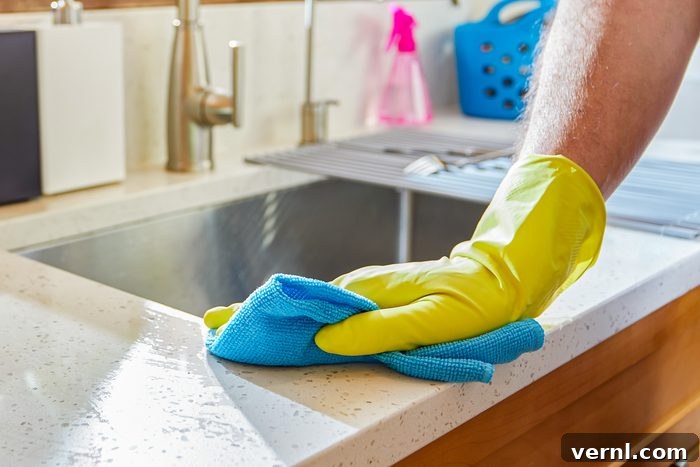
One of the most appealing aspects of quartz countertops is their minimal daily maintenance requirement. Most days, your quartz surfaces will need little more than a quick, gentle wipe-down to keep them sparkling. Alicia Sokolowski, founder and co-CEO of AspenClean, a company specializing in natural cleaning products and home services, recommends making daily cleaning a simple, consistent habit. “Clean the countertops regularly with a microfiber cloth or sponge and a natural cleaner,” she advises. For routine cleaning, warm water mixed with a natural, pH-neutral dish soap is often perfectly sufficient to tackle daily dust, minor spills, and food splatters.
To make this daily task even easier, you can mix a small amount of natural dish soap with warm water in a bowl, or as Rathey prefers, use a spray bottle for convenient dispersal. Lightly mist the surface or dampen your cloth, then gently wipe away any visible grime. Microfiber cloths are particularly effective for this task as they efficiently capture dust and dirt without leaving streaks. After cleaning, it’s crucial to follow up with a clean, damp cloth to rinse away any soap residue. Finally, dry the surface thoroughly with a separate clean, dry microfiber cloth to prevent water spots and achieve a streak-free, gleaming finish. This simple daily ritual not only keeps your countertops looking their best but also prevents the build-up of grime, significantly reducing the need for more intensive cleaning later on, and contributing to a healthier, more hygienic kitchen environment.
Protect from Heat: A Crucial Precaution for Quartz Lifespan
While quartz countertops are celebrated for their durability, it’s important to recognize that they don’t possess the same heat resistance as certain natural stone counterparts like granite. This vulnerability isn’t due to the quartz crystals themselves, but rather, once again, the polymer resin that binds the stone fragments together. This resin is susceptible to melting, scorching, or discoloration when exposed to high temperatures, which can lead to permanent damage.
Therefore, it is absolutely essential to protect your quartz surfaces from direct heat. Whenever you take a hot pan, pot, or dish directly off the stove, out of the oven, or from the microwave, ensure you have a protective barrier ready. Always use a trivet, a sturdy potholder, or a heat-resistant cutting board to place hot items on. Even prolonged exposure to moderate heat, such as from slow cookers, griddles, or electric kettles, can cause heat damage over time, so it’s wise to place these appliances on protective pads as well. The consequences of scorching the surface of a quartz countertop can be severe; the resin can melt and deform, leaving an indelible mark that is incredibly difficult, if not impossible, to repair without professional assistance. In many cases, professional repair for heat damage can be costly and may not perfectly restore the original finish. Prevention is undoubtedly the best approach to ensure your quartz countertops remain pristine and beautiful for years.
Act Swiftly: Clean Up Spills Immediately
One of the hallmark features of quartz countertops is their nonporous nature, making them highly resistant to staining compared to more porous natural stones. This means liquids and spills don’t easily penetrate the surface. However, this excellent resistance doesn’t grant complete immunity. It’s still a wise practice to wipe up spills as soon as they happen, as even non-porous surfaces can show marks if substances are left to sit for too long, potentially leading to surface adherence or even etching if the spill is acidic or basic.
Geologist and science writer Karen Kirk conducted a study on the stain resistance of quartz countertops, which compellingly demonstrated that they will stain under certain conditions, particularly if spills are left unattended for extended periods. Common culprits include highly pigmented foods and liquids like red wine, coffee, tea, fruit juices, and food coloring. Bright spices such as turmeric and chili powder are notorious for leaving persistent marks, as are acidic foods like tomatoes, citrus juices, and vinegar. Additionally, oil-based products, certain cosmetics, and nail polish can also pose a staining risk. The key is immediacy: blot the spill gently with a clean cloth, then wipe the area with warm water and a mild dish soap solution. Rinse thoroughly and dry to prevent any residue or potential marking. A proactive approach to spills ensures that the inherent beauty and stain resistance of your quartz countertops are fully maintained.
Steer Clear of Harsh Acids and Bases
Given how incredibly easy it is to clean quartz countertops with just warm water and a mild dish soap, there is genuinely no need to introduce harsh chemical cleaners into your routine. These aggressive chemicals, whether highly acidic or strongly alkaline, pose a significant threat to the polymer resin binder in your quartz, leading to irreversible damage. Sokolowski strongly advises against their use, as they can cause etching, discoloration, and a dull finish that diminishes the countertop’s natural sheen.
Even relatively gentle acids, such as lemon juice or vinegar, which are often touted as natural cleaners, can etch the surface of quartz if left to sit for too long. Stronger acids, like hydrochloric acid and sulfuric acid found in many toilet bowl cleaners, rust removers, and some commercial tarnish removers, are absolute no-nos. These chemicals can quickly break down the resin, leaving permanent burn marks or dull spots. Similarly, strong bases, including bleach, oven cleaners, drain cleaners, and heavy-duty degreasers, will react negatively with the resin matrix, causing it to weaken, discolor, or even disintegrate. Always err on the side of caution. Stick to pH-neutral, gentle cleaners and rely on a little “elbow grease” with a soft cloth for effective and safe cleaning of your quartz countertops. If you’re ever in doubt about a cleaning product, test it in an inconspicuous area first, or better yet, simply use soap and water.
Always Use a Cutting Board for Surface Protection and Hygiene
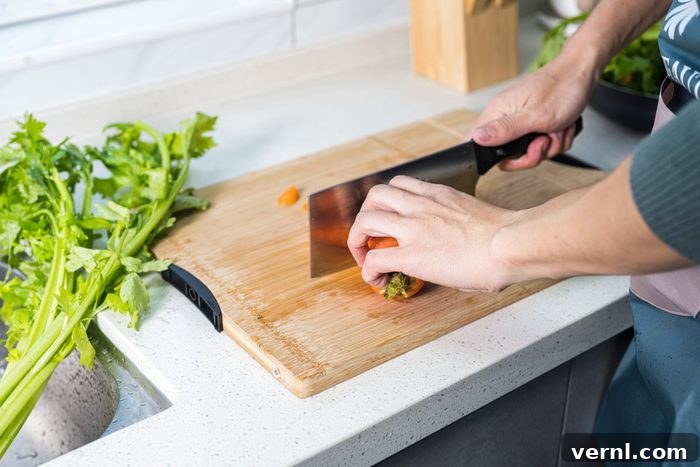
While quartz countertops are incredibly durable and can certainly withstand the occasional accidental knife strike without immediate visible damage, they are not impervious to scratches from sharp objects. Consistent cutting or chopping directly on the surface can lead to a gradual accumulation of fine scratches and etch marks that, over time, become noticeable and detract from the countertop’s smooth, polished appearance. As Sokolowski wisely recommends, “you should always use cutting boards.”
Using a cutting board offers a dual benefit: it not only protects the pristine surface of your quartz countertop from unsightly scratches and gouges but also helps to preserve the sharpness of your knives, preventing them from dulling quickly against the hard stone. Moreover, there’s a significant hygiene aspect to consider. Even minor, seemingly invisible scratches can create tiny crevices on the countertop surface where bacteria can settle and multiply, especially when preparing raw meats, poultry, or fish. These microscopic imperfections become difficult to thoroughly clean and sanitize. Therefore, consistently using a washable cutting board, particularly when handling raw ingredients, is not just a matter of preserving aesthetics but also a critical step in maintaining a food-safe and hygienic kitchen environment. Make it a habit to grab a cutting board for every chopping task, ensuring both your countertops and your family’s health are protected.
Baking Soda: Your Gentle Ally Against Stubborn Stains
By now, you understand the critical importance of avoiding harsh abrasives to protect the delicate resin binder of your quartz countertop. But what happens when you encounter a stubborn stain that simply won’t yield to a simple wash with dish soap and warm water? Is your beautiful countertop doomed? Absolutely not, assures Alicia Sokolowski. Before resorting to any potentially damaging chemicals, she recommends turning to a remarkably effective, yet gentle, solution: baking soda.
Baking soda, or sodium bicarbonate, is a natural, mildly abrasive, and incredibly versatile cleaner. For less severe but persistent marks, begin by applying a small amount of baking soda directly to a damp, soft cloth. Gently rub the stained area in a circular motion. The fine particles of baking soda will provide a mild scrubbing action without scratching the resin. For more stubborn or dried-on stains, create a thick paste by mixing baking soda with a small amount of water – aim for a consistency similar to toothpaste. Spread this paste generously over the mark, ensuring it’s completely covered. Allow the paste to sit and dry completely, which can take several hours, allowing the baking soda to draw out and absorb the stain. Once dry, gently scrape off the hardened paste with a non-abrasive tool (like a plastic scraper or your fingernail), then clean the area thoroughly with dish soap and warm water to remove any residue. Finish by rinsing and drying the surface to reveal a clean, refreshed countertop. This method leverages baking soda’s gentle abrasive and absorbent qualities, offering a safe and effective way to tackle tough stains without compromising your quartz.
Rathey’s Squeegee Secret: Effortless Cleaning for Large Surfaces
For those blessed with expansive quartz countertops, the thought of meticulously wiping down every inch can seem daunting. However, Allen Rathey offers an ingenious and highly efficient method for cleaning large surfaces quickly and easily: employing a squeegee. Yes, just like the tool a professional window washer uses, a squeegee can transform your countertop cleaning routine into a satisfying and swift task.
Before you begin, ensure your countertop is clear of any clutter. Remove cooking utensils, cutting boards, tea towels, and any small appliances to provide an unobstructed surface. Next, prepare your cleaning solution: in your sink or a bucket, mix a capful of mild, pH-neutral dish soap with warm water. Dunk a soft cloth or a strip washer (the T-bar tool window washers use to apply water) into the solution, wring out any excess, and generously apply the soapy water across the entire quartz surface you wish to clean. Once the surface is uniformly wet and soaped, take your squeegee. Start at one end of the counter, angling the squeegee slightly, and draw it across the surface in overlapping strokes, directing the soapy water directly into the sink. The squeegee efficiently collects the water and grime, leaving behind a remarkably clean and streak-free surface. This technique is not only incredibly fast but also incredibly satisfying, as it quickly transforms a messy counter into one that is “clean as a whistle,” gleaming and ready for use. It’s an excellent method for maintaining consistent cleanliness on substantial kitchen islands or extensive counter runs.
Revitalize Dull Quartz: Restoring Shine with Specialized Products
Over time, even with diligent care, quartz countertops can occasionally lose a bit of their initial luster, appearing slightly dull due to minor surface abrasion, mineral deposits from water, or residual cleaning product build-up. Thankfully, the market offers a wide array of commercial products specifically formulated for cleaning quartz countertops. Many of these specialized cleaners go beyond mere cleaning; they contain unique ingredients designed to polish and shine, restoring the countertop’s original brilliance and depth.
If you notice your quartz looking a bit less vibrant than usual, or if you simply prefer a cleaning product specifically engineered for quartz, consider investing in one of these solutions. You can easily find them online or at most home improvement stores. When selecting a product, look for labels that explicitly state “quartz safe,” “non-abrasive,” “pH-neutral,” and “food-surface safe.” These products often contain polymers or waxes that gently fill in microscopic imperfections, enhancing the reflective quality of the surface without harming the resin. Application is typically straightforward: spray the product onto the countertop, wipe with a clean microfiber cloth, and then buff to a brilliant shine according to the manufacturer’s instructions. Integrating such a product into your routine every few weeks or months can effectively revitalize a dull surface, bringing back that showroom-quality gleam and protecting your investment for the long term.
Always Test First: A Precautionary Measure for Peace of Mind
The cleaning and care methods outlined above are expert-approved and designed to protect your valuable quartz countertop investment. However, even with the best advice, it’s always a golden rule of cleaning to “test in a small, inconspicuous area first” before applying any new cleaning solution or technique to a larger, more visible area. This cautionary step is particularly crucial when dealing with a stubborn stain that hasn’t responded to traditional methods, or if you’re trying a new commercial product for the first time.
Different brands of quartz may have slight variations in their resin formulations or surface finishes, which could potentially react differently to certain chemicals or cleaning approaches. Testing in a hidden spot – perhaps under an appliance, inside a cabinet door, or in a far corner – allows you to observe any adverse effects, such as discoloration, dulling, or etching, without risking damage to a prominent area of your countertop. While desperate times might call for more assertive measures to tackle a tough stain, the absolute last thing you want to do is inadvertently make the problem worse, or create a new one. A quick, discreet test provides peace of mind and ensures that your attempts to clean and care for your quartz truly enhance, rather than harm, its enduring beauty.
About the Experts
- Allen P. Rathey is the director of the Indoor Health Council, an esteemed advisory group comprised of cleaning professionals and public health experts. He is deeply committed to helping individuals create and maintain safe, healthy indoor environments. With an impressive background, Rathey has previously served as president of the Housekeeping Channel, the Healthy House Institute, and the Healthy Facilities Institute, bringing a wealth of knowledge to best practices in cleanliness and hygiene.
- Alicia Sokolowski is a highly respected cleaning expert with over 15 years of extensive experience. As the president and co-CEO of AspenClean, she leads a green cleaning company renowned for its dedication to producing high-quality, environmentally sustainable cleaning products and delivering exceptional home cleaning services. Her expertise lies in effective and eco-friendly cleaning solutions for various surfaces.
Sources
- International Surface Fabricators Association. (2009). “The Manufacture of Engineered Stone and Installation of Quartz Surfacing Countertops.“
- Kirk, Karen. (2019, June 28). “Do Engineered Quartz Countertops Stain?“