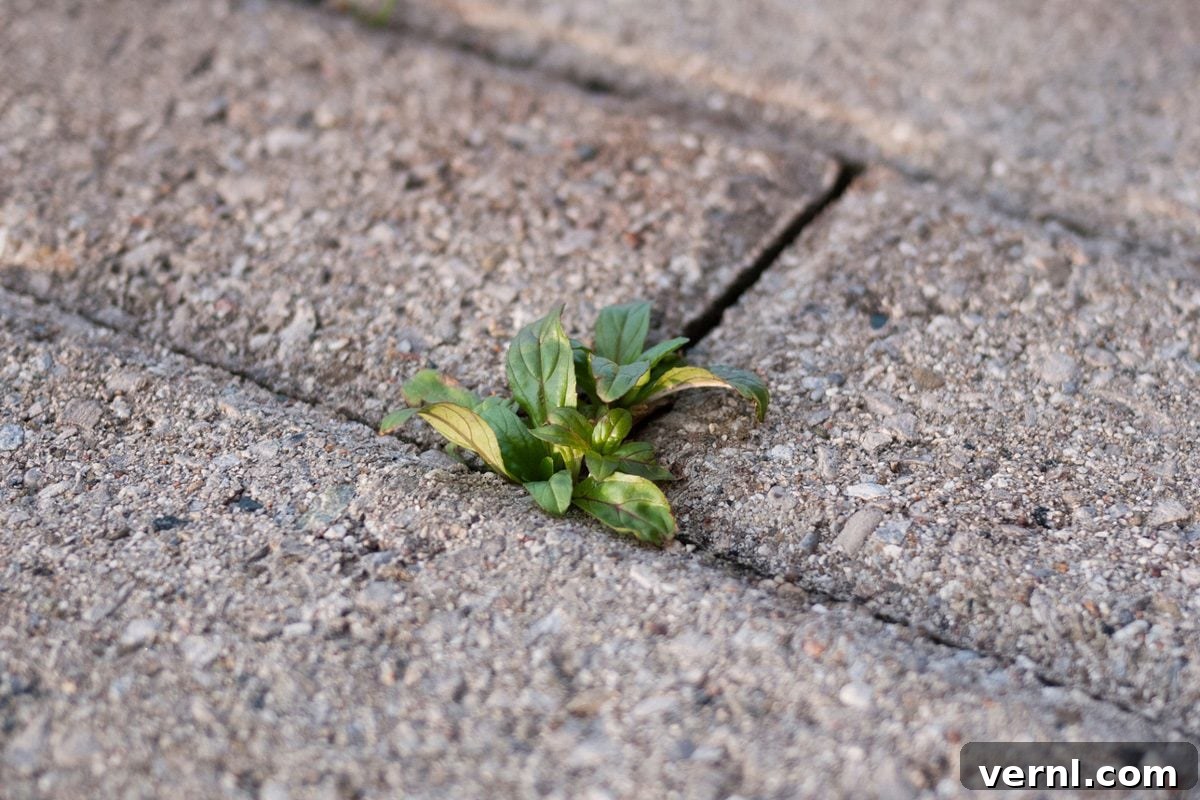
The quest for effective weed control often leads gardeners down intriguing paths, especially when balancing environmental concerns with practical solutions. For those living near sensitive ecosystems, like waterways, the standard chemical herbicides are a definite no-go. This dilemma often brings a seemingly natural, historical remedy to the forefront: salt. The idea of using salt to kill weeds harkens back to ancient tales of conquerors salting agricultural fields to render them barren, prompting the question: Is this age-old method a wise choice for your own land?
“It is a myth that salt is a safe, natural alternative to chemical herbicides,” warns Bennett Barrier, a seasoned turf specialist and CEO at DFW Turf Solutions. “While it might seem like a cheap shortcut, in the long run, it will cause profound and long-lasting damage to the soil and adversely affect surrounding plants, significantly impacting local biodiversity.”
Understanding the full implications before sprinkling salt on your garden is crucial. This comprehensive guide will delve into what you need to know about using salt for weed control, exploring its effectiveness, potential dangers, and when – if ever – it might be considered a viable, albeit limited, solution. We’ll also explore a range of truly safe and sustainable alternatives that protect your soil and the wider environment.
Does Salt Really Kill Weeds? Understanding the Mechanism
Yes, salt does kill weeds. Its effectiveness stems from a fundamental biological process known as osmosis. When salt is applied to plants, especially in high concentrations, it draws moisture out of their cells. Plants rely on water for turgor pressure (which keeps them rigid) and for transporting nutrients. As salt dehydrates the plant cells, it disrupts these vital functions, effectively “burning” the plant tissue and interfering with its ability to uptake water and essential nutrients from the soil. This cellular disruption eventually leads to the plant’s demise.
The type of salt used can vary, from common table salt (sodium chloride) to rock salt, or even Epsom salt (magnesium sulfate). While all can desiccate plants, their long-term effects on soil differ. Table salt and rock salt are particularly detrimental due to their sodium content. Epsom salt, often touted for gardening benefits, is less effective as a broad-spectrum weed killer and primarily provides magnesium and sulfur, though excessive amounts can still harm plants by altering soil chemistry or creating nutrient imbalances.
Does Salt Offer a Permanent Weed Solution?
The permanence of salt’s weed-killing power is a nuanced issue, largely depending on several factors: the amount of salt applied, the type of plant, and the soil environment. In general, smaller amounts of salt tend to only kill the above-ground parts of the plant, often failing to reach and eradicate deep root systems. This means that while the visible parts of the weed may wither and die, the roots can remain viable, allowing the plant to regrow over time.
Eduard Negodenko, a landscape and lawn care expert from Avanti Landscaping, explains, “Salt works best on smaller, shallow-rooted annual weeds. For persistent perennials like dandelions, thistles, or bindweed, which boast extensive, deep taproots, salt typically provides only a temporary setback, not a permanent solution.” These resilient weeds can draw moisture and nutrients from deeper soil layers, making them much harder to eliminate entirely with surface applications of salt. To truly kill these weeds permanently, the root system must be completely destroyed, which often requires a concentration of salt that would render the surrounding soil infertile for an extended period.
The Dangers of Using Salt to Kill Weeds on Your Lawn
While the immediate thought of using salt on your lawn to tackle weeds might seem appealing, it is unequivocally a bad idea. The ramifications extend far beyond the targeted weeds, causing extensive and often irreversible damage to your entire lawn ecosystem. Keith Sant, founder and CEO of Kind House Buyers, emphasizes, “Salt doesn’t discriminate; it kills beneficial grass and plants just as effectively as weeds, leading to uneven, sickly-looking patches and ultimately, a compromised lawn.”
The primary concern is the alteration of your soil’s chemistry. Salt introduces excess sodium and chloride ions into the soil, which are highly detrimental to soil health. These ions disrupt the delicate balance of essential nutrients, making them unavailable to desirable plants. Furthermore, salt harms the vital microbial life – bacteria, fungi, and other microorganisms – that are crucial for breaking down organic matter, cycling nutrients, and maintaining healthy soil structure. Without these microbes, the soil becomes compacted, less fertile, and prone to disease.
Once salt contaminates your lawn’s soil, reversing the damage is a challenging and lengthy process. Until rainwater gradually washes the excess salt away, nothing will be able to grow effectively in those areas. This leaching process can take years, especially in drier climates. Consequently, attempts to renovate or re-sod the lawn will likely fail, as new grass struggles to establish roots in the hostile, saline environment. You could be left with barren patches for a long time, making your initial shortcut a costly, long-term problem.
Some might consider a mixture of salt with other household ingredients like baking soda, vinegar, and dish soap, believing it to be a more effective or safer concoction. Rob Palmer, Brand President at Lawn Squad, notes, “Since salt is a primary component of baking soda, adding it can indeed amplify the weed-killing effect.” The vinegar, with its acetic acid, further aids in drying out target weeds by lowering the pH and breaking down plant tissue. Dish soap acts as a surfactant, helping the mixture stick to the leaves, increasing contact time and absorption. However, while these additives might make the mixture more potent for killing plants, they do not mitigate the underlying problem of salt contamination in the soil. The sodium from both table salt and baking soda will still accumulate, leading to the same long-term soil degradation issues.
Using Salt to Kill Weeds in Driveway Cracks: A Cautious Approach
When it comes to using salt for weed control in paved areas, such as driveways, patios, or pathways, the approach changes slightly, but caution remains paramount. “Since you are dealing with hard, compacted surfaces like concrete, the salt will be more effective here without doing as much damage to surrounding plant life,” explains Bennett Barrier. The crucial distinction is the lack of a permeable soil bed directly beneath the application point. However, this doesn’t eliminate the risks entirely.
Barrier further warns, “It will, nonetheless, still affect the soil beneath the driveway, especially if the salt is washed into any cracks or crevices. This can lead to future growth problems in those areas and potentially harm adjacent landscaping or gardens if runoff occurs.” The salt can seep through concrete cracks or wash off the surface, eventually making its way into the soil at the edges of the driveway or into nearby planting beds. Once in the soil, its effects are the same: making the soil inhospitable for plant growth.
If you absolutely must use salt in these specific, contained areas, Negodenko recommends pouring a modest 3:1 water-to-salt mixture directly into the cracks. Crucially, he advises applying it only during a dry period to prevent any runoff from washing the salt into areas where desirable plants are growing or where groundwater could be affected. Even with these precautions, it’s essential to use it sparingly and infrequently to minimize environmental impact.
Beware of De-icing Salts
Beyond targeted weed control, another significant source of salt contamination comes from de-icing salts used during winter months. These salts, often containing sodium chloride along with other additives, pose a significant threat to your lawn, soil, and the broader ecosystem. Rob Palmer highlights, “Over time, de-icing salts can build up in the soil, creating an increasingly inhospitable environment for plant growth.” The accumulation of these salts can cause direct tissue damage to plants, interfere with water uptake, and alter soil structure. Some turfgrasses, like tall fescue and perennial ryegrass, exhibit a higher tolerance to salt exposure, making them better choices for roadside plantings. However, more sensitive varieties, such as Kentucky bluegrass, may suffer extensive damage, leading to brown patches and stunted growth.
For winter de-icing, Palmer strongly recommends exploring safer alternatives. These include calcium magnesium acetate (CMA), which is less corrosive and more environmentally friendly. Other options include sand or kitty litter for improved traction without chemical melting, or natural solutions like beet juice or various brine solutions, which can lower the freezing point of water with less environmental impact than traditional rock salt. Choosing these alternatives helps protect your landscape from long-term salt damage.
The Best Alternatives: Sustainable Solutions for Weed Control
Given the significant downsides of using salt, a smarter and more sustainable approach to weed control involves methods that protect your soil, encourage biodiversity, and provide lasting results without harming the environment. Here are some of the most effective and eco-friendly alternatives:
- Horticultural-Grade Vinegar: Not to be confused with household vinegar (which is typically 5% acetic acid), horticultural vinegar boasts a much higher concentration (typically 10-20% acetic acid). “It’s incredibly effective for killing tender and sprouting plants,” says Eduard Negodenko. “It’s a rapid solution for desiccating weeds.” The higher acidity quickly breaks down plant cell walls, causing dehydration and death. However, extreme caution must be exercised when using it, as it is non-selective and can harm desirable plants and irritate skin/eyes. Always wear protective gear and target weeds precisely.
- Boiling Water: A simple, cost-effective, and surprisingly potent method. Boiling water works by scalding plant cells, immediately rupturing them and causing the plant to die. “It is simple and straight to the point,” Negodenko notes. It’s best suited for weeds growing in cracks in driveways, patios, gravel paths, or isolated areas where you don’t have desirable plants nearby. Ensure safety when carrying hot water and avoid splashing.
- Manual Weeding (Hand Pulling & Weeding Tools): Often overlooked, but one of the most effective and eco-friendly methods, especially for plants with deeper roots. Pulling weeds by hand or with specialized weeding tools (like a hori-hori knife, dandelion weeder, or stand-up weeder) allows for precise removal without chemicals. This method ensures the entire root system is extracted, preventing regrowth. Best done when the soil is moist, making extraction easier. Regular hand weeding also helps you monitor your garden’s health.
- Flame Weeding with a Propane Torch: This method uses a concentrated burst of heat to disrupt plant cell structure, causing the weed to wilt and die, typically within a few days. Flame weeding is excellent for weeds in gravel paths, sidewalks, or between pavers, as it doesn’t disturb the soil or leave chemical residues. It’s particularly effective on young, broadleaf weeds. Crucially, it won’t damage the surrounding soil microbiology or leave behind persistent residues. Always follow safety guidelines for using propane torches and avoid dry, flammable materials.
- Mulching (Wood Chips, Straw, Shredded Leaves): Mulch is a preventative powerhouse. Applying a layer of organic mulch (3-4 inches thick) directly blocks sunlight, which is essential for weed germination and growth. It effectively smothers existing small weeds and prevents new ones from sprouting. Beyond weed suppression, mulch also retains soil moisture, moderates soil temperature, and enriches the soil as it decomposes, fostering a healthier environment for your desired plants to thrive.
- Organic Weed Barriers (Landscape Fabric): When properly installed, certain organic weed barriers can be highly effective. These typically consist of breathable, biodegradable fabrics (avoid plastic-based products, which impede soil aeration and moisture penetration, ultimately damaging soil health). They allow water and nutrients to pass through while blocking weeds. These are often used under pathways, stone, or deep mulch layers.
- Preventative Measures & Healthy Lawn Practices: “In severe cases, one could use something more preventive like a pre-emergent,” says Negodenko. For a healthy lawn that naturally resists weeds, he recommends a strategy that begins with aerating the soil to improve air and water penetration. Following this, over-seeding with desirable grass varieties helps establish a dense turf that outcompetes weeds. Finally, applying corn gluten meal as a natural, organic pre-emergent herbicide can inhibit the germination of many weed seeds without harming established plants. “It’s a great way to kill weeds and preserve a healthy lawn while improving soil structure,” he concludes. Maintaining proper mowing height, consistent watering, and balanced fertilization also contribute significantly to a strong, weed-resistant lawn.
By opting for these responsible and effective alternatives, you can achieve a beautiful, weed-free garden and lawn while simultaneously protecting the environment and promoting long-term soil health. The temporary convenience of salt is simply not worth the lasting damage it inflicts.
About the Experts
- Rob Palmer is Brand President at the lawn care franchise Lawn Squad, and has been in the lawn care business for more than 30-years.
- Eduard Negodenko has been designing landscapes and providing lawn and garden expertise for more than seven years. He currently work at Avanti Landscaping in Toronto, Canada.
- Bennett Barrier has years of experience with lawn care, and is currently a turf specialist and CEO at DFW Turf Solutions.
- Keith Sant is Founder and CEO of Kind House Buyers, based in Tacoma, Washington, and specializes in buying, renovating and selling highly damaged houses.