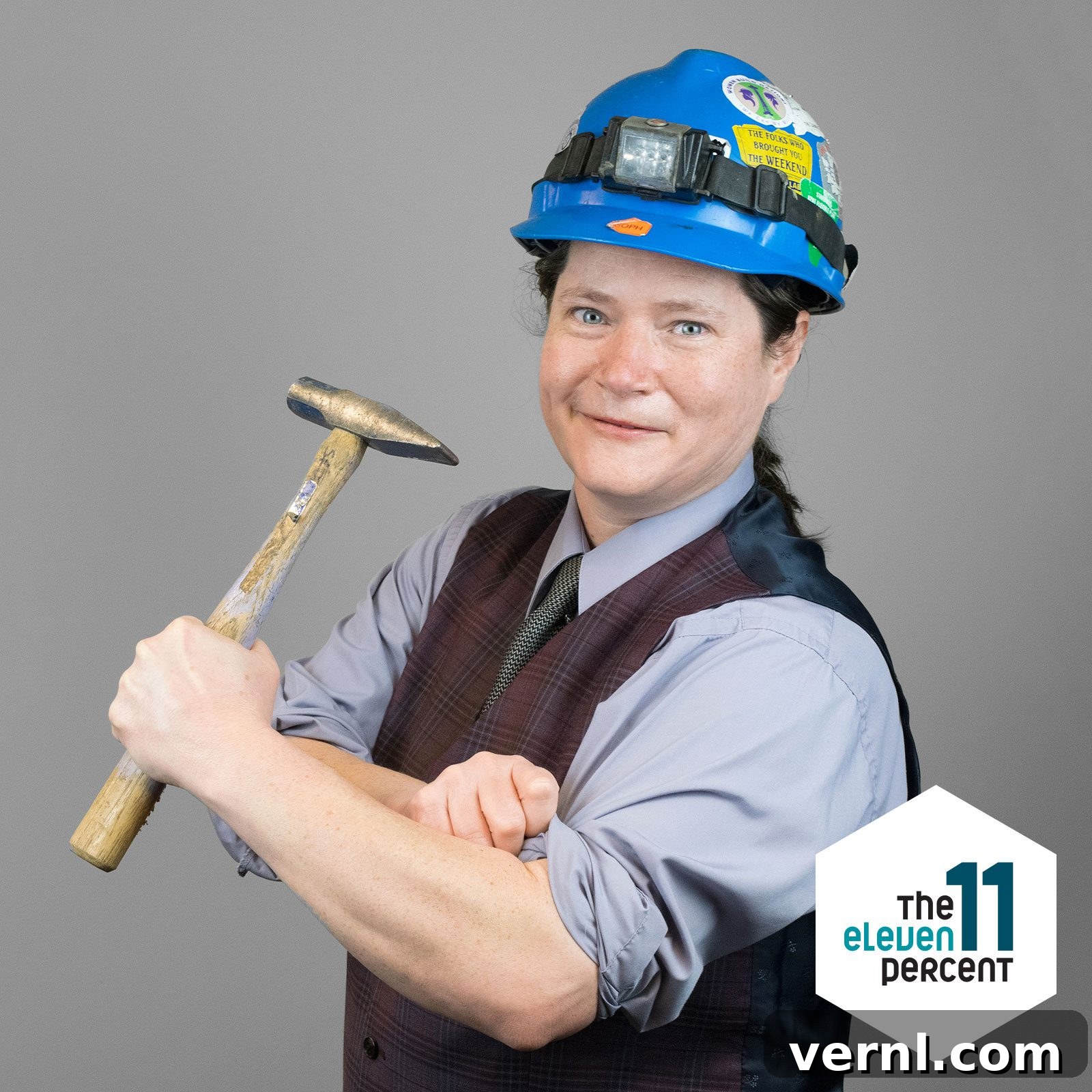
This FH series proudly shines a spotlight on the remarkable women and nonbinary tradespeople who are not only contributing to but actively shaping America’s construction workforce. Currently, these dedicated professionals comprise a vital 11 percent of this essential sector, bringing diverse skills, perspectives, and innovation to every project. Do you know someone whose inspiring story deserves to be shared? We invite you to email us here.
In this installment, we feature Soph Davenberry, an industry expert whose journey into the skilled trades exemplifies resilience, continuous learning, and a passion for impactful work. After completing a liberal arts degree, Soph found themselves searching for a career path that offered tangible skills and a clear direction. The job market after college can often feel daunting, and Soph, like many, faced the challenge of translating academic knowledge into immediate employment. While navigating this uncertain period, a simple newspaper advertisement for a sheet metal apprenticeship caught their eye.
At the time, Davenberry, who uses the pronoun ‘they’, had little understanding of what sheet metal work truly entailed. It was a leap of faith, a venture into the unknown, but one they instinctively felt drawn to. This decision, made almost three decades ago, proved to be profoundly life-changing. Today, 26 years later, Soph Davenberry stands as a highly respected industry expert in the complex fields of sheet metal fabrication and HVAC systems. Their career trajectory is a testament to the opportunities available in the trades for those willing to learn and dedicate themselves.
Their commitment to growth didn’t stop there. A few years ago, Davenberry embarked on another academic endeavor, pursuing a second degree while working full-time. This time, their focus was on applied science, specifically with an emphasis on sustainable building practices and science technology. This additional qualification not only expanded their expertise but also showcased their forward-thinking approach to the industry.
Reflecting on their educational journey, Davenberry proudly states, “And I paid for them both with my job in the trades.” This powerful statement highlights the financial independence and career stability that a skilled trade can provide, enabling individuals to invest in their own professional development without the burden of student debt. It underscores the immense value and potential for upward mobility within the trades, offering a viable and rewarding alternative to traditional four-year university paths.
We recently had the opportunity to speak with Davenberry, delving into their insights on the current landscape of the sheet metal and HVAC industries. We discussed the evolving demands of their role, particularly the increasing need for creativity and innovative problem-solving in a sector that is constantly adapting to new technologies and environmental imperatives.
Q: Did you have a background in the trades before your apprenticeship?
A: My upbringing was far from what you might consider a traditional trades background. My mom was a social worker, dedicating her career to helping communities, and my dad was a college professor, deeply immersed in academia. While my home life was intellectually stimulating, it didn’t expose me directly to hands-on construction or technical skills.
My first brief encounter with what might resemble a trade came during middle school shop class. I was genuinely interested in learning to use the tools and create something tangible. However, the experience was quite disheartening. The instructor had a practice of having the girls hand their pieces of wood to him so he could operate the table saw, and then he would hand the processed wood back to us. It quickly became apparent that I wouldn’t be gaining much practical knowledge or hands-on experience in that environment. Feeling a lack of genuine learning opportunities, I made the decision to switch to home economics, which, while valuable, was a different avenue altogether.
Despite this early setback, I did manage to gain a small amount of practical construction work experience as a teenager. I volunteered with Habitat for Humanity a few times, and those experiences were incredibly impactful. They offered a glimpse into the collaborative nature of building, the satisfaction of seeing a structure come together, and the fundamental processes involved in construction. These brief but meaningful volunteer stints provided a foundational understanding and perhaps even sparked a latent interest that would later fully blossom into my career in the trades.
Q: What are some of your more memorable projects?
A: Throughout my career, I’ve had the privilege of working on an incredibly diverse range of projects, each presenting its own unique set of challenges and learning opportunities. From the dizzying heights of skyscraper rooftops, where precision and safety are paramount, to a protracted hospital wing addition that spanned an impressive eight years, my experiences have been anything but mundane. The variety of these projects has allowed me to develop a broad skill set and adapt to different working environments, from bustling urban centers to critical healthcare facilities.
One particular project that stands out as a source of immense professional pride involved a massive underground transit tunnel. This wasn’t just any tunnel; it was designed to accommodate two tracks and required extremely precise engineering for its fire life safety systems. My role involved measuring the airflow within this enormous subterranean structure when its fire life safety systems were fully engaged. These systems relied on colossal fans, capable of moving hundreds of thousands of cubic feet of air per minute, critical for smoke evacuation and occupant safety in an emergency.
The primary challenge was accurately calculating the tunnel’s volume, which was far from a straightforward geometric problem. The tunnel’s cross-section wasn’t a perfect circle; it included complex platforms where people would stand, creating an irregular shape that defied simple formulas. To add to the complexity, the company I was working for at the time did not utilize AutoCAD or any other computer-aided design and drafting software. This meant that all the intricate calculations had to be performed manually, meticulously working from detailed paper drawings. It was a painstaking process, requiring exceptional attention to detail and a deep understanding of fluid dynamics and geometry.
The true satisfaction came toward the end of the project. When the engineers were performing their final double-checks on my calculated airflow values, they finally had access to a sophisticated computer program designed to handle such complex volumetric analyses. For a structure that measured 80 feet or more in diameter, my hand calculations were incredibly accurate – within just a couple of square feet of the computer-generated figures. Achieving such precision through manual effort on a project of that scale was not only a significant accomplishment but also immensely gratifying and, believe it or not, a lot of fun. It truly highlighted the value of fundamental knowledge and meticulous work in the field.
Q: What changes have you seen in your trade over the last 10 years?
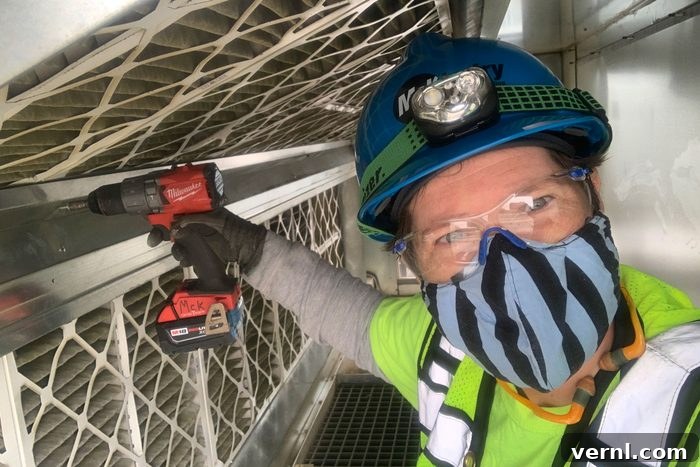
A: The last decade has brought about some truly transformative changes in the sheet metal and HVAC industries, making our work more visible, efficient, and diverse.
Perhaps one of the most significant shifts was catalyzed by the pandemic. It dramatically elevated public awareness about the critical importance of indoor air quality. Suddenly, the complex systems that we design, install, and maintain – which ensure healthy and comfortable indoor environments – became a topic of widespread conversation and concern. What we do for a living, which was once largely unseen by the general public, became front and center, highlighting our essential role in public health and well-being. This increased visibility has also spurred greater investment and innovation in air quality solutions.
Parallel to this, we’ve witnessed remarkable technological advancements, particularly within architectural sheet metal. Construction sites are no longer solely reliant on traditional manual methods. We are now frequently utilizing sophisticated tools like electric suction grips, which have revolutionized the assembly of rainscreen systems. These advanced tools not only enhance efficiency but also improve safety and precision in installation. Furthermore, the role of detailers has evolved dramatically. They are now working with highly detailed virtual 4D models, allowing for unprecedented levels of planning, coordination, and error detection before a single piece of material is cut. As a balancer, my own toolkit has become increasingly high-tech. I now rely on wireless tools and cloud-based software to make precise adjustments to HVAC systems and to report these adjustments more efficiently and accurately. This integration of digital technology streamlines workflows and provides immediate, data-driven insights.
Beyond technology, I’m incredibly encouraged by the shifts in diversity within our industry. I’m now working alongside women and nonbinary individuals far more frequently than ever before. This growing representation is not just a statistical change; it brings fresh perspectives, diverse problem-solving approaches, and a richer, more inclusive work environment. It’s inspiring to see more people from varied backgrounds finding their place and thriving in the trades. For instance, you can learn about the journey of Jessie Cannizzaro, a successful plumbing contractor, who is another fantastic example of this positive trend.
Q: What sort of changes do you see coming down the industry pipeline?
A: Looking ahead, I believe we are on the cusp of truly transformative changes within the construction and building systems industry, driven primarily by a pressing need for greater sustainability and energy efficiency. A significant portion of our global energy consumption is attributed to buildings – from their construction to their daily operation. This presents a massive opportunity for us to make a profound difference, shifting towards a more sustainable and conscientious use of our planet’s finite resources. The urgency of addressing climate change is increasingly influencing every aspect of how we design, build, and maintain structures.
One of the most exciting developments I’m observing is the evolution of energy codes. Historically, these codes often prescribed specific materials or methods for building construction, dictating ‘how’ things should be done. However, there’s a significant and welcomed pivot happening now. Modern energy codes are increasingly focusing on performance-based outcomes. Instead of mandating particular materials, they are asking for the end result – how well a building actually performs in terms of energy consumption, indoor air quality, and overall efficiency. This shift from prescriptive rules to performance targets is incredibly liberating for the industry.
This change is precisely what excites me most: moving away from being told how to build something, and instead being challenged to innovate and devise novel ways to achieve desirable, sustainable end goals. It opens up the field for immense creativity and ingenuity. Designers, engineers, and tradespeople are now empowered to explore a wider array of solutions, materials, and technologies that might not have been considered under older, more restrictive codes. This encourages a holistic approach to building, where interdisciplinary collaboration can lead to groundbreaking advancements in efficiency and sustainability. It creates a space where problem-solvers can truly shine, developing bespoke solutions tailored to specific projects and environmental contexts. This collaborative and innovative spirit is vital as we work towards a greener future. Another inspiring example of leadership in this area is Renee Wilson, an insulation contractor and owner, who demonstrates how business acumen and environmental responsibility can go hand-in-hand in the modern construction industry.
Q: Where do you then find inspiration for creative building solutions?
A: My inspiration for innovative and creative building solutions often comes from diverse sources, particularly from engaging with global perspectives and interdisciplinary thinking. Last June, I had the incredible opportunity to attend an international tradeswomen’s conference in London. This experience was truly eye-opening, not just for the camaraderie and networking among fellow tradeswomen, but also for the profound differences in public awareness and industry approach compared to what I often encounter in North America.
In Europe, particularly in London, the general public exhibits a much higher level of awareness regarding building systems, how structures function, and the urgent necessity to curb our reliance on carbon-producing fuels. This heightened understanding among consumers and policymakers pushes the industry there to innovate at a faster pace and adopt more sustainable practices. It creates a fertile ground for discussing and implementing advanced green building technologies.
One particular innovation I encountered at the conference really captured my imagination: the concept of using the very piles driven into the ground to support buildings as heat pumps. This ingenious solution effectively combines two seemingly distinct elements of construction – foundational structural support and an active energy system – into a single, highly efficient function. It bridges the gap between different trades in a way that truly exemplifies creative problem-solving. Who would have ever imagined that I, as an HVAC technician deeply involved with air and thermal systems, would find common ground and shared purpose with a pile driver, whose work is entirely focused on ground stabilization? But we do, and that’s precisely the kind of interdisciplinary “mix-up” and collaborative thinking we are beginning to see more of in the industry.
I am genuinely excited for us in the trades to foster more collaborative environments. Often, we get compartmentalized, or “hung up,” by jurisdictional boundaries and the traditional separation of trades. However, there is so much collective knowledge, experience, and ingenuity that we have to share across disciplines. By breaking down these silos and encouraging open dialogue and cooperation, we can accelerate the development and implementation of truly sustainable and efficient building solutions. The future of construction lies in this collaborative spirit, where HVAC technicians, structural engineers, electricians, and all other trades work in concert to achieve shared environmental and performance goals.
Q: How do you think people in the industry can facilitate these environmental changes more effectively?
A: I perceive a couple of areas within the industry that are currently somewhat fractured, hindering our collective ability to effectively facilitate environmental changes and push for greater sustainability. Addressing these disconnects is crucial for meaningful progress.
One significant divide lies between the academic and practical realms. Many of the individuals who are spearheading the development and implementation of new energy codes often come from a more academic background, having pursued extensive studies in colleges or universities. While their theoretical knowledge and research are invaluable, a smaller proportion of them have direct, hands-on experience working with the tools in the field. This can lead to a gap in understanding regarding the practicalities, limitations, and on-the-ground realities of construction. Assumptions can sometimes be made about what those of us actually assembling and installing components in the field are capable of, or what our passions and priorities might be. To bridge this gap, there needs to be a much more robust and consistent dialogue with the crews who are performing the actual installation work. Their insights into how things could be done better, more efficiently, or more sustainably from a practical standpoint are invaluable. I’m pleased to see that some forward-thinking individuals and organizations are beginning to recognize the importance of this field-to-theory exchange.
Conversely, those of us working directly in the field also need to recognize our role and responsibility in this broader environmental effort. It’s essential to understand that energy codes and sustainability regulations are not merely a “bunch of bureaucratic rules” imposed from above. Instead, they are vital frameworks designed to protect and preserve the very environments we cherish. How we behave on job sites, the materials we choose, and the efficiency of our installation practices directly affect the places we love to be in.
There are countless individuals in the trades who are passionate about the outdoors – who find solace and enjoyment being outside, whether it’s hiking in forests, fishing by lakes, or rafting down rivers. If we genuinely want to preserve these natural environments, keeping them healthy and accessible for future generations, then we absolutely need to adapt and change some of our current practices. This means embracing new, greener technologies, improving waste management, optimizing energy use on sites, and actively contributing to the construction of more sustainable buildings. It’s about recognizing that our professional actions have a direct impact on our personal values and the world we want to live in.
Q: Do you find anything challenging or beneficial about being nonbinary in your field?
A: Yes, absolutely – I find both challenges and unique benefits associated with being nonbinary in the skilled trades, particularly in an industry that has historically been very gendered.
What I find most challenging often revolves around assumptions people make based on my appearance. On a job site, especially when I’m wearing full safety gear like a hard hat, vest, and sturdy boots, I can sometimes be perceived as young or inexperienced. This happens even though I’ve dedicated 26 years of my life to this trade, building a deep reservoir of knowledge and expertise. It can be frustrating to constantly prove my capabilities or explain my extensive background before my experience is acknowledged. For many years, I’ve actively participated in numerous tradeswomen events, and I always strive to represent myself as someone with a wealth of experience, not just as a woman in the trades, but as a seasoned professional who has navigated and excelled in this field for decades.
On the other hand, my genderqueer identity is far more expansive and nuanced than being solely categorized as a “tradeswoman.” While I derive immense pride and satisfaction from my achievements as a tradeswoman and value that community, I also recognize that even that label doesn’t fully encompass my entire self or identity. My nonbinary identity offers a broader perspective, allowing for a more fluid and adaptable approach to professional and personal interactions.
I think what’s particularly beneficial about being nonbinary is the unique ability it grants me to bring forward different aspects of my gender identity that are most helpful or relevant in various circumstances. For instance, when I find myself as the only non-guy on a crew, my presence can subtly shift dynamics and open conversations in ways that might not occur otherwise. Similarly, having been mentored by powerful tradeswomen has provided invaluable guidance and a sense of belonging. My nonbinary identity allows me to connect with different individuals and groups within the trades, fostering understanding and collaboration. It provides a distinct lens through which to navigate professional relationships, often allowing for a more empathetic and inclusive approach that can ultimately strengthen team cohesion and problem-solving abilities on the job site.
Q: What are your pro-specific tools?
A: In my line of work, having the right tools is absolutely crucial, not just for efficiency but for safety and accuracy. There are definitely a few essential tools that I make sure to load into my work pants or carry on my person every single day. These are the versatile companions that handle a multitude of common tasks: my trusty nine-in-one screwdriver set, which is a marvel of compactness and utility; my indispensable Leatherman multi-tool, a true workhorse for quick fixes and adjustments; and, of course, a reliable flashlight, because you never know when you’ll need to illuminate a dark corner or inspect an intricate component.
Beyond these daily essentials, my trade-specific tools are highly specialized for HVAC and balancing work. A primary tool I use is an airflow hood. This device is precisely fitted onto an air diffuser – the component that disperses conditioned air into a space – to accurately measure the velocity and volume of air moving through it. The hood captures the airflow, directing it into a measurable path. Connected to this is a compact handheld meter that performs the complex calculations, providing me with immediate, precise readings of the airflow. What’s fantastic about this meter is its versatility; it can be connected to various sensors, including the flow hood, a velgrid for larger ducts, an airfoil, or a pitot tube for different measurement scenarios.
For Fire Life Safety damper inspections, particularly when I need to test smoke detectors, I utilize a powerful magnet paired with an extending paint pole. This combination allows me to safely and efficiently trigger smoke detectors that are often mounted high up, eliminating the need for constant ladder usage. An even more ingenious application of the extending paint pole involves its use with a Bluetooth-enabled flow hood. I can “float” this specialized hood up to 20 or even 30 feet in the air to take readings, while the handheld meter remains safely with me on the ground. This setup is a game-changer for efficiency and safety: it negates the need for a ladder or a lift, which saves considerable time and reduces fall hazards. Furthermore, it eliminates the requirement for another worker to be present to read out values or assist, making me far more self-sufficient and productive on the job site.
Finally, modern cloud-based software has become an indispensable part of my professional toolkit. Platforms like Building Start, Blue Rithm, CX Alloy, and TABopts are integral to my work. These sophisticated applications tie everything together, allowing me to meticulously record, analyze, and report all the data, measurements, and adjustments from my work. They provide a comprehensive digital record, streamline project management, facilitate collaboration, and ensure accountability, effectively transforming the raw data of my work into actionable insights and verifiable reports. This suite of tools, both physical and digital, empowers me to perform my job with unparalleled precision, efficiency, and safety in today’s demanding construction environment.
Soph Davenberry Bio
Soph Davenberry is a highly esteemed and active union sheet metal worker with an impressive career spanning over 26 years. Their extensive experience encompasses a wide range of roles and locations, having worked throughout Turtle Island (North America) and abroad. Soph has contributed their expertise both in fabrication shops and in the field across numerous facets of the trade, including Architectural sheet metal, Industrial applications, Commercial HVAC systems, and specializing in Test, Adjust, and Balance (TAB) services. Beyond their technical skills, Davenberry has also been involved in organizing efforts, instruction, business development, and certification within the industry. Currently, they are applying their profound knowledge and skills as a dedicated TAB technician at McKinstry, a leader in the built environment.
Soph Davenberry possesses a profound passion that intertwines building systems with social justice. They adeptly leverage their unique qualifications, including dual journey cards, their robust formal education, and exceptional public speaking talents, to advocate for the advancement of both better, more sustainable building systems and more equitable human organizations. Their work is a testament to the belief that the built environment can and should serve as a catalyst for positive societal change, championing not only technical excellence but also the importance of inclusivity and progressive practices within the trades and beyond.
Writer Karuna Eberl Bio
Karuna Eberl is a distinguished and regular contributor to FamilyHandyman.com, bringing her rich storytelling ability to a broad audience. Over the past 25 years, Eberl has established herself as a versatile freelance journalist and accomplished filmmaker, dedicated to crafting compelling narratives that explore the fascinating worlds of people, nature, travel, science, and history. Her impactful work has garnered numerous accolades, recognizing her excellence in writing, her comprehensive Florida Keys Travel Guide, and her critically acclaimed documentary, The Guerrero Project. Eberl’s ability to blend engaging prose with insightful research makes her a valuable voice in the field of journalism.
[cf]skyword_tracking_tag[/cf]