Even for seasoned professionals with decades in the automotive repair industry, terms like “lug nut swelling” might initially sound unfamiliar. Yet, as automotive experts like ASE Master Technician Tom Diamond explain, it’s a very real and frequently encountered problem. Once understood, many realize they’ve tackled this precise issue countless times throughout their careers without putting a specific name to it.
For those residing and working in regions known as the “salt belt”—the northern areas where vast quantities of salt are spread on roads during winter snowstorms—the battle against rust and corrosion is constant. This harsh environment accelerates the degradation of vehicle components, particularly metal parts exposed to the elements, leading to various problems, including the notorious lug nut swelling. Lug nuts are far more than just small fasteners; they are fundamental safety components, as critical as your car’s brakes or steering system. Their importance should never be underestimated. Throughout my professional life, I have witnessed firsthand the extensive damage and dangerous situations that can arise from compromised lug nuts and wheel studs.
This comprehensive guide, informed by insights from ASE Master Technicians and other industry experts, will delve into the phenomenon of lug nut swelling. You’ll learn what causes this frustrating issue, discover effective strategies for safely removing swollen lug nuts, and, most importantly, understand how to prevent lug nut swelling from occurring in the first place, ensuring your vehicle remains safe and reliable on the road.Are Swollen Lug Nuts a Real Concern?
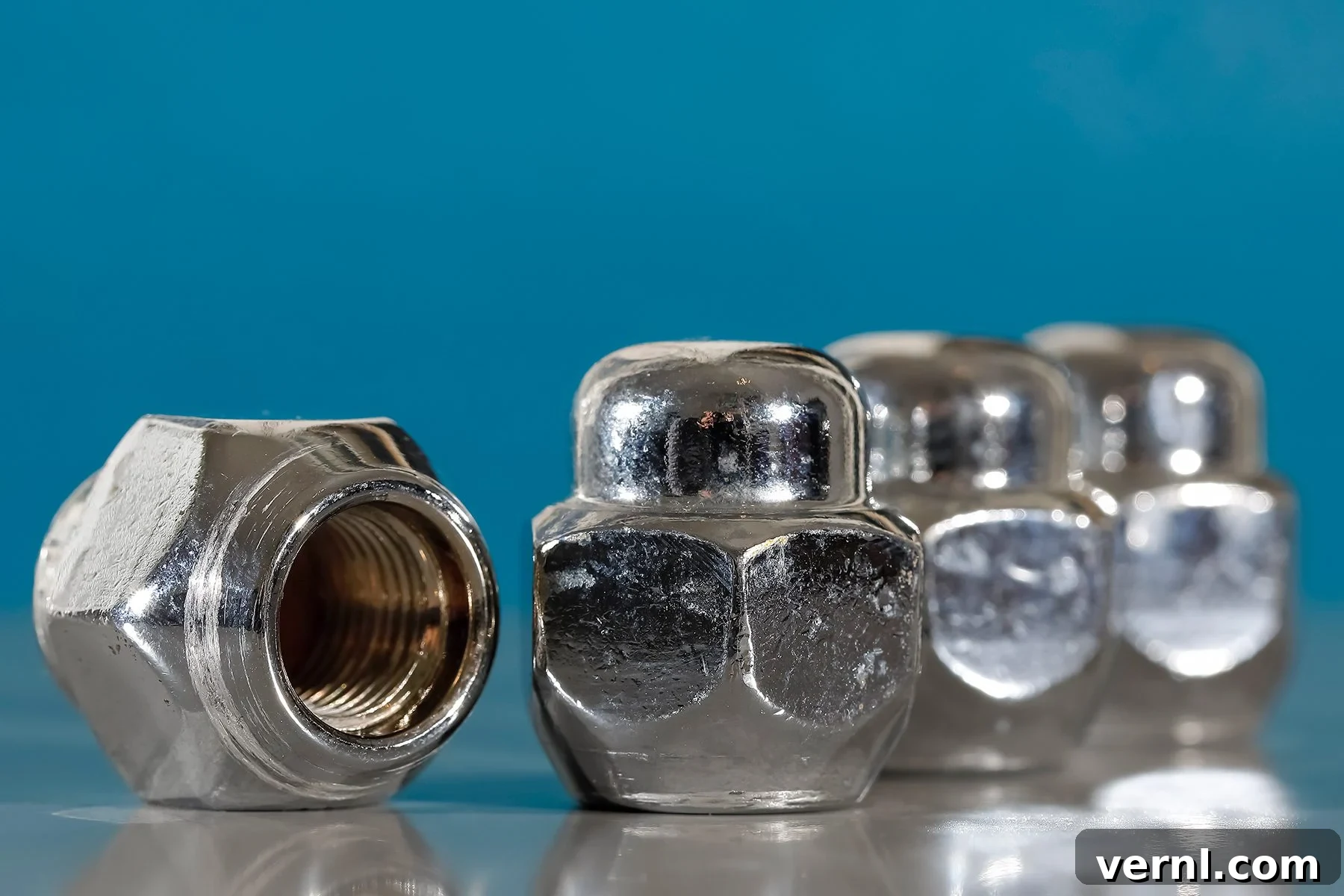
Absolutely, swollen lug nuts are not only a “thing” but a legitimate and widespread problem that can significantly impact vehicle safety and maintenance. To enhance a vehicle’s aesthetic appeal, many manufacturers equip lug nuts with a separate, decorative outer cover, typically crafted from finely finished chrome. While these covers add a sleek look, they also introduce a vulnerability. Over time, rust and corrosive elements can infiltrate the minute gap between this ornamental cover and the actual steel lug nut beneath. This corrosive buildup causes the inner steel nut to expand, subsequently deforming and swelling the outer chrome shell. Once swollen, these lug nuts become exceedingly difficult, if not impossible, to remove using standard factory-supplied lug wrenches or common garage tools.
The implications of swollen lug nuts can range from inconvenient to dangerous. Imagine being stranded on the side of the road with a flat tire, only to find your lug wrench won’t fit or slips off the swollen nuts. Or consider the frustration of attempting a routine DIY task like a flat tire change, a necessary tire rotation, or even replacing brakes on your car, only to be stopped by stubborn, swollen lug nuts. Often, if you’re fortunate, your trusted mechanic will encounter and resolve this issue during routine service before it becomes an emergency for you.
The problem isn’t confined solely to the lug nuts themselves. The exposed threads of the wheel studs, onto which the lug nuts fasten, are also susceptible to rust and corrosion. Even if the lug nuts appear to be in reasonable condition, the underlying wheel stud threads can become damaged, crusted, and “bloated.” When a lug nut is removed or installed over these compromised threads, the threads on both the lug nut and the stud can become stripped or ruined, leading to an insecure wheel connection.
- PRO TIP: Always prioritize safety and functionality. If lug nuts or wheel studs show signs of damage, corrosion, or swelling, they must be replaced. Never attempt to repair or rethread them, as this can compromise their structural integrity. Furthermore, Don Sutliff from Permatex Inc., a global leader in automotive chemicals, sealants, and adhesives, strongly advises against using any lubricant or oil, including anti-seize compound, on lug nut threads. He explains that the extremely low coefficient of friction created by such products can lead to over-tightening and an inaccurate torque reading, potentially causing lug nut or stud failure.
What Causes Swollen Lug Nuts?
The primary culprit behind swollen lug nuts is a chemical reaction known as electrolysis, or galvanic corrosion. This process occurs when two dissimilar metals come into contact in the presence of an electrolyte – which can be anything from rainwater, road salt, dirt, or even saltwater spray. This chemical reaction generates a small electrical current, causing the less noble metal to corrode at an accelerated rate, releasing corrosion-causing oxides.
In the case of chrome-covered lug nuts, the problem arises because the core lug nut is typically made of steel, while the decorative outer cover is chrome (often a thin layer over nickel or copper, which are still different from steel). When water, salt, or dirt penetrates the minuscule gap between these two materials, an electrochemical cell is formed. The steel core, being more reactive, begins to oxidize and rust. As steel rusts, it expands significantly—much like how rusted rebar can crack through solid concrete. This expansion forces the chrome cover to bulge, deform, and eventually crack or peel away. This deformation is what we refer to as a “swollen lug nut.”
Environmental factors play a critical role. Vehicles frequently exposed to harsh conditions, such as those driven in the aforementioned “salt belt” or coastal regions with high humidity and saltwater spray, are far more susceptible to this type of corrosion. Beyond environmental exposure, human error can also contribute to the problem. Over-tightening lug nuts during installation, or using incorrect tools like ill-fitting impact sockets, can damage the delicate chrome cover, creating microscopic cracks or gaps. These tiny imperfections provide an easy pathway for moisture and contaminants to enter and initiate the corrosive process. ASE Master Technician Tom Diamond emphasizes, “Over-tightening lug nuts is just as dangerous as under-tightened [lug nuts].” He strongly recommends always using a torque wrench to tighten lug nuts to the manufacturer’s specified settings, ensuring both safety and longevity.
Are Swollen Lug Nuts Dangerous?
Yes, swollen lug nuts pose a significant safety risk and should never be ignored. The most immediate danger arises when the outer chrome cover expands due to rust and corrosion. Once this deformation occurs, the factory-supplied lug wrench, which is precisely sized for new lug nuts, will no longer fit properly over the swollen nut. This can leave you unable to remove a wheel in an emergency, such as a flat tire on a busy highway, putting you and your vehicle at considerable risk.
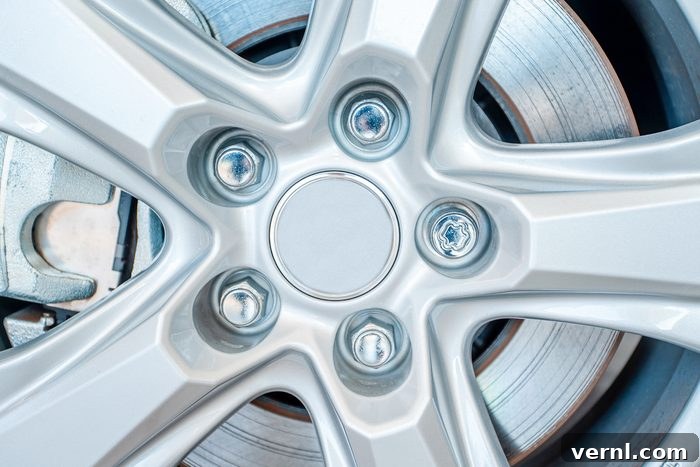
Beyond the inconvenience, attempting to force an ill-fitting wrench onto a swollen lug nut can lead to several dangerous outcomes. The wrench might slip, potentially causing severe injury to your hand or body. It can also strip or round off the lug nut’s hexagonal shape, making it even more challenging, if not impossible, to remove without specialized tools. In extreme cases, I have personally observed rust buildup so severe that the chrome covers completely detached from the lug nut. This situation is equally, if not more, problematic. Without its protective and sizing cover, the underlying steel lug nut is significantly smaller than the factory-supplied lug wrench. Attempting to use the oversized wrench on the now-smaller nut will almost certainly cause the lug nut to round off, or the wrench to slip repeatedly during loosening or tightening, further increasing the risk of injury or leaving you stranded. An improperly torqued or damaged lug nut can lead to wheel vibration, stud shear, and in the worst-case scenario, the wheel separating from the vehicle while in motion, which can cause catastrophic accidents.
Therefore, if you observe any missing covers from your car’s lug nuts, or if they appear corroded or swollen, it is imperative to replace them immediately with new, high-quality lug nuts. Do not delay, as this is a critical safety measure for your vehicle.
How To Safely Remove Swollen Lug Nuts
Removing swollen lug nuts requires patience, the right tools, and often a degree of specialized knowledge. For mildly swollen lug nuts, ASE Master Technician and MAC Tools distributor Jody Connelly recommends using an 18.5mm or a 19.5mm “half-size” socket, specifically designed to grip chrome-covered lug nuts that have slightly expanded. Similarly, Tom Diamond suggests a half-size 17.5mm socket for lug nuts where the chrome caps are missing or severely distorted, as these nuts will present a smaller effective size.
For more severely corroded or rounded lug nuts, more aggressive methods may be necessary. “Twist sockets,” also known as lug nut removers or extractor sockets, are specialized tools designed with an internal helix that bites into the damaged nut as they are hammered onto it. If you’re using twist sockets and have access to a 1/2-inch drive impact gun (either air-powered or electric), this is the ideal time to employ it, as the impact action can help loosen stubborn nuts. Always ensure the impact gun is set to the correct rotational direction.
In cases of extreme damage or corrosion, where even twist sockets fail, professional intervention is highly recommended. I have personally resorted to using an air hammer to carefully chisel off severely damaged lug nuts. This is a delicate procedure that carries a significant risk of damaging the wheel itself. One slip of the chisel, and you could be looking at a deeply gouged or permanently damaged alloy wheel, leading to costly repairs or replacement. Therefore, for extreme cases, it’s always best to leave this to experienced professionals. Diamond further advises, “I always install new lug nuts if I have to use a half size or twist socket to remove lug nuts,” emphasizing that once a lug nut has been compromised to this extent, its integrity cannot be guaranteed.
- SAFETY NOTE: Whenever hammering on a twist socket, operating an impact gun, or working with any power tools, always wear appropriate personal protective equipment. This includes, but is not limited to, sturdy safety glasses to protect your eyes from flying debris, and gloves to protect your hands. Ensure the vehicle is properly supported on jack stands and the wheel is chocked if working on a level surface.
How to Prevent Swollen Lug Nuts
Preventing swollen lug nuts is far simpler and less costly than dealing with them after the fact. With proper care, the use of appropriate tools, and adherence to manufacturer guidelines, your lug nuts should easily last for the entire lifespan of your vehicle. The key lies in understanding what causes damage to the lug nut covers and threads, and then actively avoiding those actions.
A common mistake is using improper tools for lug nut removal and installation. The manufacturer-supplied lug wrench, while convenient for emergencies, often doesn’t provide the ideal leverage or fit for regular use. Similarly, chrome (non-impact) sockets or low-quality 6- or 12-point sockets are prone to slipping, rounding off edges, or deforming the delicate chrome lug nut cover. This damage creates microscopic entry points for water, dirt, and road salt to penetrate the gap between the chrome cover and the steel lug nut, initiating the corrosive process. Over time, this inevitable corrosion leads to swelling.
Tom Diamond strongly advocates for preventative measures, recommending the use of “1/2-inch drive, thin wall, deep impact sockets with plastic sleeve lug nut cover guards.” These specialized sockets are engineered to provide a precise fit, distribute force evenly, and protect both the lug nuts and their covers, as well as your wheels, from getting scratched or damaged during removal and installation. While it may be tempting to use an impact gun for both loosening and tightening lug nuts due to its speed, caution is advised. Diamond explains, “Although it’s tempting to use an impact gun to remove and install lug nuts, it’s best to use the protective sockets with a breaker bar to loosen lug nuts.” This allows for better control and reduces the risk of stripping or over-stressing the nuts and studs. For installation, he advises: “snug the lug nuts by hand with the wheel off the ground, and finish tightening with a torque wrench [in a ‘star’ pattern].”
Following this precise procedure is crucial: hand-snugging ensures the lug nuts are properly seated without cross-threading. The “star pattern” (tightening opposite lug nuts sequentially) ensures the wheel is evenly seated against the hub, preventing warping or uneven stress. Finally, using a torque wrench to achieve the manufacturer’s specified torque setting is paramount for safety, preventing both under-tightening (which can lead to loose wheels) and over-tightening (which can stretch studs, damage lug nuts, and contribute to swelling). Regular inspection of your lug nuts during tire rotations or oil changes can also help catch early signs of corrosion before they become significant problems.
Meet Our Automotive Experts
Our insights are backed by professionals with extensive real-world experience and deep technical knowledge in the automotive industry.
- Tom Diamondbrings over 35 years of dedicated experience to the automotive repair industry. His diverse career spans roles as a skilled technician, a certified original equipment manufacturer (Mazda) trainer, and a meticulous shop supervisor. For over a quarter-century, Tom has maintained his status as an ASE Master Technician, holding the prestigious ASE L1 advanced automotive engine performance certification. Additionally, he is a Pennsylvania Department of Transportation certified state safety, emissions, and reconstructed vehicle inspector, as well as a certified welder. Currently, Tom dedicates his expertise to educating the next generation as the automotive technology instructor for the Faulkner Institute at Father Judge High School in Philadelphia, PA.
- Jody Connelly boasts more than 20 years of hands-on experience in the demanding automotive repair industry. He is an accomplished ASE, Mazda, and Chevrolet Master Technician, having also served effectively as a service manager. Jody holds certifications as a Pennsylvania emissions and safety inspection inspector. After a successful career in the front lines of automotive repair, Jody transitioned to become a professional tool distributor for MAC Tools (achieving Gold Level status). In this role, he continues to support technicians by providing them with access to the latest tools, cutting-edge technology, and essential training required to accurately diagnose and expertly repair today’s increasingly complex vehicles.
Additional Industry Resources
Further valuable perspectives and information were contributed by these respected industry professionals and organizations.
- Don Sutliff serves as the senior product specialist at Permatex Inc., located in Solon, Ohio. His extensive experience within the specialty chemical industry provides him with firsthand knowledge and deep insights into automotive compounds and their practical applications.
- William “Bill” Guzenskiis a highly respected figure in the automotive community, having produced hundreds of insightful how-to videos. He is an ASE Certified Master Automobile Technician and maintains affiliations with the Specialty Equipment Market Association (SEMA). Bill currently holds the significant positions of contact center manager and director for analytical skills at CarParts.com.