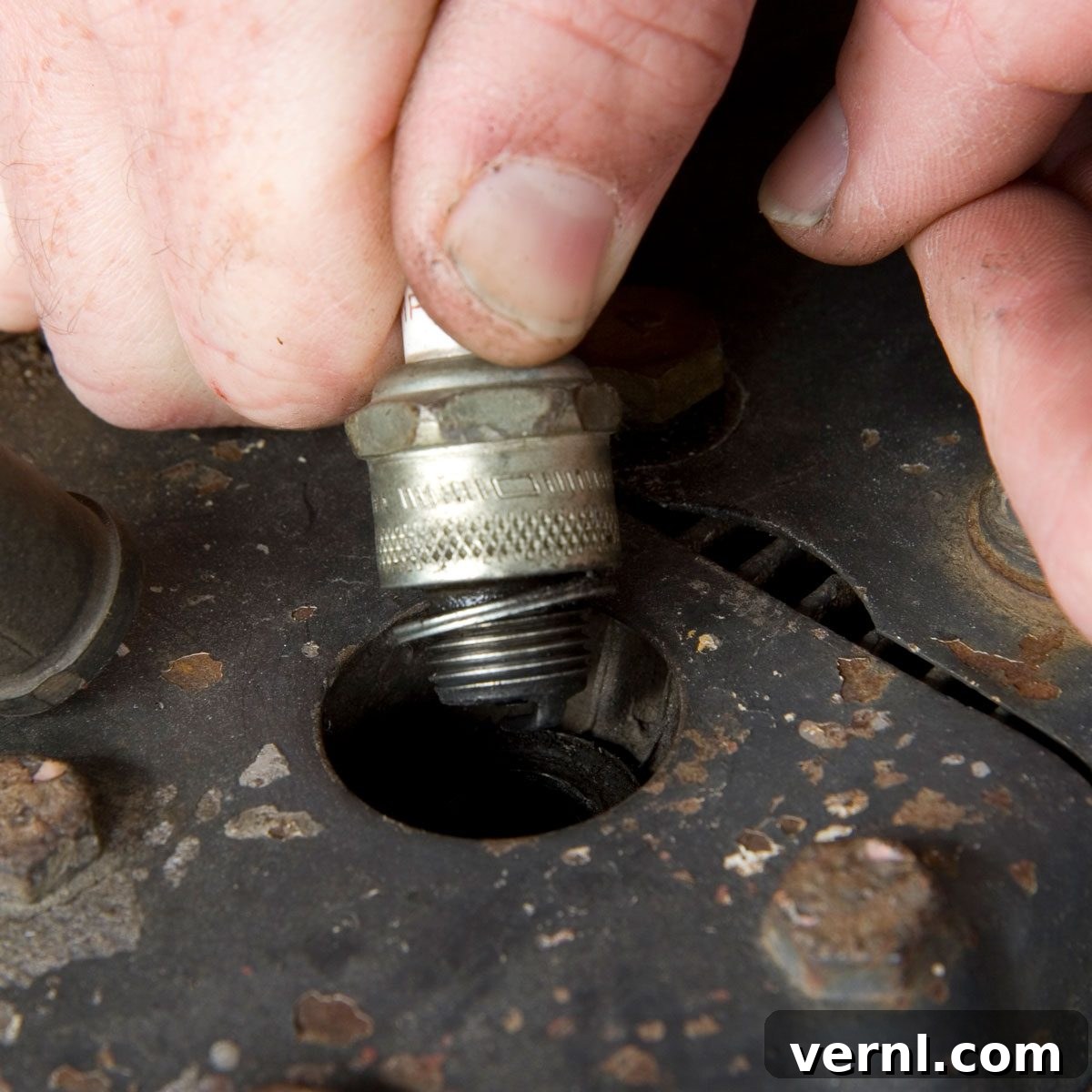
At the heart of every internal combustion engine lies a small but mighty component: the spark plug. These cylindrical devices are crucial for igniting the compressed air-fuel mixture within the engine’s cylinders, initiating the combustion process that allows the engine to start and continue running. Without a properly functioning spark plug, your engine is nothing more than an inert collection of metal parts. They convert incoming electrical voltage into a precisely timed spark, creating a controlled explosion that pushes the piston downward, generating the power needed for your machinery to operate. This cycle of ignition, power generation, and exhaust expulsion repeats thousands of times per minute, making the spark plug an unsung hero of mechanical efficiency.
While spark plugs are vital for all engines, this guide will specifically focus on small engines commonly found in household and garden tools. Think about your lawn mower, rototiller, snow blower, chainsaw, string trimmer, or pressure washer. Although the spark plugs themselves might bear a visual resemblance to those in road vehicles, they often encounter more frequent issues in small engines. This increased vulnerability stems from several factors, including the intermittent use of many small engine tools, varying fuel quality, and sometimes less rigorous maintenance schedules. Understanding the common culprits behind spark plug failure in these machines is the first step towards effective troubleshooting and ensuring your equipment remains reliable. This comprehensive guide will walk you through the tell-tale signs of a failing spark plug, how to diagnose the problem, and the straightforward steps to fix it, ensuring your small engine tools are always ready for action.
Recognizing the Symptoms: Signs of a Bad Spark Plug in Small Engines
Identifying a failing spark plug often begins with how your small engine tool performs, or rather, how it fails to perform. These symptoms can range from a complete inability to start to a noticeable decline in performance. Recognizing these signs early can save you time and frustration, pointing you directly to the spark plug as a potential cause.
Initial Startup Problems
The most immediate and frustrating sign of a bad spark plug is difficulty starting your machine. Before jumping to conclusions, always ensure your fuel tank is adequately filled with fresh, clean fuel. Stale fuel, especially gasoline left sitting for too long, can clog the carburetor and prevent fuel from reaching the combustion chamber. However, if you’ve confirmed good fuel supply and your small engine still struggles to ignite, the spark plug is a prime suspect.
- No Start Condition: If the engine cranks over but refuses to catch, or doesn’t even attempt to fire, a faulty spark plug is highly probable. This indicates a complete lack of spark or a spark too weak to ignite the air-fuel mixture.
- Hard Starting: Your engine might eventually start, but only after excessive pulling of the recoil starter or prolonged cranking. This suggests an intermittent or weak spark, making ignition difficult.
- Sputtering or Hesitation on Startup: The engine might sputter briefly and then die, or run very roughly for a few seconds before giving up. This signifies an inconsistent ignition due to a struggling spark plug.
Performance Issues While Running
Even if your engine manages to start, a bad spark plug can significantly impair its operation. These performance problems are often noticeable during use and can range from minor annoyances to serious power losses.
- Rough Idling or Running: If your engine starts but then runs rough, vibrates excessively, or sounds inconsistent, a failing spark plug is a likely culprit. This “roughness” can manifest as misfires, where one or more cylinders fail to ignite properly, leading to uneven power delivery.
- Loss of Power: You might notice a significant drop in the machine’s overall power output. For a lawn mower, this could mean it struggles to cut thick grass; for a chainsaw, it might bog down easily. This is due to incomplete combustion in one or more cylinders.
- Engine Surging or Misfiring: The engine RPMs might fluctuate wildly, surging and then dropping, without any change in throttle input. Misfires are distinct “hiccups” in the engine’s rhythm, often accompanied by unusual sounds or vibrations.
- Increased Fuel Consumption: An inefficiently firing spark plug leads to incomplete combustion, meaning your engine has to work harder and consume more fresh fuel to produce the same amount of power. You might find yourself refilling the tank more often than usual.
- Abnormal Exhaust Smoke or Smell: While less common for spark plug issues alone, a very rich or incomplete burn caused by a bad plug can sometimes lead to excessive black smoke from the exhaust or an unusually strong fuel smell.
It’s important to remember that most small engines have only one or two cylinders, but some larger models can have more. Each cylinder has its own spark plug. Therefore, even if only one spark plug is failing, it can significantly impact the entire engine’s performance, leading to the symptoms described above.
Visual Diagnosis: What Does a Bad Spark Plug Look Like and What Causes It?
Once you suspect a spark plug issue, the next step is a physical inspection. This involves safely removing the spark plug and examining it closely. The appearance of the spark plug can reveal a great deal about its health and even indicate other underlying engine problems. Always ensure the engine is cool before handling any components, and disconnect the spark plug wire to prevent accidental starts.
To begin, carefully disconnect the plug wire from your engine’s spark plug. This wire typically pulls straight off or twists slightly to release. Next, use an appropriately sized spark plug wrench to unthread the spark plug from the cylinder head. Turn counter-clockwise until it’s free, then remove it from the engine. With the plug in hand, examine both the ceramic insulator and the metal electrodes carefully. Small engines are particularly susceptible to physical debris or carbon buildup affecting spark plug function.
Common Visual Indicators of Spark Plug Failure:
- Black, Chunky Carbon Buildup: This is one of the most common signs. If you see a thick, sooty, black deposit spanning the gap between the center electrode and the hook-shaped ground electrode, or covering the electrodes heavily, it indicates a problem.
- Causes: This typically occurs when the fuel-air mixture is too rich (too much fuel, not enough air), often due to a clogged air filter, a faulty carburetor float, or excessive choking. It can also result from prolonged idling or slow-speed operation, where the plug doesn’t get hot enough to self-clean.
- Dark, Dry Carbon Residue: Similar to the chunky buildup, but often drier and less pronounced, this appears as a dark, powdery deposit on the tips of the electrodes but not necessarily bridging the gap.
- Causes: Primarily indicates a rich fuel mixture or operating the engine at consistently low temperatures, preventing the plug from reaching its optimal self-cleaning temperature.
- Oily Residue: If the spark plug tip is covered in a wet, black, and greasy film, it’s a strong indicator of oil getting into the combustion chamber.
- Causes: This is most commonly seen in two-stroke engines if the gas/oil mixture is incorrect (too much oil). In four-stroke engines, oily plugs suggest more severe internal issues like worn piston rings, worn valve guides, or a clogged crankcase breather.
- Ash Deposits: Light tan or white deposits on the electrodes and insulator.
- Causes: Usually from oil additives or fuel additives that leave deposits when burned. While not immediately problematic, heavy ash can eventually cause misfires.
- Melted or Burned Electrodes: If the electrodes appear pitted, blistered, or partially melted, it’s a sign of extreme heat.
- Causes: This can be due to an incorrect spark plug heat range (using a plug that’s too hot for the engine), a lean fuel mixture (too much air, not enough fuel), engine overheating, or pre-ignition/detonation. These are serious issues that require further investigation beyond just the spark plug.
- Cracked or Chipped Insulator: Any visible cracks, chips, or damage to the ceramic insulator surrounding the center electrode.
- Causes: Physical impact during installation or removal, severe engine knocking, or extreme temperature fluctuations. A damaged insulator can cause the spark to short circuit, preventing it from reaching the gap.
Internal Failure and Spark Plug Gap Issues
Sometimes, a spark plug can fail internally, meaning its electrical components cease to function correctly, even if there are no visible signs of damage or buildup. When this happens, the plug will either fail to produce any spark at all or generate a very weak, inconsistent spark. If you suspect an internal failure and the plug looks physically fine, a dedicated tool is necessary.
To diagnose an internal failure, use a spark plug tester. This tool connects between the spark plug wire and the spark plug itself, allowing you to visually confirm if a strong, consistent spark is being generated when the engine is cranked.
Another common, yet often invisible, cause of spark plug malfunction is an incorrect gap. The distance between the center and ground electrodes, known as the “spark plug gap,” is critical. This gap must be set precisely to allow the electrical current to jump across and create a strong spark. Even a difference of a few thousandths of an inch (which is too small to detect with the naked eye) can lead to misfires, hard starting, and reduced engine efficiency. Refer to your machine’s owner’s manual for the exact recommended spark plug gap. Then, use a spark plug gap tool to measure your plug and carefully adjust the gap if needed, by gently bending the ground electrode. Always be gentle to avoid cracking the ceramic insulator.
Auditory Clues: How Does a Bad Spark Plug Sound?
While visual inspection and performance issues are primary indicators, your ears can also offer valuable clues about a failing spark plug. The sounds an engine makes (or doesn’t make) can help confirm your suspicions, especially when combined with other symptoms.
There are essentially two main auditory indicators that strongly suggest a bad spark plug:
- The Sound of a Rough-Running Engine: As mentioned earlier, if your engine starts but quickly settles into a rough, uneven idle or runs with noticeable hesitation under load, it’s often linked to a struggling spark plug. This “roughness” might manifest as a sputtering, chugging, or skipping sound, rather than the smooth, consistent hum you’d expect from a healthy engine. It’s the sound of incomplete or inconsistent combustion, where the engine is missing beats because the spark isn’t reliably igniting the fuel mixture. You might also hear unusual vibrations or feel them through the machine’s handles.
- The Silence of an Engine That Won’t Start: Conversely, the complete absence of sound beyond the cranking starter motor is another strong indicator. If you’re pulling the starter cord or turning the key, and you hear the engine try to turn over but no attempt at ignition – just the whirring of the starter – then a lack of spark is highly probable. This silence, or rather the lack of combustion noise, signifies that the spark plug isn’t doing its job at all, leaving the air-fuel mixture unignited in the cylinder.
While these are the primary auditory signs, an extremely rich condition caused by a very dirty spark plug might sometimes lead to occasional backfiring or popping sounds, especially when the engine is shutting down or decelerating. This happens when unburnt fuel ignites in the exhaust system. However, for most common spark plug issues, the rough running or complete silence are the most reliable sound-based diagnostics.
Fixing a Bad Spark Plug: Clean or Replace?
Once you’ve identified a bad spark plug, the solution is usually straightforward. Depending on the nature of the fault, you have two primary options: cleaning it or replacing it. The choice often depends on the type of damage or buildup present.
Cleaning a Dirty Spark Plug
If your spark plug exhibits signs of carbon buildup (black, sooty deposits) or oily residue, cleaning it can often restore its function. This is a cost-effective first step, especially for plugs that aren’t physically damaged.
Steps for Cleaning:
- Gather Your Tools: You’ll need a soft wire brush (brass or nylon is ideal to avoid damaging the electrodes), warm water, and mild soap.
- Remove Carbon Buildup: If your spark plug is covered in dark-colored carbon, use the soft wire brush to carefully scrub away all deposits from both the center and ground electrodes, as well as the ceramic insulator. Pay close attention to the gap area, ensuring it’s completely clear of obstructions. Avoid harsh scrubbing that could damage the electrode tips.
- Address Oily Residue: If an oily film covers the plug, washing it in warm, soapy water is effective. Modern spark plugs are designed to withstand moisture, so water won’t harm them. Gently scrub with a soft brush to remove the oil, then rinse thoroughly.
- Dry Thoroughly: After cleaning, ensure the spark plug is completely dry before reinstallation. You can air-dry it or use compressed air. Any moisture left on the plug could prevent proper sparking or cause a short circuit.
- Check and Adjust Gap: Before reinstalling, always re-check the spark plug gap with a gap tool, referring to your owner’s manual for the correct specification. Adjust as necessary.
- Reinstall: Carefully thread the clean and gapped spark plug back into the cylinder head by hand to avoid cross-threading. Once finger-tight, use your spark plug wrench to tighten it to the manufacturer’s recommended torque. Over-tightening can damage the plug or the engine head, while under-tightening can lead to compression leaks.
Cleaning is generally effective for plugs with simple carbon or oil fouling. However, if the plug is deeply embedded with hard deposits or shows signs of advanced wear, replacement is the better option.
Replacing a Spark Plug
In many cases, replacing a spark plug is the most reliable and often recommended solution, especially considering their inexpensive cost. You should opt for replacement if:
- Your failed spark plug is physically damaged (cracked insulator, melted electrodes, bent ground electrode).
- The spark plug looks visually fine but isn’t producing a strong spark (diagnosed with a spark tester), indicating an internal electrical failure.
- Cleaning doesn’t resolve the performance issues.
- The spark plug shows signs of significant wear, such as heavily eroded electrodes, which cannot be fixed by cleaning.
Steps for Replacement:
- Choose the Correct Replacement: This is critical. Always refer to your engine’s owner’s manual or the manufacturer’s recommendations for the specific spark plug type, heat range, and thread pattern. Using the wrong plug can cause serious engine damage.
- Ensure Correct Gap: Even new spark plugs should have their gap checked and adjusted if necessary before installation. While many new plugs are “pre-gapped,” shipping and handling can sometimes alter this.
- Replace the Plug: Remove the old spark plug as described above. Carefully thread the new plug into the cylinder head by hand until it’s finger-tight. Then, use your spark plug wrench to tighten it to the manufacturer’s recommended torque setting. Apply a thin layer of anti-seize compound to the threads if recommended by the spark plug or engine manufacturer, but be careful not to get any on the electrodes.
- Reconnect the Spark Plug Wire: Push the spark plug wire firmly back onto the new plug terminal until it clicks or feels securely seated.
Spark plugs are relatively cheap components, and there’s no easy way to repair a physically damaged or internally failed one yourself. Investing a few dollars in a new, correctly gapped spark plug can often resolve a myriad of engine problems, restoring your small engine tool to peak performance and reliability. Regular inspection and timely replacement or cleaning of spark plugs are key components of a robust small engine maintenance routine.