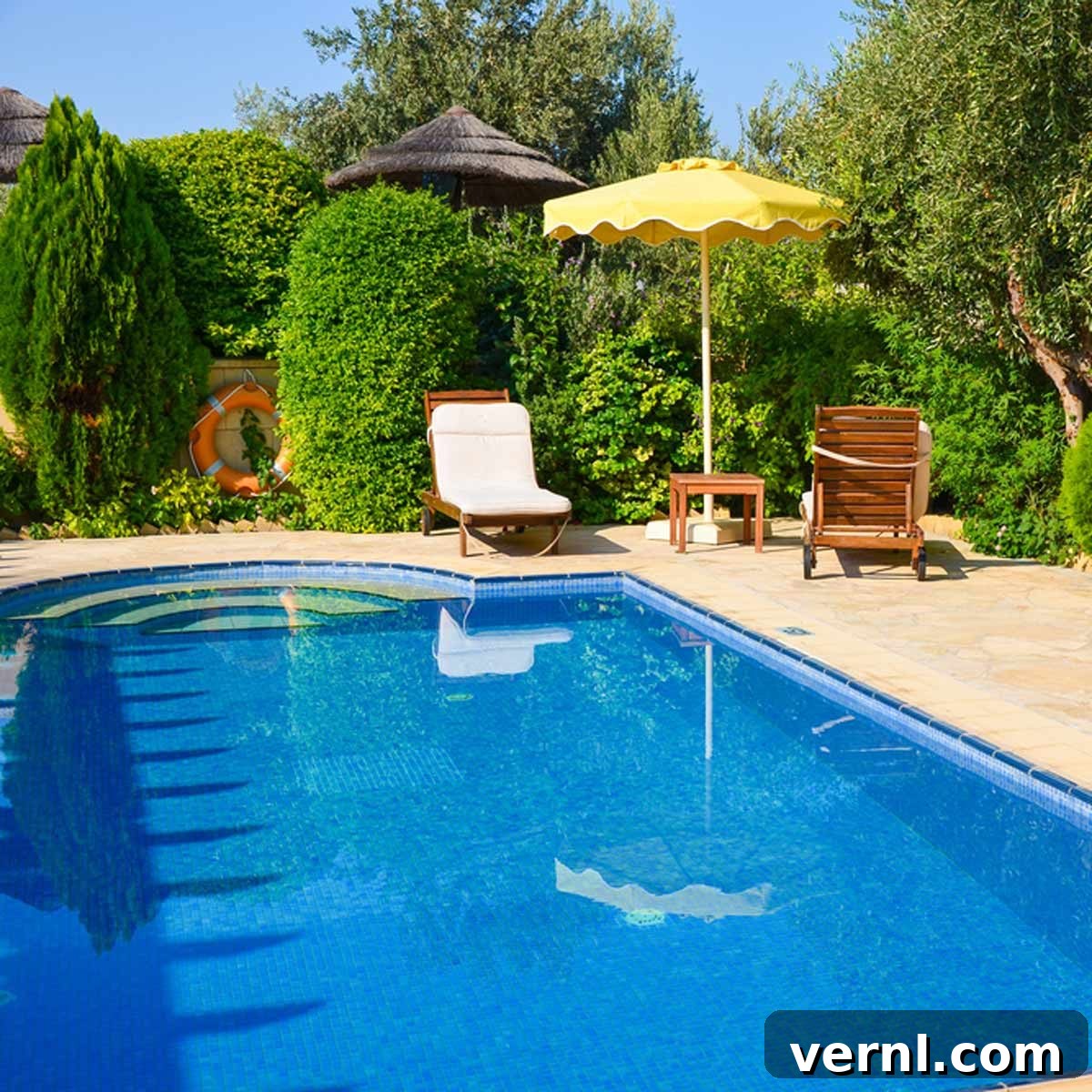
Just like any valuable asset, your swimming pool thrives on regular care and attention. Practicing some fundamental, routine maintenance ensures its longevity, keeping it a vibrant hub for family fun and relaxation for many years to come. Considering the substantial investment an in-ground pool represents—often ranging from $20,000 to over $42,000, including materials and labor—protecting this asset is not just wise, it’s essential.
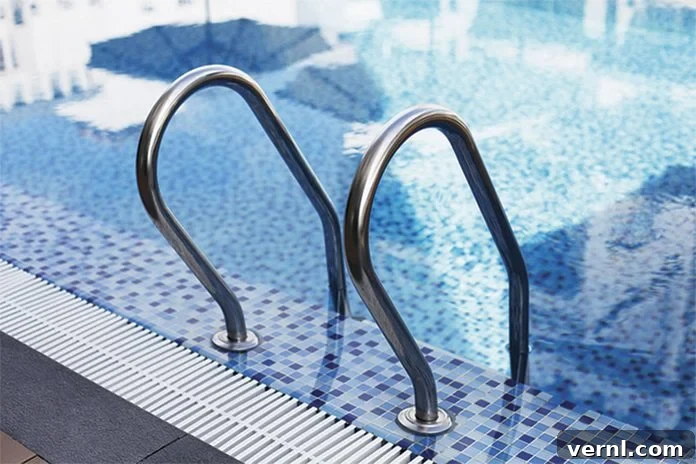
Embarking on a comprehensive pool maintenance routine might seem daunting at first glance. However, by breaking it down into manageable steps, you can ensure your pool remains crystal clear and inviting throughout the season. Here are five crucial areas to focus on for optimal pool health and enjoyment.
Mastering Pool Water Chemistry for a Sparkling Oasis
The foundation of a healthy pool lies in its water chemistry. Maintaining precise pH and alkalinity levels is paramount, not just for the pool’s infrastructure but also for the comfort and safety of its swimmers. Understanding these key parameters is the first step toward effective pool care.
The term “pH” stands for “potential hydrogen” and serves as a vital measure of your pool water’s acidity or basicity. A low pH indicates acidic water, while a high pH points to alkaline or basic water. Alkalinity, specifically “total alkalinity,” refers to the concentration of substances in the water that can neutralize acids, essentially acting as a buffer for pH. In simpler terms, while pH tells you how acidic or basic your water is, total alkalinity dictates the water’s capacity to resist drastic changes in pH, keeping it stable.
So, what are the ideal levels? For pH, the recommended range is typically between 7.2 and 7.8, closely mirroring the pH of human tears for maximum comfort. Total alkalinity should ideally measure between 80 and 120 parts per million (ppm). Regular testing is crucial; aim to test your pool water at least two to three times per week, increasing frequency during periods of heavy use or after significant weather events. Convenient test kits, available at pool-supply stores and home centers, often include instructions for adjusting these levels.
Ignoring proper chemical balance can lead to a host of problems. If the pH level dips too low, the acidic water can become corrosive, attacking vital pool components such as plaster finishes, metal parts of pumps, heaters, and filters, leading to costly damage. Conversely, an excessively high pH level promotes the formation of unsightly scale deposits on pool walls, equipment, and plumbing. High pH also causes your pool water to become cloudy, which isn’t just an aesthetic issue. Cloudy water poses a significant safety risk, as it can obscure visibility, making it difficult to see swimmers, especially children, at the bottom of the pool. The Centers for Disease Control and Prevention advises that if you cannot clearly see the main drain at the deep end from the deck, the water is too cloudy for safe swimming.
While both measures are interconnected, pH is often considered the most critical. However, always test and adjust total alkalinity first, as it directly influences pH stability. A balanced alkalinity level is your best defense against erratic pH swings.
To increase total alkalinity, sodium bicarbonate, commonly known as baking soda, is an effective solution. Always refer to your pool system specifications for precise dosing instructions. For lowering pool water alkalinity, products like ACID Magic® offer a user-friendly alternative to standard muriatic acid. ACID Magic is engineered to produce 90 percent fewer noxious fumes, making it significantly easier and safer to handle. It is also certified by NSF International and meets ANSI Standard 50 for safe use in pools. Furthermore, ACID Magic contains no phosphates or phosphorus-containing ingredients, which are known contributors to algae growth and can be harsh on pool pumps and heat exchangers. Despite its user-friendly formulation, always wear gloves and protective eyewear when handling any pool chemicals. It’s also wise to verify compatibility with your specific pool liner by consulting the manufacturer.
Optimizing Pool Pump Performance: The Heart of Your Pool System
The pool pump is undeniably the circulatory system of your pool’s ecosystem. It tirelessly moves water through the filter, distributing essential chemicals evenly and ensuring constant circulation. This continuous movement and filtration are what keep your pool water clean, clear, and inviting, making all other maintenance tasks considerably easier.
The good news is that pool pumps are generally robust and don’t demand excessive attention. One of your most vital and frequent tasks is cleaning the strainer basket located inside the pump housing. This should be done at least once a week, or more often if debris levels are high. Simply turn off the pump, remove the housing lid (your owner’s manual will guide you if you’re unsure), extract the basket, and clear out any accumulated leaves, hair, or other debris. A clogged strainer forces your pump to work harder, reducing its efficiency and potentially shortening its lifespan.
While you have the pump housing open, take a moment to inspect the O-ring—the rubber gasket that creates a watertight seal between the lid and the housing. Look for any cracks, stretching, or signs of wear. A compromised O-ring can lead to air leaks, which can impair pump performance, or even water leaks. Periodically lubricating the O-ring with a silicone-based, approved lubricant (avoid petroleum-based products like Vaseline, as they can degrade rubber) will help maintain its flexibility and seal integrity.
BONUS TIP: Running Your Pump Efficiently
Ideally, a pool pump would run 24 hours a day to achieve continuous filtration and circulation. However, this can be prohibitively expensive in terms of electricity consumption. A more practical approach is to aim for 10 to 12 hours of operation daily, or long enough to circulate the entire volume of your pool water through the filter system at least once within a 24-hour period. Newer variable-speed pumps offer significant energy savings by allowing you to run them at lower, more efficient speeds for longer durations, greatly reducing operational costs.
Comprehensive Pool Cleaning: Beyond the Surface
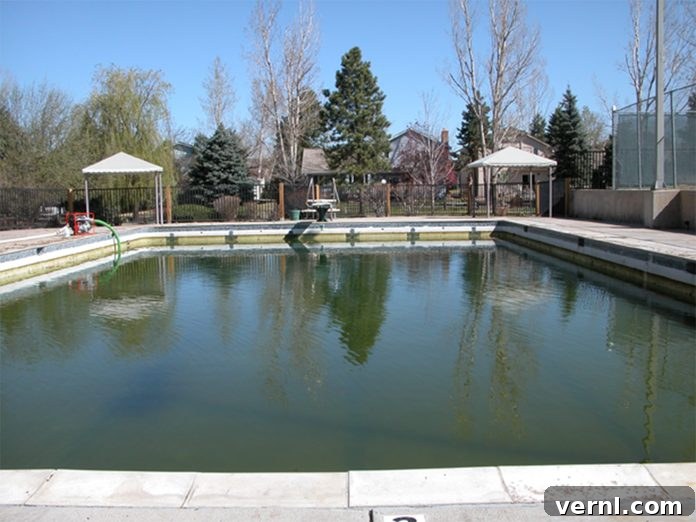
Restoring a neglected pool to its former glory can indeed appear to be a monumental undertaking. However, with the right approach and products, even stubborn stains can be tackled effectively. Beyond routine skimming and vacuuming, deeper cleaning methods like acid washing are sometimes necessary to combat severe mold, mildew, and algae stains.
ACID Magic, as a safer, user-friendly alternative to conventional muriatic acid, proves to be a powerful ally in this battle. Its unique chemical blend significantly reduces noxious fumes by 90 percent compared to standard muriatic acid, making the cleaning process considerably more pleasant and less hazardous. Nonetheless, safety should always be your top priority: always wear gloves, protective eyewear, and appropriate clothing when working with any cleaning chemicals.
When using ACID Magic for cleaning, start with a conservative dilution. A common starting point is a 1:2 dilution of ACID Magic to water (e.g., one gallon of ACID Magic mixed with two gallons of water). To prevent potential unwanted chemical reactions, always add the ACID Magic to the water, never the other way around. Typical coverage ranges from 100 to 300 square feet, varying based on the pool’s depth and the severity of the staining. If the initial solution doesn’t provide sufficient cleaning power, you can gradually increase the concentration of ACID Magic, up to full strength if absolutely necessary, always testing on an inconspicuous area first.
Before application, ensure that the surfaces to be cleaned are thoroughly wet. It is crucial to check with your pool manufacturer regarding the compatibility of ACID Magic with your specific pool liner material, as it is not recommended for all types. Additionally, exercise caution to prevent ACID Magic from coming into contact with other surfaces such as wood, metal, or surrounding landscaping, to avoid potential discoloration or damage.
Before commencing the acid wash, it’s advisable to pre-clean the pool surface. Wash the pool with a trisodium phosphate (TSP) solution to effectively remove any oily residues, dirt, and loose debris. Start in the shallow end, working in small, manageable sections with a scrub brush, and then rinse the pool thoroughly. This preliminary cleaning ensures the ACID Magic can work directly on the stains.
Now, for the deep cleaning process: First, ensure the pool walls are uniformly wet. Then, liberally apply the diluted ACID Magic solution using a sprinkling can or a low-pressure, acid-resistant sprayer. A mop can also be effective for applying it to pool walls. Lightly scrub the affected areas with a natural soft-bristle brush as needed. Avoid using nylon brushes when working with ACID Magic, as the chemical can degrade the bristles.
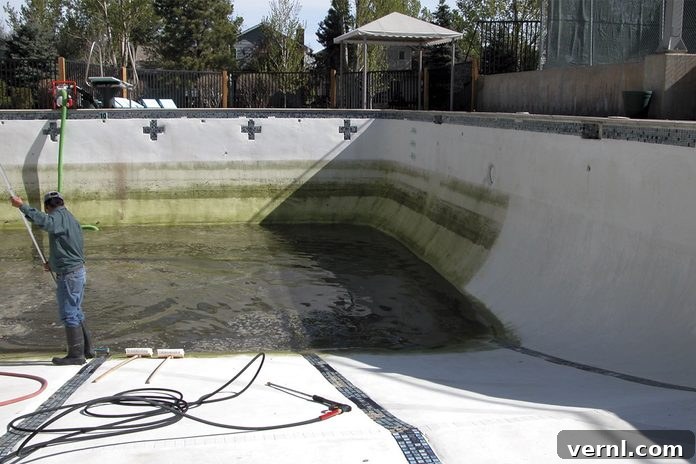
Allow the ACID Magic to dwell on the surface for two to four minutes. If you are etching a plaster pool, you can determine if the process is complete by applying water; if the water is quickly absorbed into the plaster, etching is finished. If not, reapply the ACID Magic, ensuring a thorough rinse between applications to prevent over-etching.
Once the acid washing is complete, thoroughly rinse the pool again with clean water. The next crucial step is neutralizing the pool surface and wastewater. Dissolve two to three ounces of TSP into one gallon of water, then scrub down the entire pool surface once more, followed by another rinse. This neutralization step is vital; neglecting it can result in dangerously low pH levels when you eventually refill the pool, potentially harming new plaster or causing severe corrosion.
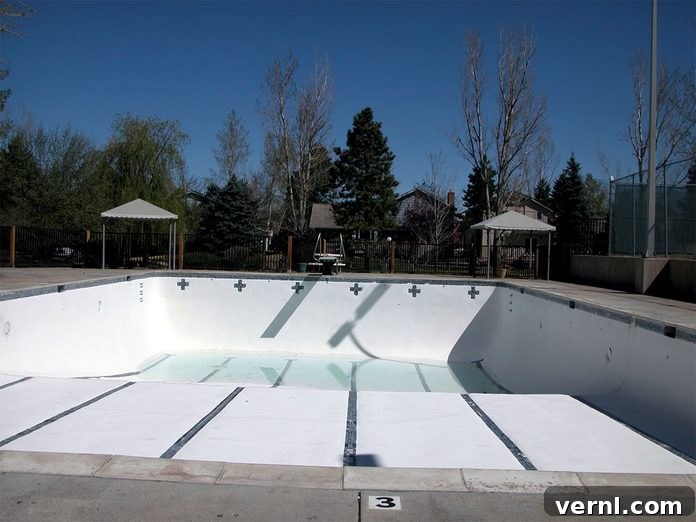
Finally, rinse the pool thoroughly with clean water one last time and allow it to completely drain before refilling. Once the pool is sparkling clean and refilled with properly balanced water, all that’s left is to change into your swimsuit and enjoy the pristine water!
The Unsung Heroes: Pool Filters and Their Vital Role
If the pump is the heart of your pool, then the filter unequivocally serves as its liver and kidneys, meticulously removing debris, contaminants, and microscopic impurities that can compromise your pool’s health and clarity. A well-maintained filter is critical for sparkling water and a hygienic swimming environment. Generally, there are three primary types of pool filters, each with its own advantages and maintenance requirements: cartridge, sand, and diatomaceous earth (DE).
Cartridge Filters
Cartridge filters consist of pleated polyester cylinders capped on each end, strikingly similar to the filters found in shop wet/dry vacs, but significantly larger and designed for continuous water flow. They capture particles as small as 10-20 microns. Maintenance typically involves removing the cartridges from the filter housing and thoroughly spraying them down with a garden hose to dislodge trapped debris. This process should ideally be performed a few times a year, or more frequently if water flow is noticeably reduced or the pressure gauge indicates an increase. Over time, cartridges can become clogged with oils and calcium, requiring a chemical soak cleaner for deeper cleaning or eventual replacement, usually every 3-5 years.
Sand Filters
As their name suggests, sand filters employ a large tank filled with specialized filter sand. Water is pumped into the top of the tank, flows down through the sand bed, and the sharp, rough edges of the sand grains effectively trap particles as small as 20-40 microns. Clean water then exits through laterals at the bottom. The primary method for cleaning a sand filter is “backwashing.” This process involves reversing the flow of water through the filter, flushing the accumulated debris out to waste. You’ll know it’s time to backwash when the pressure gauge on the filter rises 8-10 PSI above its normal clean operating pressure. Consult your owner’s manual for specific backwashing instructions, as techniques can vary by manufacturer. Over a period of five to seven years, the sharp edges of the sand grains naturally wear down and become smooth, reducing their filtration effectiveness. At this point, the filter sand will need to be replaced to maintain optimal performance.
Diatomaceous Earth (DE) Filters
DE filters are widely considered the most effective type of pool filter, capable of trapping particles as minuscule as 1-5 microns, thanks to their unique filtering element: microscopic, fossilized organisms called diatoms. These filters achieve unparalleled water clarity. Similar to sand filters, an increase in the filter’s pressure-gauge reading signals the need for cleaning, which is accomplished by backflushing. After backflushing, a new charge of DE powder must be added to the filter system. This is typically done by mixing the powder with water and pouring it into the skimmer, where it then coats the internal grids of the filter. Always follow the filter manufacturer’s directions for the correct amount of DE powder. It’s also important to be aware that some municipalities have specific guidelines for the disposal of spent DE, as it can be a fine powder.
BONUS TIP: Salt Cell Maintenance for Electrolytic Chlorine Generators
Saltwater pools utilize an electrolytic chlorine generator (ECG) to convert salt into chlorine, providing a continuous supply of sanitizer. One of the most common challenges for saltwater pool owners is scale buildup on the cell plates within the ECG. If you notice a whitish, crystalline buildup inside your salt cell, it’s a clear indication that cleaning is required to restore its efficiency. ACID Magic, with its fume-reduction formula, is exceptionally ideal for this task. Its reduced noxious fumes make it much more comfortable and safer to work with when you’re up close and personal cleaning the delicate components of a salt cell. Regular cleaning ensures your ECG operates effectively, keeping your saltwater pool perfectly sanitized.
The First Line of Defense: Understanding Pool Skimmers
Pool skimmers are those inconspicuous yet incredibly important rectangular inlet boxes typically built into the sides of your pool, precisely at the water line. As their name aptly suggests, their primary function is to “skim” the surface of the pool, drawing in floating debris as the pool’s pump pulls water through them. Each skimmer houses a crucial component: a skimmer basket. This basket acts as the pool’s initial defense, catching larger items such as leaves, twigs, insects, and other floating debris before they can reach and potentially damage the more sensitive components of your pump and filter system.
Neglecting skimmer baskets can have significant repercussions. A clogged skimmer basket restricts water flow to the pump, forcing the pump to work harder, reducing its efficiency, and potentially leading to premature wear and tear. Therefore, skimmer baskets should be cleaned at least once a week, and more frequently during heavy winds, after storms, or when trees are shedding leaves.
Cleaning a skimmer is a straightforward process: First, turn off the pool pump to prevent accidental suction. Then, locate and carefully remove the skimmer lid, which is usually found flush with the pool deck. Once the lid is off, lift out the skimmer basket, empty all accumulated debris into a trash receptacle, and rinse the basket if necessary. Finally, replace the clean basket securely back into the skimmer body and reinstall the lid, ensuring it’s properly seated to prevent accidents.
While maintaining a pool undoubtedly requires consistent effort and a dedicated routine, the rewards far outweigh the time expended. Creating a simple maintenance calendar can be an invaluable tool to stay on top of all tasks, from chemical checks to filter cleanings. Rest assured, all these “health check-ups” are an investment in protecting your substantial financial commitment and, more importantly, in ensuring countless years of safe, enjoyable swimming experiences for everyone.
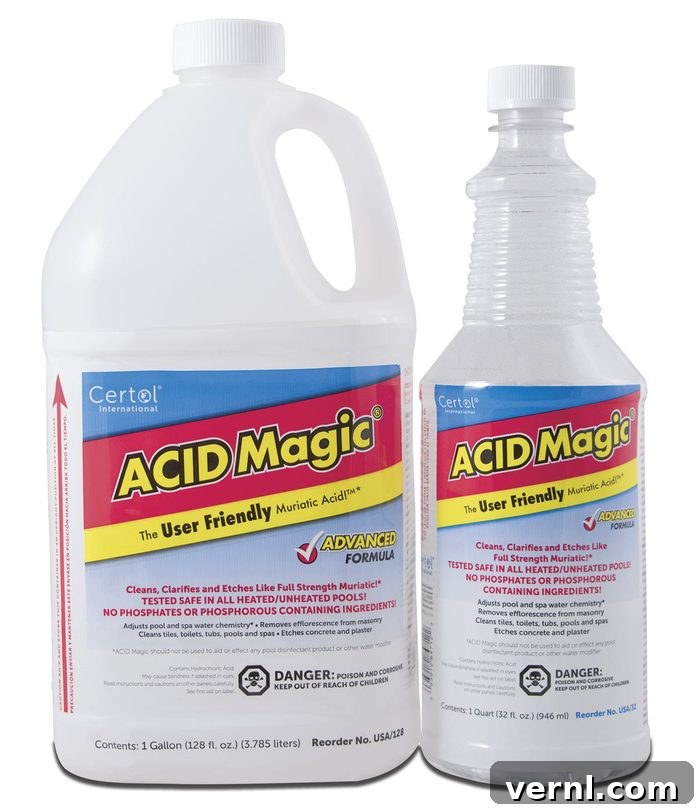
ACID Magic is widely available at numerous retailers, including Ace Hardware and True Value hardware stores, as well as many specialized pool supply companies. For more information on where to purchase ACID Magic, please click here.
Sponsored by Acid Magic