The Enigmatic Basement Toilet: Unraveling the Mystery of the “Pittsburgh Potty”
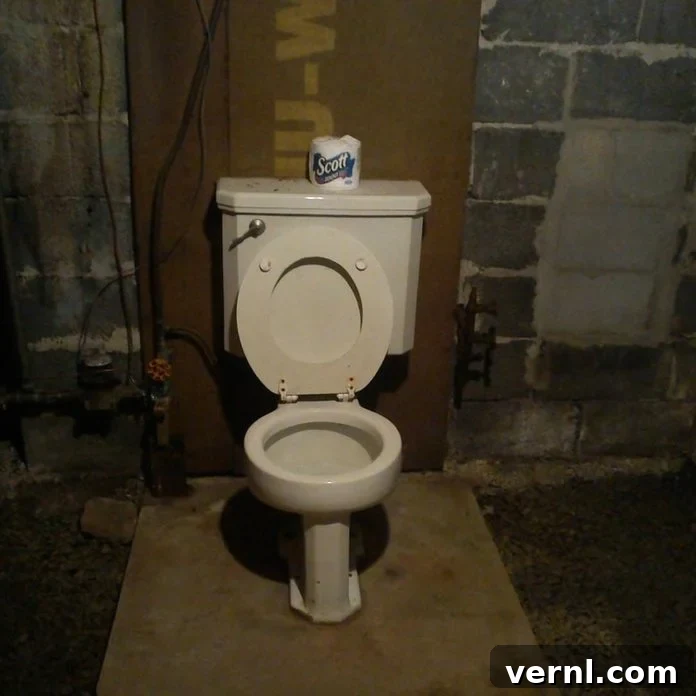
Step into the basement of an older home, particularly one built before World War II, and you might encounter a peculiar sight: a lone toilet standing in the open, often without walls, a shower, or even a proper sink nearby. At first glance, it looks out of place, perhaps even comical – a relic from a bygone era that seems to defy modern sensibilities of privacy and design. Yet, this seemingly random fixture, often referred to as the “Pittsburgh Potty,” was far from purposeless. It served various crucial functions, deeply rooted in the historical, industrial, and infrastructural realities of its time.
These solitary basement toilets challenge our contemporary understanding of home layouts and utility. Unlike the well-appointed bathrooms we expect today, these fixtures frequently exist in stark simplicity. Some are accompanied by a crude basement shower apparatus and a large utility sink, suggesting a dedicated cleanup zone. Others stand entirely on their own, prompting endless speculation among homeowners, historians, and plumbing enthusiasts alike. What drove the installation of such an unusual fixture? And what can it tell us about the lives and challenges of previous generations?
The Legendary “Pittsburgh Potty” and its Industrial Roots
The term “Pittsburgh Potty” has become almost synonymous with these basement toilets, a testament to their striking prevalence in the city of Pittsburgh, Pennsylvania. This industrial powerhouse, once a global leader in steel production and coal mining, fostered a unique culture and infrastructure. Popular Pittsburgh folklore provides a compelling narrative for the existence of these basement facilities, deeply tied to the city’s blue-collar heritage.
According to this widely accepted local lore, the basement toilet served as a vital sanitation point for the city’s diligent steelworkers and miners. After long, arduous shifts spent in the grime and soot of the mills and mines, these laborers would return home absolutely covered in dirt, dust, and industrial residue. To prevent tracking this pervasive grime into the main living areas of their houses, they would head straight to the basement. There, in a dedicated, albeit rudimentary, cleanup zone, they could shed their dirty work clothes, wash off, and use the toilet before venturing upstairs to interact with their families and enjoy the comforts of their clean homes. This practice wasn’t just about cleanliness; it was about respecting the sanctity of the home and maintaining a clear separation between the arduous demands of industrial labor and the domestic sphere.
While the name “Pittsburgh Potty” is deeply entrenched, these unique fixtures are by no means exclusive to Pittsburgh. As archivist and historian Ron Baraff noted in the Pittsburgh City Paper, “I know of other towns where people have the same sort of thing.” Baraff explains that such toilets are commonly found in numerous working-class towns across the United States. These were often communities built around heavy industries – be it mining, manufacturing, or other labor-intensive sectors – where workers faced similar daily challenges of dirt and grime. Reports of these basement toilets surface in places like Cleveland, Chicago, and even older towns in Oregon, suggesting a broader, albeit less documented, phenomenon. The shared industrial heritage and working-class demographics of these areas offer a strong contextual link, reinforcing the theory of their practical purpose as a vital part of a working family’s daily routine.
Beyond Folklore: The Enduring Mystery and Local Pride
Despite anecdotal evidence and local folklore, comprehensive historical documentation on these solitary basement toilets outside of Pittsburgh remains sparse. Online forums buzz with discussions and questions from homeowners encountering these baffling fixtures, with many reporting their existence in various cities across the Midwest and Northeast. Yet, time and again, the conversation inevitably circles back to the “Pittsburgh Potty,” highlighting Pittsburgh’s unique cultural connection to this architectural curiosity.
Ron Baraff aptly captures this sentiment, adding, “But what’s really unique is that we claim such ownership of it. It’s this weird provincial thing: The weird pride we take in our toilets is more unique than the toilets themselves.” This deep-seated local pride underscores how these fixtures have become more than just plumbing; they are symbols of Pittsburgh’s industrial past, resilience, and unique identity. This cultural adoption has perhaps overshadowed the broader historical context, making it challenging to unearth definitive information about similar installations in other regions.
However, it’s crucial to differentiate between the various configurations of these basement facilities. Baraff, who has spoken to “dozens of steelworkers and their families,” confirms that many accounts link these fixtures to post-work cleanup. Yet, he is often referring to the setups that included both a toilet, a utility sink, and a shower. A lone toilet, standing by itself with no washing facilities, presents an entirely different puzzle. This distinction suggests that while some basement toilets were part of a comprehensive cleaning station, others might have served a different, perhaps even more critical, purpose, leading us to another prominent theory rooted in the evolution of urban plumbing systems.
The Ingenious Plumbing Safeguard: Preventing Catastrophe
Another compelling theory, advanced by architect William Martin, suggests that many basement toilets were not primarily intended for regular use, at least not in the way we conceive of a bathroom today. Instead, they served a vital, albeit unpleasant, function: a safeguard against the frequent and often catastrophic sewage backups prevalent in early urban plumbing systems. This perspective delves into the engineering challenges and limitations of “old school plumbing” technology.
In the early days of urban development, particularly in large cities across the Northeast, municipal sewer systems were rudimentary compared to modern standards. As Martin explained to WESA-FM, Pittsburgh’s NPR news station, early sewer pipes were sometimes improvised. “In some cases back then, they didn’t have the piping we had, they would use trees and hollow out the trunk and it would use that as a sewer pipe because they needed the big size of the pipe to make it work.” While these large, hollowed-out tree trunks or other early piping solutions worked adequately for a time, they were not designed to handle the increasing demands of rapidly growing populations and expanding urban infrastructure. “As the population increased, and there’s more and more of fluid flowing through the pipes, they began to have some issues,” Martin elaborated.
These issues often manifested as severe sewage backups. When the municipal sewer lines became overwhelmed or clogged – a far more frequent occurrence many years ago than it is today – raw sewage would have nowhere to go but back up the pipes. To mitigate the devastating impact of such an event, homeowners and builders employed a clever, albeit unpleasant, solution: installing a “sacrifice fixture” in the lowest part of the house – the basement. As Martin further explained to TODAY, “Sewage backs up the pipe and into the fixtures that are connected to it.” If a backup occurred, rather than having raw sewage erupt into the elegant, tiled bathrooms on the main living floors – spilling over tubs, toilets, and sinks and contaminating entire living spaces – it would ideally emerge from the basement toilet first. This strategic placement confined the mess to the unfinished, easily cleaned basement, protecting the more habitable and finished areas of the home from significant damage and contamination. From this perspective, the basement toilet was less about convenience and more about ingenious, albeit grim, disaster prevention, offering homeowners a crude but effective line of defense against potential sanitary catastrophes.
Other Practicalities and Modern Day Relevance
While the industrial cleanup and sewage backup theories are the most prominent, other practical reasons might have contributed to the installation of these basement toilets. In many older homes, the basement served as a multi-functional utility area. It was often where laundry facilities were located, with large wash tubs and drainage. A simple toilet nearby would have been a practical addition for those spending time in the basement doing laundry or other chores, eliminating the need to trek upstairs repeatedly. For homes that hosted large gatherings or had numerous occupants, an extra toilet, even a basic one, could alleviate pressure on the main bathrooms.
Furthermore, in some historical contexts, particularly in multi-unit dwellings or homes with live-in domestic staff, a basic basement toilet might have provided a separate, less formal facility for workers or tenants, reflecting the social stratification of the era. The low cost and minimal installation effort compared to a full bathroom also made them an economical choice for adding a basic sanitary fixture when budgets were tight.
Today, homeowners encountering these vintage basement toilets face a decision. Some embrace them as quirky historical features, leaving them as conversation starters. Others choose to integrate them into modern basement renovations, transforming them into part of a legitimate basement bathroom or laundry room. With modern plumbing technology, the risk of sewage backup is significantly reduced, meaning their original “sacrifice fixture” role is largely obsolete. However, their presence continues to serve as a tangible link to the past, reminding us of the evolving needs, technologies, and ingenuity of previous generations.
The mysterious basement toilet, or “Pittsburgh Potty,” is more than just an odd plumbing fixture. It’s a fascinating artifact that tells a story of industrial boom towns, the daily lives of hard-working individuals, and the ingenious, sometimes unglamorous, solutions devised to manage the challenges of urban living and early plumbing. Whether it was a place for coal miners to wash away the day’s grime or a critical safeguard against plumbing disasters, its presence in old homes forever changes how we view these otherwise utilitarian spaces. You’ll never look at one of these lone toilets the same again, much like learning why some old homes have a bed in the ceiling—each offers a unique glimpse into the historical tapestry of our homes.