Mastering Tree Stump Removal: A Detailed Guide to Chemical and Alternative Methods
Tree stumps are often the last lingering reminder of a fallen tree, an unsightly obstacle that can mar the beauty of your landscape, pose tripping hazards, and even attract pests. While removing a tree can be a significant undertaking, dealing with the remaining stump is equally important for maintaining a tidy, safe, and functional outdoor space. This comprehensive guide will walk you through various tree stump removal methods, with a particular focus on the effective and often preferred chemical approach using potassium nitrate. We’ll provide you with everything you need to know to tackle even the most stubborn stumps, transforming your yard from an obstacle course into an inviting haven.
Why Is Tree Stump Removal Essential for Your Property?
Beyond simply improving the aesthetic appeal of your garden, removing old tree stumps offers several practical benefits:
- Enhanced Aesthetics: A prominent stump can be an eyesore, disrupting the visual flow of your garden and making your property look unkempt. Its removal instantly elevates the tidiness and beauty of your landscape.
- Eliminate Safety Hazards: Stumps, especially those partially hidden by grass or foliage, are notorious tripping hazards for children, pets, and adults. Removing them significantly reduces the risk of accidents and injuries.
- Prevent Pest Infestations: Decaying wood is an open invitation for pests like termites, carpenter ants, beetles, and even fungi. These pests can then migrate from the stump to your home or other healthy trees, causing extensive damage.
- Reclaim Valuable Space: A stump occupies ground that could otherwise be used for planting new shrubs, flowers, or even extending your lawn. Its removal opens up possibilities for new landscaping projects.
- Prevent New Growth: While the tree itself is gone, the root system in the stump can sometimes sprout new shoots, leading to unwanted suckers that require continuous maintenance. Removing the stump eliminates this issue.
- Improve Mowing Efficiency: Maneuvering a lawnmower around a tree stump is cumbersome and can damage your equipment. A stump-free lawn makes mowing faster and easier.
An Overview of Tree Stump Removal Methods
There isn’t a single “best” method for every stump; the ideal approach depends on factors like the stump’s size, age, tree species, your budget, timeline, and comfort level with different tools and chemicals. Here’s a brief look at the primary methods:
- Chemical Decomposition: This method uses a chemical agent, most commonly potassium nitrate, to accelerate the natural decay process of the stump, making it softer and easier to break apart or burn.
- Stump Grinding: A mechanical process involving a powerful machine that grinds the stump down into wood chips, typically several inches below ground level.
- Manual Removal: For smaller, newer stumps, it’s possible to dig them out by hand, severing roots with an axe or mattock.
- Burning: While effective, burning a stump can be dangerous, environmentally unfriendly, and is often restricted by local ordinances due to fire hazards.
- Natural Decomposition: Simply letting nature take its course. This is the slowest method, potentially taking many years.
Focusing on Chemical Stump Removal: The Potassium Nitrate Approach
Chemical stump removers, particularly those containing potassium nitrate, are a popular choice for homeowners who prefer a less labor-intensive approach than grinding or manual extraction. This method works by accelerating the decomposition of the wood, transforming the hard stump into a spongy, porous material that is easy to break apart or, in some cases, can be burned safely (if local regulations permit and precautions are taken). It’s a patient process but yields excellent results.
How Does Potassium Nitrate Work to Decompose Old Stumps?
Potassium nitrate (KNO₃), often marketed as a stump remover, is a powerful oxidizing agent. When applied to a drilled stump and moistened, it penetrates the wood fibers. While it doesn’t “dissolve” the stump, it significantly speeds up the natural decay process. It essentially acts as a catalyst for fungi and bacteria, which are the primary decomposers of wood. By saturating the wood, it creates an environment that encourages these microorganisms to break down the cellulose and lignin in the stump much more rapidly than they would naturally. Over several weeks or months, the stump becomes soft, brittle, and punky, making it simple to remove.
Here’s a practical demonstration of how to do a tree stump removal using this method:
Step-by-Step Guide: Removing a Tree Stump with Potassium Nitrate
This method requires patience, but the steps are straightforward. Follow these instructions carefully for the best results:
Materials You’ll Need:
- Potassium nitrate stump remover product
- Electric drill with a large-diameter bit (e.g., 1-inch) and a long bit (e.g., 12-inch)
- Axe or chainsaw (for cutting the stump low)
- Shovel or mattock
- Protective eyewear and gloves
- Watering can or hose
- Plastic sheeting or tarp (optional)
- Axe or pickaxe (for breaking up the decomposed stump)
The Process:
- Preparation is Key: Cut the Stump as Low as Possible
Before you begin, use a chainsaw or an axe to cut the stump as close to the ground as you safely can. The lower you cut it, the less material you’ll have to treat and remove. Remove any loose bark or debris from the top of the stump to expose the raw wood. - Drill Strategic Holes into the Stump
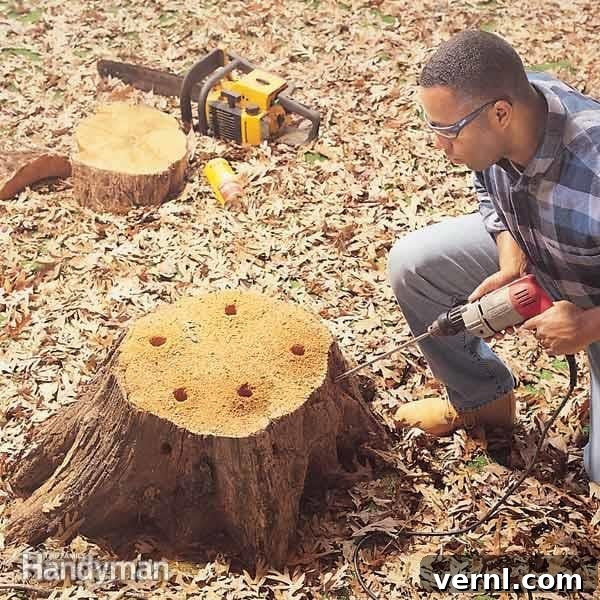
This is the most crucial step for effective chemical penetration. Using your drill with a large, long bit, drill multiple holes into the top surface of the stump. Aim for holes that are approximately 8-12 inches deep and about 1 inch in diameter. Space these holes about 3-4 inches apart, covering the entire surface of the stump. For larger stumps, consider drilling additional holes into the sides at an angle, leading down into the core of the stump. The more holes you drill, the more surface area the chemical has to work on, accelerating the process. - Apply the Potassium Nitrate Stump Remover
Following the manufacturer’s instructions on your specific potassium nitrate product, carefully pour or sprinkle the chemical into each drilled hole. Fill the holes generously but avoid overfilling to the point of spillage. Some products may recommend adding a small amount of water after application to help the chemical dissolve and penetrate deeper into the wood. Read your product’s instructions carefully for specific dilution or watering advice. - Add Water to Activate (If Recommended)
If your product suggests it, add warm water to each hole after applying the potassium nitrate. Water helps to dissolve the granules and carry the chemical deeper into the wood fibers, initiating the decomposition process. - Exercise Patience: The Waiting Game
This method is not instantaneous. Potassium nitrate works by accelerating natural decay, which takes time. Depending on the size, type, and age of the stump, as well as environmental conditions (moisture, temperature), the decomposition process can take anywhere from several weeks to several months. You may want to cover the stump with a plastic tarp to keep moisture in and protect it from rain washing away the chemical, though this is optional. Periodically check on the stump; it should gradually become soft and spongy. - Remove the Decomposed Stump Remnants
Once the stump has sufficiently decomposed and feels soft and pulpy, you can begin to remove it. Use a shovel, mattock, or an axe to break apart the softened wood. It should come apart relatively easily. Dig out as much of the stump and its main root system as possible. The goal is to remove it below ground level to allow for planting or sod. - Dispose of Debris and Fill the Hole
Collect all the wood fragments and dispose of them properly. Do not use them for firewood unless you are certain they are completely free of chemical residue. Once the stump is removed, fill the remaining hole with fresh soil, compost, or sand, ready for new landscaping.
Important Safety Precautions During Chemical Stump Removal
Working with chemicals requires careful attention to safety. Always prioritize your well-being and the safety of those around you:
- Wear Personal Protective Equipment (PPE): Always wear safety glasses or goggles to protect your eyes from chemical splashes and wood debris during drilling. Wear chemical-resistant gloves to prevent skin contact.
- Read Product Labels: Thoroughly read and understand all instructions and safety warnings on the potassium nitrate product label.
- Ventilation: Work in a well-ventilated area. If applying in an enclosed space (unlikely for a stump), ensure proper airflow.
- Keep Away from Children and Pets: Store potassium nitrate and other chemicals securely out of reach of children and pets. During the treatment period, consider fencing off the area or taking measures to prevent access.
- Avoid Inhalation: Do not inhale dust from the chemical. If it’s a powdered form, consider wearing a dust mask.
- Environmental Concerns: Be mindful of runoff. While potassium nitrate is a common fertilizer component, concentrated amounts could potentially harm nearby plants if it leaches into their root zones in large quantities. Apply carefully.
- Fire Safety: While potassium nitrate accelerates decomposition, it is also used in some incendiary compounds. Do NOT attempt to burn a stump treated with potassium nitrate unless the product specifically states it is safe to do so AFTER full decomposition, and only if local burning regulations are followed. Burning chemically treated wood can be unpredictable and dangerous.
- Proper Storage and Disposal: Store unused chemicals in their original containers in a cool, dry, secure place. Dispose of empty containers and any residual chemicals according to local regulations.
Pros and Cons of Using Potassium Nitrate for Stump Removal
Advantages:
- Less Labor-Intensive: Compared to manual digging or operating a stump grinder, the chemical method requires significantly less physical effort.
- Quiet Process: There’s no loud machinery involved, making it a peaceful process for you and your neighbors.
- Cost-Effective: Chemical removers are generally more affordable than renting a stump grinder or hiring a professional service.
- No Heavy Equipment Needed: You don’t need to transport or operate heavy, specialized machinery.
- Effective for Hardwoods: It works well on a variety of wood types, including dense hardwoods that might be challenging to grind manually.
Disadvantages:
- Time-Consuming: This is the biggest drawback. The process can take several weeks to many months, depending on the stump’s characteristics and environmental factors.
- Not for Instant Results: If you need the stump gone quickly, this is not the method to choose.
- Chemical Handling: Requires careful handling and adherence to safety protocols.
- Environmental Impact: While generally considered safe for localized use, concerns exist regarding chemical runoff and its potential impact on surrounding soil and plants.
- Residual Waste: You still need to manually remove the softened wood and roots, and dispose of the debris.
- Partial Effectiveness: While it softens the stump, it typically doesn’t fully eliminate the entire root system deep underground.
Exploring Alternative Tree Stump Removal Methods
While potassium nitrate is a great option, it’s wise to be aware of other methods, as one might be better suited for your specific situation.
1. Stump Grinding
Stump grinding is a popular mechanical method that uses a powerful machine with a rotating cutting wheel to chip away at the stump. The grinder reduces the stump into a pile of wood chips and mulch, typically grinding it 6 to 12 inches below ground level. This allows you to plant grass or new shrubs over the area almost immediately.
- Pros: Fast, effective, leaves a clean area, generates useful mulch.
- Cons: Requires renting or buying expensive, heavy machinery (or hiring a professional), can be noisy and dusty, safety concerns if not operated correctly.
2. Manual Removal
For smaller, softer, or recently cut stumps, manual removal might be feasible. This involves physically digging around the stump to expose the roots, then cutting the roots with an axe, mattock, or specialized root saw. Once enough roots are severed, the stump can be pried out.
- Pros: No chemicals, no heavy machinery, very cost-effective if you have the tools.
- Cons: Extremely labor-intensive, suitable only for smaller stumps, can be very time-consuming and physically demanding.
3. Controlled Burning
Burning a stump involves igniting the wood and allowing it to smolder until it’s completely consumed. This method is highly effective but comes with significant risks and limitations.
- Pros: Can be very thorough if done correctly.
- Cons: Highly dangerous due to fire risk, often illegal or restricted by local ordinances, can damage surrounding soil, extremely slow, difficult to sustain burning deep into the roots, produces smoke pollution. Generally not recommended for DIY homeowners.
4. Natural Decomposition / Concealment
If time is not an issue, you can simply allow the stump to decompose naturally. This can take many years, even decades. To accelerate this process, you can drill holes and keep them moist, or even introduce fungi spores. Alternatively, you can incorporate the stump into your landscape design by turning it into a planter, a small table, or by simply landscaping around it.
- Pros: Zero effort, no cost, environmentally friendly.
- Cons: Very slow, still poses some hazards, can attract pests, limits use of the space.
Tips for Optimal Tree Stump Removal Success
- Patience is Paramount: Especially with chemical methods, rushing the process will lead to disappointment. Allow the chemicals sufficient time to work.
- Drill Generously and Deeply: The more holes you drill, and the deeper they are, the more effectively the chemical can penetrate and accelerate decomposition.
- Keep it Moist: For chemical methods, ensuring the holes remain moist (as per product instructions) can help the chemical dissolve and distribute better.
- Monitor Progress: Periodically check the stump. As it softens, you can sometimes apply a second round of chemical treatment to stubborn areas if needed.
- Consider the Weather: Ideal conditions for chemical decomposition usually involve moderate temperatures and consistent moisture, avoiding extremely dry or freezing periods.
When to Consider Professional Stump Removal Services
While DIY methods are empowering, there are situations where hiring a professional is the safest and most efficient choice:
- Very Large Stumps: Extremely large or old stumps, especially those from mature trees, can be too challenging for DIY chemical or manual removal. Professionals have industrial-grade equipment.
- Stumps in Difficult Locations: Stumps located very close to foundations, fences, utility lines, or in tight spaces might require specialized equipment and expertise to avoid damage.
- Time Constraints: If you need the stump removed quickly for a landscaping project, a professional grinder can finish the job in hours, not months.
- Lack of Proper Equipment: If you don’t own a powerful drill or don’t want to invest in specialized tools, a professional service is a convenient alternative.
- Safety Concerns: If you are uncomfortable with operating power tools, handling chemicals, or performing strenuous labor, a professional will ensure the job is done safely and correctly.
- Multiple Stumps: Dealing with several stumps might make the cost of professional service more economical than acquiring all necessary tools and chemicals for each.
Conclusion: Reclaim Your Yard, One Stump at a Time
Removing a tree stump, while not a trivial task, is a highly rewarding home improvement project. Whether you choose the patient and effective chemical decomposition method using potassium nitrate, opt for the speed and power of stump grinding, or brave the manual extraction, understanding the process and adhering to safety guidelines is key to success. By thoughtfully selecting the best method for your specific stump and situation, you can eliminate an eyesore, enhance safety, prevent pests, and ultimately reclaim valuable space in your yard. Take the first step today to transform your landscape and enjoy a cleaner, safer, and more beautiful outdoor environment.