Understanding Your Furnace’s Heat Exchanger: The Heart of Your Home Heating System
Furnaces play a critical role in keeping our homes warm and comfortable, especially during colder months. Whether you have a gas or oil furnace, the basic principle involves burning fuel to generate heat. This combustion process, while essential for warmth, inevitably produces harmful byproducts, specifically noxious gases like carbon monoxide. The fundamental challenge then becomes: how do you introduce warm air into your living spaces without circulating these dangerous gases?
The answer lies in a meticulously engineered component known as the heat exchanger. It’s the ingenious solution that allows furnaces to operate safely and efficiently, ensuring your family’s well-being while providing essential warmth. Without it, the very act of heating your home would pose a significant health risk.
“Think of the heat exchanger as the heart of your heating system,” says Tim David, CEO of AirLucent, an expert in HVAC and air purification. This analogy perfectly encapsulates its vital role. The heat exchanger acts as a protective barrier, keeping the combustion gases isolated while facilitating the transfer of heat to the air that circulates throughout your home. While conceptually simple as a metal barrier, the engineering behind most heat exchangers is surprisingly complex, designed to maximize efficiency and safety.
The design and materials of heat exchangers vary depending on the furnace type and intended use. “There are a few different styles based on the overall intention of where they will be used,” David explains, “and they could be made of different materials like steel, cast iron, or aluminum.” Each material offers different properties regarding durability, corrosion resistance, and heat transfer efficiency.
It’s important to note that an electric furnace, which generates heat without combustion, does not require a heat exchanger. However, for any gas or oil-burning furnace, a fully functional heat exchanger is an indispensable safety and operational component.
About the Experts
- Tim David is the CEO of Airlucent, a leading HVAC, heating, and air purification information website based in Hampton Cove, Alabama. He’s a retired HVAC tech with 25 years of experience and holds multiple certifications in air purification technologies.
- John Gabrielli specializes in furnace and heating systems, HVAC maintenance, and repair. He owns Air Temp Solutions in New Castle, Delaware, serving residential and commercial clients.
What Is the Heat Exchanger in a Furnace?
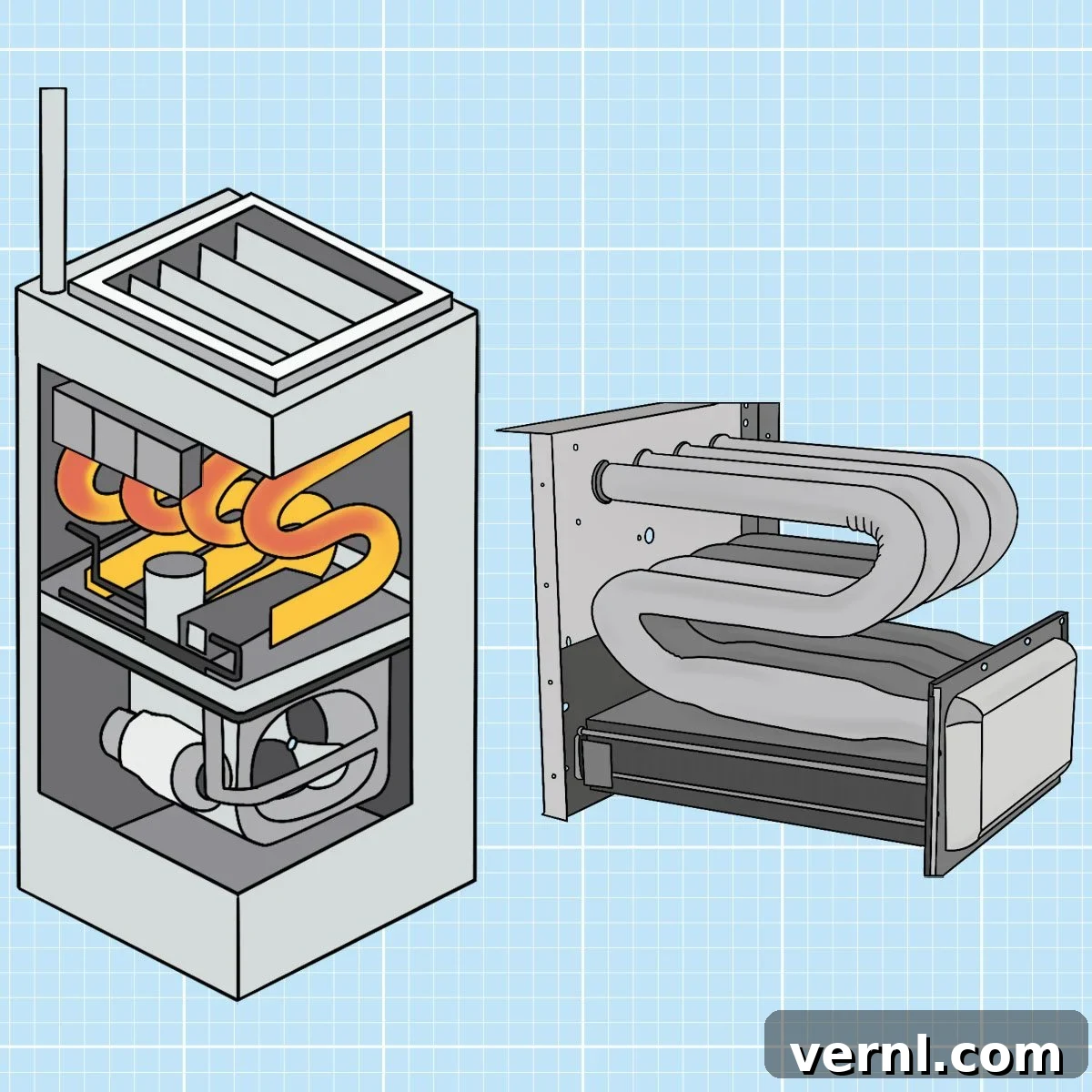
To elaborate further, John Gabrielli, owner of Air Temp Solutions, describes a heat exchanger succinctly: “It’s a piece of your furnace that is responsible for transferring heat from the combustion of fuel to the air that is blown into your house. A heat exchanger is made up of metal tubes, which heat up when fuel is burned.”
The heat exchanger’s primary function is to serve as a thermal conduit, separating the air you breathe from the noxious exhaust gases. As fuel (natural gas or oil) burns in the furnace’s combustion chamber, it generates intense heat and creates flue gases. These hot gases flow through one side of the heat exchanger. Simultaneously, the cooler air from your home’s return ducts is blown across the exterior surface of the heat exchanger. The metal walls of the heat exchanger absorb the heat from the combustion gases and then transfer it to the circulating air, without any direct mixing of the two. This warmed air is then pushed through your home’s ductwork, providing comfort.
Just as furnace designs differ, so do the configurations of heat exchangers. While often described as metal tubes, their forms can be much more varied and complex to optimize heat transfer surface area and efficiency.
“There are a few different styles based on the overall intention of where they will be used, like tubular mazes, clamshell sandwiches, and slithering serpents, each transferring heat in their own unique way,” David explains. These diverse designs are engineered to maximize the surface area exposed to both the hot combustion gases and the cooler circulating air, ensuring efficient heat transfer before the exhaust gases are safely vented out of your home.
How Does the Heat Exchanger in a Furnace Work?
The operational principle of a furnace heat exchanger is both critical and ingenious. According to Gabrielli, “Exhaust gases go through one side of the heat exchanger, while your home’s interior air goes through the other side. The heat transfers through the metal, warming up the air on the other side, which is then blown into your house.” This continuous process ensures a steady supply of warm, clean air.
Here’s a more detailed breakdown:
- Combustion Process: Fuel ignites in the combustion chamber, creating hot exhaust gases.
- Primary Heat Exchanger: These hot gases enter the primary heat exchanger. As they pass through its internal passages, heat is conducted through the metal walls to the cooler air circulating on the outside. This heated air is then pushed into your home’s ductwork by the blower fan.
- Exhaust Venting: After transferring a significant amount of heat, the cooled exhaust gases are typically vented out of the home through a flue pipe.
While all fuel-burning furnaces have a primary heat exchanger, modern high-efficiency gas furnaces incorporate an additional component: a secondary heat exchanger. This innovation dramatically boosts efficiency by extracting even more heat from the exhaust gases that would otherwise be wasted.
The secondary heat exchanger typically consists of an array of smaller metal tubes. Hot gases from the primary exchanger, which are still quite warm, enter these tubes. As they cool further, they drop below their dew point, causing water vapor within the exhaust to condense into acidic water. This phase change (from gas to liquid) releases a latent heat that is then transferred to the circulating air. Because this process converts most exhaust gases into acidic water, which then drips into a specialized drainage system, high-efficiency furnaces don’t use a conventional metal exhaust vent. Instead, they feature a corrosion-resistant PVC vent, designed to safely expel any trace gases that remain, preventing corrosion from the acidic condensate.
The incorporation of a secondary heat exchanger allows these furnaces to achieve efficiencies of 90% AFUE (Annual Fuel Utilization Efficiency) or higher, meaning over 90% of the fuel consumed is converted into usable heat for your home. This translates directly to lower energy bills and reduced environmental impact.
How to Know If Your Furnace Heat Exchanger Is Bad
Heat exchangers are built to endure, but they are constantly exposed to extreme temperature fluctuations – intense heat on one side and cooler air on the other. This constant thermal stress, combined with the corrosive nature of combustion byproducts, means that over time, heat exchangers do wear out and can go bad. As David states, “Most of the issues I’ve dealt with over the years were due to cracking, rusting or corrosion.”
A damaged heat exchanger is not merely an inconvenience; it’s a serious safety hazard and something you absolutely cannot ignore. David emphasizes that a compromised heat exchanger can allow deadly carbon monoxide (CO) gas to escape the combustion chamber and mix with the air circulating throughout your house. Carbon monoxide is a colorless, odorless gas, making it impossible to detect without specialized equipment, yet its effects can be fatal. Beyond the immediate safety risk, a failing heat exchanger also severely impacts the furnace’s performance, leading to reduced heating efficiency, elevated energy bills, and ultimately, a complete system breakdown.
One of the most crucial safety devices for any home with a fuel-burning furnace is a carbon monoxide detector. “If you have a carbon monoxide detector in the same room as your furnace, which I recommend everyone should, it can alert you to the presence of exhaust gases leaking into your home through the heat exchanger,” says Gabrielli. Regular testing of these detectors is paramount.
Both Gabrielli and David suggest homeowners be vigilant for specific signs:
- Unusual Odors: A persistent, strange smell, often described as a metallic, burning plastic, or formaldehyde-like odor, that doesn’t dissipate.
- Soot Buildup: David adds that you may also notice soot buildup around the burners or within the furnace cabinet, indicating incomplete combustion or improper venting.
- Flame Discoloration: Ideally, your furnace burner flames should be a steady blue. If they appear yellow, orange, or flickering, it could indicate a combustion problem, potentially related to a compromised heat exchanger.
- Visible Cracks: While not always easy to spot without professional tools, “If you have your furnace open, and you’re looking directly at the heat exchanger, some cracks might be big enough to spot,” says Gabrielli. These might appear as hairline fractures or larger fissures.
- Reduced Heating Efficiency: Your furnace runs longer cycles to achieve the set temperature, or struggles to heat your home adequately.
- Strange Noises: Popping, rattling, or banging noises coming from the furnace could indicate issues with the heat exchanger expanding and contracting unevenly due to damage.
- Frequent Cycling: The furnace turning on and off more frequently than usual.
Upon noticing any of these symptoms, it is imperative to contact a qualified HVAC technician immediately for a professional inspection.
What Is the Life Expectancy of a Furnace Heat Exchanger?
The lifespan of a furnace heat exchanger can vary significantly depending on its material, usage, and maintenance. While Gabrielli and David didn’t directly address this specific question in the provided content, we can draw upon industry knowledge. According to InspectaPedia, which compiles composite opinions from various reputable sources, the consensus for typical lifespans is:
- Steel Heat Exchangers: Generally last between 15 to 20 years on average.
- Cast Iron Heat Exchangers: Tend to be more robust and can last much longer, often 40 to 50 years.
Several factors influence these figures:
- Maintenance: Regular, professional maintenance is crucial. A well-maintained furnace, with clean filters and proper combustion settings, puts less stress on the heat exchanger, extending its life.
- Operational Conditions: Furnaces that run frequently or in harsh environments (e.g., extremely cold climates, high humidity) may experience accelerated wear.
- Installation Quality: Proper installation ensures correct airflow and combustion, minimizing stress on the heat exchanger.
- Furnace Type: High-efficiency furnaces with secondary heat exchangers, while more efficient, can sometimes experience corrosion issues in the secondary exchanger if the condensate drainage system is not properly maintained or if the unit is not regularly serviced.
- Manufacturing Quality: The initial quality of the material and construction plays a significant role in durability.
Many major furnace manufacturers back their products with substantial warranties, which can be an indicator of expected component life. For instance, companies like American Standard and Bryant sometimes offer a lifetime warranty on all furnace parts, including the heat exchanger. Other prominent brands such as Carrier, Heil, Rheem, and Janitrol commonly provide 20-year parts warranties on both standard and high-efficiency models. These warranties provide peace of mind and reflect the manufacturers’ confidence in their products’ longevity when properly maintained.
Do You Need To Call a Pro To Replace the Heat Exchanger in a Furnace?
The answer to this question is an unequivocal and resounding “Absolutely.” Replacing a furnace heat exchanger is unequivocally NOT a do-it-yourself (DIY) job. This task is incredibly complex, requires specialized knowledge and tools, and carries significant safety implications that make professional intervention non-negotiable.
The process of replacing a heat exchanger involves the extensive disassembly and meticulous reassembly of a substantial portion of the furnace’s internal components. It’s akin to performing intricate surgical repairs on a car engine – requiring precision, an understanding of complex systems, and the right equipment. A homeowner, even a highly competent one, is unlikely to possess the necessary expertise, specialized tools, and critical safety equipment required to perform this task correctly and safely.
The single most important issue when replacing a heat exchanger is creating and verifying a perfectly hermetic (airtight) seal. This seal is crucial to prevent the escape of carbon monoxide and other combustion gases into your living space. Achieving this requires not only skill in reassembly but also specialized gas monitoring equipment to confirm the absence of leaks post-installation. Without the proper tools and extensive know-how, ensuring this critical seal is virtually impossible for a typical homeowner.
Furthermore, local building codes and regulations in many jurisdictions may legally require that such work be completed only by a licensed and certified HVAC technician. These regulations are in place for public safety, recognizing the severe health consequences associated with improper furnace repair.
The health consequences of a carbon monoxide leak can range from severe illness to permanent brain damage and even death. Given these life-threatening risks, it is always the safest and most responsible course of action to entrust the job of heat exchanger replacement to a qualified, licensed HVAC professional. Their expertise ensures the job is done right, adhering to all safety standards and local codes, thereby protecting your home and family.
How Much Does It Cost to Replace a Heat Exchanger in a Furnace?
Replacing a furnace heat exchanger is a significant undertaking, both in terms of labor and cost. The expense can vary widely, typically ranging from $1,500 to as much as $3,000 or more, depending on several factors. These factors include the make and model of your furnace, the complexity of accessing the heat exchanger, the cost of the replacement part itself, the specific labor rates in your geographic area, and the amount of time the repair takes. The repair process can be lengthy, often requiring up to eight hours of a skilled technician’s time.
Given the substantial cost of replacing a heat exchanger, it often makes more financial sense to consider replacing the entire furnace, especially if the unit is older or if other components are also showing signs of wear. A new furnace, depending on its type and efficiency rating, might cost anywhere from $2,500 to $6,000 or more for parts and installation. When the cost of a heat exchanger replacement approaches or even exceeds half the cost of a new furnace, investing in a full replacement becomes a highly practical option.
There are several compelling reasons to opt for a new furnace instead of just replacing the heat exchanger:
- Age of the Furnace: If your furnace is already 15 years old or more, other components are likely nearing the end of their lifespan as well. A new heat exchanger might solve one problem, but another costly repair could be around the corner.
- Overall Condition: If the heat exchanger is cracked or corroded, it’s a strong indicator that other internal parts of the furnace have also been subjected to similar stresses and might be damaged or degraded.
- Increased Efficiency: Modern furnaces are significantly more energy-efficient than older models. Replacing an old furnace with a new, high-efficiency unit can lead to substantial savings on your energy bills over the long term, quickly offsetting the higher initial investment.
- New Warranty: A new furnace comes with a comprehensive warranty covering all parts and labor, providing peace of mind for years to come.
- Improved Comfort and Reliability: A new system will offer more consistent heating, quieter operation, and significantly enhanced reliability compared to an old, repaired unit.
Ultimately, the decision to replace the entire furnace versus just the heat exchanger should be made after consulting with a trusted HVAC professional who can assess the overall condition of your unit, provide a detailed cost breakdown for both options, and help you weigh the long-term benefits and costs.
Essential Furnace Maintenance for Longevity and Safety
To maximize the lifespan of your heat exchanger and ensure the continued safe operation of your furnace, regular preventative maintenance is paramount. Annual professional tune-ups can identify potential issues before they become serious and help maintain optimal efficiency. During a professional inspection, an HVAC technician will:
- Visually inspect the heat exchanger for cracks, corrosion, or signs of soot buildup.
- Test for carbon monoxide leaks around the furnace and throughout your home.
- Clean the burners and other internal components.
- Check and adjust combustion settings for peak efficiency and safety.
- Inspect the flue pipe for obstructions or damage.
- Ensure proper functioning of the condensate drainage system in high-efficiency units.
As a homeowner, you can also contribute to your furnace’s health by regularly changing air filters (monthly or quarterly, depending on usage and household conditions) and ensuring that your carbon monoxide detectors are tested every six months and replaced according to manufacturer recommendations.
Furnace FAQs: Common Questions and Parts Explained
Whether you’re trying to understand how your furnace works or troubleshooting issues, here are the answers to some of the most common furnace questions and explanations of various parts.
- What Is a Furnace?
- How Does a Gas Furnace Work?
- What Are Furnace Energy Efficiency Ratings?
- Understanding the Different Parts of a Furnace
- This Is What That Furnace Switch Is For
- What Is a Furnace Inducer Motor?
- What Does a Furnace Pressure Switch Do?
- How Much Will It Cost to Replace a Furnace Blower Motor?
- Boilers vs. Furnaces: What’s the Difference?
- How to Choose Between a Heat Pump vs. a Furnace