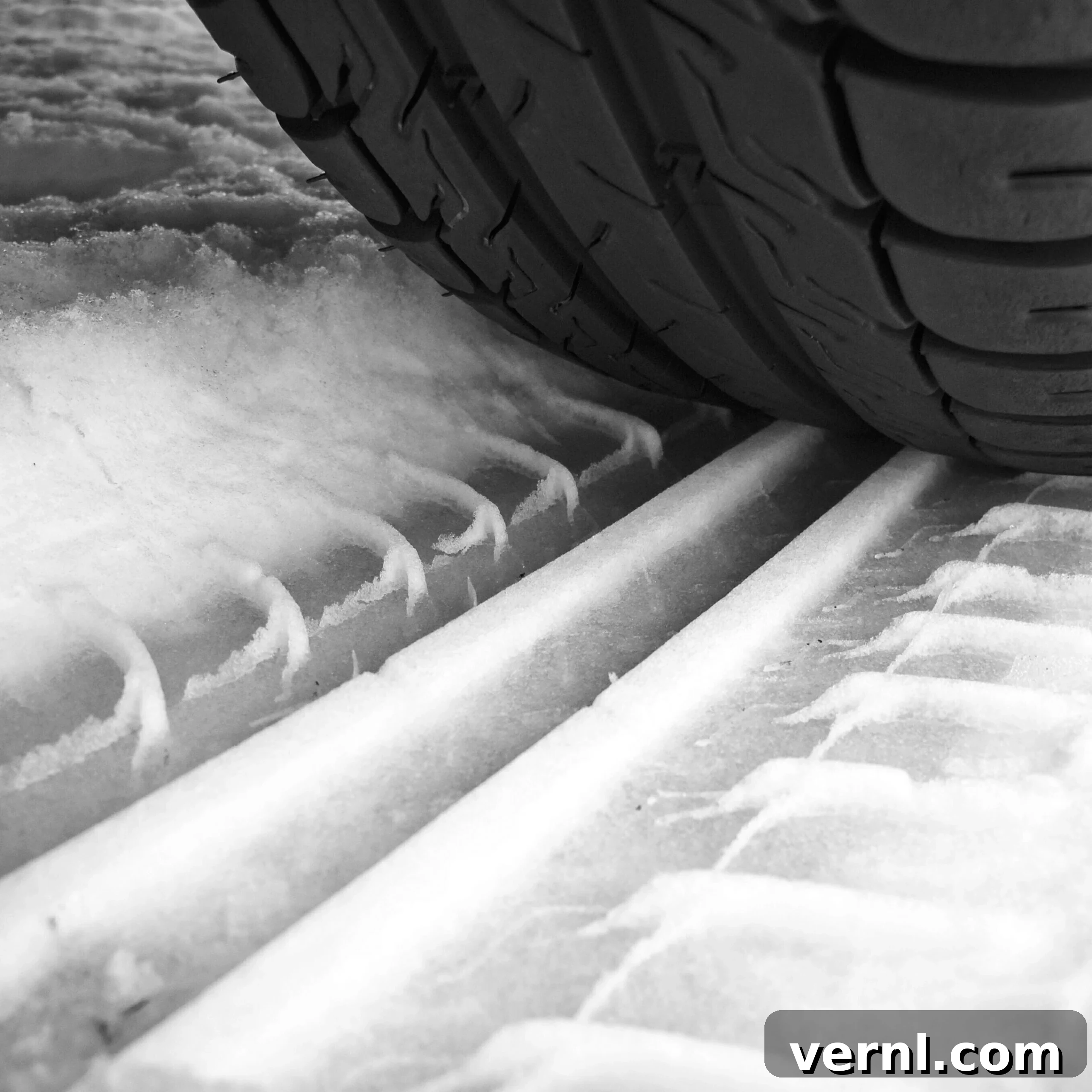
The tires on your vehicle are its sole point of contact with the road, a critical interface that dictates your safety, control, and overall driving experience. This fundamental connection becomes even more vital when challenging winter conditions arrive. As temperatures drop, road surfaces transform into treacherous landscapes of cold pavement, ice, slush, and snow. These elements conspire to drastically reduce tire grip, making every journey significantly more hazardous. It is precisely for these reasons that dedicated winter tires are gaining widespread recognition and popularity in regions that experience severe cold and snowfall.
My own experience highlights this crucial point. Living in a northern climate, though not one typically prone to frequent, heavy snowfalls, I once found myself woefully unprepared. In my younger days, my only vehicle was a small, lightweight, rear-wheel-drive roadster, completely devoid of any modern traction control systems. I was caught entirely off-guard by an unexpected, fierce snowstorm, my car still equipped with all-season tires. Despite driving with extreme caution and at a snail’s pace, those all-season tires proved utterly inadequate. Their grip simply wasn’t enough to maintain control and ensure my safety. The car spun out multiple times, a terrifying experience, though mercifully without any collisions or injuries. Ultimately, I was forced to abandon the sports car and call my wife for a rescue. That particular vehicle has never, and will never, see a single snowflake again without the superior performance and safety offered by modern winter tires.
Why Are Winter Tires Better Than All-Season Tires for Cold Weather?
All-season tires are engineered to offer a reasonable balance of performance across a broad spectrum of conditions. They are designed as a compromise, aiming for acceptable functionality in mild summer heat, light rain, and occasional, very light winter conditions. However, this versatility comes at a cost: they lack the specialized features needed for optimal performance in extreme conditions. They don’t boast the high-performance tread patterns or advanced rubber compounds tailored for peak dry-weather summer grip, nor do they possess the soft, pliable compounds, aggressive tread designs, or specialized construction required to consistently tackle frozen roads, heavy snow, and persistent ice.
If your daily driving is confined to more temperate climates, where temperatures rarely dip below freezing and heavy snowfall is a rarity, all-season tires may suffice. They offer convenience and acceptable performance in most mild scenarios. Nevertheless, if your region experiences even one severe southern snow or ice storm per year, the safest course of action is often to simply stay home. Your all-season tires, and likely those of most other drivers on the road, are simply not equipped to handle such treacherous conditions effectively, putting you and others at significant risk.
Thanks to continuous innovation and significant advancements in tire technologies, modern winter tires deliver profoundly superior performance in cold, icy, and snowy conditions compared to their all-season counterparts. They even surpass the capabilities of “snow tires” from decades past. The fundamental differentiator lies in their specialized engineering, optimized for the unique challenges of winter.
The Science Behind Winter Tire Superiority:
- Specialized Rubber Compounds: The most significant advantage of modern winter tires is their unique rubber formulation. Unlike all-season tires, whose rubber hardens and loses flexibility when temperatures consistently drop below 7°C (45°F), winter tires are made with cryophilic, or cold-loving, compounds. These compounds contain a higher percentage of natural rubber and specific polymers that enable them to remain flexible and pliable even in sub-zero temperatures. This flexibility is crucial for maintaining contact and grip on cold pavement, ice, and snow. Without it, a tire becomes rigid and loses its ability to conform to the road surface.
- Silica Infusion: Many advanced winter tires incorporate silica into their rubber compounds. Silica acts at a microscopic level, creating additional molecular bonds within the rubber that significantly enhance grip on icy and wet surfaces. It helps the tire maintain a “micro-bite” into the ground, piercing through thin layers of water or ice to find purchase, which is vital for both acceleration and braking performance in challenging conditions.
- Aggressive Tread Patterns: Winter tires feature distinct and often directional or asymmetric tread patterns with deeper grooves compared to all-season tires. These wider, deeper channels are meticulously designed to efficiently evacuate water, slush, and packed snow away from the tire’s contact patch. This prevents hydroplaning or slushplaning, maintaining critical contact with the road. The increased void ratio (the ratio of grooves to rubber) allows snow to pack into the tread, using snow-on-snow friction for enhanced traction – a counter-intuitive but highly effective mechanism.
- Sipes: The Biting Edges: Winter tires are characterized by thousands of tiny cuts within their individual tread blocks, known as sipes. These sipes create hundreds, if not thousands, of additional biting edges that aggressively grip into snow and ice. Modern winter tires often utilize advanced 3D or interlocking sipes. These sipes are designed not only to create extra edges but also to maintain the rigidity of the tread blocks, preventing excessive flex that could compromise handling. The sawtooth patterns or intricate ridge designs within these sipes further augment their ability to cut into slippery surfaces, dramatically improving traction for acceleration, braking, and cornering.
- Hollow Cells and Water Suction: In some cutting-edge designs, winter tires incorporate hollow cells or specialized pockets within the tread. These features are engineered to temporarily suction water away from the contact patch, much like a microscopic squeegee. This helps the tire to make more direct contact with the solid surface beneath thin layers of water or melting ice, further enhancing grip and reducing the risk of slipping.
The cumulative effect of these advanced technologies is a tire that provides vastly superior braking distances, improved acceleration, and enhanced steering control when driving in winter’s most unforgiving conditions. This translates directly into a safer driving experience and significantly reduced risk of accidents.
Can’t I Just Use Winter Tires All Year Long?
While the superior winter performance of winter tires is undeniable, they are not designed for year-round use. Due to their imperative to remain flexible and pliable in extremely cold temperatures, winter tires are typically made from softer rubber compounds than all-season tires. This inherent softness means that when subjected to warm weather and hot pavement, these winter tires will wear down significantly and much more quickly. The unique tread patterns and aggressive sipes, which are so effective in winter, also create additional friction and edges that lead to accelerated wear on dry, warm road surfaces.
Compromises of Year-Round Winter Tire Use:
- Accelerated Wear: The softer compound wears down rapidly in warm temperatures, drastically reducing the lifespan of the tires and negating their cost-effectiveness.
- Reduced Performance: The tread design and soft rubber optimized for cold weather perform poorly in warm, dry conditions. You’ll experience decreased handling precision, longer braking distances, and less stable cornering.
- Increased Fuel Consumption: Winter tires often have higher rolling resistance due to their softer compound and aggressive tread, which can lead to a slight decrease in fuel efficiency when driven in warmer conditions.
- Increased Road Noise: The open and aggressive tread patterns of winter tires tend to generate more road noise on dry pavement compared to all-season tires.
Unless you reside in an area permanently gripped by cold temperatures, such as well north of the Arctic Circle, it is strongly recommended to use winter tires exclusively for the colder months and switch back to all-season (or summer) tires for the remainder of the year. This seasonal changeover is crucial for maximizing both safety and tire lifespan.
Of course, this commitment to optimal seasonal performance necessitates changing your tires at least twice a year – typically in late fall as temperatures consistently drop, and again in the spring when they rise. There are two primary methods to accomplish this seasonal tire swap:
- Professional Dismount and Mount: This involves having a tire shop dismount your all-season tires from your existing wheels and mount your winter tires in the fall, reversing the process in the spring.
- Dedicated Wheel and Tire Sets: A more convenient option is to purchase a second set of wheels specifically for your winter tires. With two complete sets (one for winter, one for the rest of the year), you simply swap the entire wheel and tire assembly when the season changes.
While there is an additional up-front cost associated with buying a second set of wheels for your winter tires – wheels can often cost between $100 and $250 each, requiring four for a complete set – this initial investment offers substantial long-term benefits and convenience. This up-front expense can save considerable hassle when the first snows arrive, as tire shops become exceptionally busy with changeovers. Furthermore, considering the typical cost of $20 or more per tire to dismount and mount, balance, and install each time (amounting to $80+ per season, or $160+ per year for two changeovers), the cost of that second set of wheels can be recouped surprisingly quickly over several seasons.
An important consideration with a second set of wheels is the Tire Pressure Monitoring System (TPMS). Modern vehicles require TPMS sensors in each wheel. If your car has direct TPMS, you’ll either need to purchase a second set of TPMS sensors for your winter wheels and have them programmed, or be prepared to deal with a TPMS warning light on your dashboard during the winter months. Indirect TPMS systems typically don’t require new sensors.
Proper storage of your off-season tires is also important. Ensure they are clean, dry, and stored in a cool, dark place away from direct sunlight, solvents, and heat sources. Storing them upright or stacked horizontally can help maintain their shape and integrity.
Do Winter Tires Cost More Than All-Season Tires?
The notion that winter tires are an extravagant expense is largely a misconception. High-quality winter tires often cost roughly the same price as a comparable set of all-season tires – typically ranging between $600 to $1000 for a set of four, depending on the vehicle’s size, tire specifications, and brand. While this figure might seem substantial at first glance, it represents a relatively small insurance premium against the significant risks and potential costs associated with losing traction on treacherous winter roads.
The True Value Proposition of Winter Tires:
- Safety as an Investment: The primary benefit of winter tires is safety. The cost of a new set of tires pales in comparison to the financial and emotional toll of an accident – deductibles, insurance rate increases, vehicle repairs, potential medical bills, and the sheer stress and inconvenience. Winter tires significantly reduce the likelihood of skidding, collisions, and other winter-related incidents, making them a wise investment in your safety and the safety of others.
- Extended Overall Tire Lifespan: A common misconception is that purchasing winter tires means an additional expense without extending overall tire life. In reality, using two sets of tires – winter tires for cold months and all-season/summer tires for warmer months – effectively doubles the total lifespan of your tire collection. For instance, if modern winter tires can often last 35,000 miles or more, you can often get four or five winter seasons out of a set. During these seasons, your all-season tires are safely stored away, experiencing no wear and tear. This means you are essentially splitting the mileage across two sets, significantly extending the replacement cycle for both sets of tires. You won’t have to replace your all-season tires as frequently, nor your winter tires.
- Preservation of All-Season Tires: By using dedicated winter tires, you are preserving the tread depth and integrity of your all-season tires, ensuring they remain in optimal condition for the seasons they are designed for, further extending their utility and performance.
Yes, you will need to find a suitable place to store your second set of tires (either your all-season or winter tires) during their off-season. This might be in your garage, basement, or at some tire shops that offer storage services for a fee. However, this minor inconvenience and potential small cost is a trivial price to pay for the invaluable added peace of mind, enhanced vehicle control, and vastly superior traction afforded by equipping your vehicle with the right tires for the prevailing seasonal conditions.
When to Switch to Winter Tires (and back)
Timing your tire changeover is as crucial as the tires themselves. The general rule of thumb revolves around temperature: when the ambient temperature consistently drops below 7°C (45°F), it’s time to switch to your winter tires. At this temperature, the rubber compounds of all-season tires begin to harden, reducing their grip and effectiveness. Conversely, winter tires are designed to remain flexible and perform optimally in these colder conditions. It’s always better to switch a little too early than too late, ensuring you’re prepared before the first unexpected cold snap or snowfall hits.
- Fall Changeover: Aim to install your winter tires when daily average temperatures are consistently below 7°C (45°F). This often means late October or early November in many northern regions. Switching early helps you avoid the rush at tire shops when the first snow arrives.
- Spring Changeover: Once temperatures consistently rise above 7°C (45°F), typically in late March or April, it’s time to switch back to your all-season or summer tires. Driving on winter tires in warm weather accelerates wear and compromises handling, braking, and fuel efficiency.
Paying attention to these temperature thresholds ensures you always have the most appropriate tires for the conditions, maximizing your vehicle’s safety and performance throughout the year.
Conclusion: A Smart Investment in Winter Safety
In conclusion, winter tires are far more than just an accessory; they are a fundamental safety component for anyone driving in cold, icy, or snowy climates. While all-season tires offer a compromise, they simply cannot match the specialized performance of winter tires when temperatures consistently dip below 7°C (45°F).
The advanced rubber compounds, intricate tread patterns, and thousands of biting sipes in modern winter tires are engineered specifically to provide unparalleled grip, significantly shorter braking distances, and superior vehicle control in winter’s challenging conditions. This translates directly into a safer driving experience for you and your passengers.
Furthermore, while there is an initial investment, the long-term cost benefits of extending the life of both your winter and all-season tire sets, coupled with the immeasurable value of enhanced safety, make winter tires an exceptionally smart and responsible investment. Don’t compromise on safety when winter arrives; equip your vehicle with the right tires for the season and drive with confidence.