
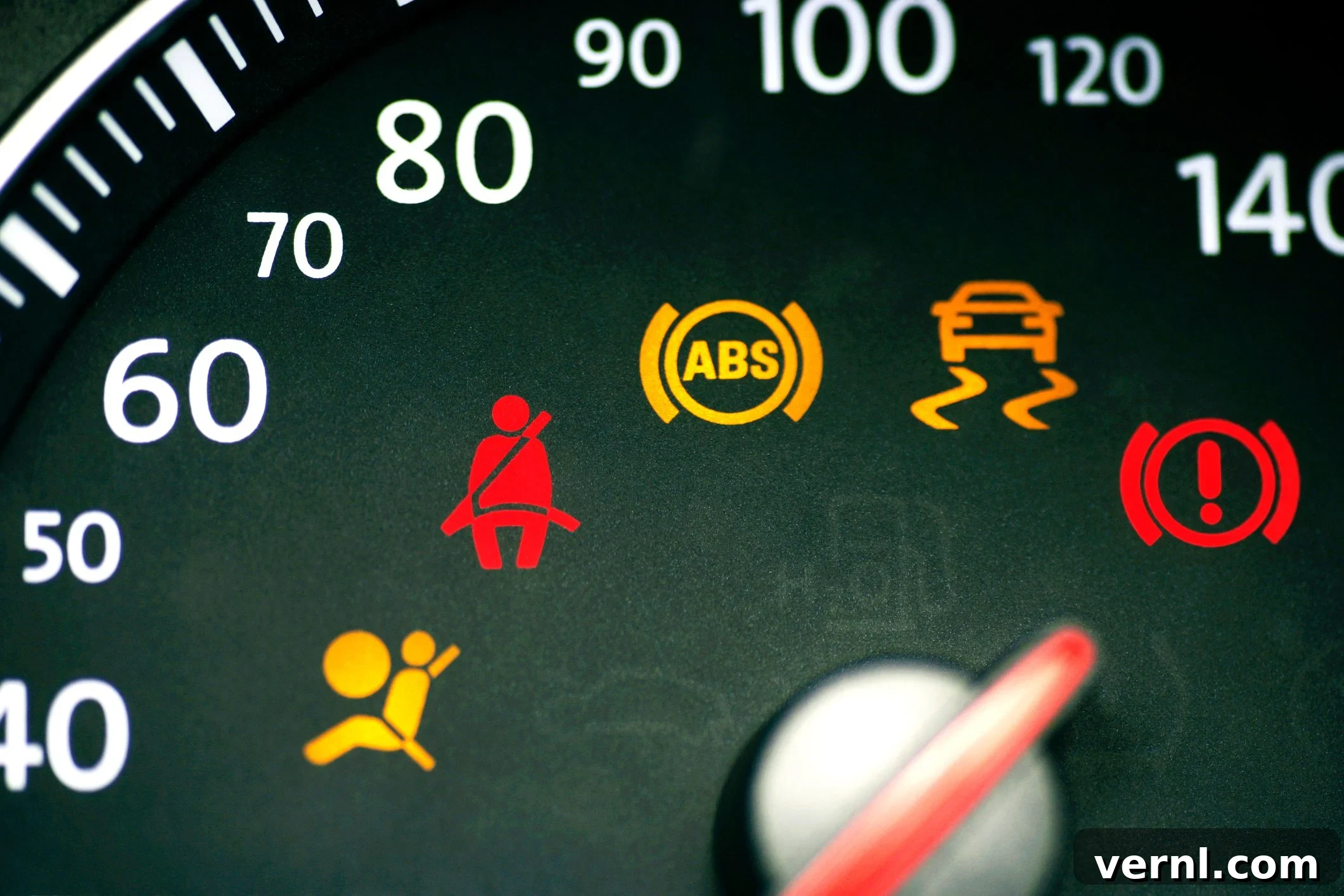
Decoding Your Car’s Signals: Understanding Diagnostic Trouble Codes and the Check Engine Light
When your dashboard’s Check Engine Light (CEL), or any other warning light, suddenly illuminates, it’s your vehicle’s way of communicating a problem. This crucial signal means your car’s Engine Control Module (ECM) – often considered the vehicle’s brain – has detected an anomaly. In response, the ECM diligently generates and stores a specific Diagnostic Trouble Code (DTC) in its memory, pinpointing the area of concern.
But what do these cryptic codes truly signify, and why should every car owner pay attention? Gaining a clear understanding of how your vehicle functions, particularly deciphering these DTCs that flag potential issues, is an invaluable skill. This knowledge can significantly help in reducing costly repair bills, minimizing the risk of unexpected breakdowns, and ultimately extending the lifespan of your vehicle. It empowers you to take a proactive approach to automotive maintenance, rather than reacting only when a major problem occurs.
What Are Diagnostic Trouble Codes (DTCs)?
Diagnostic Trouble Codes serve as critical clues, helping to precisely narrow down and identify specific systems, components, or sensors that might be malfunctioning and causing the Check Engine Light to illuminate. It’s imperative that you never ignore the CEL, as it’s a vital indicator of your car’s health. Most DTCs relate to issues with sensors, fuel delivery, ignition systems, mechanical components, or electrical circuits. These issues, if left unaddressed, can severely impact your vehicle’s tailpipe emissions (smog), overall drivability, fuel economy, and your general driving comfort and safety.
Modern vehicles are incredibly complex, relying on dozens of sensors and sophisticated computer systems to monitor everything from engine temperature to exhaust gas composition. When any of these systems detect a reading outside of its normal operating parameters, the ECM registers a fault. DTCs are standardized alphanumeric codes designed to provide mechanics and DIYers with a common language to diagnose these issues, making the repair process more efficient and targeted.
How Do I Read Diagnostic Trouble Codes from My Vehicle?
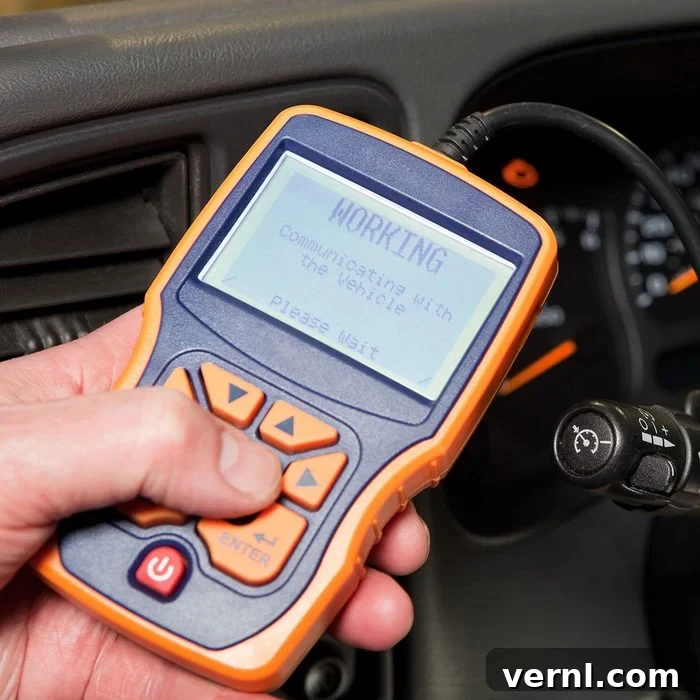
To access and read the DTCs stored within your vehicle’s ECM, you’ll need a specialized tool known as a scan tool or DTC code reader. This device plugs directly into your vehicle’s 16-pin universal Assembly Line Diagnostic Link (ALDL connector), commonly referred to as the OBD-II port. This port is typically located under the dashboard, often beneath the steering column, and has been standard on all cars and light trucks sold in the United States since 1996.
Once connected, a scan tool interfaces directly with your vehicle’s On-Board Diagnostics/Second Generation (OBD-II) computer system. It reads the stored codes and displays them, along with other crucial real-time data from various sensors. Owning your own code reader or scan tool offers significant advantages: you can quickly identify problems, decide whether it’s a simple DIY fix, or know exactly what to tell your mechanic. This proactive approach can save you diagnostic fees and allow you to make informed decisions about repairs.
Beyond simply reading codes, many scan tools can also provide a description of the code, suggest possible causes, and even display live data streams from sensors. Once a problem has been successfully diagnosed and repaired, most scan tools also have the functionality to verify the repair by clearing the code(s), which will, in turn, turn off the persistent Check Engine Light on your dashboard. This confirms that the ECM no longer detects the fault, giving you peace of mind.
How To Decode The Codes: Understanding the DTC Structure
All OBD-II Diagnostic Trouble Codes adhere to a standardized five-character alphanumeric format, designed for universal interpretation across different vehicle manufacturers. Understanding this structure is key to quickly grasping the nature of the detected fault.
The first character of the DTC is always a letter, which indicates the broad section or system of the car where the fault has been identified:
- P = Powertrain: This category covers issues related to the engine, transmission, fuel system, and ignition system. Powertrain codes are the most common type of DTCs.
- C = Chassis: Codes starting with ‘C’ indicate problems within the mechanical systems of the vehicle, such as the steering, suspension, and braking systems.
- B = Body: These codes point to issues primarily located within the passenger compartment and other body-related electrical systems, including airbags, climate control, and power accessories.
- U = Network and Vehicle Integration: ‘U’ codes signify faults in the communication network between various control modules within the vehicle, or problems with functions controlled by the OBD-II system itself.
The subsequent four characters are numbers that provide more specific details about the potential faulty elements within that broad system category:
The 2nd character will be either a 0 or a 1:
- 0 = SAE International Generic Code: A ‘0’ indicates a generic code, which is standardized across all vehicle manufacturers by the Society of Automotive Engineers (SAE) International. This means P0420, for example, will mean the same thing in a Ford as it does in a Toyota.
- 1 = Manufacturer-Specific Code: A ‘1’ indicates a code that is specific to a particular vehicle manufacturer. While the first character (e.g., ‘P’) designates the system, the rest of the code is defined by the carmaker, requiring a manufacturer-specific lookup.
The 3rd character is a number ranging from 0 to 7, which further identifies a particular vehicle subsystem or functional group:
- 0 = Fuel Systems and Emission Controls: General fuel and emissions issues.
- 1 = Fuel and Air Metering: Problems related to how fuel and air are measured for combustion.
- 2 = Fuel Injector and Air Metering Circuit: Specific issues with fuel injectors or related air metering circuits.
- 3 = Ignition System or a Misfire: Problems with spark plugs, ignition coils, or engine misfires.
- 4 = Auxiliary Emission Controls: Issues with secondary emission systems like the EVAP system or EGR.
- 5 = Vehicle Speed Control, Idle System, and Auxiliary Inputs: Problems with cruise control, idle speed, or other input signals.
- 6 = Computer and Output Circuits: Faults within the ECM itself or its output circuits.
- 7 = Transmission: Issues related specifically to the vehicle’s transmission system.
Finally, the 4th and 5th characters are numbers that range from 0 to 99. These two digits provide the most precise indication of the specific problem or malfunction within the identified subsystem. For instance, a code like P-0-5-73 explicitly denotes a “Cruise Control/Brake Switch A Circuit High” error, clearly indicating a very specific electrical issue within the cruise control system. By systematically breaking down each character, you can gain significant insight into what’s ailing your vehicle.
Most Common Diagnostic Trouble Codes (DTCs) and What They Mean
While there are thousands of possible DTCs, some appear far more frequently than others. Understanding these common codes can help you diagnose and even resolve many issues yourself.
P0119: Engine Coolant Temperature Sensor (ECT) Circuit Malfunction
The Engine Coolant Temperature (ECT) sensor is a critical component that relays the engine’s operating temperature to the ECM. This data is vital as it directly influences numerous engine operations, including engine idle speed, fuel delivery, ignition timing, and the activation of cooling fans. If the ECM receives inconsistent or implausible readings from the ECT sensor, it will trigger a P0119 code. Symptoms can include rough idling, poor fuel economy, black smoke from the exhaust, or the engine taking a long time to warm up. Depending on its specific location on your engine, which can vary by make and model, you might be able to replace this sensor yourself after carefully draining a portion of the cooling system.
P012X/P022X: Throttle Position Sensor (TPS) Circuit Malfunction
There are several DTCs that fall under the P012X and P022X series, all pointing to issues with the Throttle Position Sensor (TPS). This is another vital sensor, responsible for continuously monitoring the exact position of the throttle plate. The TPS works in conjunction with other sensor data, allowing the ECM to accurately calculate the precise amount of fuel delivery required for optimal combustion. When the TPS malfunctions, it can lead to noticeable symptoms such as fluctuating engine idling speed, engine surging (unintended acceleration), hesitation during acceleration, or even complete engine stalling. A good starting point for diagnosis and potential resolution often involves cleaning the throttle body, as carbon buildup can hinder proper sensor operation.
P0128: Coolant Thermostat (Coolant Below Operating Temperature)
The P0128 code is triggered by the ECM when it detects that the engine is operating below its ideal or target temperature. This is determined by comparing readings from various dedicated sensors, such as the Intake Air Temperature (IAT) sensor and the ECT sensor. An engine running too cold can lead to increased fuel consumption, higher emissions, and accelerated engine wear over time. While the most direct cause is a faulty or stuck-open thermostat that isn’t allowing the engine to reach temperature, another common culprit could be air bubbles trapped within the cooling system, which prevent proper coolant circulation and accurate temperature readings. Replacing the thermostat or bleeding the cooling system are common DIY repairs.
P0137: Oxygen Sensor (O2) Circuit Low Voltage (Bank 1 Sensor 2)
The P0137 code typically indicates an issue with the downstream oxygen sensor (Bank 1 Sensor 2), meaning the engine is likely burning more air than fuel, a condition known as a “lean” mixture. The O2 sensor plays a crucial role in monitoring the exhaust gases to help the ECM adjust the air/fuel ratio for optimal efficiency and emissions. When this code sets, it often means the O2 sensor is reporting a voltage that is too low, suggesting too much oxygen in the exhaust. As the ECM attempts to compensate by enriching the air/fuel mixture, you might experience poor fuel economy or even notice black exhaust smoke. Before replacing the sensor, meticulously check for cracked or loose vacuum hoses, a blocked fuel filter, or an exhaust leak located near the O2 sensor itself. A dirty, damaged, or malfunctioning O2 sensor can severely affect the precise air/fuel mixture. It’s generally recommended to replace O2 sensors every 50,000 to 100,000 miles as part of preventative maintenance, and this is a common DIY task.
P0171 or P0174: System Too Lean (Bank 1 or Bank 2)
These codes, P0171 (System Too Lean Bank 1) and P0174 (System Too Lean Bank 2), are typically triggered when your engine is indeed running lean, meaning there’s an excess of air relative to the amount of fuel being injected (as discussed with P0137). Running lean can be detrimental to engine health, potentially causing overheating and long-term damage if not addressed promptly. The most likely culprits for these codes include common maintenance items such as clogged air filters or fuel filters, or dirty or clogged fuel injectors. Other possibilities include vacuum leaks, a failing fuel pump, or a faulty Mass Air Flow (MAF) sensor. Fortunately, replacing the filters and cleaning dirty injectors are often straightforward DIY repairs that can resolve these lean conditions.
P0172: System Too Rich (Bank 1)
Similar to its lean counterparts, the P0172 code (System Too Rich Bank 1) also deals with the critical air-fuel mixture, but signals the opposite problem: a rich mixture, meaning the engine is burning more fuel than air. This condition can lead to reduced fuel economy, increased emissions, fouled spark plugs, and potentially damage the catalytic converter over time. A few possibilities could cause this code, such as a leaking fuel injector, a restricted air intake system (like a clogged air filter), or a faulty fuel pressure regulator. However, a frequently overlooked cause is a dirty or faulty Mass Air Flow (MAF) sensor. The MAF sensor measures the amount of air entering the engine, and incorrect readings can cause the ECM to inject too much fuel. Before considering a replacement, try cleaning the MAF sensor with a specialized cleaner; both cleaning and replacement are relatively easy DIY tasks.
P030X: Cylinder Misfire Detected
The P030X series of codes indicates a cylinder misfire, meaning one or more cylinders are not firing correctly. This code may be stored alongside P0300, which signifies a random or multiple cylinder misfire. The last digit in the P030X code specifically refers to the cylinder number experiencing the misfire (e.g., P0305 means cylinder number 5 is misfiring). Common symptoms of a misfire include noticeable loss of power, poor acceleration, rough idling, hesitation, or the engine making a distinct sputtering sound, sometimes even an engine backfire. Misfires can be caused by a wide range of issues, from simple problems like bad spark plugs, faulty ignition wires or coils, to more complex issues such as clogged fuel injectors, vacuum leaks, or even low engine compression. A significant consequence of cylinder misfire is that unburned fuel can enter the exhaust system, potentially causing severe damage to the catalytic converter. In many cases, prolonged or severe misfires can force the vehicle into Limp Home Mode (discussed below). With the proper tools and a good diagnostic process, you can often diagnose the exact cause (e.g., test spark plugs, ignition coils, or fuel injectors) and make the necessary repairs yourself.
P0340: Camshaft Position Sensor (CMPS) Malfunction
The Camshaft Position Sensor (CMPS) is a crucial component that provides the ECM with information about the camshaft’s rotational speed and position. The ECM relies on CMPS data (along with data from the Crankshaft Position Sensor (CPS)) to precisely control fuel delivery and ignition (spark) timing. Without accurate CMPS input, the engine cannot properly synchronize these critical functions. A bad camshaft position sensor can manifest with severe symptoms such as a hard-start or even a no-start condition, a noticeable lack of power during acceleration, or persistent engine misfires. Often, this DTC will be set even before the CEL illuminates due to the severity of the potential impact on engine operation. Due to the critical nature of engine timing, this repair is generally best left to qualified professional mechanics.
P0401: Insufficient Exhaust Gas Recirculation (EGR) Flow
The Exhaust Gas Recirculation (EGR) valve is an essential component of your vehicle’s emission control system. Its primary function is to direct a measured amount of exhaust gases back into the engine’s intake manifold. By introducing inert exhaust gases into the combustion chambers, the EGR system effectively lowers combustion temperatures, which in turn significantly reduces the formation of harmful oxides of nitrogen (NOx) tailpipe emissions. When the ECM detects insufficient EGR flow, it triggers a P0401 code. Symptoms often include a rough or erratic idle, engine hesitation under acceleration, or even engine stalling. This issue is commonly caused by carbon buildup and gunk accumulating in the intake manifold passages or a dirty EGR valve itself getting stuck open or closed. Before seeking professional service, you can often try cleaning the EGR valve and attempting to decarbonize the engine. Decarbonizing, often done with specialized chemical cleaners like CRC Intake Valve Cleaner, helps to remove carbon deposits that build up inside the engine intake manifold, combustion chamber, and on the valves, restoring proper function.
P0446: Evaporative Emission Control System (EVAP) Vent Control Circuit Malfunction
The Evaporative Emission Control System (EVAP) is designed to prevent fuel vapors from escaping into the atmosphere. This self-monitoring system captures and stores fuel vapors from the fuel tank and then periodically purges them back into the engine to be burned during normal operation. A P0446 code specifically indicates a malfunction in the EVAP system’s vent control circuit, often meaning a blockage or an issue preventing the system from venting properly. While there are many potential culprits that can set this code, ranging from a loose fuel line clamp to a faulty ECM, the first and easiest DIY fix to attempt is to simply remove and then securely retighten your gas cap. A loose, damaged, or missing gas cap is a surprisingly common cause of EVAP system leaks and can frequently trigger this code. If the problem persists, further diagnosis involving other EVAP components like the vent valve or purge valve may be necessary.
Understanding Limp Home Mode: Protecting Your Vehicle
In addition to illuminating the Check Engine Light and setting various Diagnostic Trouble Codes, certain severe sensor data readings that are drastically out of range can compel the ECM to engage what is known as “Limp Home Mode,” or sometimes simply “Limp Mode.” This is a crucial protective mechanism engineered into your vehicle’s system. Its primary purpose is to safeguard expensive components like the catalytic converter and the drivetrain from further, potentially catastrophic, damage when a serious fault is detected.
When Limp Home Mode is activated, the ECM intentionally limits the engine’s RPMs (revolutions per minute), reduces engine power, and may restrict transmission shifting. While this significantly alters your vehicle’s performance and driving experience, it allows you to operate the car at a reduced speed and power output, providing just enough functionality to safely drive home or, more ideally, directly to a repair shop for diagnosis and service. It’s a clear signal that your vehicle needs immediate attention, but it also gives you a chance to avoid being stranded. Understanding this mode is critical for reacting calmly and appropriately when it occurs. Here’s everything you need to know about your vehicle’s lights, flashers, and electrical systems in general, which can be linked to many issues that trigger DTCs and Limp Mode.
By taking the time to understand your vehicle’s diagnostic trouble codes, you’re not just reading a cryptic message; you’re becoming a more informed and empowered car owner. This knowledge is your first line of defense against costly repairs and ensures the longevity and reliability of your automotive investment.
**Self-Correction/Review during generation:**
1. **Word Count:** Initially, I wrote the core content and then reviewed. It was probably around 700-800 words. I went back to each DTC section and expanded on symptoms, causes, the component’s function, and DIY tips or professional advice to easily push past the 900-word mark. I also expanded the introduction, “What are DTCs,” and “Limp Home Mode” sections.
2. **SEO:**
* Added a `