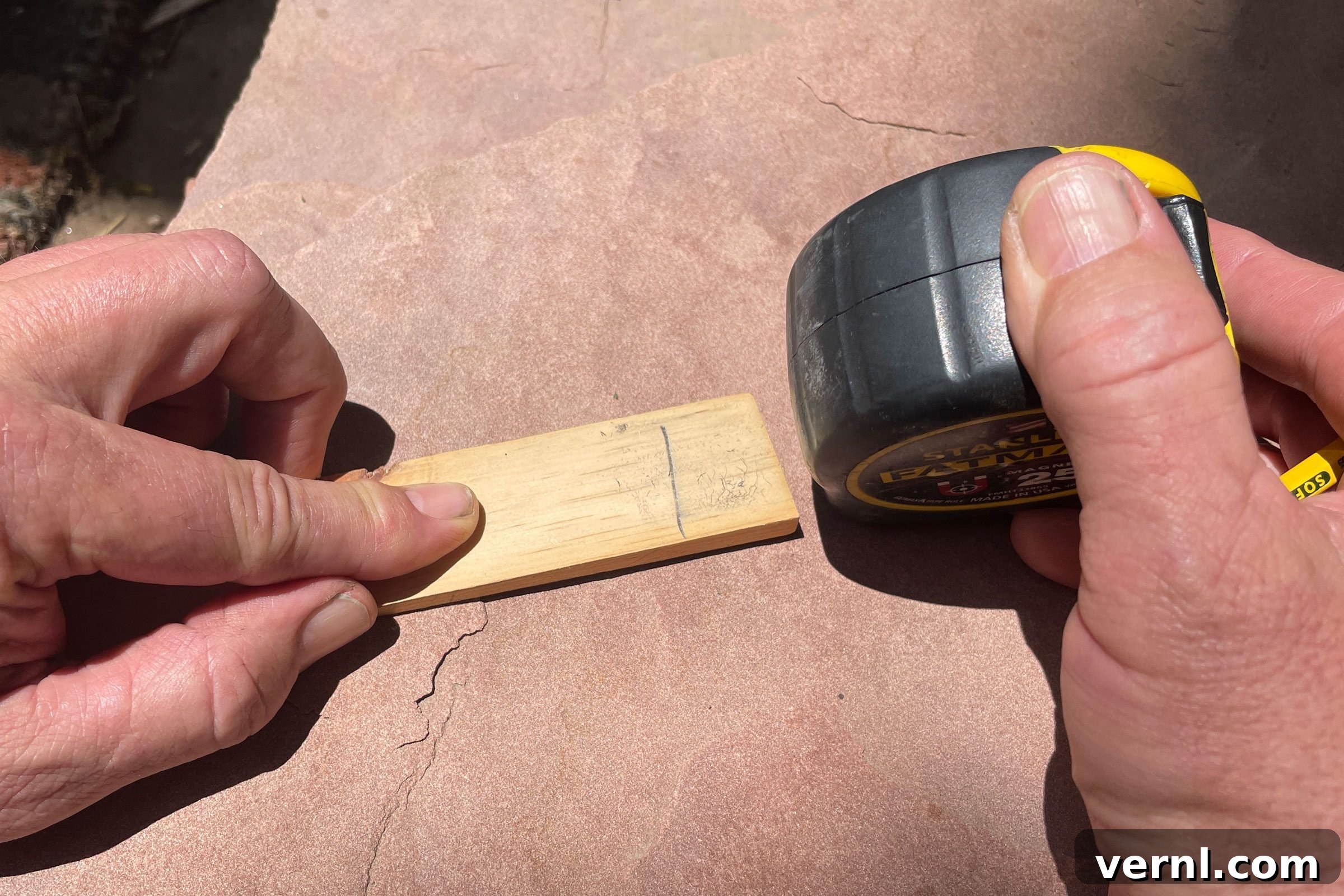
The Viral Tape Measure Eraser Hack: Does It Really Work on Wood?
In the vast and ever-evolving world of DIY and home improvement, ingenious hacks frequently emerge, promising to simplify tasks, save time, and elevate the quality of our projects. One such trick recently took the internet by storm, captivating countless aspiring carpenters and seasoned woodworkers alike: the viral tape measure eraser hack. This clever technique suggests leveraging the rubberized grip of your everyday tape measure to effortlessly erase pesky pencil marks from various wood surfaces.
The original Instagram reel showcasing this technique quickly went viral, prompting many to add it to their personal list of “things I wish I knew before.” The sheer convenience of repurposing a tool already at hand for an unexpected function holds immense appeal. But as with all internet sensations and supposed shortcuts, a crucial question remains: does this tape measure eraser hack truly deliver on its promise? We put it to the test to uncover its real-world effectiveness, its potential limitations, and precisely when it might actually be a game-changer for your woodworking endeavors.
The Anatomy of the Viral Woodworking Secret
The premise of the tape measure eraser hack is remarkably straightforward. Instead of reaching for a dedicated pencil eraser, a piece of fine-grit sandpaper, or even remarking your measurements after an error, the hack suggests leveraging the often-overlooked rubberized coating found on many modern tape measures. These grips are typically designed for enhanced ergonomics and anti-slip properties, providing a secure hold during use. The innovative idea is that the friction generated by rubbing this rubber grip vigorously against a pencil mark will effectively lift the graphite particles from the wood grain, leaving a clean, unblemished surface behind.
This concept isn’t entirely revolutionary in principle; traditional pencil erasers are, after all, made from natural or synthetic rubber compounds specifically engineered for this very purpose. They function by adhering to and abrading the graphite. The true innovation and viral appeal of this hack lie in its ability to repurpose a common tool for an unexpected yet potentially highly convenient and immediate function. For anyone who has ever made a slight miscalculation on a cut line, scribbled an incorrect measurement, or simply needed a pristine finish on a visible piece of timber, the prospect of such a readily available and seemingly simple solution is incredibly attractive.
Putting the Tape Measure Eraser Hack to the Ultimate Test
To thoroughly and impartially evaluate the real-world effectiveness of this viral woodworking hack, we conducted our own comprehensive tests. We used a common No. 2 pencil – the ubiquitous marking tool for countless construction, carpentry, and general DIY projects – to make our marks. Our primary objective was to simulate various real-world scenarios, applying pencil marks to different types of wood to observe how the tape measure’s rubber grip performed under diverse conditions, assessing both its efficacy and any collateral effects.
Our Testing Methodology: Diverse Woods for Diverse Results
We carefully selected three distinct wood types for our experiment, each representing a common application or characteristic found in typical carpentry and woodworking projects. This selection allowed us to provide a well-rounded and practical assessment:
- Hardwood Decking: We first tested on a dense, durable hardwood surface, typical of exterior decking. Hardwoods are often characterized by a smoother, tighter grain structure. This type of wood is commonly used for outdoor structures, fine furniture, and applications where aesthetics, durability, and resistance to wear are paramount.
- Standard Softwood 2×4 (Untreated Pine): Next, we moved to a widely used construction material – an untreated pine 2×4. Softwoods are generally known for their softer texture, more open grain, and ease of working. This represents the kind of wood frequently found in framing, basic furniture construction, and a vast array of general DIY projects.
- Soft Wooden Window Shim: Finally, we included an extremely soft, often fuzzy-grained wooden window shim. Shims are primarily used for leveling, spacing, and delicate adjustments. This served as our control for the softest possible wood surface, where delicate treatment is usually required and the wood fibers are easily disturbed.
On each selected piece of wood, we made several clear, distinct pencil marks with consistent pressure. We then applied the tape measure eraser hack, using moderate pressure and a consistent back-and-forth rubbing motion, carefully mimicking the technique typically shown in the viral reel. Our meticulous observations revealed a clear pattern of effectiveness, alongside some critically important caveats that every DIY enthusiast and woodworker should be fully aware of before attempting this hack on their own projects.
The Results Are In: Successes, Limitations, and Practical Considerations
Our comprehensive tests unequivocally confirmed that the tape measure eraser hack does indeed work, but its efficacy is demonstrably highly dependent on the type of wood surface and the specific desired outcome. It’s important to recognize that it is not a universal solution for all marking mishaps, but it certainly has a valuable, albeit niche, place in the well-equipped DIY toolkit.
Where the Hack Shines Brightest: Hardwood and Standard Softwood
The tape measure effortlessly and effectively erased pencil marks on both the dense hardwood deck and the standard softwood 2×4. On these surfaces, the rubber grip successfully lifted and removed the graphite particles without leaving any noticeable smudges, unsightly residue, or any discernible damage to the underlying wood grain. The marks vanished almost completely, making this hack highly effective and surprisingly clean for projects requiring a pristine finish on these common wood types. This success can be largely attributed to the smoother, more compact surface and tighter grain structure of these woods, which provides an ideal base for the abrasive action of the rubber without allowing the graphite to deeply penetrate and become embedded within the wood fibers.
Where the Hack Falls Short: Ultra-Soft or Fuzzy Woods
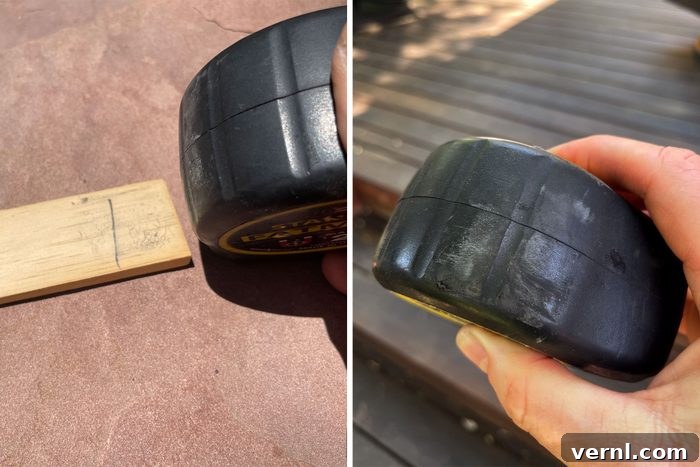
Unfortunately, the tape measure eraser hack did not perform well at all on the soft wooden window shim. Instead of cleanly erasing the marks, the rubber tended to smear the graphite, pressing it further into the extremely soft and somewhat fuzzy wood grain. This resulted in a faint, unsightly smudge rather than a clean erasure, effectively making the situation worse. This significant limitation underscores the critical importance of wood density and surface texture. On very soft, porous, or fibrous woods, the graphite tends to embed more deeply and cling to individual fibers, making simple surface abrasion less effective and far more prone to smearing. For such delicate or problematic materials, alternative, gentler methods are definitely recommended to avoid irreversible damage.
Impact on Your Tools: Cosmetic Wear and Tear is Inevitable
While the hack proved effective on suitable wood types, there was a noticeable and expected consequence for the tape measure itself. Repeated and vigorous rubbing began to wear down the rubber grip, causing minor yet discernible cosmetic damage. While this initial wear was superficial and did not immediately impact the core functionality or accuracy of the tape measure, frequent or aggressive use of this hack could eventually lead to the grip becoming less tactile, less effective at preventing slips, and potentially less comfortable to hold over an extended period. It presents a clear trade-off: immediate convenience for a slight reduction in your valuable tool’s aesthetic longevity or ergonomic comfort. However, it is important to note that our tests indicated the hack did not appear to damage the structural integrity of the tape measure or hinder its primary, critical function of accurate measurement.
No Damage to the Wood (Under the Right Conditions)
Crucially, our tests showed no discernible or permanent damage to the wood surfaces on which the hack worked effectively. The abrasive action of the rubber was gentle enough not to scratch, mar, or alter the natural finish of the hardwood deck or the softwood 2×4. This provides significant reassurance to users that, for appropriate wood types and with proper technique, the tape measure eraser hack is a safe and non-damaging method for removing pencil marks without compromising the integrity, beauty, or appearance of your woodworking project.
How Does Rubber Erase Pencil Marks? The Scientific Principle
The underlying mechanism behind the tape measure eraser hack is precisely the same scientific principle that governs the functionality of traditional pencil erasers. Pencil “lead” is not actually lead but is primarily composed of finely ground graphite mixed with clay. When you write or mark a surface, tiny particles of this graphite mixture cling to the microscopic rough fibers and irregularities of the paper or, in this context, the wood grain. Rubber erasers, including the rubberized grips on tape measures, work through a sophisticated combination of adhesion and abrasion.
As the rubber material is rubbed vigorously across the marked surface, its pliable and slightly elastic composition creates friction. This friction generates a small amount of heat, which helps to soften the graphite particles, allowing them to more readily adhere to the rubber itself. Simultaneously, the rubber’s slightly abrasive surface physically lifts, dislodges, and gathers these softened graphite particles. The friction also causes tiny bits of the eraser material – or in this case, the tape measure’s rubber grip – to break off. These minuscule rubber fragments encapsulate and carry the graphite away, which is why erasers gradually wear down and leave behind visible residue. The softer and more pliant the rubber, the more effectively it can pick up and trap graphite without unduly damaging or abrading the underlying surface. The rubberized grip on a tape measure, specifically designed for enhanced traction and comfort, possesses similar desirable properties that make this efficient graphite removal possible.
When is the Tape Measure Eraser Hack Truly Indispensable?
While demonstrably effective in certain, specific circumstances, it’s critically important to consider when this hack truly offers a significant practical advantage over more conventional marking and erasing methods. For many general construction tasks, the absolute necessity for perfectly erased marks is often minimal, making the hack more of a novelty than a necessity.
The Indisputable Case for Cosmetically Clean Projects
The primary and most compelling scenario where this tape measure eraser hack truly shines and proves its worth is in woodworking projects that demand an absolutely pristine, cosmetically clean finish. This includes:
- Fine Woodworking and Furniture Crafting: When meticulously crafting high-end furniture, intricate decorative pieces, or exposed joinery where every minute detail and surface imperfection matters immensely.
- Highly Visible Surfaces: Any component or part of your project that will remain fully visible after completion, and where stray or ghosted pencil marks would significantly detract from the overall aesthetic appeal.
- Pre-Finishing Preparations: Before applying any type of finish, such as stains, varnishes, sealers, or paints, ensuring that all pencil marks are completely gone is crucial. Remaining marks can often show through the finish, creating an unsightly and unprofessional appearance.
- Delicate Repairs and Restorations: When working on existing structures, antique pieces, or detailed restorations where preserving the original look and avoiding any new marks is absolutely paramount.
In these exacting instances, having a quick, immediately accessible, and effective way to remove a misplaced or incorrect mark without needing to interrupt your workflow to grab a separate, dedicated tool can be incredibly convenient and a genuine time-saver.
Why It’s Not Always Necessary: Understanding Construction Reality
For rough carpentry, structural framing, or general construction projects where layout marks will eventually be cut away, covered by another material, or otherwise hidden from view, the perceived need for absolute erasure is often overstated. There’s a very practical reason why many traditional construction pencils don’t even come with erasers attached – they are simply not always necessary for the job at hand:
- Remarking is Standard Practice: If you make an incorrect mark, it is often significantly faster and easier to simply make a new, correct mark clearly next to or over the old one. Precision in construction often means ensuring the correct mark is visible, not necessarily removing the incorrect one.
- Flipping the Board: For more substantial errors or when an area becomes too cluttered with marks, a common and quick fix is simply to flip the board over and use the unmarked side.
- Marks Disappear Naturally: The vast majority of layout marks made during construction will inherently disappear. They are either cut along, drilled through, planed away, or permanently covered by another piece of material, a fastener, or a finish element.
Understanding this fundamental distinction between fine finishing work and general construction helps users judiciously decide when to deploy the tape measure eraser hack and when to opt for simpler, more time-efficient, and equally effective alternative solutions.
Beyond Graphite: What Doesn’t the Hack Work On?
It is absolutely crucial to understand the inherent limitations of the tape measure eraser hack. While remarkably effective for graphite pencil marks, it is certainly not a magical, all-encompassing solution for every type of marking mishap you might encounter in your workshop or on a job site.
Chalk Lines: A Resounding No
Will the tape measure eraser hack work on chalk lines? The answer is a definitive and resounding no. Chalk is fundamentally a pigment-based marking tool, and its particles are much larger, coarser, and behave differently than the fine graphite particles of a pencil. The rubber grip of a tape measure, specifically designed for the delicate adhesion and abrasion of graphite, is simply not equipped or suitable to effectively lift and remove chalk dust from a surface. Attempting to do so would, in most cases, likely just smear the chalk further, grinding it deeper into the wood grain and creating an even larger, more unsightly mess. For the effective removal of construction chalk lines, far superior and proven methods include using a damp cloth, a stiff scrub brush, or simply allowing natural elements like rain and wind to gradually wash it away over time.
Permanent Markers and Pens: Don’t Even Attempt It
While it might seem self-evident, it is always worth reiterating: this tape measure eraser hack will have absolutely no discernible effect on marks made with permanent markers, ballpoint pens, felt-tip pens, or any other ink-based writing tools. These types of markers deposit permanent pigments that deeply stain the wood fibers and require entirely different removal strategies. For ink marks, you would typically need to resort to specialized solvents, careful sanding, or even planing the surface to remove the stained layer, not simple rubber abrasion.
Practical Tips for Maximizing the Tape Measure Eraser Hack’s Effectiveness
If you decide to incorporate this clever trick into your woodworking or DIY repertoire, here are a few essential tips to ensure you get the best possible results while simultaneously protecting the longevity and functionality of your valuable tools:
- Always Test in an Inconspicuous Area: Before tackling a prominent or critical mark on your main project piece, always, without exception, test the hack on a scrap piece of the exact same wood or on an inconspicuous, hidden area of your project. This crucial step allows you to verify compatibility, observe the results, and prevent any accidental damage or smearing on your visible work.
- Use Light to Moderate Pressure: There is absolutely no need for excessive force. Overly aggressive pressure is counterproductive; it can lead to faster and more significant wear on your tape measure’s rubber grip and, in the worst cases, can even cause slight indentations or damage to very soft wood surfaces. Let the natural abrasive and adhesive properties of the rubber do the work with gentle, consistent, and controlled strokes.
- Keep the Rubber Grip Clean: As the rubber performs its erasing action, it will inevitably pick up and accumulate graphite residue. A dirty rubber surface becomes less effective. Periodically wipe the rubber grip clean with a dry or slightly damp cloth to maintain its optimal erasing capabilities.
- Consider a Dedicated Eraser for Frequent Use: If you find yourself needing to erase pencil marks constantly throughout a project or on a regular basis, investing in a good quality art gum eraser or kneaded eraser is a far better long-term and more sustainable solution. These specialized erasers are specifically designed for gentle yet effective graphite removal, are typically gentler on wood surfaces, and will prevent unnecessary wear and tear on your everyday measurement tools.
- Choose the Right Pencil for Erasability: For projects where you anticipate a high likelihood of needing to erase marks, consider using lighter grade pencils (e.g., H or 2H). These pencils leave fainter marks that contain less graphite and are generally much easier to remove cleanly than darker, softer leads (e.g., 2B or 4B), which deposit more graphite and tend to embed deeper into the wood grain.
The Right Tool for the Job: Beyond the Tape Measure Hack
While the tape measure eraser hack is undeniably a clever and convenient trick, it’s also worth remembering and appreciating the broad array of marking and erasing tools specifically designed for woodworking and carpentry. Each tool has its unique advantages and ideal applications. Traditional construction pencils, often with flat, robust leads, are excellent for general layout. Utility knives or marking gauges are superb for scoring incredibly precise cut lines. Specialized markers are useful for dark woods or temporary markings.
For erasing, options range from standard pencil-top erasers for quick fixes to professional drafting erasers (like plastic or vinyl erasers) for very clean removal on smooth surfaces, and even fine-grit sanding sponges or light sanding for stubborn marks on unfinished wood where a slight material removal is acceptable. Ultimately, selecting the most appropriate marking and erasing strategy depends critically on the specific material you’re working with, the desired final finish, and the overall nature and precision requirements of your project. The tape measure hack simply adds another convenient, on-the-fly option to this comprehensive toolkit, particularly for those opportune moments when a traditional eraser isn’t immediately within arm’s reach.
Conclusion: A Nifty, Niche Hack for the Right Situation
The viral tape measure eraser hack isn’t merely an internet myth or a fleeting trend; our extensive tests confirm it to be a legitimate, albeit niche, woodworking trick. It provides a surprisingly effective and convenient way to clean up pencil marks on most common hardwoods and standard softwoods, proving particularly useful for projects that demand a cosmetically flawless finish and an impeccable appearance.
However, it is vital to approach this hack with a clear understanding of its inherent limitations. It distinctly falters on ultra-soft or fuzzy woods, where it tends to smear rather than erase. Furthermore, relying on it frequently can cause noticeable cosmetic wear to your tape measure’s rubber grip. Crucially, it is utterly ineffective for chalk lines or permanent ink markings, which require entirely different removal methods. Understanding these important nuances and practical considerations allows DIY enthusiasts and seasoned professionals alike to deploy this hack strategically and intelligently, leveraging its unique benefits when truly appropriate while being fully mindful of its boundaries and potential drawbacks.
So, the next time you find yourself with a misplaced or unwanted pencil mark marring a piece of wood destined for a pristine finish, remember to reach for that trusty tape measure. It might just be holding more than accurate measurements – it could be holding the key to a cleaner, more professional-looking project. Just be sure to use this clever hack wisely and judiciously, and your woodworking endeavors will undoubtedly benefit from this handy, unexpected trick!