Tsurikawa: Unraveling the Mystery Behind This Iconic JDM Car Accessory
The world of automotive customization is vast and varied, often presenting onlookers with unique and sometimes perplexing accessories. While some modifications are purely aesthetic, like intricate lighting setups, others, such as performance spoilers, offer clear practical benefits. Yet, every so often, a particular item emerges that leaves even seasoned enthusiasts scratching their heads. Such was the case recently when a curious car accessory caught the attention of the online community, sparking a discussion that ultimately shed light on its intriguing origins and true purpose.
The object of recent online debate was shared on Reddit by user Vee4Victory, who posted an image of a distinctive black strap attached to the front of a vehicle. Dangling from the strap was a peculiar black metal heart-shaped object adorned with horn-like protrusions. The user admitted their confusion, noting that the item bore a resemblance to certain pointy keychains often marketed as self-defense tools, but they couldn’t fathom its placement or utility on a car. The post quickly garnered significant attention, prompting a flurry of responses from knowledgeable members of the automotive community eager to clarify the mystery.
More Than Meets The Eye: Addressing Misconceptions First
Before diving into the actual identity of the accessory, the Reddit community was swift to issue a crucial warning. Many respondents emphatically stated that despite its appearance and prominent placement, this strap is absolutely not a tow point or tow hook. Attempting to use such a strap for towing purposes would not only be ineffective but could also lead to significant damage to the vehicle, the strap itself, and potentially cause dangerous situations. It is vital for anyone encountering such an accessory to understand this critical distinction for safety reasons.
Once this primary misconception was addressed, the community pivoted to reveal the true nature of the item. These distinctive straps, often seen gracing the exteriors and interiors of modified vehicles, are known as tsurikawa. Far from being a modern invention or a purely decorative trinket, tsurikawa possess a rich history deeply embedded in Japanese culture and automotive subcultures.
What Exactly Is Tsurikawa? A Journey Through Time and Culture
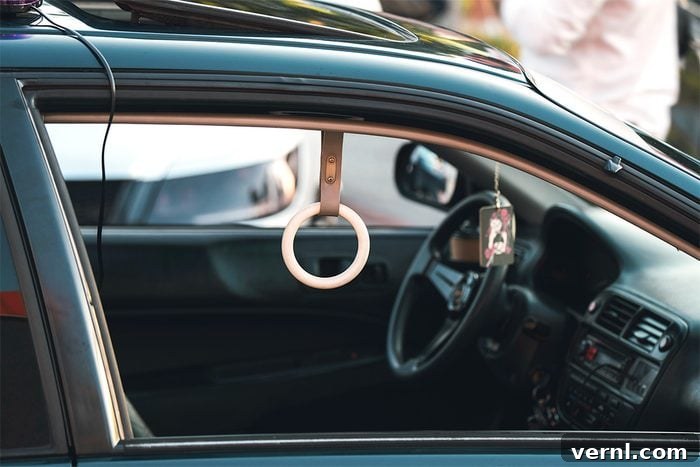
The term “tsurikawa” (吊り革) holds a simple yet profound meaning derived from its Japanese roots: “tsuri” (吊り) translates to “hang,” and “kawa” (革) means “leather.” This etymology directly points to their original form and function. Historically, tsurikawa were practical, everyday objects found extensively in Japanese public transportation, particularly in train cars and subway systems. These durable straps, originally made of leather or sturdy plastic, hung from the ceiling, providing standing passengers with a secure handhold to maintain balance while the vehicle was in motion. This essential function helped ensure passenger safety and comfort during commutes.
As JDM Tsurikawa explains, the name perfectly “describes objects, usually suspended, that help standing passengers to keep their balance while the vehicle is in motion.” Their design was purely utilitarian, focused on durability and ergonomics for public use. However, like many utilitarian items, their journey from public transit to automotive icon is a fascinating tale of subversion and cultural adoption.
From Rebellion to Iconic JDM Accessory
The transition of tsurikawa from mundane train handles to cherished car accessories is closely intertwined with the emergence of Japan’s vibrant car modification scene, particularly the “Bosozoku” (暴走族) subculture. This notorious youth subculture, which gained prominence in the 1970s and 80s, was characterized by its radical modifications to motorcycles and cars, often accompanied by rebellious attitudes and disregard for societal norms. For the Bosozoku, stealing a tsurikawa from a public train and displaying it on their heavily customized vehicles became a powerful symbol of defiance against authority and mainstream society. It was an act of nonconformity, a statement of their unique identity and disdain for rules.
JDM Performance aptly defines this evolution as “a mix of rebellion against conventional norms and a passion for automotive style, particularly in the JDM community.” Over time, as the Bosozoku era waned and elements of Japanese Domestic Market (JDM) car culture gained global recognition, the tsurikawa transitioned from a symbol of outright rebellion to a celebrated aesthetic emblem. It became an instantly recognizable nod to classic Japanese street car styling and a way for enthusiasts to showcase their appreciation for the history and rebellious spirit of JDM culture.
The Enduring Appeal and Variations of Tsurikawa
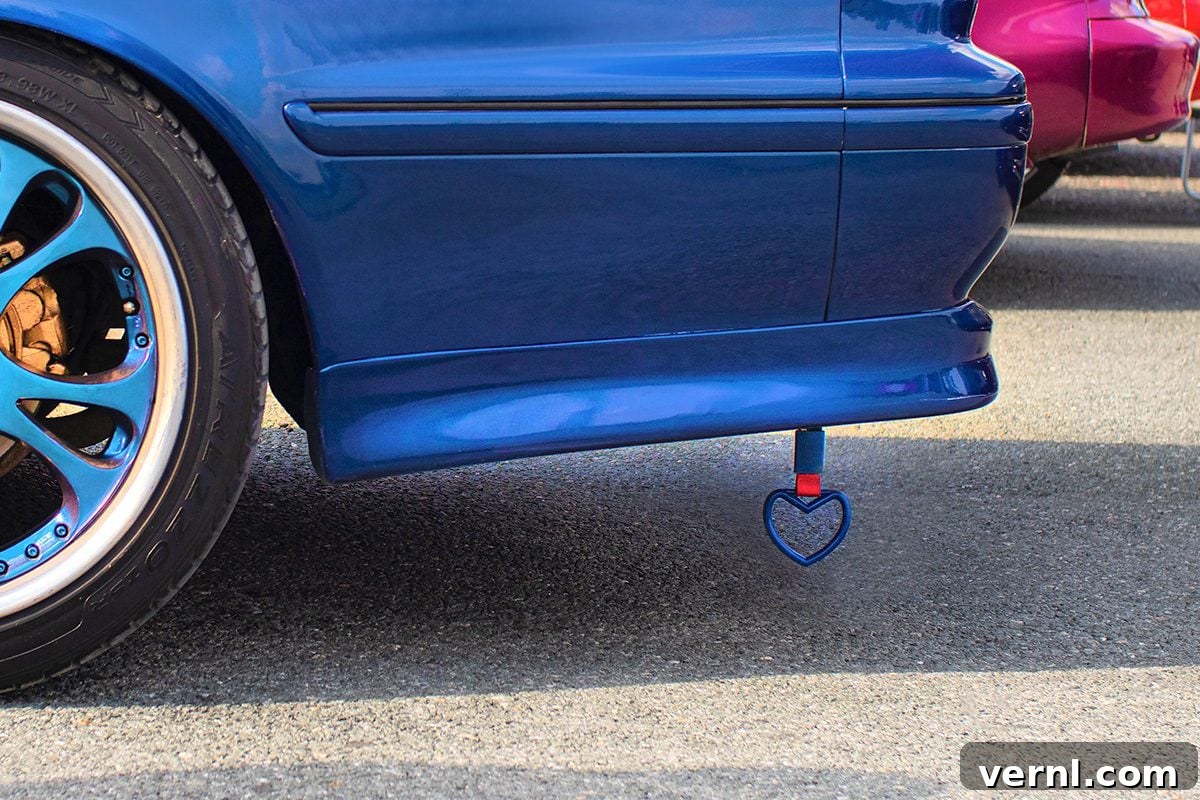
Today, while the act of stealing tsurikawa from trains is no longer commonplace (and certainly not encouraged), there’s a thriving market for new, custom-made versions. These modern tsurikawa come in a vast array of designs, colors, and materials, far beyond the utilitarian straps of yesteryear. While the classic white plastic ring remains a popular choice, enthusiasts can now find tsurikawa shaped like hearts, stars, diamonds, and even unique character designs, crafted from materials ranging from durable plastics and resins to polished metals and even wood. This variety allows owners to personalize their vehicles while still paying homage to the accessory’s rich heritage.
Their placement on vehicles is also versatile. Many enthusiasts choose to hang them from the rear bumper, often dragging just above the ground, a style that originated with the Bosozoku as a further act of rebellion, implying they were ‘too cool’ to care if it scraped. Others prefer to display them inside the car, perhaps hanging from the rearview mirror or grab handles, serving as a constant reminder of JDM roots and personal style. Regardless of placement, the tsurikawa serves as a badge of honor for those deeply immersed in or appreciative of Japanese car culture.
Beyond Aesthetics: The Importance of Understanding
While tsurikawa are undeniably a cool and meaningful accessory for many, the initial confusion of the Reddit user highlights an important point: understanding what these items are – and are not – is crucial. As reiterated, their primary function in automotive culture is symbolic and aesthetic. They are not engineered to withstand towing forces, nor do they serve any practical performance enhancement. Misusing them could lead to accidents, damage, or even legal issues in some regions if they are perceived as obstructing vehicle functions or creating a hazard.
For those new to the JDM scene, encountering a tsurikawa for the first time can be a genuinely puzzling experience. However, armed with knowledge of its origins in Japanese public transport, its rebellious past with the Bosozoku, and its current status as an iconic JDM style statement, its presence makes perfect sense. It’s a tangible link to a rich automotive history, a piece of cultural rebellion transformed into an admired accessory, and a clear signal of an owner’s passion for a distinctive style.
Conclusion: A Small Accessory with a Big Story
The humble tsurikawa, once a simple handle in a train car, has journeyed far beyond its initial purpose. It has evolved into a powerful symbol within the global automotive community, representing rebellion, unique style, and a deep connection to Japanese car culture. Whether you see it dangling from a bumper, swaying from a rearview mirror, or adorning a meticulously customized JDM machine, the tsurikawa is much more than just an accessory. It is a storyteller, silently narrating tales of defiance, cultural heritage, and the enduring passion for unique automotive expression. Its presence is a testament to how even the most unassuming objects can gain profound meaning and become iconic symbols within specific subcultures, uniting enthusiasts worldwide while also sparking curiosity and sometimes, a little confusion.
Sources
- The Tsurikawa Story, JDM Tsurikawa.
- Tsurikawa Meaning: Discover the Significance of Tsurikawa in JDM Car Culture, JDM Performance, 2025.