
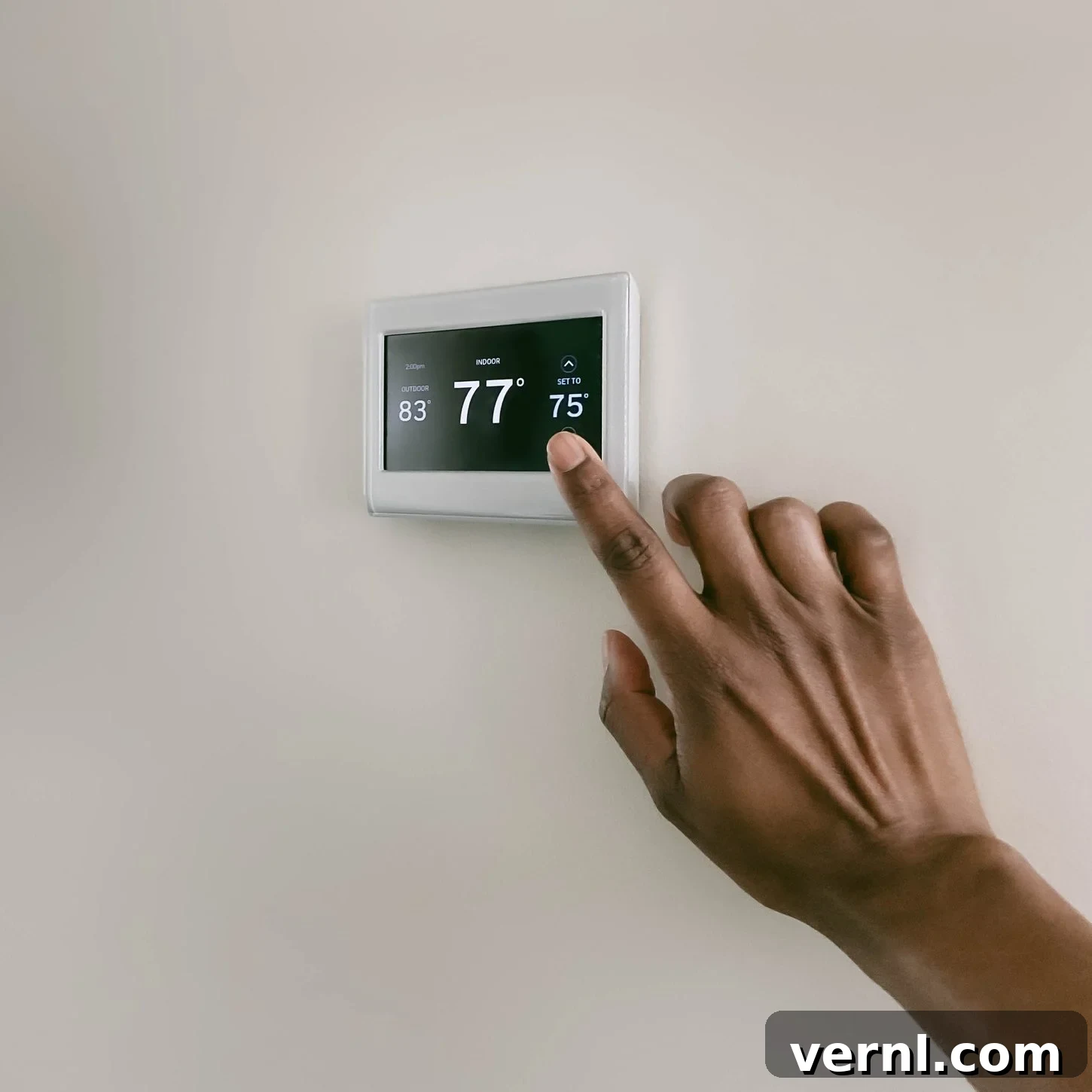
As the vibrant colors of summer begin to fade, many regions across the country continue to experience warm temperatures, necessitating the use of air conditioning well into the autumn months. For homeowners and renters alike, the consistent hum of an AC unit often brings with it a nagging concern about escalating utility bills. This leads to a fundamental question many ponder: “What’s the most efficient and cost-effective way to use my air conditioning system?” Navigating the balance between comfort and energy savings is a common challenge, but with the right knowledge, you can significantly optimize your cooling strategy and keep those energy costs in check.
Is It Cheaper to Leave Your Air Conditioner On All Day? Unpacking the Efficiency Debate
The question of whether to shut off your air conditioning when you’re away from home or to let it run continuously has long been a subject of debate. Many believe that powering down saves energy, while others argue that the unit works harder to cool a hot house from scratch, negating any savings. To shed light on this crucial energy dilemma, a team of engineers, including two professors and one Ph.D. student from the University of Colorado, conducted a comprehensive study. Their findings provide valuable insights, revealing that the answer isn’t always straightforward and largely hinges on how much energy is required to remove accumulated heat from your living space.
Several critical factors come into play when determining the most energy-efficient approach for your home cooling. These include the quality of your home’s insulation, the specific climate you live in, and the type of air conditioning unit you utilize. A well-insulated home, for instance, significantly slows down heat transfer from the outside, meaning less heat will penetrate your indoor environment during the day. This reduction in heat gain directly lessens the workload on your AC system, making it more efficient whether it runs constantly or cycles on and off. Similarly, ambient humidity levels and the particular design of your AC system can profoundly impact its operational efficiency and overall energy consumption.
The Colorado researchers meticulously analyzed various scenarios to address the core question: Should you leave your air conditioner running when you’re out? They investigated two distinct climates, examined three different AC systems, and considered three typical cooling cycles. To ensure robust and applicable results, they standardized the time of day for their measurements, crucially including the hottest part of the day when AC units typically face their highest demand. By accounting for a diverse range of experiences and variables, their study aimed to provide a comprehensive answer to this pervasive household energy query.
Intriguingly, the study revealed that the most technologically advanced and inherently efficient air conditioning systems didn’t always translate into the highest energy savings when considering the “on vs. off” debate. This highlights how complex the interaction between a home’s thermal characteristics, external environmental conditions, and system operation truly is. However, a general consensus emerged: in most scenarios, turning off your AC when you leave home can indeed lead to energy savings.
Specifically, the research indicated that by leaving your air conditioner off for an extended period, such as eight hours, you are almost guaranteed to see energy savings, regardless of the type of cooling system you have installed. This is because the energy saved by not running the unit for an extended period typically outweighs the energy expended to bring the temperature back down later. However, the results were more nuanced for shorter periods, like leaving the AC off for just four hours. Depending on the humidity levels and the specific AC system, this shorter shutdown could result in minor energy savings, or in some cases, it might even consume slightly more energy than simply letting the unit run all day at a higher setpoint. This suggests that the duration of your absence is a key factor in maximizing potential savings.
One critical aspect the study did not explicitly account for was the physical condition and cleanliness of the AC system itself. A neglected or dirty air conditioner unit will inevitably operate less efficiently. Over time, dust, debris, and grime can accumulate on coils, filters, and fans, impeding airflow and heat exchange. This forces the unit to work harder and consume more energy to achieve the desired cooling. Therefore, it’s paramount to remember to clean your unit regularly and ensure it receives proper maintenance to keep it functioning at its peak efficiency and truly realize any energy savings.
How Often Should Your AC Turn On and Off? Understanding Optimal Cycling
The operational rhythm of your air conditioning system—how frequently it cycles on and off—is a crucial indicator of both its health and efficiency. This frequency is largely influenced by external weather conditions, the precise temperature you’ve set for your home on the thermostat, and the inherent efficiency of your particular system. In an ideal scenario, during a typical summer day, a properly functioning central AC unit should engage in cooling cycles that last approximately 10 to 15 minutes, with the unit turning on and off roughly every 15 to 20 minutes. This provides sufficient time for the system to effectively cool the air, remove excess humidity, and then rest before the next cooling demand.
It’s important to remember that these figures serve as a general guideline. There will naturally be instances where your system deviates from this pattern. For example, on intensely hot and humid days, your AC unit will need to work significantly harder and run for longer periods to maintain your desired set temperature, resulting in longer cycles and less frequent shutdowns. Conversely, on milder days, the cycles might be shorter and more spaced out.
Understanding Short Cycling: A Red Flag for Your AC System
If you notice your AC unit is constantly turning on and off in rapid successions, often running for only a few minutes at a time, this phenomenon is known as “short cycling.” Short cycling is a significant red flag and usually indicates an underlying problem that requires immediate attention. Beyond just being annoying, short cycling can lead to a host of detrimental effects:
- Increased Energy Bills: Each time your AC unit starts up, it draws a significant surge of power. Frequent starts and stops consume more energy than continuous, stable operation.
- Premature Wear and Tear: The constant on-off stress puts undue strain on the compressor and other vital components, accelerating wear and tear and potentially leading to expensive repairs or even premature system failure.
- Inadequate Cooling and Dehumidification: Short cycles don’t allow the system enough time to properly cool the air throughout your home or effectively remove humidity, leaving your living spaces feeling clammy and uncomfortable.
- Uneven Temperatures: You might experience hot and cold spots throughout your home as the system struggles to maintain a consistent temperature.
Short cycling can be caused by several issues, each requiring a different diagnostic and repair approach:
- Oversized AC Unit: Counterintuitively, an AC unit that is too large for your home’s square footage can be a primary culprit. An oversized unit cools the space too quickly, satisfying the thermostat’s setting before it has completed a full, efficient cooling cycle, thus causing it to shut off prematurely.
- Clogged Air Filter: A dirty or clogged air filter restricts airflow, forcing your AC to work harder and less efficiently. This reduced airflow can cause the evaporator coil to freeze up, which can trigger the system to short cycle.
- Low Refrigerant: Refrigerant is the lifeblood of your AC system, responsible for absorbing heat from your home. A leak leading to low refrigerant levels severely impairs the unit’s ability to cool, causing it to run longer to try and reach the set temperature, but often leading to overheating and short cycling as a protective measure.
- Malfunctioning Thermostat: A faulty thermostat might inaccurately read the room temperature or have damaged wiring, causing it to send incorrect signals to the AC unit, leading to erratic cycling.
- Dirty Coils: Both the evaporator coil (indoor unit) and condenser coil (outdoor unit) need to be clean. Dirt and grime reduce their ability to transfer heat, making the system less efficient and prone to issues like short cycling.
- Electrical Problems: Issues with wiring, capacitors, or relays can also disrupt the power supply or control signals, leading to inconsistent operation.
If you suspect your AC unit is short cycling, it’s highly advisable to consult with a qualified HVAC technician. Prompt diagnosis and repair can prevent further damage, improve efficiency, and restore comfort to your home. Additionally, be sure to explore and debunk common air conditioner myths that might be influencing your cooling habits.
When Your AC Runs Too Long: Long Cycling Issues
On the other end of the spectrum from short cycling, you might encounter situations where your AC unit runs almost continuously, or for unusually long periods, without reaching your desired temperature or cycling off. This “long cycling” or continuous running is also a sign of inefficiency or a problem:
- Undersized AC Unit: If your AC unit is too small for the size of your home, it will constantly struggle to remove enough heat, leading it to run almost non-stop in a futile attempt to reach the thermostat setting.
- Refrigerant Leaks: Similar to short cycling, low refrigerant levels can mean the system can’t effectively cool, so it keeps running.
- Dirty Coils or Filters: Blocked airflow or poor heat exchange forces the unit to run longer to achieve the same effect.
- Poor Insulation or Air Leaks: If your home is poorly sealed or insulated, conditioned air escapes, and hot air infiltrates continuously, making the AC work harder to maintain temperature.
- Thermostat Malfunction: A faulty thermostat might not be accurately detecting the room temperature or sending the correct signals to shut off the unit, causing it to run indefinitely.
- Ductwork Leaks: Leaks in your ductwork can lead to significant loss of conditioned air, forcing your AC to run longer to compensate.
Both short cycling and long cycling are indicators that your AC system is not operating optimally. Addressing these issues swiftly will not only save you money on energy bills but also extend the lifespan of your unit.
How to Turn Off Your Air Conditioner: Methods and Best Practices
Turning off an air conditioning unit seems like a straightforward task, but the exact method can vary slightly depending on the type of system you have – whether it’s a window unit, a central HVAC system, or a ductless mini-split. Understanding the correct way to shut down your AC ensures not only energy savings but also the safety and longevity of the appliance. Here are the primary methods for turning off your air conditioner:
- Thermostat Method: The Most Common Approach
- Locate Your Thermostat: This is the primary control panel for your home’s heating and cooling. It’s usually mounted on an interior wall in a central location.
- Identify the “Off” Setting: Most modern thermostats, whether digital or smart, will have a clear “Off” setting accessible via a switch, button, or touchscreen interface. For older, analog thermostats, you might find a slider switch that moves between “Cool,” “Heat,” and “Off.”
- Select “Off”: Move the switch or press the button to the “Off” position. For smart thermostats, you might need to navigate through a menu. The air conditioning system should then cease operation within a few seconds. Ensure that the fan setting is also moved to “Auto” or “Off” rather than “On,” which would continue to circulate air without cooling.
- Smart Thermostat Considerations: If you have a Wi-Fi-enabled smart thermostat, you might also have the option to turn off your AC remotely via a smartphone app, providing convenience when you’re away from home.
- Breaker Box Method: For Complete Power Disconnection
- Locate Your Home’s Breaker Box: Your electrical panel, or breaker box, is typically found in a utility room, basement, garage, or sometimes on an exterior wall of your house.
- Identify the AC Breaker: The breakers inside should be labeled. Look for one specifically marked “AC,” “HVAC,” “Furnace,” or “Air Conditioner.” In some cases, there might be separate breakers for the indoor and outdoor units. If labels are unclear, you may need to consult your home’s electrical diagram or a professional.
- Switch the Breaker to “Off”: Once identified, firmly flip the toggle switch for the AC breaker to the “Off” position. This action will completely cut off the electrical power supply to your air conditioning unit, effectively turning it off. This method is particularly useful for long-term shutdowns (like winterizing), maintenance, or in case of an electrical emergency.
- Safety Note: Always exercise caution when working with your electrical panel. If you are unsure or uncomfortable, it’s best to contact a qualified electrician or HVAC technician.
- For a Window AC Unit: Simplicity at Its Best
- Power Button on the Unit: Most window air conditioners have a clearly marked power button directly on the unit’s control panel. Simply press this button to turn it off.
- Remote Control: Many window AC units come with a remote control. Find the power button on the remote and press it.
- Unplugging: For complete power disconnection, especially when cleaning or storing the unit, you can simply unplug the power cord from the wall outlet.
Remember, if you plan to shut down your AC unit for an extended period—such as preparing for the winter months or going on a long vacation—it’s highly advisable to consider having a professional HVAC service technician perform a seasonal tune-up. They can clean the unit, check for any potential issues, and ensure it’s in optimal condition for storage and ready for efficient operation when you switch it back on for the next cooling season. This proactive approach can prevent future breakdowns and costly repairs.
Note: Always consult the user manual provided by the manufacturer for precise and accurate instructions on how to operate, troubleshoot, and maintain your specific AC unit model. Manufacturer guidelines are your best resource for ensuring safe and efficient usage.
Maximizing Your AC’s Efficiency: Beyond On/Off Strategies
While the “on or off” debate is crucial for energy savings, optimizing your air conditioner’s efficiency involves a holistic approach. Implementing several best practices can lead to significant reductions in your energy consumption and enhance your home’s comfort levels.
1. Utilize Programmable or Smart Thermostats
These modern devices are game-changers for AC efficiency. A programmable thermostat allows you to set specific temperature schedules for different times of the day, automatically adjusting the temperature when you’re away or asleep. Smart thermostats take this a step further, learning your preferences, integrating with smart home systems, and often allowing remote control via a smartphone app. By programming your thermostat to a higher temperature (e.g., 78-80°F or 25-27°C) when you’re out or asleep, and then dropping it to your comfort zone (e.g., 72-75°F or 22-24°C) when you’re home and awake, you can save a considerable amount of energy without sacrificing comfort.
2. Regular Maintenance is Key
Neglecting your AC system is a surefire way to drive up energy costs and shorten its lifespan. Consistent maintenance includes:
- Changing Air Filters: Replace or clean your air filters every 1-3 months, or more frequently if you have pets or allergies. A clean filter ensures optimal airflow and prevents strain on your system.
- Coil Cleaning: Ensure both the evaporator (indoor) and condenser (outdoor) coils are clean. Dirty coils reduce the system’s ability to absorb and release heat, forcing it to work harder. This is often best handled by a professional during an annual tune-up.
- Clear the Outdoor Unit: Keep the area around your outdoor condenser unit clear of debris, overgrown vegetation, and anything that might obstruct airflow.
- Professional Tune-Ups: Schedule an annual professional inspection and tune-up. A technician can identify potential issues early, clean components thoroughly, check refrigerant levels, and ensure all parts are working efficiently.
3. Seal Air Leaks and Improve Insulation
Your AC unit can be the most efficient on the market, but it will struggle if your home is a leaky sieve. Conditioned air can easily escape through gaps around windows, doors, electrical outlets, and ductwork. Similarly, insufficient insulation in your attic, walls, and floors allows heat to penetrate during summer. Prioritize:
- Weatherstripping and Caulking: Seal gaps around windows and doors.
- Duct Sealing: Have your ductwork inspected and sealed to prevent conditioned air loss.
- Attic Insulation: Ensure your attic has adequate insulation (check recommended R-values for your climate).
- Window Upgrades: Consider energy-efficient windows or apply window films to reduce heat gain.
4. Utilize Strategic Fan Use
Ceiling fans and exhaust fans can complement your AC and reduce its workload. Ceiling fans create a wind-chill effect, making you feel cooler without actually lowering the room temperature. This allows you to set your thermostat a few degrees higher. Remember that ceiling fans cool people, not rooms, so turn them off when you leave a room. Exhaust fans in kitchens and bathrooms can help remove heat and humidity generated by cooking and showering.
5. Manage Sunlight and Shade
Direct sunlight entering your home, especially through south and west-facing windows, can significantly increase indoor temperatures. Implement strategies to block solar heat gain:
- Blinds and Curtains: Keep blinds, shades, or drapes closed during the hottest parts of the day. Energy-efficient window treatments like blackout curtains can be particularly effective.
- Awnings and Overhangs: Install exterior awnings or lengthen existing roof overhangs to shade windows.
- Landscaping: Plant trees and shrubs strategically to provide natural shade for your home, especially on the west and south sides.
6. Consider Zoning Systems
For larger homes or multi-story residences, a zoning system can provide tailored comfort. Zoning allows you to divide your home into different temperature zones, each controlled by its own thermostat. This means you only cool the areas that are currently occupied, avoiding the wasteful cooling of unused rooms and significantly reducing energy consumption.
Conclusion: Smarter Cooling for a Sustainable Future
Understanding the nuances of your air conditioning system and adopting smart usage habits are essential for both your wallet and the environment. While the University of Colorado study suggests that turning off your AC for longer periods generally saves energy, the specific circumstances of your home, climate, and system type will always play a role. By combining informed decisions about when to run your AC with consistent maintenance, strategic use of fans, and improvements in home insulation and sealing, you can achieve optimal comfort without breaking the bank. Embrace these tips to not only extend the life of your cooling system but also contribute to a more energy-efficient and sustainable household. Your comfort, your budget, and the planet will thank you.