
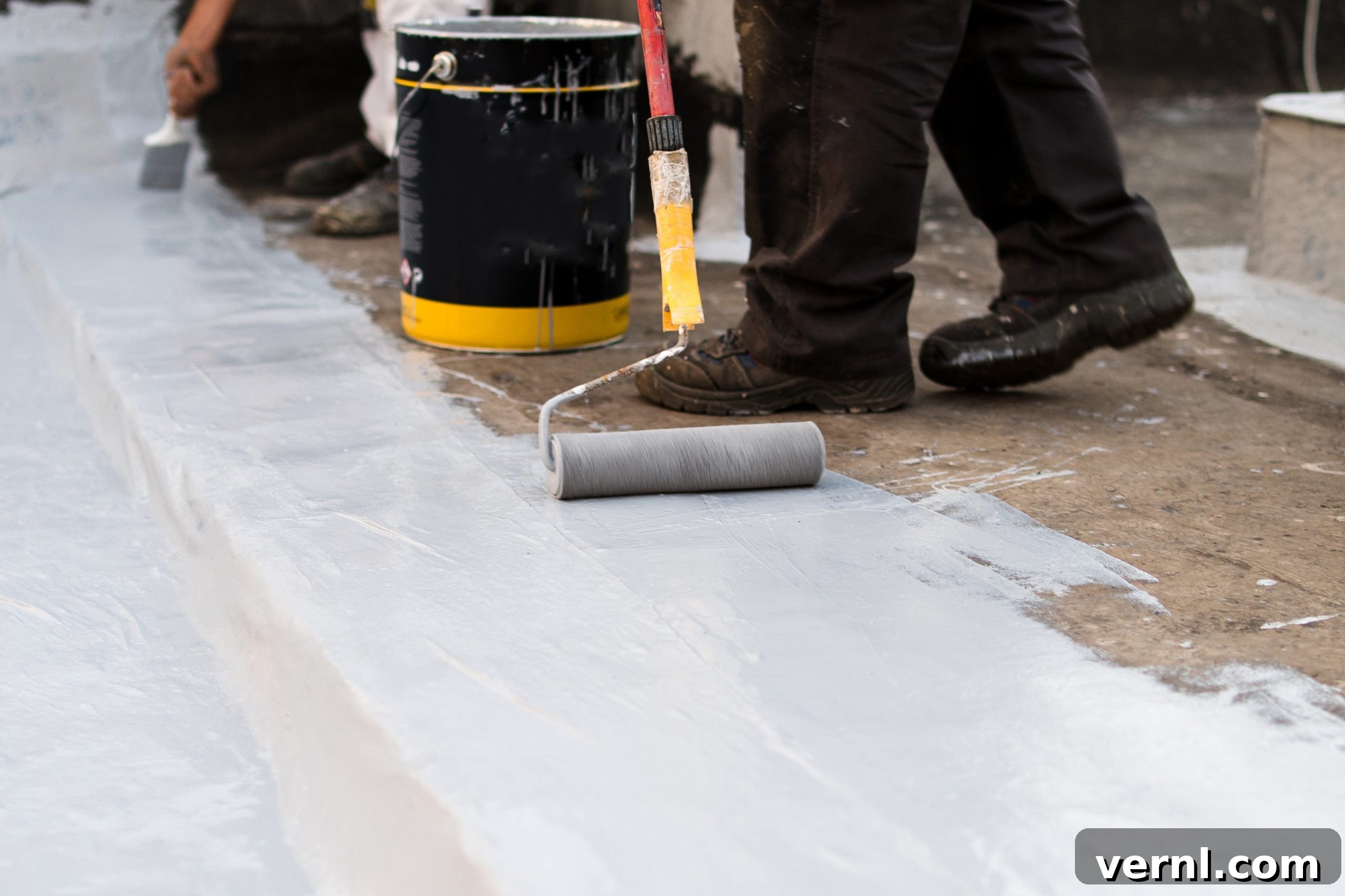
Basement moisture is a pervasive issue for homeowners, manifesting in various forms from the subtle musty odor of mildew to the alarming sight of standing water across the floor. Regardless of its severity, any sign of moisture in your basement warrants immediate attention. Even minor dampness, often dismissed as insignificant, can lead to significant health concerns for individuals sensitive to mold and mildew. More severe water intrusion not only renders your basement unusable but can also compromise the structural integrity of your home’s foundation, leading to costly and extensive repairs down the line.
The financial implications of tackling basement moisture problems can vary dramatically. While professional waterproofing services can indeed be a substantial investment, homeowners often have the opportunity to address simpler issues themselves, saving a considerable amount of money. Tasks such as sealing minor cracks in concrete walls with hydraulic cement or applying a waterproof coating to prevent minor seepage are accessible DIY projects. Outdoors, extending downspouts to direct roof runoff away from the foundation is another straightforward, yet effective, measure to prevent water accumulation near your home.
However, basements, by their very nature, are susceptible to natural forces, particularly their proximity to the water table. This can introduce more complex issues that demand drastic—and often more expensive—professional solutions. These advanced interventions may include installing a robust sump pump system, establishing an indoor or outdoor perimeter drain, or applying a waterproof barrier around the exterior of the foundation. These types of projects typically fall within the purview of seasoned professionals due to the specialized knowledge, equipment, and labor required.
According to Dallas Nevill of Rainbow Restoration, a Neighborly company and a trusted name in restoration services, the costs for typical basement waterproofing projects can range from $1,900 to $6,000 for an average-sized house. It’s crucial to understand, however, that these figures are general estimates. The actual cost can escalate significantly depending on the specific mitigation methods required, the extent of the damage, and regional labor rates. Early detection and intervention are key to managing these costs effectively.
While this article focuses on addressing existing basement moisture, it’s worth noting that adding a basement to an existing home is a complex and expensive endeavor. If you’re contemplating such a project, you can learn more about how to add a basement to your house through specialized resources.
Factors That Significantly Impact Basement Waterproofing Cost
When budgeting for basement waterproofing, it’s important to recognize that there is no universal “standard cost.” The total amount you’ll invest is a dynamic figure, heavily influenced by a confluence of factors unique to your home and the nature of the water problem. Understanding these variables will help you prepare for the financial commitment and make informed decisions.
- Size of the Basement: Unsurprisingly, the dimensions of your basement play a primary role in determining the overall cost. Nevill estimates a general range of $3.50 to $6.50 per square foot for waterproofing services. This per-square-foot cost typically applies to applications like floor sealants or internal wall coatings. For perimeter-based solutions such as drain tile systems or exterior membranes, the cost is often calculated per linear foot, covering the entire length of the foundation walls that need treatment. A larger basement not only requires more materials but also more labor, leading to higher overall expenses.
- Cause of the Water Incursion: Identifying the root cause of water entry is paramount, as different problems demand distinct solutions and, consequently, different price points. Water can seep up through the floor due to hydrostatic pressure when the groundwater level rises significantly, requiring interior drainage systems. Alternatively, water may enter through the walls due to insufficient outdoor drainage, lateral pressure from saturated soil, or cracks in the foundation, which may necessitate exterior waterproofing or crack repair. A thorough assessment by a professional can pinpoint the exact cause and recommend the most effective and efficient solution.
- Severity of the Problem and Associated Damages: A minor damp spot or a single hairline crack will naturally incur far less expense to patch than addressing full-scale flooding or extensive structural damage. The severity dictates the scope of work. Beyond the immediate waterproofing, you must also factor in the cost of repairing any existing water damage. This could include repairing or replacing damaged foundation elements, extensive mold remediation (which often involves specialized cleaning and air quality testing), and replacement of water-damaged finishes in a finished basement. These secondary repairs can significantly inflate the final bill.
- Finished vs. Unfinished Basement: Waterproofing tends to be considerably more complicated and expensive in a finished basement. The presence of drywall, flooring, and other installed finishes means that contractors often have to remove these materials to access the foundation walls or floor slab underneath. This demolition adds to labor costs, and after the waterproofing is complete, these finishes will need to be replaced, incurring additional expenses for materials and re-installation. In contrast, an unfinished basement offers easier access, reducing labor time and material replacement costs.
- DIY vs. Professional Waterproofing: Homeowners can achieve significant savings by undertaking certain waterproofing tasks themselves, especially for minor issues. This approach primarily involves material costs and your time. However, not all problems are suitable for DIY solutions; complex issues like extensive foundation cracks, high water tables, or persistent flooding often require the expertise, specialized equipment, and warranties offered by professional contractors. Attempting a DIY fix for a severe problem can lead to more costly damage if not executed correctly.
- Geographic Location and Local Labor Rates: Costs for materials and labor can vary widely depending on your region. Urban areas or areas with a higher cost of living generally have higher labor rates for skilled trades. It’s always advisable to obtain multiple quotes from local contractors to get an accurate estimate for your specific area.
- Type of Materials and System Chosen: The specific waterproofing materials and systems chosen also influence cost. For example, a simple surface coating is less expensive than an internal drain tile system, which in turn is typically less than a full exterior excavation and membrane application. High-quality, durable materials may have a higher upfront cost but often offer superior, long-lasting protection.
If you’re considering enhancing your basement’s utility and aesthetic appeal beyond just waterproofing, it’s wise to also explore the cost of remodeling a basement to factor that into your overall home improvement budget.
Cost for DIY Basement Waterproofing: Taking Control of Minor Issues
For many homeowners, tackling basement moisture problems doesn’t always require calling in the professionals. A significant portion of these issues, especially those stemming from condensation or minor seepage, can be effectively resolved with a do-it-yourself approach. The primary costs involved in these types of repairs are typically limited to the purchase of tools and materials, making them a budget-friendly option for proactive homeowners.
Curing Basement Condensation: Improving Air Quality and Comfort
It’s a common misconception that all basement moisture originates from outside. In reality, a substantial number of basement moisture problems are internally generated, primarily due to poor ventilation and/or the presence of high-humidity sources within the basement itself. Common culprits include unvented clothes dryers, indoor clotheslines, leaky plumbing, or even just the natural humidity of the air interacting with cooler basement surfaces.
Homeowners can often significantly mitigate these issues by identifying and addressing the source of the moisture. This might involve rerouting a clothes dryer vent to the exterior, avoiding drying clothes indoors, or repairing leaky pipes. Following source control, improving air circulation and drying out the basement is crucial. This can be achieved with a combination of fans to circulate air, heaters to slightly raise the temperature and reduce the dew point, and perhaps most importantly, dehumidifiers. A good quality dehumidifier designed for areas ranging from 1,000 to 1,500 square feet, like many available on platforms such as Amazon, typically costs between $100 and $200. The specific cost will depend on the unit’s capacity and features, which should be matched to the size of your basement and the level of humidity.
Beyond appliances, consider installing exhaust fans in areas prone to high humidity, such as laundry rooms or bathrooms, and ensuring any existing windows or vents are utilized for cross-ventilation. Sealing air leaks around windows and utility penetrations can also prevent humid outdoor air from entering and condensing.
Insulating the Walls: A Barrier Against Condensation and Energy Loss
Sometimes, the fix for persistent condensation is more involved than just dehumidification. A common cause of condensation is the significant temperature differential between the relatively warm, humid basement air and the typically much colder concrete or masonry walls. These cold surfaces act as dew points, causing moisture to condense. Insulating the basement walls effectively creates a thermal barrier, raising the surface temperature of the interior wall and preventing condensation.
The cost of insulating walls can vary based on the chosen method and materials. If you opt for a traditional approach of installing wall framing (2x4s) and filling the cavities with fiberglass batt insulation, you’re looking at material costs between $3 and $5 per square foot. This method also requires a vapor barrier to prevent moisture from reaching the insulation. If you then choose to add new drywall over the insulation to create a finished look, the cost will increase by approximately $1 per square foot for the drywall materials alone. This approach essentially marks the beginning of a finished, habitable basement space.
For a more budget-friendly and simpler DIY solution, you can directly glue rigid foam insulation board to the concrete walls. This method can cost about $1 to $2 per square foot of wall space for materials. Rigid foam boards offer excellent insulation value and act as a vapor barrier, making them a popular choice for DIY basement insulation. This can be covered with a fire-rated material like drywall for safety and aesthetics, or left as is in an unfinished space.
Patching and Coating the Walls: Direct Defense Against Seepage
For basements experiencing minor water seepage through cracks or porous concrete walls, a combination of patching and coating can provide effective and DIY-friendly protection from the inside. This strategy is particularly useful for managing lateral water pressure from the soil outside.
The first step involves patching any visible cracks. Hydraulic cement is an excellent material for this purpose. It’s designed to expand as it cures, effectively filling and sealing cracks even in the presence of active water leaks. A sufficient quantity of hydraulic patching cement for most typical DIY jobs can be purchased for around $20. The application process usually involves preparing the crack, mixing the cement, and forcing it into the crack with a trowel or putty knife, ensuring it creates a tight seal.
After patching, applying an elastomeric coating to the interior basement walls provides an additional layer of protection. These specialized paints are designed to be flexible and highly resistant to water, creating a waterproof barrier on the wall surface. Elastomeric coatings can typically be applied like regular paint and cost approximately $2.50 per square foot. They not only prevent water from passing through porous concrete or masonry but can also bridge small, non-structural hairline cracks that might appear in the future. For added protection against floor seepage, an epoxy floor sealant can also be applied, typically ranging from $0.50 to $2.00 per square foot for materials.
Cost for Professional Basement Waterproofing: When Experts Are Essential
When homeowners face more severe or persistent basement water problems—such as groundwater consistently seeping through the floor or walls, leading to significant accumulation—a professional approach often becomes not just advisable, but necessary. These complex issues frequently require a combination of waterproofing strategies and specialized equipment. In such scenarios, the costs are likely to rise considerably higher than the initial upper limits quoted for simpler projects, reflecting the extensive labor, technical expertise, and advanced materials involved. It’s crucial to seek out reputable contractors who offer warranties for their work and who can provide a comprehensive assessment of your specific situation.
Installing a Drain Tile System: The Heart of Interior Waterproofing
A drain tile system, often referred to as a French drain when installed internally, is a highly effective interior waterproofing solution designed to manage hydrostatic pressure and collect water before it enters your living space. This system typically involves carefully digging a shallow trench or trough into the basement floor along the interior perimeter walls. Perforated drain pipes are then laid in this trench, surrounded by gravel, which helps filter water and allows it to flow freely. Installers meticulously calibrate the slope of the drain to ensure efficient water flow to a central runoff point, usually a sump pit. Once the pipes are in place, the trench is covered with concrete or tiles to restore the floor surface.
The installation of an interior drain tile system is a labor-intensive process that requires breaking concrete, excavation, pipe laying, and then restoring the floor. Due to this complexity, specialized equipment, and the need for precision, the cost can range significantly, typically from $8,000 to $15,000 for an average-sized basement. Factors influencing this cost include the linear footage of the perimeter, the thickness of the concrete slab, and the type of materials used.
Installing a Sump Pump: Your Basement’s Last Line of Defense
A sump pump is often an indispensable component of an effective drain tile system, though it can also be installed as a standalone solution for basements prone to water accumulation in a specific low spot. Its primary function is to collect water in a sump pit and then pump it out and away from the house, typically into a storm drain or a designated drainage area on the property. Professional installation involves breaking through the basement floor to dig a sump pit, which is usually a pre-formed basin. The sump pump is then placed inside this pit, and connected to a discharge pipe that carries the water outside or sometimes ties into the home’s waste system (where permitted by local code).
Sump pump installation costs range from $1,500 to $3,000, depending on factors such as the type of pump (submersible vs. pedestal), the need for electrical work, the complexity of the discharge line, and the inclusion of features like battery backup systems (highly recommended for power outages) or high-water alarms. A quality sump pump with a reliable backup system can provide invaluable peace of mind during heavy rains or sudden thaws.
Solving Outdoor Drainage Issues: Preventing Water Before It Enters
Many basement moisture problems originate from poor drainage around the home’s foundation. Addressing these exterior issues is a proactive and highly effective way to prevent water from ever reaching your basement walls. One common solution is regrading the soil around the foundation. This involves creating a positive slope that directs surface water away from the house. Regrading along one wall might cost between $500 to $1,000, while re-sloping the entire house perimeter could range from $1,000 to $3,000, depending on the amount of earth moved and any landscaping considerations.
For more persistent outdoor water issues, an exterior French drain can be a superior solution. Unlike interior drain tiles, an exterior French drain intercepts water before it can put pressure on your foundation walls. This system involves digging a trench around the outside perimeter of the house, lining it with filter fabric, placing a perforated pipe at the bottom, surrounding it with gravel, and then covering it with topsoil. While this is something a handy homeowner could undertake with a shovel, hiring a professional with trenching equipment is often more efficient and ensures proper depth and slope. Professional installation costs typically range from $10 to $50 per linear foot, with variations based on the required depth of the trench, soil conditions (rocky soil increases costs), and accessibility.
Waterproofing the Foundation from Outside: The Ultimate Exterior Barrier
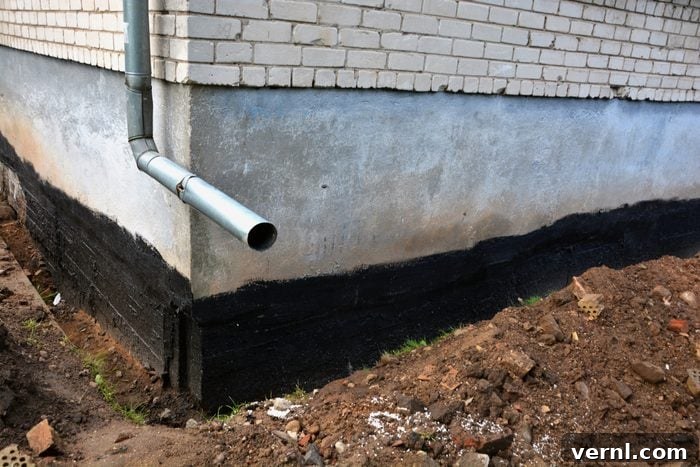
For basements with severe and persistent leaks through the foundation walls, particularly those caused by saturated soil and high lateral pressure, installing a comprehensive waterproof membrane around the outside perimeter of the foundation is often the most effective and permanent cure. This method involves extensive excavation around the entire foundation of the house, which is a major undertaking. Once the foundation walls are exposed and thoroughly cleaned, a liquid membrane (like asphaltic polymer coatings) or a sheet membrane (such as rubberized asphalt membranes) is applied to create a seamless, impenetrable barrier against water.
Additionally, a dimple board or drainage board may be installed over the membrane to provide an extra layer of protection and create an air gap that allows water to drain freely down to an exterior French drain system. The costs for this labor-intensive process, which includes excavation, material application, and careful backfilling, typically range from $3 to $6 per square foot for both labor and materials. This is considered a highly invasive but exceptionally robust solution for long-term foundation protection, especially crucial in areas with consistently high water tables or poor soil drainage.