The Ultimate Guide to Gas Furnaces: Efficient Home Heating Explained
For countless homeowners across the United States, natural gas stands as a premier and highly economical source of energy for keeping their homes warm and comfortable. Its widespread availability and cost-effectiveness have cemented its position as the most popular heating option for decades. In fact, statistics from naturalgas.org reveal that a staggering 62 million homes – representing 56 percent of all U.S. residences – rely on a natural gas furnace for their heating needs. This enduring popularity is a testament to its reliability, efficiency, and consistent performance.
Delving into a bit of history, the foundational concept for the modern gas furnace was an innovative creation. It was first conceived and patented in 1919 by Alice Parker of Morristown, New Jersey, marking a significant milestone in residential heating technology.
What is a Gas Furnace?
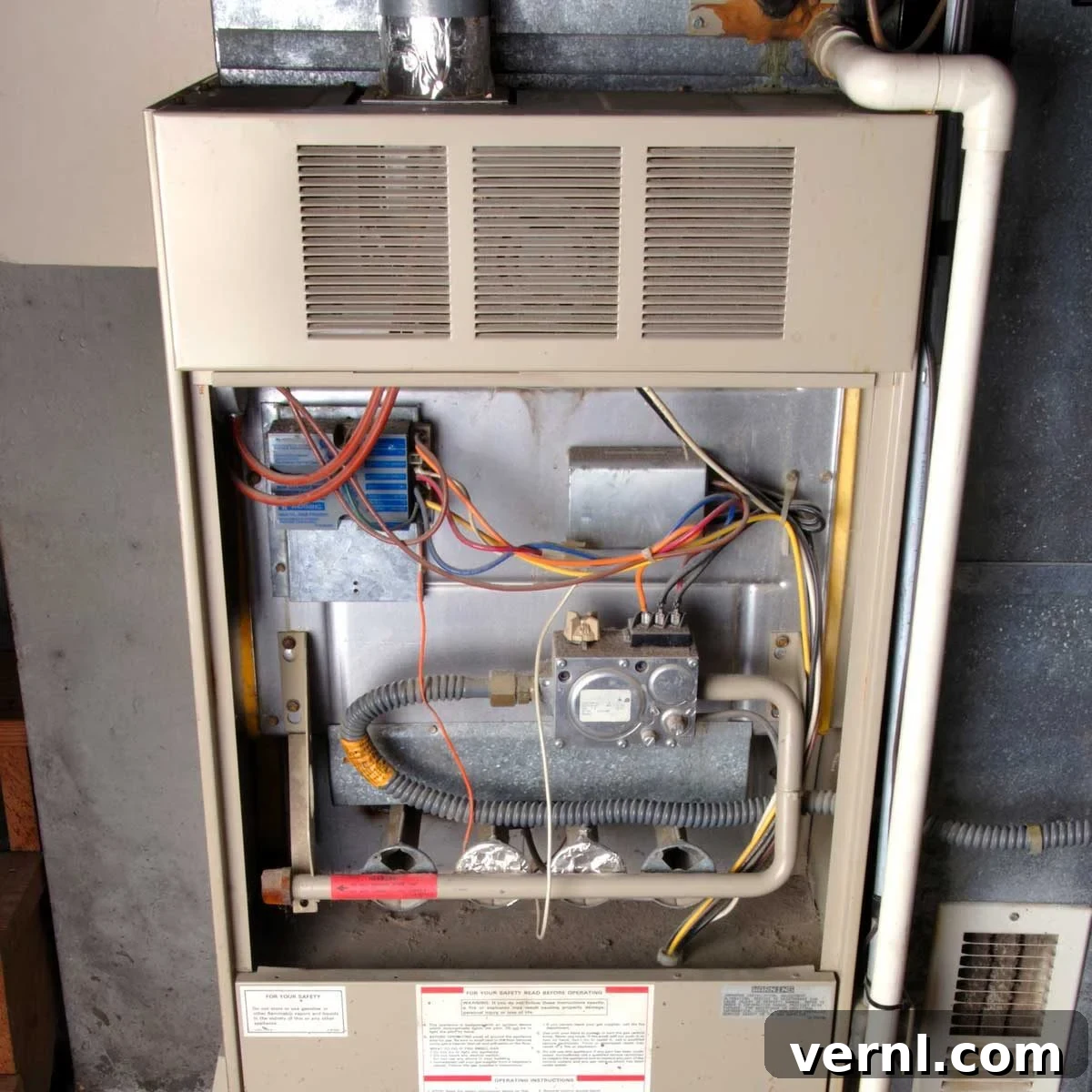
At its core, a gas furnace is a central heating appliance designed to warm indoor spaces. These systems operate by burning either natural gas or propane to generate heat. This heat is then transferred to air, which is subsequently distributed throughout a building via a network of ducts and vents, ensuring consistent warmth in every room. While natural gas and propane are also used to heat water for specific systems like hydronic heating (radiators or in-floor heating), the appliances performing this function are distinctly referred to as boilers, not furnaces, as their primary output is heated water rather than heated air.
How Does a Gas Furnace Work to Heat Your Home?
Understanding the operational mechanics of a modern residential gas furnace reveals an intricate yet highly efficient process. The journey begins when the furnace draws in either natural gas or propane, combining it with air within a sealed combustion chamber. This mixture is then ignited, leading to a controlled burning process that generates significant heat internally.
Crucially, this heat energy doesn’t directly enter your living spaces. Instead, it is safely transferred to the circulating indoor air through a vital component called a heat exchanger. This metallic barrier serves a dual purpose: it effectively transfers warmth to the air intended for your home, while simultaneously keeping potentially harmful combustion exhaust gases (like carbon monoxide) completely separate from your indoor air supply. These exhaust gases are safely vented outside your home through a flue.
Once the air is heated by the heat exchanger, a powerful blower fan springs into action, propelling this warm air through a system of metal ducts to various rooms and areas of your home. Concurrently, a separate set of return air ducts draws cooler air from your home back to the furnace. This continuous cycle of heating and air movement ensures a consistent and comfortable temperature throughout your residence.
The entire operation is intelligently managed by one or more thermostats strategically placed within the home. These devices constantly monitor the indoor temperature and compare it against your desired temperature set point. When the indoor temperature drops below the set point, the thermostat signals the furnace to turn ON and initiate the heating cycle. Once the desired temperature is reached, the thermostat signals the furnace to turn OFF, conserving energy and maintaining comfort.
Key Considerations for Your Gas Furnace
When it comes to your home’s heating system, several factors warrant careful consideration, whether you’re evaluating a potential replacement, monitoring efficiency, or simply understanding your options.
Gas Furnace Replacement vs. Repair: Making the Right Decision
Deciding whether to repair an existing furnace or invest in a new one is a common dilemma for homeowners. The primary factors influencing this decision are the age of the unit, the estimated cost of repairs, and the furnace’s overall performance. Modern furnaces are generally engineered to provide reliable service for approximately 15 to 20 years. To simplify the decision-making process, consider a linear depreciation model: assume your furnace loses a steady amount of its value each year, reaching zero value at the end of its two-decade lifespan.
A widely accepted rule of thumb is this: if the cost of a necessary repair exceeds 50 percent of the furnace’s remaining theoretical value, then replacement becomes a more financially sensible choice. If the repair cost falls below this 50 percent threshold, opting for the repair is usually the more economical path.
Let’s illustrate with an example: Imagine you purchased a furnace 12 years ago for $6,000. Assuming a 20-year lifespan, its value declines by $300 per year ($6,000 / 20 years). With eight years remaining before it hits the 20-year mark, its current theoretical value is 8 years * $300/year = $2,400. If an impending repair is quoted at more than 50 percent of this remaining value ($1,200), then you should strongly consider a complete furnace replacement. Conversely, if the repair cost is less than $1,200, proceeding with the repair is likely the better option.
Monitoring Gas Consumption and Furnace Efficiency
Understanding your furnace’s efficiency goes beyond just the initial purchase. It’s crucial to regularly review the physical quantity of gas consumed, as indicated on your utility bills (e.g., therms or cubic meters), rather than solely focusing on the total cost, which can fluctuate with market prices. If you notice a consistent increase in gas consumption over time, with no significant changes to your home (like adding an extension) or your heating habits (like setting the thermostat higher), it often signals a decline in the furnace’s operational efficiency. In such cases, especially if your furnace is older than 15 years, it might be time to consider a replacement to avoid escalating energy bills.
The efficiency of a gas furnace is quantified by its Annual Fuel Utilization Efficiency (AFUE) rating. This percentage represents how much of the fuel’s energy is converted into usable heat for your home over a year, with the remainder being lost through the exhaust. Standard-efficiency gas furnaces, common in older homes, typically achieve an AFUE of at least 80 percent, meaning 20 percent of the gas consumed is wasted. However, today’s high-efficiency models dramatically improve upon this, converting at least 90 percent of gas energy into heat. The most advanced gas furnaces on the market can even boast AFUE ratings approaching an impressive 98 percent, signifying minimal energy waste and maximum heating output per unit of fuel.
How Heat Is Delivered: Understanding Furnace Stages
Beyond basic efficiency, the way a gas furnace delivers heat significantly impacts both comfort and energy consumption. Furnaces are categorized into different “stages” based on their output capabilities:
- Single-stage models: These are the most basic and typically the least expensive type. A single-stage furnace operates in an “all or nothing” manner. When the thermostat calls for heat, the furnace kicks on at its maximum capacity, regardless of how much heat is actually needed. Once the desired temperature is reached, it shuts off completely. This can lead to larger temperature swings and less consistent heating, often resulting in noticeable bursts of warm air followed by periods of coolness.
- Two-stage gas furnaces: Offering a step up in sophistication, two-stage furnaces can operate at two different heat output levels – usually a lower setting (around 60-70% capacity) and a high setting (100% capacity). For most of the heating season, especially during milder weather, the furnace can run on its lower setting. This allows for longer, gentler heating cycles, which provide more consistent temperatures and improved comfort, while also being more energy-efficient than single-stage units. The higher stage is reserved for colder days when more heating power is truly required.
- Modulating gas furnaces: Representing the pinnacle of gas furnace technology, modulating furnaces are the most advanced and, consequently, the most expensive. Unlike single or two-stage units, modulating furnaces can adjust their heat output in incredibly fine increments, often ranging from 40% to 100% capacity. This precise control allows them to match the exact heating demands of your home with remarkable accuracy. They constantly adjust based on factors such as the outdoor temperature, the difference between the current room temperature and the set point, and how quickly the room is responding to heating. All else being equal, modulating gas furnaces are significantly more efficient than two-stage models and far superior to single-stage units. Their ability to provide a nearly continuous and perfectly matched supply of heat translates into unparalleled comfort, virtually eliminating temperature swings and hot/cold spots within the home.
How Much Does a Gas Furnace Cost?
The investment in a new gas furnace can vary considerably, typically ranging between $3,000 and $12,000 for the unit and professional installation. This broad price spectrum is influenced by several critical factors, including the furnace’s size (BTU output), its efficiency rating (AFUE), the brand and quality of the unit, and the complexity of the installation process. For instance, replacing an existing furnace in an easily accessible location will be less costly than installing a new one in an attic or crawl space that requires extensive ductwork modifications. On average, homeowners can expect to pay around $6,000 for a new gas furnace, professionally installed.
Beyond the initial purchase and installation, it’s essential to consider the ongoing operating costs for natural gas furnaces. These expenses can fluctuate dramatically depending on a confluence of factors: the harshness of your climate, the size and insulation quality of your home, your preferred indoor temperature settings, and the prevailing market price of natural gas. In more temperate regions with well-insulated homes, total annual heating costs might be as low as $500. Conversely, residents in colder climates living in older, less insulated houses could see their heating bills soar to ten times that amount.
When assessing operating costs, it’s crucial not to conflate natural gas prices with those of propane. Although both are combustible gases utilized for heating, propane is almost always substantially more expensive for an equivalent amount of heat output than natural gas. This cost disparity largely stems from their distribution methods: natural gas flows efficiently and economically through an underground pipeline network directly from the source to the consumer, minimizing transportation costs. Propane, however, requires delivery by truck to individual residences, adding significant logistical expenses. Furthermore, in some isolated or rural areas where competition among propane suppliers is limited, propane prices can rise unchecked, further widening the cost gap.
Choosing Between a Gas Furnace and Other Heating Options
For homeowners with existing access to a natural gas line at their property, choosing a natural gas furnace is almost always the most economical and logical option, both for immediate and long-term heating needs. While there might be occasional, short-lived periods where other home heating energy sources temporarily become cheaper, natural gas typically maintains its cost advantage over extended durations.
The decision becomes more complex if natural gas is not available in your area. In such scenarios, propane, while also a combustible gas, presents a different financial picture. As previously noted, market prices for propane are consistently higher than natural gas. If you lack natural gas access, propane may not be the clear-cut, obvious choice for your primary heating system. In these situations, it’s highly advisable to explore alternatives such as an oil-burning furnace, an electric furnace, a modern heat pump system, or even wood heat, depending on local availability and specific needs. Each of these options has its own set of advantages, disadvantages, and operating costs that should be carefully weighed against propane before making a final decision.
Helpful Tips For Buying the Best Furnace for Your Home
Selecting the ideal furnace for your home is a significant investment that impacts your comfort and energy bills for years to come. To ensure you make an informed decision, consider these essential buyer’s guidelines before committing to a purchase:
- Understand Different Types of Furnaces: Familiarize yourself with the various types of furnaces available, including natural gas, propane, oil, and electric models. Each has distinct characteristics, efficiencies, and suitability for different regions and home setups.
- Research Reputable Brands: Investigate the best furnace brands known for their reliability, customer service, warranty offerings, and technological advancements. A well-regarded brand often signifies better product quality and support.
- Consider Specific Furnace Styles: Depending on your home’s layout and existing infrastructure, you might explore specific furnace styles like a complete wall furnace guide for compact spaces or unique heating requirements.
- Explore Alternative Fuel Options: If natural gas isn’t an option, dive deeper into an oil furnace buying guide or an electric furnace buying guide to understand their respective costs, efficiencies, and installation needs.
- Look Beyond Traditional Forced Air: For unique comfort needs or energy efficiency goals, consider alternatives like a hydronic baseboard heater buying guide, which offers radiant heat.
- Assess Your Home’s Specific Needs: Before shopping, get a professional assessment of your home’s size, insulation levels, ductwork condition, and existing electrical or gas lines. This will help determine the correct furnace size (BTUs) and type.
- Prioritize Efficiency (AFUE): Opt for the highest AFUE rating your budget allows, especially if you live in a cold climate. The initial higher cost of a high-efficiency furnace is often recouped through significant energy savings over its lifespan.
- Understand Installation Requirements: The complexity of installation can greatly affect the overall cost. Ensure your chosen HVAC contractor provides a detailed quote that includes all labor, materials, and any necessary modifications to your existing system.
- Review Warranty and Maintenance: A robust warranty provides peace of mind. Also, inquire about recommended maintenance schedules and what’s covered. Regular professional maintenance can extend your furnace’s life and ensure optimal efficiency.
- Get Multiple Quotes: Always obtain at least three quotes from different reputable HVAC contractors. Compare not just the price, but also the proposed equipment, warranty, and their approach to installation and service.
- Consult a Professional: Ultimately, the best way to choose a home heating system is to consult with a qualified HVAC professional. They can assess your home’s unique characteristics and recommend the most suitable and cost-effective solution for your specific situation. Review a comprehensive guide to choosing a home heating system for more detailed insights.