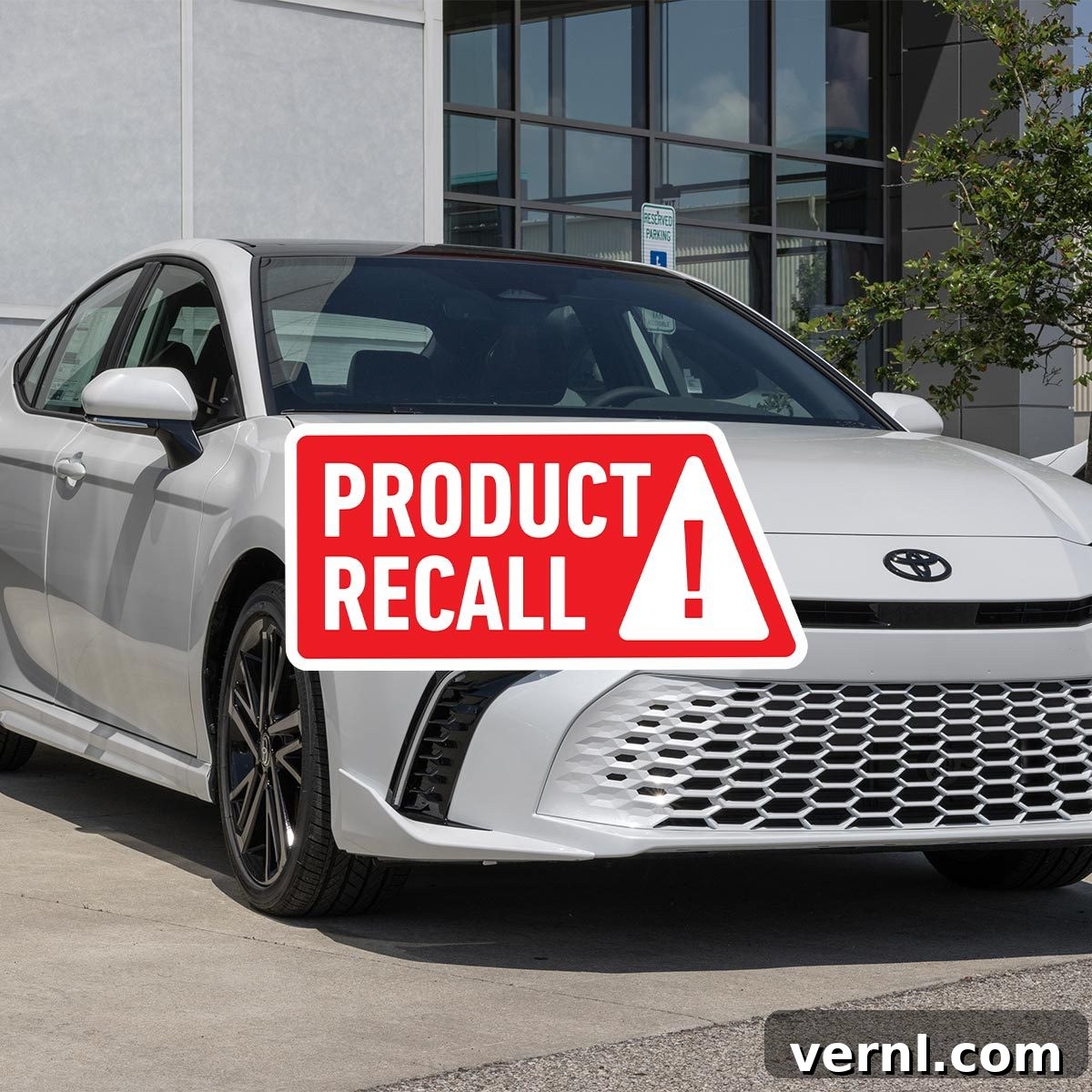
In the vast landscape of the automotive world, where innovation meets the open road, one truth remains constant: no vehicle is entirely immune to the possibility of a recall. From the latest luxury sedans to robust pickup trucks and family-friendly SUVs, manufacturers regularly issue recalls to address potential safety concerns, ensuring the well-being of their customers. Staying informed about these announcements is not just recommended; it’s a critical aspect of responsible vehicle ownership. As of February 6, 2025, Toyota, a global leader renowned for its reliability, has announced multiple significant recalls impacting over a hundred thousand of its vehicles. These recalls span a variety of popular models and model years, making it imperative for owners to carefully review the details. Missing crucial safety information could have serious implications if your vehicle is among those identified.
We’ve meticulously broken down the essential information regarding these latest Toyota recalls to make it as accessible and easy to understand as possible. If you discover that your vehicle is listed among the affected models, taking prompt action by scheduling an appointment to have the necessary remedy performed free of charge is your top priority for ensuring continued safety and peace of mind.
Understanding the Importance of Vehicle Recalls
Before diving into the specifics of Toyota’s recent announcements, it’s beneficial to grasp the fundamental purpose and process of vehicle recalls. A vehicle recall is issued by a manufacturer when they discover a defect that could pose a safety risk to the driver, passengers, or other road users. These defects can range from minor component failures to critical issues affecting steering, braking, airbags, or fuel systems. Recalls are not an indication of poor quality in general but rather a demonstration of a manufacturer’s commitment to safety and adherence to regulatory standards once a potential issue has been identified.
The process typically begins when a manufacturer, or sometimes a regulatory body like the National Highway Traffic Safety Administration (NHTSA) in the United States, identifies a systemic flaw in a specific make, model, or year range of vehicles. Once confirmed, the manufacturer is legally obligated to notify affected owners and provide a remedy, usually free of charge. This proactive approach ensures that potential hazards are addressed before they can lead to accidents or injuries. For vehicle owners, receiving a recall notice should be taken seriously, as ignoring it could compromise their safety and potentially affect the vehicle’s long-term performance and resale value.
Toyota’s Latest Recall Announcements: An Overview
According to official press releases from Toyota, there are currently two distinct recall campaigns impacting a total of over 140,000 vehicles across various Toyota and Lexus models. These recalls address different components and potential safety risks, highlighting the diverse nature of automotive manufacturing challenges. The first recall focuses on certain models of the popular Toyota Tacoma 4-wheel drive trucks, addressing a potential brake system vulnerability. The second campaign encompasses a range of Camry and Lexus vehicles, primarily due to a manufacturing defect related to a crucial safety component: the second-row center seatbelt. Owners of any of the specified models are strongly advised to pay close attention to the details of each recall.
The list of affected vehicles includes:
- 2024 Tacoma 4-wheel drive vehicles equipped with 16-inch brakes and 17-inch Toyota wheels
- 2025 Tacoma 4-wheel drive vehicles equipped with 16-inch brakes and 17-inch Toyota wheels
And for the second recall, vehicles include:
- 2024 Lexus RX
- 2025 Lexus RX
- 2025 Toyota Camry
- 2025 Lexus NX
Deep Dive: The Toyota Tacoma Brake System Recall
The first of Toyota’s recent recall announcements specifically targets a critical safety component in select Toyota Tacoma models: the rear brake hoses. Toyota’s official brief concerning the Tacoma recall outlines a serious potential hazard: the rear brake hoses on the impacted vehicles are susceptible to significant damage. This vulnerability arises primarily under specific conditions where excessive accumulation of mud and dirt within the rear wheels can occur. Such buildup is particularly common in off-road driving environments, for which the Tacoma 4-wheel drive is often utilized. The design or placement in these specific models creates an increased risk of the debris rubbing against and ultimately damaging the brake hoses.
Should the rear brake hoses sustain enough damage from this external friction, it could lead to a critical brake fluid leak. Brake fluid is an essential hydraulic component that transmits the force from the brake pedal to the brake calipers, enabling the vehicle to slow down and stop effectively. A loss of brake fluid can severely compromise the vehicle’s braking capability, potentially leading to an unexpected increase in stopping distance or, in severe cases, a complete failure of the braking system. This scenario dramatically elevates the risk of a crash, posing a direct threat to the occupants of the vehicle and others on the road. The recall specifically pertains to 2024 and 2025 Tacoma 4-wheel drive models that are equipped with 16-inch brakes and 17-inch Toyota wheels, underscoring the importance of checking your vehicle’s exact specifications against the recall notice.
Comprehensive Look: The Camry and Lexus Seatbelt Recall
The second major recall announced by Toyota addresses a different, but equally vital, safety component: the second-row center seatbelt. This recall impacts a range of Toyota and Lexus vehicles, including the 2024 Lexus RX, 2025 Lexus RX, 2025 Toyota Camry, and 2025 Lexus NX. According to the manufacturer’s brief, the core issue stems from a potential manufacturing defect. It has been identified that the second-row center seatbelt in these subject vehicles may have sustained damage during the production process itself. This damage, though perhaps not immediately visible or apparent during casual inspection, has significant implications for the seatbelt’s integrity.
The primary concern arising from this manufacturing defect is that the damaged seatbelts may not comply with relevant federal motor vehicle safety standards regarding strength requirements. Seatbelts are engineered to withstand immense forces during a collision, designed to securely restrain occupants and distribute impact forces across the strongest parts of the body. If a seatbelt’s structural integrity is compromised due to manufacturing damage, it may not perform as intended during a crash. Toyota explicitly warns that if an occupant is belted into the second-row center seat with a damaged seatbelt, the risk of injury during certain types of collisions could be substantially increased. This underscores the critical role seatbelts play as a primary safety restraint system and the absolute necessity for them to be in perfect working order. For owners of the specified Lexus RX, Toyota Camry, and Lexus NX models, verifying the condition of this particular seatbelt is paramount for the safety of passengers.
What Owners Need to Do: The Remedy and Next Steps
Toyota is committed to resolving these safety concerns efficiently and without cost to its customers. For both the Tacoma brake recall and the Camry/Lexus seatbelt recall, Toyota has announced that authorized dealerships will perform all necessary repairs completely free of charge. This commitment ensures that vehicle owners can address these safety issues without financial burden, reinforcing the importance of responding to recall notices promptly. The first wave of owner notification letters for both recall campaigns is scheduled to be mailed out in early April 2025. If you own any of the vehicles listed in these recalls, it is crucial to keep a vigilant eye on your mailbox for these official communications, as they will contain detailed instructions on how to proceed.
However, you don’t necessarily have to wait for a letter to take action or verify if your vehicle is affected. Proactive owners can use their Vehicle Identification Number (VIN) to check for open recalls. Both Toyota’s official website and the National Highway Traffic Safety Administration (NHTSA) website typically offer online tools where you can input your VIN to see if your specific vehicle is included in any recall campaign. This is an excellent way to get the most up-to-date information directly. Once you confirm your vehicle is subject to a recall, the next step is to contact your nearest authorized Toyota or Lexus dealership to schedule an appointment for the repair. Dealerships are equipped with the specialized tools, parts, and trained technicians required to accurately diagnose and remedy the specific issues outlined in the recall. It is advisable not to delay these repairs, as addressing potential safety defects promptly is paramount for the safety of you and your passengers.
The Broader Impact of Vehicle Recalls on Automotive Safety
While inconvenient, vehicle recalls are an indispensable part of ensuring ongoing automotive safety and accountability. They serve as a vital mechanism for manufacturers to rectify issues that could otherwise lead to serious accidents and injuries. For consumers, recalls build trust, demonstrating that manufacturers are committed to standing behind their products and prioritizing safety over all else. In an industry as complex and technologically advanced as automotive manufacturing, occasional defects can arise despite rigorous quality control. Recalls provide a structured way to address these anomalies on a large scale.
Regulatory bodies, such as the NHTSA, play a crucial oversight role, monitoring manufacturer compliance and ensuring that recall campaigns are executed effectively and transparently. This partnership between manufacturers and regulatory agencies is fundamental to maintaining high safety standards across the entire automotive landscape. Ultimately, responding to recalls promptly contributes not only to individual vehicle safety but also to the collective safety of everyone on the road. It reinforces the idea that an active, informed public and responsible manufacturers are key pillars of a secure transportation system. These Toyota recalls, while concerning, are a clear example of this system at work, providing owners with the opportunity to correct potential hazards and drive with confidence.
Staying Informed About Vehicle Recalls
The best defense against potential vehicle safety hazards is staying informed. Beyond waiting for a physical letter, there are several reliable ways for vehicle owners to remain up-to-date on potential recalls affecting their automobiles. Regularly checking the official websites of Toyota or Lexus using your VIN is one of the most direct methods. These sites typically feature dedicated recall lookup tools that provide real-time information. Additionally, the National Highway Traffic Safety Administration (NHTSA) maintains a comprehensive public database of all vehicle recalls in the United States, accessible via their website (NHTSA.gov). This resource allows you to search by VIN or by make and model, offering an independent verification source.
It’s also a good practice to ensure that the manufacturer has your most current contact information. If you’ve moved or purchased a used vehicle, updating your registration details with the manufacturer directly can ensure you receive future recall notifications promptly. Subscribing to email alerts from NHTSA or relevant automotive news outlets can also provide timely updates. By adopting these proactive measures, vehicle owners empower themselves to act swiftly when a recall is issued, ensuring that their vehicles remain safe and compliant with the latest safety standards. Remember, your safety, and the safety of your passengers, is paramount, and staying informed is the first step in ensuring that peace of mind on every journey.
Source
- Toyota Recalls Certain Toyota and Lexus Vehicles, Toyota Newsroom, 2025
- Toyota Recalls Certain 2024-2025MY Toyota Tacoma 4-Wheel Drive Trucks, Toyota Newsroom, 2025