

Our bedrooms are more than just spaces for sleep; they are our personal sanctuaries, offering respite from the day’s demands. Within these walls, we engage in a myriad of activities: unwinding with a book, tackling a crossword puzzle, getting dressed, packing for a trip, or applying a touch of makeup. Each of these functions demands a distinct type of illumination to ensure comfort, prevent errors, and, crucially, avoid disrupting our precious sleep patterns. Experts consistently highlight the profound impact of bedroom lighting on our circadian rhythm and overall well-being. Jennifer Johnson, CEO of The Light Center, emphasizes that careful attention to bedroom lighting is not just about aesthetics, but a vital component of a healthy lifestyle.
Fortunately, lighting professionals have dedicated considerable thought to crafting optimal bedroom environments. By strategically designing the lighting, you can transform your bedroom into a multi-functional haven that supports both vigorous activity and serene relaxation. Here, we delve into their invaluable insights and practical tips for creating the perfect lighting scheme for your personal retreat.
Define Your Bedroom Lighting Needs
The first step in any effective lighting design is to understand the specific activities that take place in your bedroom. Sheva Knopfler, co-founder and creative director of Lights.com, advises a function-first approach. Begin by meticulously outlining what you do in your room. Do you have a dedicated workspace that requires focused task lighting? Perhaps a vanity area where you prepare for the day, necessitating bright, even illumination? Or do you need an accent light to highlight a cherished piece of art or define a dressing nook?
“It is always necessary to layer light fixtures based on the functionality of your space,” Knopfler states. This foundational principle ensures that every corner of your bedroom serves its purpose effectively. While it’s tempting to make your bedroom a catch-all for various functions, remember the core purpose of this space. Joel Worthington, president of Mr. Electric, a Neighborly company, underscores that “The best bedroom lighting ideas should always begin with comfort and relaxation in mind.” Balancing these functional demands with an overarching sense of calm is key to successful bedroom lighting design.
Embrace Layered Lighting
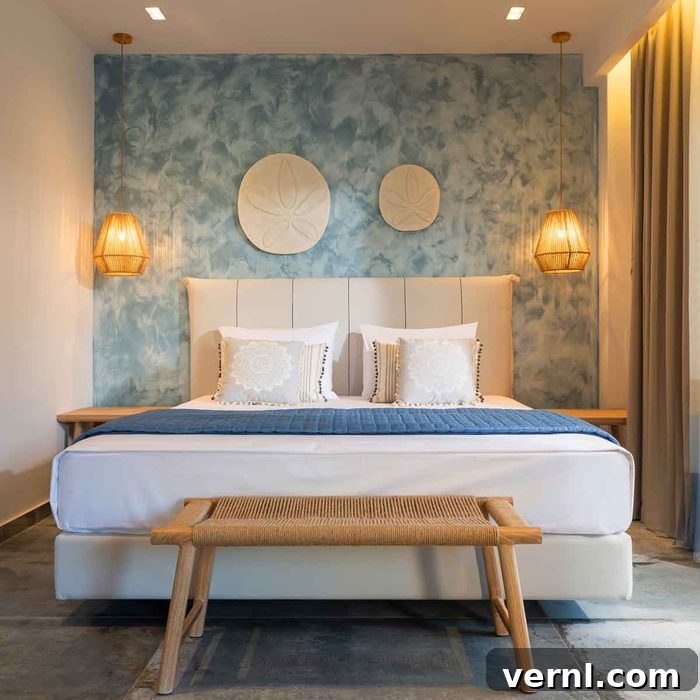
One of the most powerful concepts in interior lighting, especially for bedrooms, is layering. This involves combining different types of light to achieve versatility and depth. “When it comes to bedroom lighting, it is important to layer your lights,” Knopfler reiterates. Think of it as painting with light, using various brushes to create a rich and nuanced visual experience.
A well-layered lighting scheme typically comprises three main categories:
- Ambient Lighting: This is your general illumination, providing overall brightness for the room. It ensures you can navigate safely and see clearly. A main source, such as an overhead light, flush mount, or recessed cans, forms the backbone of ambient lighting. For a bedroom, this should provide a soft, welcoming glow rather than harsh, direct light.
- Task Lighting: As the name suggests, this is focused illumination for specific activities. For instance, dedicated lighting at your bedside is crucial for reading, allowing you to immerse yourself in a book without straining your eyes. Instead of traditional table lamps on nightstands, many opt for elegant wall sconces or even small pendant lights for a modern, industrial touch or to save precious surface space. Similarly, any desk or vanity in your bedroom requires its own task lighting to prevent shadows and ensure adequate visibility for detailed work.
- Accent Lighting: This layer adds visual interest and creates mood. Accent lighting can highlight architectural features, artwork, or decorative elements. Johnson suggests considering the direction of light flow. Uplights, such as lamps or sconces that direct light upwards, can create a sense of spaciousness and warmth by washing the ceiling in light. Conversely, downlights, like perimeter recessed cans or specific ceiling lights directed away from our direct line of sight, can create a more intimate atmosphere and prevent glare. The interplay of these light directions contributes significantly to the room’s overall feel.
Understand Color Temperature
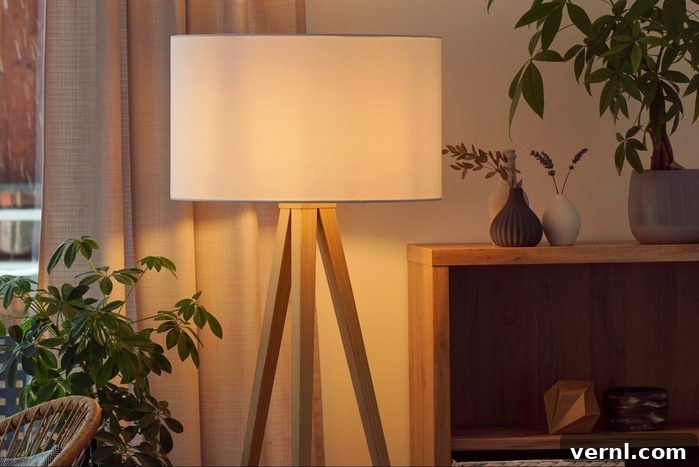
The “temperature” of light, measured in Kelvins (K), plays a critical role in setting the mood and influencing our biological clocks. Knopfler advises that a warm or neutral white light temperature is ideal for creating a soothing yet functional bedroom environment. She recommends a color temperature between 2,700K and 3,000K, which closely mimics the soft, inviting glow of traditional incandescent bulbs. This range is known for its ability to promote relaxation and prepare the body for sleep.
Consistency is also vital; all lights within the bedroom should ideally have the same or very similar color temperatures to prevent a jarring, mismatched aesthetic. Worthington echoes this sentiment, recommending warmer or softer-light bulbs. He cautions against cooler temperatures (typically 4,000K and above), which can be perceived as daylight, making the space feel cold, clinical, and potentially disruptive to sleep cycles. For those embracing modern LED technology, look for packaging that specifies color temperature, as many advanced LED bulbs now offer temperature adjustment options, allowing you to shift from warm to cool light as needed.
A crucial safety note: never attempt to modify lights by draping fabrics over lampshades to soften or change the color. “This is a fire hazard,” Worthington warns. Instead, opt for lower-wattage bulbs or bulbs specifically designed for warmer light output. Understanding how to choose the right bulb is as important as choosing the right fixture. Learning how to light a living room with no overhead lighting can provide transferable insights into creating ambient warmth without reliance on primary ceiling fixtures.
Selecting Your Main Light Fixture
The main light fixture in your bedroom, often an overhead fixture, serves as the primary source of ambient light. Your choice here hinges on several factors, including existing electrical infrastructure and ceiling height. Do you currently have recessed cans or track lighting? If so, you might require less power from your central ceiling light, allowing you to opt for something more decorative or accent-focused. If, however, your main ceiling light is the sole source of general illumination, select a fixture that disperses light effectively in multiple directions to avoid dark spots and provide comprehensive coverage.
Ceiling height is another critical consideration. For shorter ceilings, typically eight feet or less, a flush mount fixture is often the most practical choice, sitting snugly against the ceiling. Bedrooms with ceilings nine feet or higher can comfortably accommodate semi-flush mount fixtures, which extend slightly from the ceiling, offering a more decorative presence and often better light distribution. Some semi-flush mounts are designed with a more horizontal orientation, making them suitable even for moderately lower ceilings. Vaulted or very high ceilings provide the most design flexibility, opening up possibilities for grander fixtures like chandeliers or larger pendant lights, which can become stunning focal points.
Johnson generally favors semi-flush mounts for main ceiling lights due to their versatility. They are adaptable to most ceiling heights, project light both upward and downward, and create a beautiful “ceiling glow” that enhances the room’s atmosphere. “It uplevels any room in my opinion,” she asserts, highlighting their ability to elevate the aesthetic.
Before making a final decision on your overhead lighting, consider the inclusion of ceiling fans. Worthington considers them a “must” for climate control and air circulation. If you choose a ceiling fan, this decision will influence your other lighting choices, as many fans come with integrated lighting, potentially solving two needs with one fixture. Ensure that any fan light provides sufficient illumination or that your other layered lighting compensates adequately.
Optimizing Bedside Lighting

“Your bedside lamp is the workhorse of bedroom lights,” Worthington aptly describes. This singular fixture serves multiple crucial roles: it’s the light you switch on as you prepare for bed and the first thing you reach for upon waking. It offers comfort and visibility when you’re startled awake in the dead of night, and it’s undoubtedly your most frequent companion for late-night reading sessions. Given its importance, careful selection is paramount.
For those with ample space, traditional table lamps placed on nightstands can offer convenience and style. However, if you’re working with a petite bedroom or simply prefer a minimalist aesthetic, wall sconces are an excellent, space-saving alternative. Sconces come in a variety of styles, from hardwired options that offer a clean, integrated look to user-friendly plug-ins, and from static fixtures to those with adjustable arms, allowing you to direct light precisely where needed.
Knopfler, acknowledging the realities of urban living, emphasizes, “As a Brooklyn-based mom, I fully understand the need for space in small bedrooms.” Her recommendation for compact spaces is to “skip the nightstands and table lamps and install wall sconces on either side of the bed.” She even points out the availability of renter-friendly plug-in wall lights, perfect for apartment dwellers. This not only offers a stylish, contemporary look but also liberates valuable floor and surface area.
When installing sconces, precise placement is key. Knopfler suggests measuring from the floor to the top of the sconce, aiming for an approximate height of 55 to 60 inches. This ensures the light is at an optimal level for reading without casting harsh shadows or causing glare. Furthermore, if your sconces operate via a switch, meticulously review its placement before installation. You’ll want to ensure it’s easily accessible from your bed, preventing any late-night fumbling in the dark.
Increasingly, people are also installing pendants over their bedsides, offering a chic, contemporary aesthetic. If considering this option, ensure the pendants are positioned at a height that provides adequate light without obstructing movement or becoming a visual nuisance. Always verify that they will throw sufficient light for your intended activities, especially reading.
The Indispensable Role of Dimmers
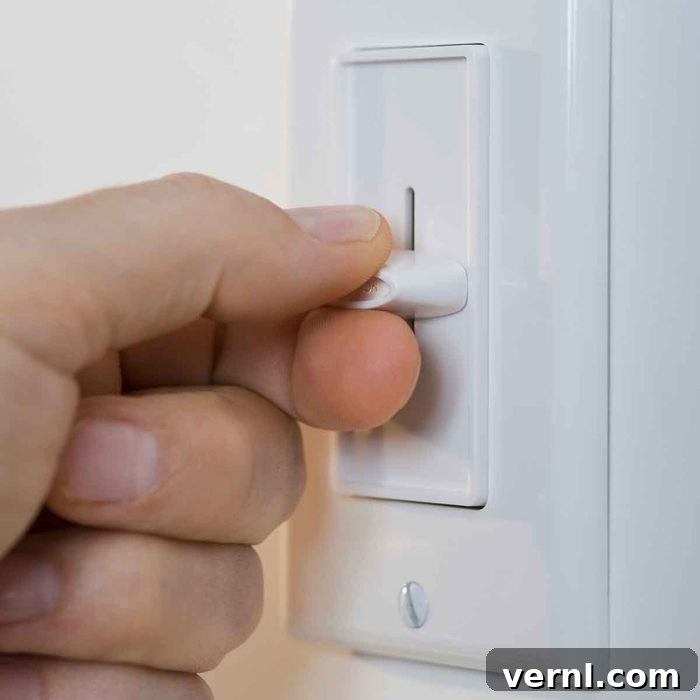
Without exception, lighting experts agree on the transformative power of dimmers. Whether controlled by traditional wall switches or sophisticated smart home apps, dimmers are fundamental to creating a truly versatile and comfortable bedroom lighting scheme. Jennifer Johnson eloquently compares lighting without dimmers to “music without the volume control,” underscoring the critical need for adjustability.
Dimmers empower you to fine-tune the intensity of your lights, allowing you to transition effortlessly from bright, functional illumination to soft, ambient glow. This flexibility is invaluable in a bedroom. In the morning, you might need full brightness to get dressed or organize your day. In the evening, as you wind down, dimming the lights signals to your body that it’s time to relax and prepare for sleep, aligning with your natural circadian rhythm. This ability to customize brightness helps foster an environment conducive to rest, as excessive bright light before bed can suppress melatonin production.
Knopfler emphasizes, “The bedroom is supposed to be as calm as it is functional.” Dimmers are the key to achieving this delicate balance. “You can fully customize how bright you need the light, and in some cases how low you need it,” she explains. This benefit extends beyond just overhead lighting; accent lighting and bedside lamps should also be dimmable to your liking. Dimming not only enhances comfort and mood but also contributes to energy efficiency and extends the lifespan of your light bulbs, making it a smart investment for any bedroom.
Creative Mood Setting
Beyond functional illumination, lighting plays a crucial role in shaping the emotional landscape of your bedroom. If you’re looking for an easy, budget-friendly way to introduce impactful mood lighting, Jennifer Johnson offers an ingenious solution. “Plugging in a tape light behind a headboard or under the bed might be the single biggest change that is most cost-effective,” she notes. These subtle washes of light can dramatically alter the ambiance, creating a soft, ethereal glow that makes the room feel instantly more inviting and luxurious.
Simple LED tape lighting kits are incredibly versatile. Many models are color-adjustable, allowing you to choose from a spectrum of hues to match your mood or décor. Some advanced kits can even synchronize with music or cycle through colors automatically, adding a dynamic, playful element to your space. These kits are remarkably affordable, typically ranging from $40 to $55 for a cuttable 36-foot run, making them an accessible upgrade. Installation is usually hassle-free, often involving a simple peel-and-stick application, making them a perfect DIY project for anyone looking to enhance their bedroom’s mood without extensive effort or cost.
The Essential Nightlight
Even in the deepest sleep, occasional nighttime wake-ups are inevitable, whether for a quick trip to the bathroom or to tend to a child. During these moments, the right light is critical. Jennifer Johnson highlights a common dilemma: too bright a light and your eyes struggle to adjust, posing potential safety risks in a disoriented state. Moreover, a sudden burst of bright light can mistakenly signal to your brain that it’s time to fully wake up, making it harder to fall back asleep. Conversely, too much darkness increases the risk of stumbling or falling.
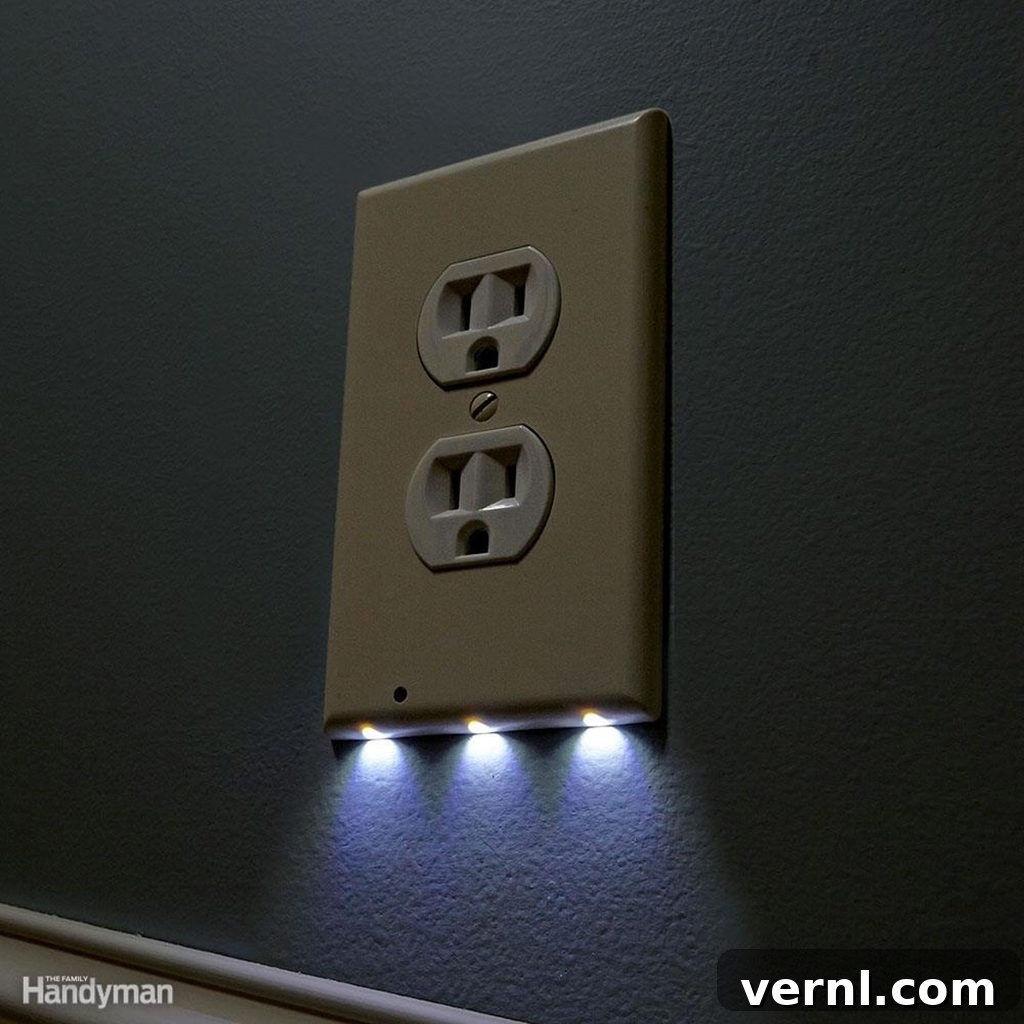
The solution lies in a gentle, low-level illumination provided by a nightlight. Modern innovations offer several convenient options. Some electrical outlets, such as those preferred by Johnson from brands like Legrand or Lutron, come with integrated nightlights, providing a subtle, constant glow. Alternatively, LED tape lighting equipped with a motion sensor can be strategically placed along pathways or under the bed, illuminating your path only when needed. Traditional plug-in nightlights also remain a popular and effective choice. The key is to select a nightlight that emits a soft, warm glow, sufficient for safe navigation without fully disrupting your sleep cycle. This small addition can significantly enhance safety and comfort during those nocturnal awakenings.
Inject Personality and Playfulness
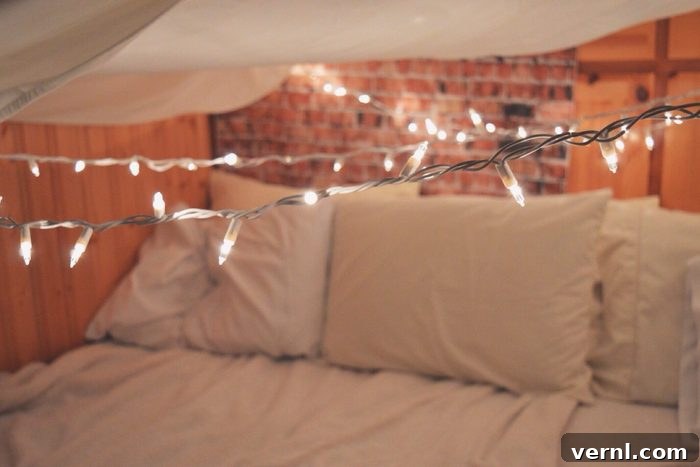
While functionality and comfort are paramount, don’t shy away from infusing your bedroom lighting with personality and charm. Worthington suggests indoor string lights as an excellent option for adding an extra layer of sparkle and whimsy. “While indoor string lights aren’t for everyone, they can add a little whimsy and a soft glow to a bedroom,” he explains. They create a magical, inviting atmosphere that can transform an ordinary space into something extraordinary.
String lights are particularly delightful for children’s bedrooms, where they can serve as a fun and imaginative alternative to traditional nightlights, sparking creativity and easing nighttime anxieties. For adult bedrooms, there are myriad stylish applications. Outline a headboard with delicate white fairy lights for a romantic touch, or criss-cross your ceiling with a couple of strands of Edison lights to evoke a vintage industrial vibe. The soft, diffused light from string lights contributes to a cozy ambiance, perfect for unwinding. They are not just for holidays; when integrated thoughtfully, string lights can be a permanent fixture that celebrates individuality and adds a unique, enchanting glow to your personal haven.